
When you take a pill, your body doesn’t process it the same way as someone else—even if you’re the same age, weight, or have the same diagnosis. That’s where PopPK, population pharmacokinetics, a method that studies how drugs move through groups of people to predict individual responses. Also known as population PK, it’s the science behind why your doctor might adjust your dose based on your age, kidney function, or even what other meds you’re taking. It’s not magic. It’s math built from real data: thousands of blood tests, weight measurements, and side effect reports pulled from actual patients. This is how modern medicine moves away from one-size-fits-all dosing and starts personalizing treatment.
PopPK doesn’t just look at you in isolation. It connects you to a larger pattern. For example, if most older adults clear a certain drug slower because of reduced kidney function, PopPK models that trend and tells doctors: "Start this patient at 30% lower dose." It explains why a generic version might work fine for most but cause side effects in someone with liver disease. It’s why your child’s antibiotic dose is based on weight, not age. And it’s why some people need higher doses of blood thinners while others get sick from standard amounts. PopPK links drug metabolism, how the body breaks down and eliminates medications, often through the liver and kidneys to dosing individualization, the practice of adjusting medication amounts based on patient-specific factors like genetics, organ function, or coexisting conditions. It’s also why your doctor checks your kidney function before prescribing certain drugs—PopPK data shows that even a 20% drop in kidney function can double drug levels in your blood.
Behind every smart dosing decision, there’s a PopPK model. It’s in the guidelines for cancer drugs, epilepsy meds, and heart failure treatments. It’s why some medications come with warnings like "use lower doses in elderly patients"—those warnings aren’t guesses. They’re based on real population data. And if you’ve ever wondered why your medication dose changed after switching insurance or after a hospital stay, PopPK is often the reason. The posts below show how this science shows up in real life: from why generics don’t always work the same for everyone, to how liver and kidney changes with age affect your meds, to why some people react badly to common combinations like blood thinners and NSAIDs. You’ll find real stories, real data, and real advice on how to talk to your doctor about what’s happening inside your body—not just what’s on the label.
Posted by Ian Skaife with 9 comment(s)
Dec
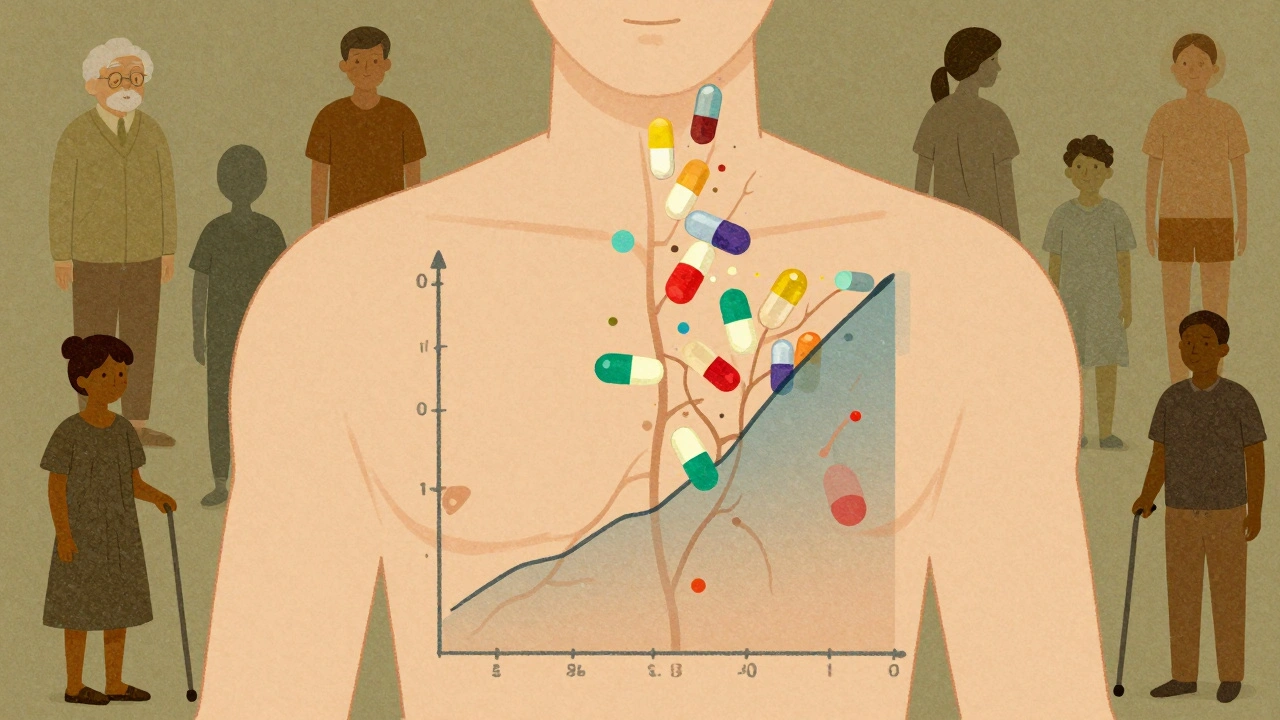
Population pharmacokinetics uses real-world data to prove drug equivalence across diverse patient groups, offering a smarter alternative to traditional bioequivalence studies - especially for complex drugs and vulnerable populations.
view more