
When you take a pill, it doesn’t just sit there and work. Your body pharmacokinetic modeling, the science of how drugs move through the body over time. Also known as PK modeling, it’s the hidden math behind why your doctor chooses a certain dose, timing, or even a different drug altogether. This isn’t just for scientists—it’s the reason some people need higher doses, why some meds make you dizzy at first, or why your blood thinner works differently than your neighbor’s.
It all starts with drug absorption, how quickly and completely a medication enters your bloodstream. A pill swallowed on an empty stomach might hit your blood faster than one taken after a big meal. Then comes drug metabolism, how your liver breaks down the drug into smaller pieces. Some people have liver enzymes that work fast—others slow. That’s why two people taking the same dose can have totally different reactions. And finally, drug elimination, how your kidneys and liver clear the drug from your system—this changes as you age, or if you have kidney or liver disease. These aren’t abstract concepts. They’re why your elderly parent needs lower doses, why your antidepressant took weeks to kick in, and why some generics make you feel worse than the brand name.
Pharmacokinetic modeling ties all this together. It uses real data—blood tests, timing, body weight, age, even genetics—to predict how a drug will behave in your body. That’s why your doctor might switch you from one statin to another, or why your birth control pill’s effectiveness drops if you’re on an antibiotic. It’s also why some medications come with strict food warnings, or why your chemo dose is calculated by your weight and kidney function. This isn’t guesswork. It’s precision medicine in action.
Below, you’ll find real-world stories from people who’ve dealt with the consequences of these processes—why generics didn’t work for them, how liver changes with age affect meds, what happens when drugs interact, and how to spot when your body isn’t handling a pill the way it should. These aren’t theory pieces. They’re practical guides from people who’ve been there, and the science behind why it happened.
Posted by Ian Skaife with 9 comment(s)
Dec
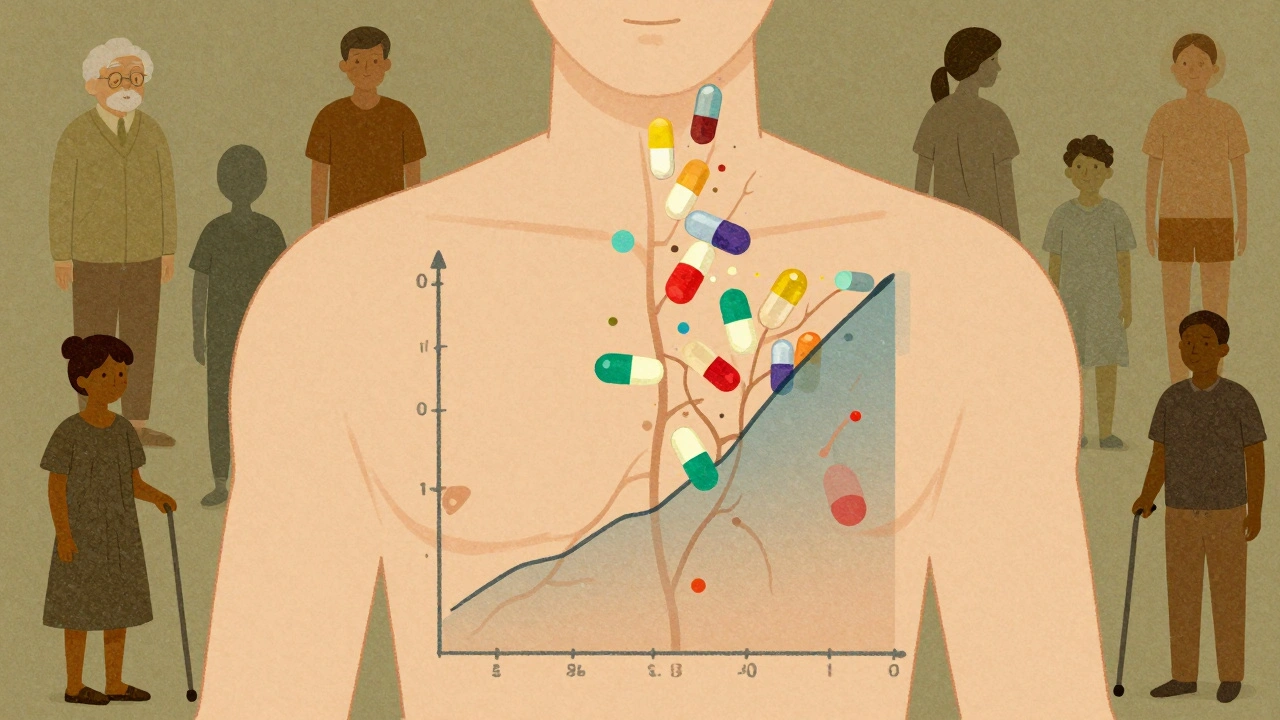
Population pharmacokinetics uses real-world data to prove drug equivalence across diverse patient groups, offering a smarter alternative to traditional bioequivalence studies - especially for complex drugs and vulnerable populations.
view more