
When you're young, your liver, a vital organ that filters toxins, breaks down drugs, and produces essential proteins. Also known as the body's chemical factory, works like a well-oiled machine. But as you age, it doesn’t just slow down—it restructures. Blood flow drops, enzyme activity declines, and fat builds up. These aren’t just minor tweaks; they change how your body handles every pill, supplement, and even over-the-counter painkiller you take. That’s why a dose that was safe at 30 might be risky at 65.
One of the biggest changes? Your liver’s ability to process drugs. The CYP450 enzymes, which break down most medications, become less active. That means drugs stick around longer, building up to dangerous levels. Acetaminophen, for example, is safe at standard doses for most people—but in older adults, even normal amounts can cause drug-induced liver injury, damage caused by medications that overwhelm the liver’s detox capacity. It’s silent, too. No pain. No warning. Just rising liver enzymes or yellowing skin. And if you’re on multiple meds—common in older adults—the risk multiplies. NSAIDs, statins, antibiotics, even some herbal supplements like kava or green tea extract can pile up and stress your liver. It’s not about taking too many pills; it’s about how your aging body handles them.
Your liver also becomes less able to recover. Cell regeneration slows, and scar tissue can creep in from years of exposure to alcohol, poor diet, or repeated medication use. This isn’t cirrhosis yet—but it’s the foundation. That’s why knowing your meds is more important than ever. If you’ve noticed unexplained fatigue, dark urine, or itching, it’s not just "getting older." It could be your liver sending a signal. And if you’ve ever been told to avoid certain drugs because of liver issues, that advice gets even more urgent after 50.
What you’ll find below are real, practical posts that connect directly to these changes. You’ll learn how to spot early signs of liver damage from meds, why some drugs become riskier with age, how to talk to your doctor about your liver health, and what alternatives exist when your body can’t handle what it used to. This isn’t theory. It’s what people over 50 need to know to stay safe, avoid hospital visits, and keep taking what they need without risking their liver.
Posted by Patrick Hathaway with 10 comment(s)
Nov
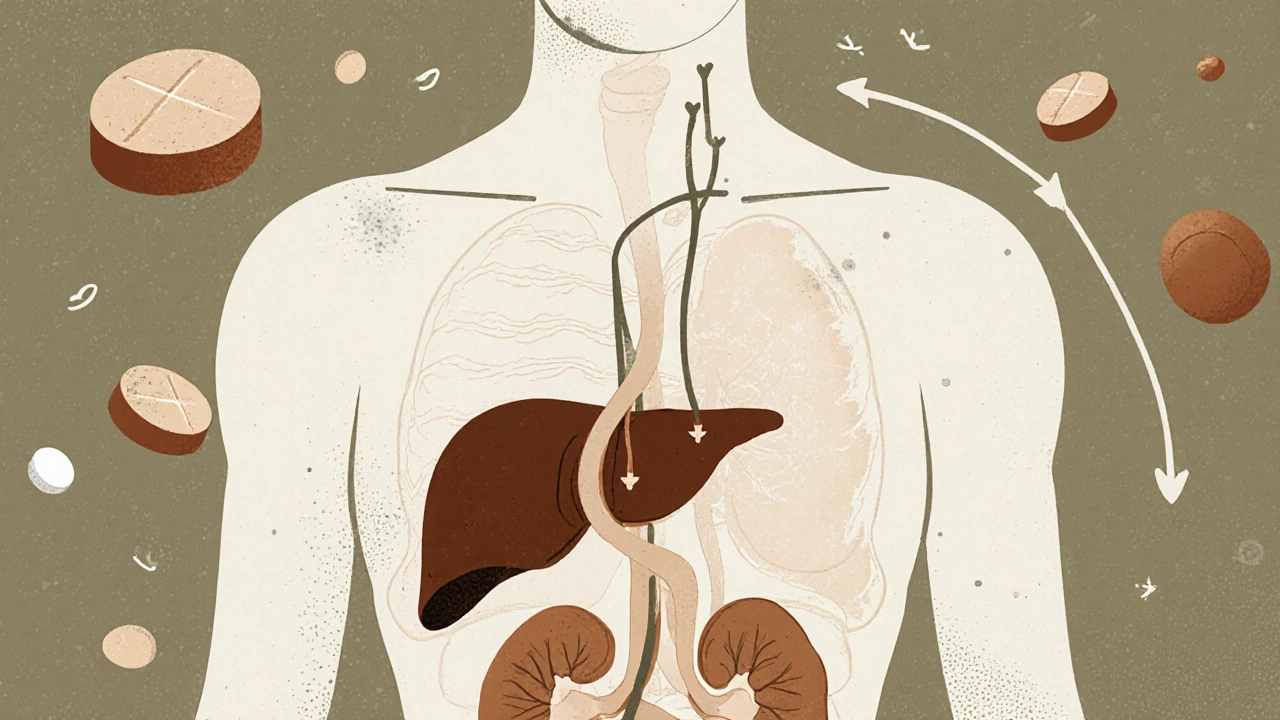
As people age, liver and kidney changes slow how drugs are processed, increasing the risk of side effects and hospitalizations. Learn how these changes affect common medications and what you can do to stay safe.
view more