
When you take warfarin, a prescription blood thinner that prevents dangerous clots by slowing down vitamin K-dependent clotting factors. Also known as Coumadin, it’s one of the most prescribed anticoagulants in the U.S.—but it’s not simple. One wrong food, supplement, or pill can throw your dose off, and that’s not something you can afford to guess at.
Warfarin doesn’t work alone. It’s tied to your INR, a blood test that measures how long it takes your blood to clot. Your doctor uses this number to adjust your dose, usually keeping it between 2 and 3 for most conditions like atrial fibrillation or deep vein thrombosis. Too low, and you’re at risk for clots. Too high, and you could bleed internally without warning. That’s why regular testing isn’t optional—it’s life-saving. And it’s not just about the dose. warfarin interactions, happen with dozens of common drugs, herbs, and even foods like kale and cranberry juice. Antibiotics, painkillers, and even some vitamins can make warfarin stronger or weaker overnight. That’s why keeping a full list of everything you take—including OTC meds and supplements—is critical.
People often think warfarin is outdated because newer blood thinners exist, but that’s not always true. For many, especially those with mechanical heart valves or certain types of kidney disease, warfarin is still the only safe option. It’s cheap, well-studied, and reversible with vitamin K if something goes wrong. But it demands attention. You can’t just pop a pill and forget it. You need to track your diet, your lab results, and every new medication you start. It’s a partnership between you and your care team—and it only works if you show up with the facts.
Below, you’ll find real-world guides from patients and providers who’ve lived with warfarin. You’ll learn how to handle missed doses, what to do when your INR spikes, how to travel safely with it, and why some people switch off it while others can’t. There’s no fluff here—just the stuff that actually matters when your next blood test could mean the difference between staying out of the hospital and ending up in one.
Posted by Ian Skaife with 10 comment(s)
Nov
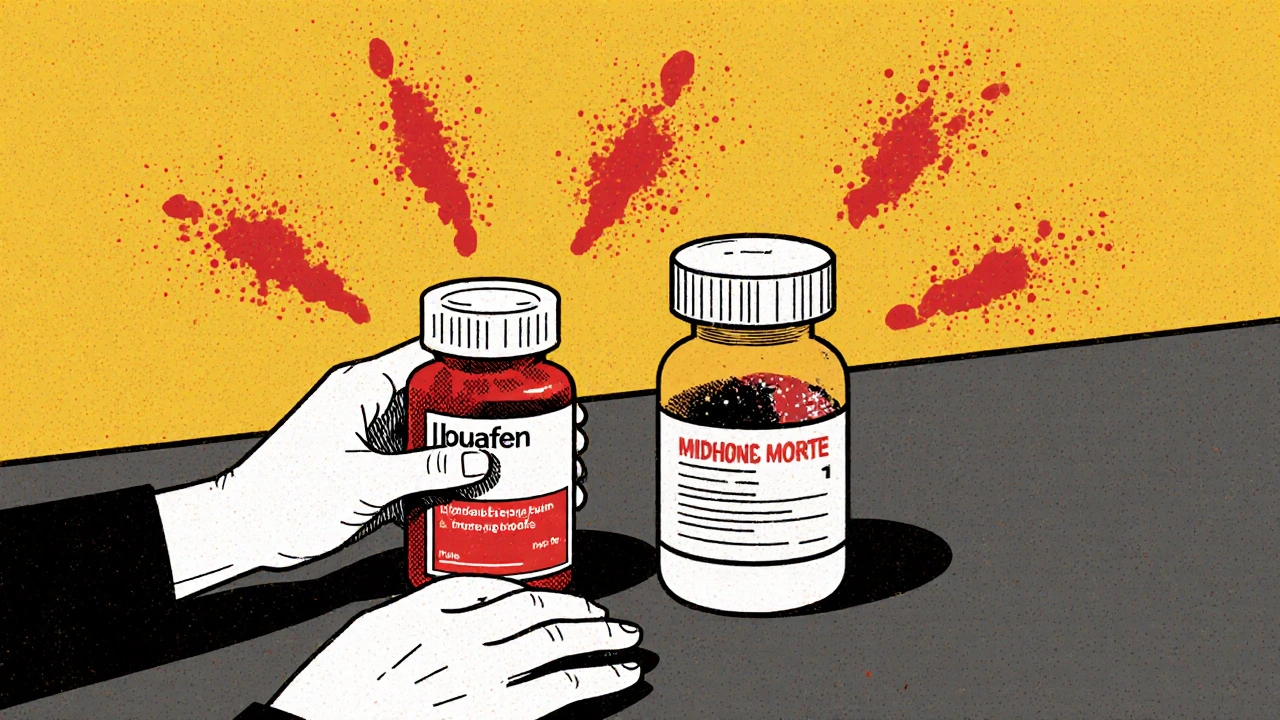
Combining blood thinners with NSAIDs like ibuprofen or naproxen can double or triple your risk of dangerous internal bleeding. Learn why this common mistake happens and what safer alternatives actually work.
view more