
Antidepressant Risk Calculator
This tool helps you understand the FDA Black Box Warning context for antidepressants. Risk is based on clinical evidence and is highest for young people during initial treatment. Results are informational only and do not replace professional medical advice.
Personalized Risk Assessment
Based on FDA clinical data, the risk of increased suicidal thoughts or behaviors is:
0% compared to placebo baseline
Recommended actions based on your assessment:
Important Note:
This tool uses general clinical data. Always consult your healthcare provider for personalized medical advice. If you or someone you know is experiencing suicidal thoughts, contact a mental health professional immediately.
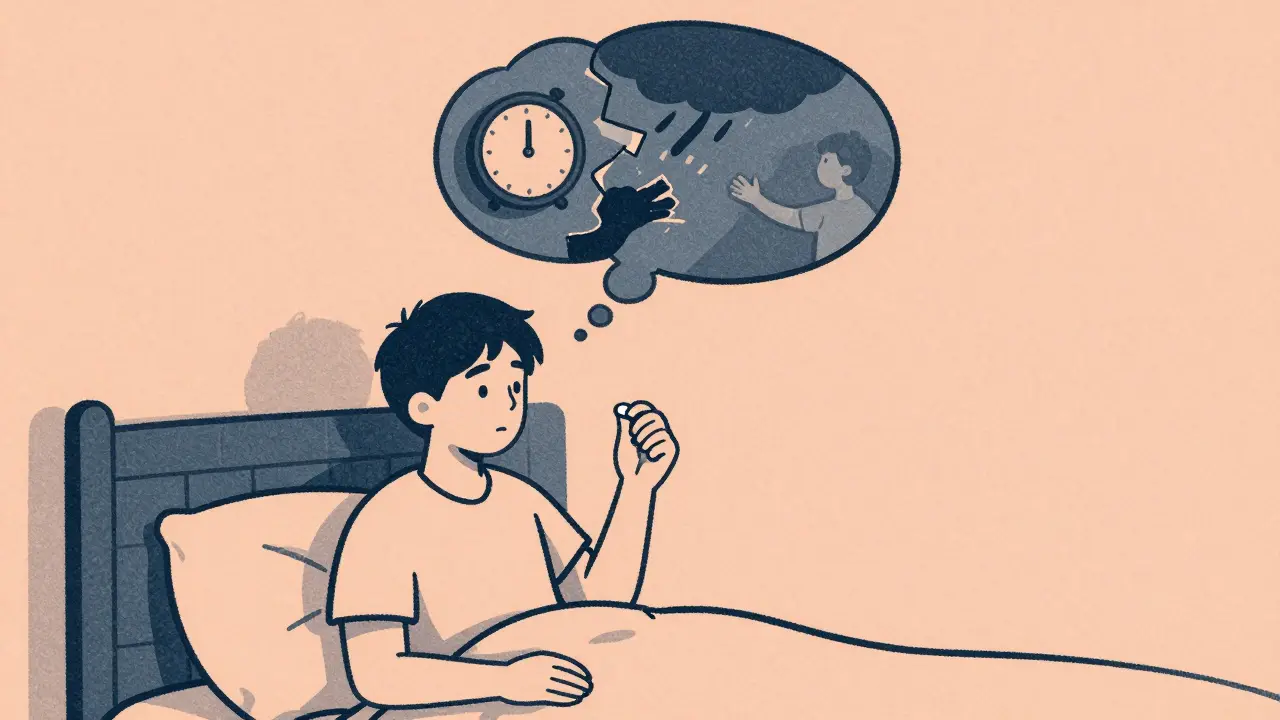
When you start taking an antidepressant, your doctor probably tells you it might take weeks to feel better. But there’s something they might not mention upfront - at least not clearly - that could change everything: antidepressant use can, in rare cases, increase the risk of suicidal thoughts, especially in the first few weeks. This isn’t speculation. It’s a federal warning, printed in bold black letters at the very top of every prescription label. It’s called the Black Box Warning. And it’s been around for over 20 years - but most people still don’t understand what it really says, or what it doesn’t say.
What Is the Black Box Warning?
The U.S. Food and Drug Administration (FDA) first issued the Black Box Warning for antidepressants in October 2004. It was the strongest safety alert they could give short of pulling a drug off the market. The warning was based on a review of 24 clinical trials involving over 4,400 children and teens with depression, anxiety, or OCD. In those studies, about 4% of kids on antidepressants had suicidal thoughts or behaviors - twice the rate of those on placebo. No one died. But the increase was real, consistent, and alarming enough to trigger a nationwide alert.
By 2006, the warning was expanded to include young adults up to age 24. It applies to nearly every antidepressant on the market - from fluoxetine (Prozac) and sertraline (Zoloft) to venlafaxine (Effexor) and bupropion (Wellbutrin). The warning doesn’t say antidepressants cause suicide. It says they may increase the risk of suicidal thinking and behavior - especially early in treatment.
The warning appears in bold, boxed text at the start of every drug’s prescribing information. It’s not hidden. It’s not optional. Pharmacies are legally required to hand out a Patient Medication Guide with every new prescription. It spells out the risk in plain language: "Children, adolescents, and young adults taking antidepressants may be at increased risk of suicidal thinking and behavior."
Why Does This Happen?
It’s not because antidepressants make people want to die. It’s because they can wake people up - too fast.
Depression often leaves people too exhausted, numb, or hopeless to act - even to harm themselves. When an antidepressant starts working, energy and motivation return before mood fully lifts. That’s when someone who was too lethargic to act suddenly has the drive to follow through on a suicidal plan. It’s not the drug creating the thought. It’s the drug giving the person the ability to act on a thought that was already there.
This is why the risk is highest in the first 1 to 4 weeks after starting treatment - or after a dose increase. It’s also why the warning focuses on young people. Their brains are still developing. Their emotional regulation is less stable. And they’re more likely to be in the early stages of treatment, when this transitional phase hits hardest.
The Unintended Consequences
Here’s the twist: the warning may have saved some lives - but cost others.
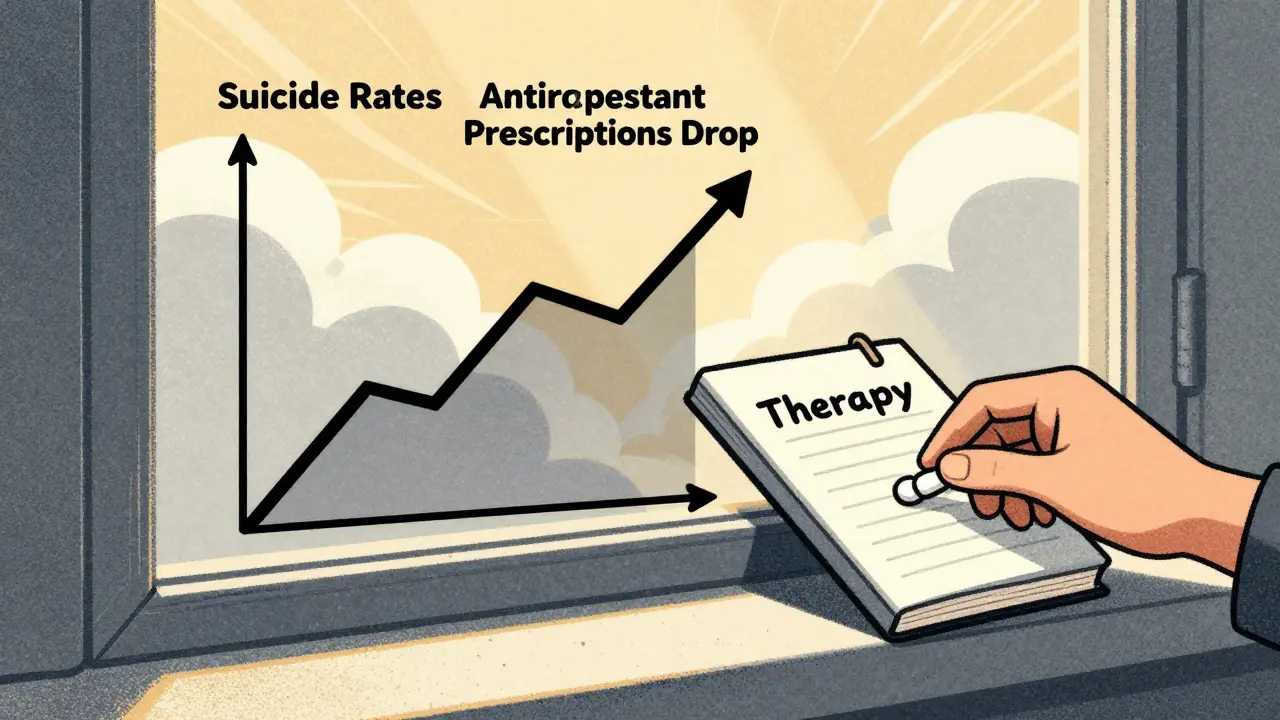
In the two years after the warning went into effect, antidepressant prescriptions for teens dropped by 22.3%. Visits to mental health professionals fell by 17.1%. Diagnoses of depression dropped by nearly 20%. At the same time, emergency room visits for drug poisonings - many of them intentional - jumped by 28.6%. Suicide deaths among young people rose by nearly 15% between 2003 and 2005.
Why? Because fear worked. Parents, doctors, and patients became terrified of antidepressants. Some stopped them. Some refused to start them. Some switched to herbal supplements, therapy alone, or nothing at all. But untreated depression is deadly. In fact, the lifetime risk of suicide for someone with major depression is about 15% - far higher than the 1-2% increase in risk the FDA warning identified.
A 2023 study in Health Affairs analyzed 15 years of data and concluded: the warning likely caused more harm than good. Fewer prescriptions meant fewer people getting help. More people turned to dangerous alternatives. More overdoses. More deaths.
Are Some Antidepressants Safer Than Others?
Yes - and it matters.
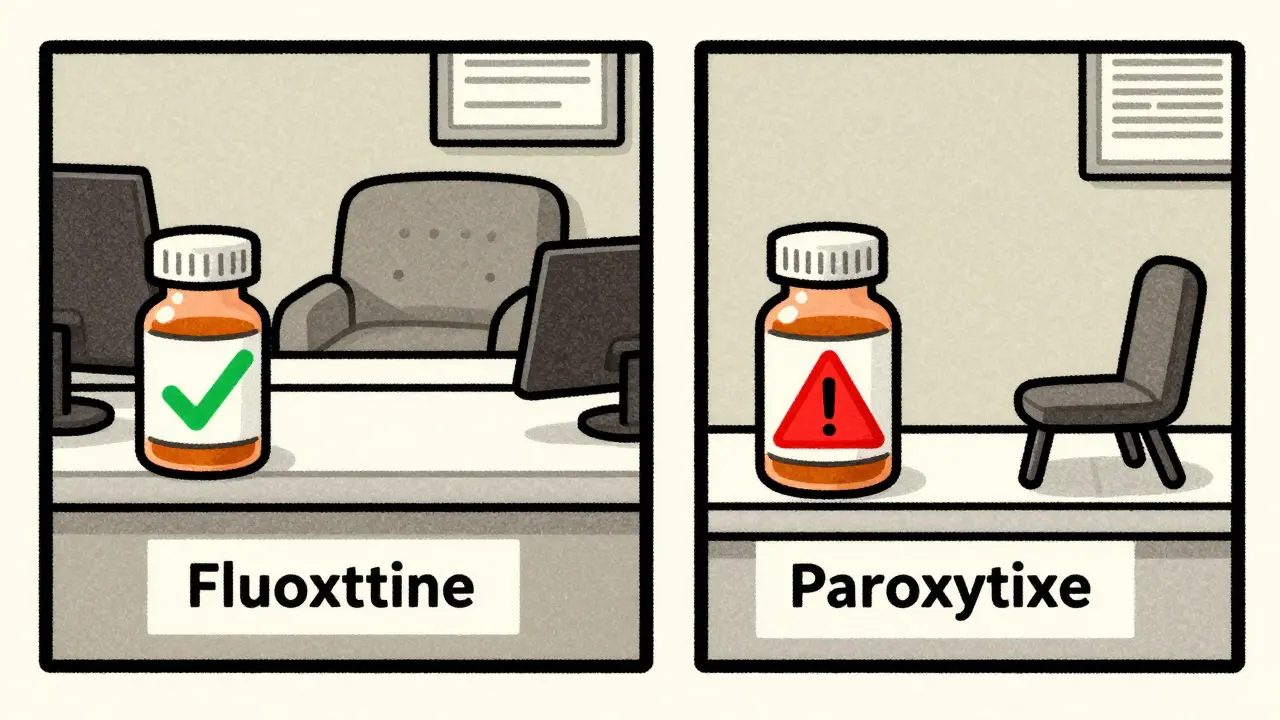
The original FDA warning applied to all antidepressants as a class. But newer research shows the risk isn’t equal across all drugs. A 2021 meta-analysis in JAMA Psychiatry found that fluoxetine (Prozac) and sertraline (Zoloft) had the lowest risk of increasing suicidality in young people. Paroxetine (Paxil), on the other hand, showed a higher risk. Fluvoxamine (Luvox) was also linked to lower risk in OCD treatment.
This is why the American College of Neuropsychopharmacology now recommends choosing antidepressants based on individual risk profiles - not just symptoms. For teens, fluoxetine is often the first choice. For young adults, sertraline is frequently preferred. Avoiding paroxetine in younger patients is now standard practice.
What Should You Do?
If you or someone you care about is starting an antidepressant:
- Expect a rocky first few weeks. Mood may dip before it lifts. Energy may spike before emotions catch up. This is normal - but it needs watching.
- Watch for warning signs. Increased agitation, panic attacks, insomnia, rage, or sudden talk of death or self-harm are red flags. Don’t wait for a crisis.
- Stay in contact with your provider. The first 30 days are critical. Weekly check-ins are not overkill - they’re essential. Most doctors will schedule follow-ups within 1-2 weeks of starting treatment.
- Don’t stop cold turkey. Abruptly quitting can cause withdrawal, worsen depression, or trigger suicidal thoughts. Always talk to your doctor first.
- Combine medication with therapy. Studies consistently show that combining antidepressants with cognitive behavioral therapy (CBT) reduces suicide risk more than either treatment alone.
Is the Warning Still Valid?
The FDA reviewed the evidence again in 2022. They kept the warning - but updated the language to better reflect the risk-benefit balance. The new version now says: "The benefits of antidepressants may outweigh the risks for many patients, especially those with moderate to severe depression."
But the debate isn’t over. Twelve out of fifteen major studies published between 2015 and 2023 found the warning caused more harm than good. Experts now argue that a blanket warning for all antidepressants is outdated. What’s needed is a targeted, drug-specific alert - one that tells patients: "Fluoxetine and sertraline have the lowest risk. Paroxetine carries higher risk. Monitor closely in the first month."
For now, the warning remains. But its future is uncertain. Many researchers believe it will be replaced by a more nuanced, personalized approach - one that doesn’t scare people away from treatment, but guides them through it safely.
What If You’re Afraid to Take Them?
It’s okay to be scared. But don’t let fear make the decision for you.
Depression kills. Antidepressants - when used correctly - save lives. The risk of suicide from untreated depression is far greater than the risk from the medication. That’s not a guess. It’s backed by decades of data.
If you’re hesitant, talk to your doctor. Ask: "Which antidepressant do you recommend, and why? What signs should I watch for? How often should we check in?" A good provider won’t brush off your concerns. They’ll walk you through the evidence.
And remember: the Black Box Warning isn’t a reason to avoid treatment. It’s a reason to start treatment the right way - with awareness, monitoring, and support.
Do antidepressants cause suicide?
No, antidepressants do not cause suicide. They may increase the risk of suicidal thoughts or behaviors in a small number of people - especially children, teens, and young adults - during the first few weeks of treatment. This is not because the drug makes someone want to die, but because it can restore energy before mood improves, allowing someone who was too depressed to act to now follow through on a pre-existing plan. The risk is real but rare, and closely monitored.
Which antidepressants have the highest suicide risk?
Studies suggest paroxetine (Paxil) carries a higher risk of increasing suicidal thoughts in young people compared to other SSRIs. Fluoxetine (Prozac) and sertraline (Zoloft) have consistently shown the lowest risk and are often recommended as first-line treatments for teens and young adults. Bupropion (Wellbutrin) and venlafaxine (Effexor) have mixed data, but are not typically first choices for younger patients due to less safety data.
Can therapy alone replace antidepressants for suicide risk reduction?
Cognitive behavioral therapy (CBT) and other forms of talk therapy are highly effective for depression and can reduce suicide risk. For mild to moderate depression, therapy alone may be enough. But for moderate to severe depression - especially when suicidal thoughts are present - combining therapy with an antidepressant is more effective than either alone. The American Psychiatric Association recommends medication for severe cases, with therapy as a critical complement.
Why was the warning expanded to age 24?
In 2006, the FDA reviewed additional data from clinical trials that included young adults up to age 24. While the original 2004 warning focused on children and teens, the expanded data showed a similar pattern of increased suicidality in this older group. The risk was smaller than in teens, but still statistically significant. The FDA concluded that young adults under 25 needed the same level of monitoring and caution.
Has the Black Box Warning led to fewer people getting help?
Yes. After the warning was issued, antidepressant prescriptions for youth dropped by over 20%. Visits to mental health providers fell by 17%. Emergency visits for drug overdoses rose by nearly 30%. These shifts suggest many people avoided treatment out of fear - and that avoidance may have contributed to more deaths. A 2023 study concluded the warning likely caused more harm than benefit overall, due to reduced access to care.
Comments
Dean Jones
Look, I get the FDA warning. But let’s be real-this whole black box thing feels like a sledgehammer to a glass window. Yeah, some kids get a spike in energy before mood lifts. But that’s not a bug, it’s a feature of neurochemistry. The real tragedy isn’t the warning-it’s how doctors stopped prescribing because they got scared. I’ve seen too many teens go from ‘I can’t get out of bed’ to ‘I can’t get out of bed… and now I’m not getting help.’ The data’s clear: when prescriptions dropped, suicides went up. We’re trading a small, transient risk for a guaranteed, deadly one. Maybe we need better education, not fear-mongering labels.
And honestly? If we’re gonna slap a black box on every antidepressant, we should also slap one on ‘do nothing’ and ‘wait it out.’ Because that’s what a lot of parents are choosing now. And that’s the real poison.
March 4, 2026 AT 13:04
Milad Jawabra
THIS. RIGHT HERE. 🤬
They warn you about the meds but don’t warn you about NOT taking them. It’s like putting a sign on a car that says ‘this might explode if you drive over 30mph’ but ignoring the fact that the road is covered in ice and you’re gonna crash anyway if you don’t move. Depression doesn’t care if you’re ‘scared.’ It just waits. And when it gets you… it doesn’t ask if you’re ready.
My cousin started Zoloft. First week? He was a zombie. Second week? He cried for 3 hours straight. Third week? He laughed. Real laugh. For the first time in 2 years. That’s the magic. Don’t let fear rob you of that.
March 5, 2026 AT 12:56
Helen Brown
They say antidepressants increase suicide risk but never say why. I think it's because the government wants people to stay sick so they keep buying pills. Big Pharma owns the FDA. I've read blogs about this. It's all a scam.
March 6, 2026 AT 04:56
Richard Elric5111
One must interrogate the epistemological foundations upon which the Black Box Warning rests. Is the statistical correlation between antidepressant administration and emergent suicidal ideation causally linked, or merely a temporal confluence? The FDA’s reliance on aggregate clinical trial data-devoid of individual phenomenological context-represents a reductive scientism that pathologizes human affective flux. To reduce existential suffering to a pharmacological variable is to commit a category error of monumental proportions. The soul, after all, cannot be calibrated by a double-blind trial.
March 6, 2026 AT 16:30
Mike Dubes
Hey, I’m a nurse. Been working psych for 12 years. I’ve seen this play out a hundred times. The first 2 weeks? People get restless, jittery, sometimes angry. They say stuff like ‘I don’t even care anymore’ or ‘I just want to sleep forever.’ That’s not suicide risk-that’s the brain recalibrating. The key is follow-up. I tell every new patient: ‘If you feel like you’re falling apart in the first week, call me. Don’t wait. Don’t suffer silently.’
And for real-fluoxetine and sertraline? Low risk. Paroxetine? Avoid like the plague in teens. I’ve had 3 kids go into ER after starting Paxil. Zero after starting Zoloft. It’s not magic. It’s science. And we’re ignoring it because we’re scared to talk about it.
March 8, 2026 AT 13:47
marjorie arsenault
I’m a mom of a 17-year-old who started Prozac last year. I was terrified. But we did the weekly check-ins. We talked every day. We added therapy. And now? He’s sleeping. He’s laughing. He’s talking about college. I don’t care what the label says. What matters is what happened in real life. He’s alive. He’s here. And that’s worth every scary week.
To anyone scared: you’re not alone. Talk to your doctor. Ask for Zoloft or Prozac. Don’t skip therapy. And don’t give up on hope. It’s coming. I promise.
March 9, 2026 AT 21:06
Stephen Vassilev
Have you considered that the Black Box Warning was not issued to protect patients-but to shield pharmaceutical corporations from liability? The FDA’s own internal memos from 2003 reveal that the warning was drafted under pressure from lobbyists who feared class-action lawsuits. Furthermore, the 4% statistic excludes deaths. And yet, the media spun it as ‘antidepressants cause suicide.’ The truth? The FDA knew the risk was minimal. But they needed a scapegoat. And now, thousands of young people are dying-not from medication-but from the fear they were taught to feel.
March 11, 2026 AT 19:10
Ethan Zeeb
There’s a reason this warning exists. And it’s not because Big Pharma is evil. It’s because kids are vulnerable. Their brains are still wiring. Their emotions are volatile. And when you give them a drug that wakes them up before their coping skills catch up? That’s dangerous. I’m not saying don’t use meds. I’m saying: monitor. Check in. Don’t assume it’s ‘just a phase.’
I’ve lost two patients in 8 years. Both were 19. Both started meds. Both stopped reporting symptoms. Both died within 17 days. We didn’t catch the warning signs. That’s on us. Not the drug. Not the FDA. Us.
March 13, 2026 AT 12:11
Betsy Silverman
I’m a Filipino-American therapist. In my community, mental health is still taboo. Many families believe depression is ‘laziness’ or ‘spiritual weakness.’ When the Black Box Warning came out? It made things worse. Parents saw the warning and said, ‘See? I told you meds are dangerous.’ So they stopped therapy. They stopped talking. And the silence? That’s what kills.
We need to reframe this-not as a warning, but as a roadmap. ‘Here’s what to expect. Here’s how to stay safe. Here’s how to call for help.’ That’s what works. Not fear. Not boxes. Just honest talk.
March 14, 2026 AT 00:58
Mariah Carle
Is it possible that the rise in teen suicide isn’t because of untreated depression… but because of social media? The algorithm doesn’t care if you’re depressed. It feeds you more pain. And then we blame the pills? Maybe we’re looking at the wrong enemy. Maybe the real risk isn’t Zoloft-it’s TikTok. The pills help you feel again. The feed makes you wish you didn’t.
March 16, 2026 AT 00:21
Deborah Dennis
Ugh. Another one of these ‘meds are fine’ posts. You people are so naive. Did you read the full FDA report? They found 14 deaths linked to antidepressants in those trials. They just didn’t call them ‘suicides.’ Because then they’d have to recall the drugs. And that would cost billions. Don’t be fooled. This isn’t science. It’s corporate PR dressed up in lab coats.
March 16, 2026 AT 15:48
Jessica Chaloux
I’ve been on 5 different antidepressants. I’ve tried therapy. I’ve done CBT. I’ve journaled. I’ve meditated. I’ve prayed. Nothing worked until I found the right one. And yes, the first week was hell. I cried all night. I called my mom at 3am. I thought I was dying. But I didn’t quit. And now? I’m stable. I have a job. I have friends. I have a dog. I’m alive. So if you’re scared? I get it. But don’t quit. Just find your person. Your doctor. Your therapist. Your friend. And tell them: ‘I’m scared. Help me.’ You’re not alone.
March 18, 2026 AT 05:48
Justin Rodriguez
As someone who’s been on antidepressants for 11 years, I want to say this: the Black Box Warning is real, but it’s incomplete. The real danger isn’t the drug-it’s the silence around it. No one told me what to expect. No one said, ‘You might feel worse before you feel better.’ I thought I was failing. I thought I was broken. I almost quit. I’m glad I didn’t.
If you’re starting now? Listen: it’s okay to feel like crap. It’s okay to be scared. But don’t stop. Call your doctor. Tell them everything. Even the ugly stuff. That’s how you stay safe.
March 20, 2026 AT 00:08