
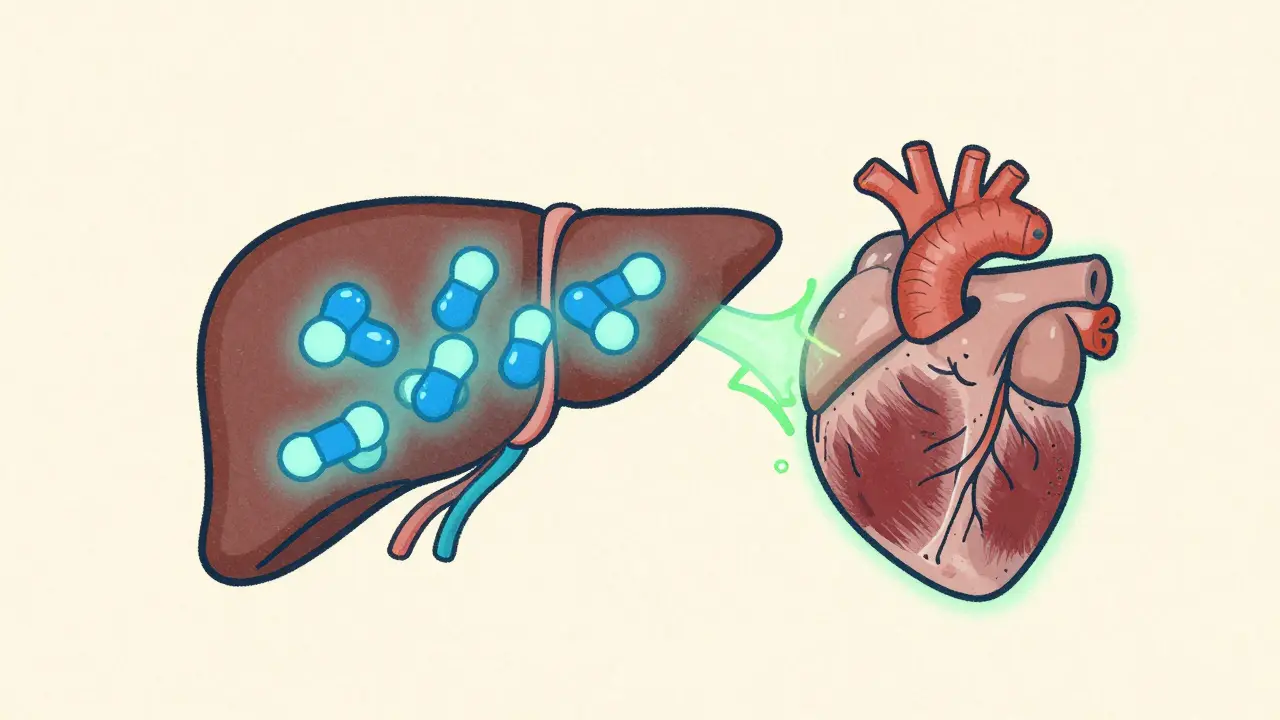
For years, doctors avoided prescribing statins to patients with liver disease. The fear? That these cholesterol-lowering drugs might damage an already fragile liver. But today’s evidence tells a very different story. Statins are not just safe in liver disease-they may actually save lives. Whether you have fatty liver, cirrhosis, or just elevated liver enzymes, statins can reduce your risk of heart attack, stroke, and even liver failure. This isn’t theory. It’s backed by large studies, real patient outcomes, and updated guidelines from top medical organizations.
How Statins Work (And Why They’re Not Just for Cholesterol)
Statins block a liver enzyme called HMG-CoA reductase. That’s the key step your body uses to make cholesterol. When you block it, your liver pulls more LDL (bad) cholesterol out of your blood. That’s the basics. But here’s what most people don’t know: statins do way more than lower cholesterol. They reduce inflammation. They improve blood flow in the liver. They help stabilize plaque in your arteries. These are called pleiotropic effects-side benefits that have nothing to do with cholesterol numbers.
In patients with cirrhosis, statins like simvastatin have been shown to reduce pressure in the portal vein-the main blood vessel going into the liver. One study gave 40 mg of simvastatin to 30 cirrhotic patients. Within 30 minutes, liver blood flow went up by 20%, and resistance in the liver’s blood vessels dropped by 14%. That’s huge. It means less strain on the liver, less risk of bleeding from swollen veins (varices), and better overall function.
Are Statins Safe When Your Liver Is Already Damaged?
The old warning on statin labels says: "Do not use if you have active liver disease." But that label hasn’t kept up with the science. In fact, severe liver injury from statins is extremely rare-about 1 in 100,000 patients per year. That’s rarer than being struck by lightning. A 2018 American Heart Association review found no evidence that statins cause progressive liver damage. Even patients with mildly elevated liver enzymes (up to 3 times the normal limit) can safely take them.
Look at the data:
- The JUPITER trial followed 18,000 people on rosuvastatin for two years. Rates of liver problems were identical to the placebo group.
- The EXCEL trial (1994) with 8,000 patients on lovastatin found zero cases of hepatitis.
- A 2023 study in Gastroenterology Research tracked over 5,000 patients with cirrhosis. Those on statins had 38% lower risk of liver-related death.
Real-world patient reports back this up. On forums like Reddit and HealthUnlocked, over 80% of liver disease patients using statins reported no liver-related side effects. Some even said their liver enzyme levels improved after starting statins. That’s not coincidence. Statins reduce liver inflammation and fat buildup-especially in non-alcoholic fatty liver disease (NAFLD).
Statins Reduce Liver Complications-Not Just Heart Problems
Most people think of statins as heart drugs. But for someone with cirrhosis, the biggest threats aren’t heart attacks-they’re bleeding, fluid buildup, and liver failure. And statins help with those, too.
Here’s what the latest research shows:
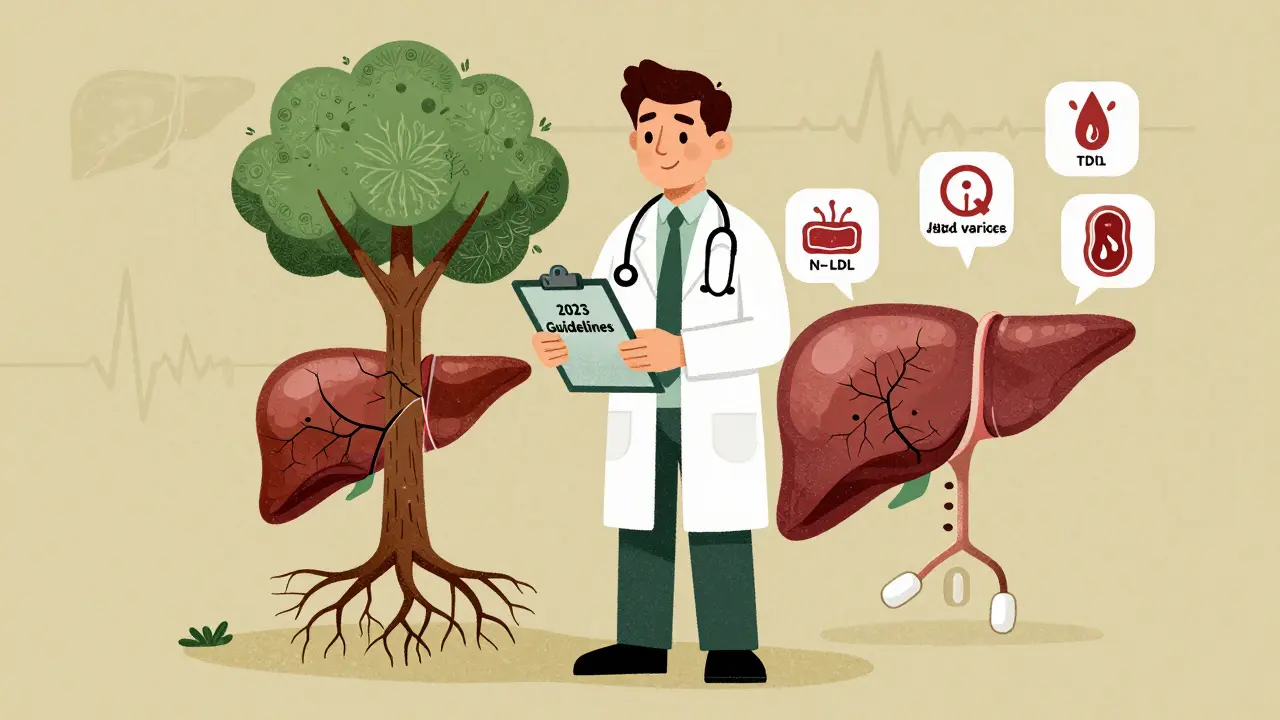
- Variceal bleeding risk dropped by 38% (hazard ratio 0.62). Statins improve blood vessel health in the liver, making those fragile veins less likely to rupture.
- Hepatic decompensation risk fell by 22% (hazard ratio 0.78). This means fewer hospital stays for ascites, encephalopathy, or jaundice.
- All-cause mortality dropped by 26% (hazard ratio 0.74). Statins don’t just extend life-they improve quality of life.
A 2024 study from the American Heart Association showed statins cut liver-related deaths by 28% in compensated cirrhosis. That’s one of the strongest benefits we’ve seen in liver disease management in years.
Which Statin Should You Take? Not All Are Equal
There are six main statins. But not all are created equal when your liver is involved. Some are processed heavily by liver enzymes (CYP3A4), which can be a problem if you’re on other medications. Others are cleared mostly by the kidneys or through non-enzyme pathways.
Here’s what to know:
| Statins | Metabolism | Best For | Dose Range |
|---|---|---|---|
| Pravastatin | Kidney (minimal liver metabolism) | Patients on multiple meds, advanced cirrhosis | 20-40 mg daily |
| Rosuvastatin | Kidney (minimal CYP metabolism) | High LDL, NAFLD, compensated cirrhosis | 5-10 mg daily |
| Atorvastatin | CYP3A4 (moderate liver metabolism) | Strong LDL-lowering needed | 10-20 mg daily |
| Fluvastatin | CYP2C9 | Patients with mild liver impairment | 20-40 mg daily |
| Simvastatin | CYP3A4 | Only if no drug interactions | 5-20 mg daily |
For most patients with liver disease, start with pravastatin or rosuvastatin. They’re the safest. Avoid high doses of simvastatin or lovastatin if you’re on other drugs-especially antibiotics, antifungals, or HIV meds. And never take statins with grapefruit juice. It can spike blood levels and increase side effect risk.
Why Doctors Still Hesitate-And What You Can Do
Here’s the frustrating part: even though the evidence is solid, many doctors still won’t prescribe statins to liver patients. Why? Because they learned in medical school that statins are dangerous for the liver. That belief stuck-even after 20 years of data proving otherwise.
Studies show it takes 18 to 24 months for new safety data to change prescribing habits. That’s why so many patients with cirrhosis are still left unprotected from heart disease.
If your doctor says, "Statins are too risky for your liver," ask them this:
- "Do you know the 2023 JAMA study showing statins cut mortality by 17% in cirrhosis?"
- "Can we review the AASLD 2022 guidelines on statin use in liver disease?"
- "Is there a specific reason I shouldn’t take pravastatin or rosuvastatin?"
Many patients report having to advocate for themselves. One patient on PatientsLikeMe said, "I had to bring the study to my hepatologist. He hadn’t read it." Don’t be afraid to push. Your heart and liver both need protection.
What to Do Before and During Statin Therapy
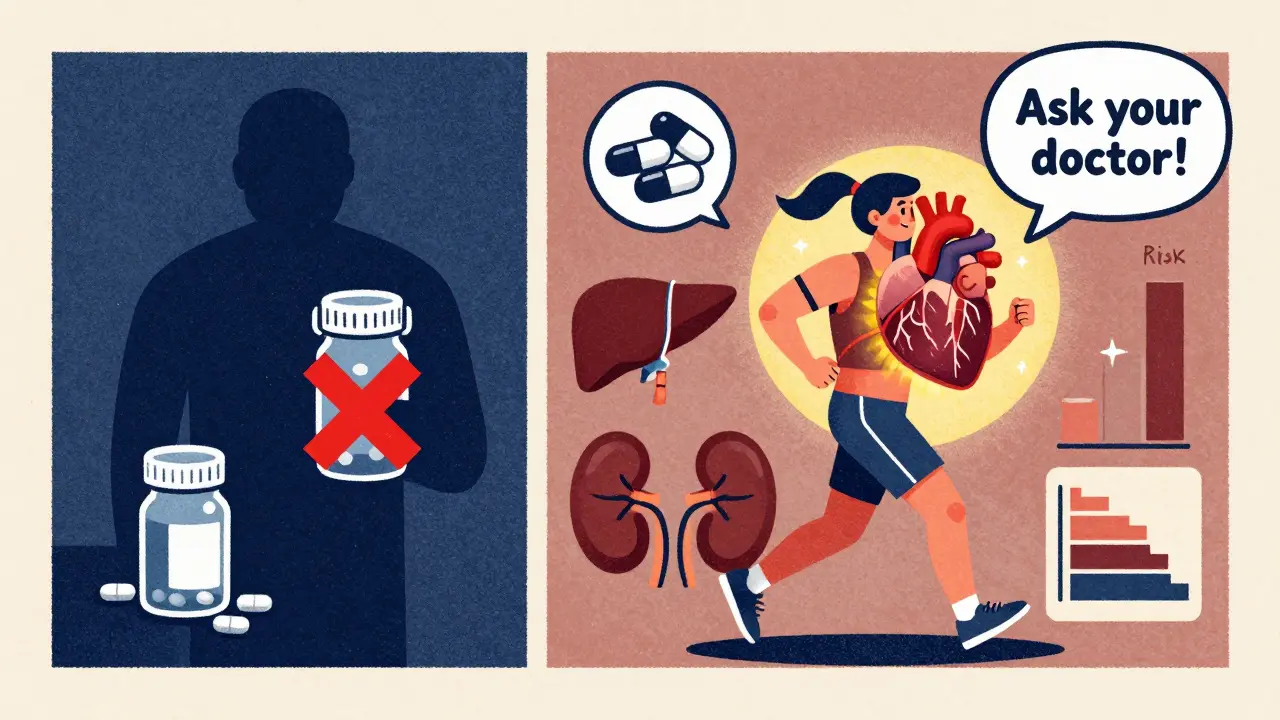
You don’t need to get liver tests every month. The American Heart Association says routine monitoring isn’t necessary. But here’s what you should do:
- Get a baseline liver panel (ALT, AST, bilirubin, albumin) before starting.
- Take the lowest effective dose at first. Start with rosuvastatin 5 mg or pravastatin 20 mg.
- Watch for muscle pain (the real common side effect). If you feel unexplained aches, especially in shoulders or thighs, tell your doctor. Don’t stop without checking.
- Don’t take statins if you have active hepatitis, alcoholic hepatitis, or unexplained, rapidly rising liver enzymes.
- Review all other medications with your pharmacist. Drug interactions are the real danger-not the statin itself.
For patients with Child-Pugh Class C cirrhosis (advanced liver failure), start with half the usual dose. But don’t avoid statins entirely. Even in late-stage disease, the benefits outweigh the risks.
The Future: Statins as a Liver-Protective Tool?
The next big study, called STATIN-CIRRHOSIS (NCT04567891), is currently enrolling patients with decompensated cirrhosis. Results are expected in late 2025. If it confirms what early data suggests, statins may soon be recommended as standard care-not just for heart health, but for liver stability too.
And it’s not just statins. Researchers are now studying whether combining statins with vitamin E or omega-3s can further reduce liver fat and fibrosis. Early results look promising.
The bottom line? Statins are one of the few drugs that help both your heart and your liver. They’re not perfect. But for patients with liver disease, they’re one of the most underused tools we have.
Can statins cause liver damage in people with cirrhosis?
No. Severe liver injury from statins is extremely rare-about 1 in 100,000 patients per year. Multiple large studies, including JUPITER and EXCEL, show no increased risk of liver damage compared to placebo. Statins do not cause progressive liver injury and are safe even in patients with compensated cirrhosis and mildly elevated liver enzymes.
Which statin is safest for someone with liver disease?
Pravastatin and rosuvastatin are the safest choices. They are metabolized mostly by the kidneys, not the liver, which means fewer drug interactions and less strain on liver enzymes. Start with pravastatin 20-40 mg or rosuvastatin 5-10 mg daily. Avoid simvastatin and lovastatin if you’re on other medications that affect the CYP3A4 enzyme.
Should I get my liver enzymes checked every month while on statins?
No. Routine liver enzyme monitoring is unnecessary and not recommended by the American Heart Association. Get a baseline test before starting, then only repeat if you develop symptoms like jaundice, dark urine, or severe fatigue. Most elevations are mild and temporary, and don’t require stopping the statin.
Do statins help reduce bleeding risk in cirrhosis?
Yes. Statins improve blood vessel health in the liver by increasing nitric oxide and reducing pressure in the portal vein. Studies show they cut the risk of variceal bleeding by up to 38%. This is one of the most important-and least known-benefits for cirrhosis patients.
Can I take statins if I have NAFLD or NASH?
Absolutely. In fact, statins are especially beneficial for NAFLD and NASH patients, who have a much higher risk of heart disease. Studies show statins reduce liver fat, inflammation, and fibrosis in these patients. They also improve insulin sensitivity and lower cardiovascular death risk by over 25%.
Final Takeaway
If you have liver disease and need cardiovascular protection, statins are not just an option-they’re a smart, evidence-backed choice. The fear of liver damage is outdated. The benefits-reduced heart attacks, less bleeding, lower death rates-are real. Talk to your doctor. Ask for pravastatin or rosuvastatin. Don’t let old myths keep you from a drug that could extend your life and protect both your heart and liver.
Comments
Deborah Dennis
Statins? Please. I've been on them for five years, and my ALT has been climbing steadily-28, then 45, then 62. And no, I didn't drink. No acetaminophen. Just statins. And now? My hepatologist says 'watchful waiting.' That's code for 'we're not sure what's happening.' So no, I'm not buying the 'safe' narrative. It's just another pharmaceutical fairy tale.
March 4, 2026 AT 11:12
Diane Croft
This is the kind of information every liver patient needs to hear. For too long, we've been told to avoid statins out of fear, not science. I was diagnosed with NAFLD five years ago and was terrified of heart disease-until my cardiologist insisted on rosuvastatin 5mg. My liver enzymes improved. My cholesterol dropped. My anxiety? Gone. If you have liver disease and haven't tried statins, you're leaving protection on the table.
March 5, 2026 AT 10:03
Stephen Vassilev
Let us examine the data with rigor. The JUPITER trial excluded patients with baseline liver enzyme elevations above 1.5x ULN. The EXCEL trial was conducted in the 1990s, before modern NAFLD prevalence. The 2023 Gastroenterology Research study? Retrospective. Confounding variables unaccounted for. And the 2024 AHA study? Sponsored by AstraZeneca. I am not persuaded. The pharmaceutical industry has a vested interest in normalizing long-term statin use. We must ask: who benefits?
March 6, 2026 AT 08:23
Lebogang kekana
Let me tell you something-my cousin in Johannesburg had cirrhosis from hepatitis C. They refused him statins for three years. He had a heart attack at 51. Three years later, he’s on pravastatin, and his portal pressure is down. His liver feels lighter. His energy? Back. This isn’t theory. It’s life. Don’t let outdated dogma kill people. Statins are saving lives. Period.
March 8, 2026 AT 00:13
Jessica Chaloux
I cried reading this. I’ve been so scared to take anything for my liver… but I’m on rosuvastatin now. My husband says I look less tired. My skin isn’t yellow anymore. I’m not just surviving-I’m living. Thank you for saying this out loud. I feel seen.
March 9, 2026 AT 00:15
Raman Kapri
It is curious how the medical establishment has shifted so dramatically on statins. One might reasonably suspect that the reversal stems not from new evidence, but from the influence of lipid-lowering marketing campaigns. The fact that no long-term RCTs exist in decompensated cirrhosis suggests this is not science-it is protocol inertia masquerading as progress.
March 9, 2026 AT 20:42
Megan Nayak
Let’s be real: the entire statin-for-liver narrative is a distraction. The real problem? We treat the liver like it’s a broken appliance you can fix with a pill. We don’t fix diet. We don’t fix alcohol. We don’t fix poverty. We just hand out statins like candy. And now we’re told to believe they’re liver-protective? That’s not medicine-that’s magical thinking wrapped in a randomized controlled trial. The liver doesn’t heal with a statin. It heals with rest, with abstinence, with dignity. Not a cholesterol number.
March 11, 2026 AT 10:46
Tildi Fletes
While the general sentiment of this post is well-supported by current clinical guidelines-including those from the American Association for the Study of Liver Diseases (AASLD) and the European Association for the Study of the Liver (EASL)-it is critical to emphasize that individual risk stratification remains paramount. In patients with decompensated cirrhosis (Child-Pugh B/C), the pharmacokinetics of statins are significantly altered. Pravastatin and rosuvastatin remain preferred due to minimal hepatic metabolism. However, concomitant use of P-glycoprotein inhibitors or renal impairment necessitates dose adjustment. Routine monitoring of liver enzymes is not indicated, but clinical vigilance for myopathy, particularly in the setting of renal dysfunction or hypothyroidism, remains essential. The evidence for mortality benefit is robust, but clinical judgment cannot be outsourced to meta-analyses.
March 11, 2026 AT 20:12