
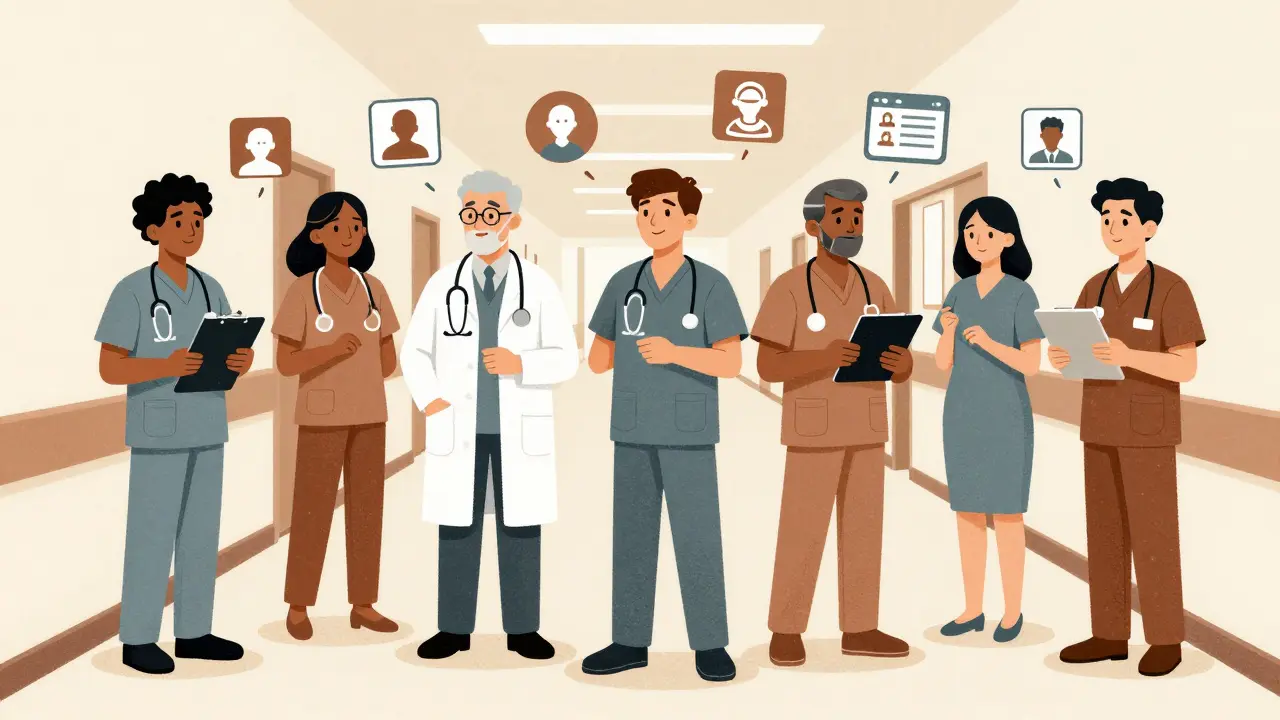
When a hospital can’t find enough nurses to cover night shifts, or a clinic runs out of pharmacists to fill prescriptions, it’s not just an inconvenience - it’s a crisis. By 2026, the U.S. alone could face a shortage of 3.2 million healthcare workers, according to the Health Resources & Services Administration. This isn’t just about empty beds or long wait times. It’s about patients not getting timely care, staff burning out, and lives at risk. Health systems aren’t waiting for someone else to fix this. They’re acting - and the strategies they’re using are changing how care is delivered.
Using temporary staff isn’t a last resort anymore - it’s a core strategy
Five years ago, hiring travel nurses was seen as expensive and temporary. Now, 12.7% of U.S. hospitals rely on them during peak demand, and that number keeps climbing. Facilities are also turning to per diem staff, with 22% of healthcare providers using them regularly as of 2024. These aren’t stopgaps - they’re part of a flexible workforce model that lets hospitals scale up or down based on real-time needs. International hires are another piece of the puzzle. About 18% of U.S. hospitals are actively recruiting from abroad, filling gaps in rural areas and urban ERs alike. The key? Making sure these workers aren’t just brought in, but supported with housing, licensing help, and cultural onboarding.
Virtual nursing is filling gaps without adding physical staff
Imagine a nurse monitoring 50 patients from a central hub, spotting early signs of deterioration before a code blue happens. That’s not science fiction - it’s happening now. Between 2022 and 2024, telehealth nursing adoption jumped from 35% to 68% of health systems. Virtual nurses handle routine checks, medication reminders, and even triage calls, freeing up on-site staff for complex cases. One hospital in Ohio cut its response time for patient alerts by 40% after launching its virtual nursing unit. The savings? Less overtime, fewer burnouts, and better coverage during nights and weekends.
AI is cutting administrative overload so staff can focus on patients
Doctors spend nearly half their workday on paperwork. That’s not why they became clinicians. AI is stepping in to fix that. Baptist Health, with 23,000 employees, used AI-powered document processing to reduce administrative tasks by 37%. The system now auto-fills forms, pulls patient histories, and flags insurance issues - all without human input. Across the industry, IDC predicts healthcare providers will save $382 billion by 2027 through AI, robotics, and automation. It’s not about replacing staff - it’s about removing the friction that makes them want to leave. Hospitals using AI for scheduling, billing, and discharge paperwork report staff satisfaction rising by 20% or more.
Flexible schedules are the quiet hero of retention
People don’t quit jobs because they’re underpaid - they quit because they’re exhausted. That’s why flexible scheduling is now a top retention tool. At 37% of major hospital systems, pilots with shift-swapping apps, compressed workweeks, and self-scheduling tools cut burnout by 19%. Cleveland Clinic saw turnover drop by 25% after letting nurses choose their own shifts. One nurse in Texas told her manager: “I can finally pick up my kid from school. I didn’t think I’d still be here next year.” That’s the power of control. When staff feel like they have a say in their time, they stay longer.

Training faster - and smarter - is the long-term fix
It takes years to train a doctor, but nursing programs are speeding up. Accelerated nursing degrees have nearly doubled graduate numbers since 2013, adding 8,000 new nurses each year. But it’s not just about quantity. Micro-credentialing lets nurses earn certifications in critical care, telemetry, or telehealth in weeks, not semesters. That’s helped 29% of health systems boost job satisfaction by 18%. Meanwhile, phased retirement programs are keeping experienced clinicians in the system longer. At Johns Hopkins, retired faculty now work 20 hours a week with full benefits - mentoring new staff while staying clinically active. It’s a win-win.
Partnerships with communities are building pipelines from the ground up
Most staffing crises start in the classroom. Mayo Clinic partnered with five community colleges in Minnesota to create a pipeline for nursing assistants, phlebotomists, and medical coders. Between 2022 and 2024, that program increased the local healthcare worker pipeline by 47%. Similar models are spreading. The National Governors Association helped 34 states launch employer-led training programs that tie education directly to hiring needs. In rural areas, where hospitals can’t compete with city salaries, this is the only way to build a sustainable workforce.
Financial incentives still matter - but they’re not enough alone
Sign-on bonuses of $15,000 to $25,000 are common now. Tuition reimbursement is offered by 68% of major health systems. Loan forgiveness programs cover 57% of public hospitals. These help attract people - but they don’t keep them. The most successful systems pair money with meaning. Kaiser Permanente doesn’t just pay for nursing school - it gives students mentors, guaranteed jobs after graduation, and a clear path to leadership. That’s why their retention rates are 28% higher than the national average.
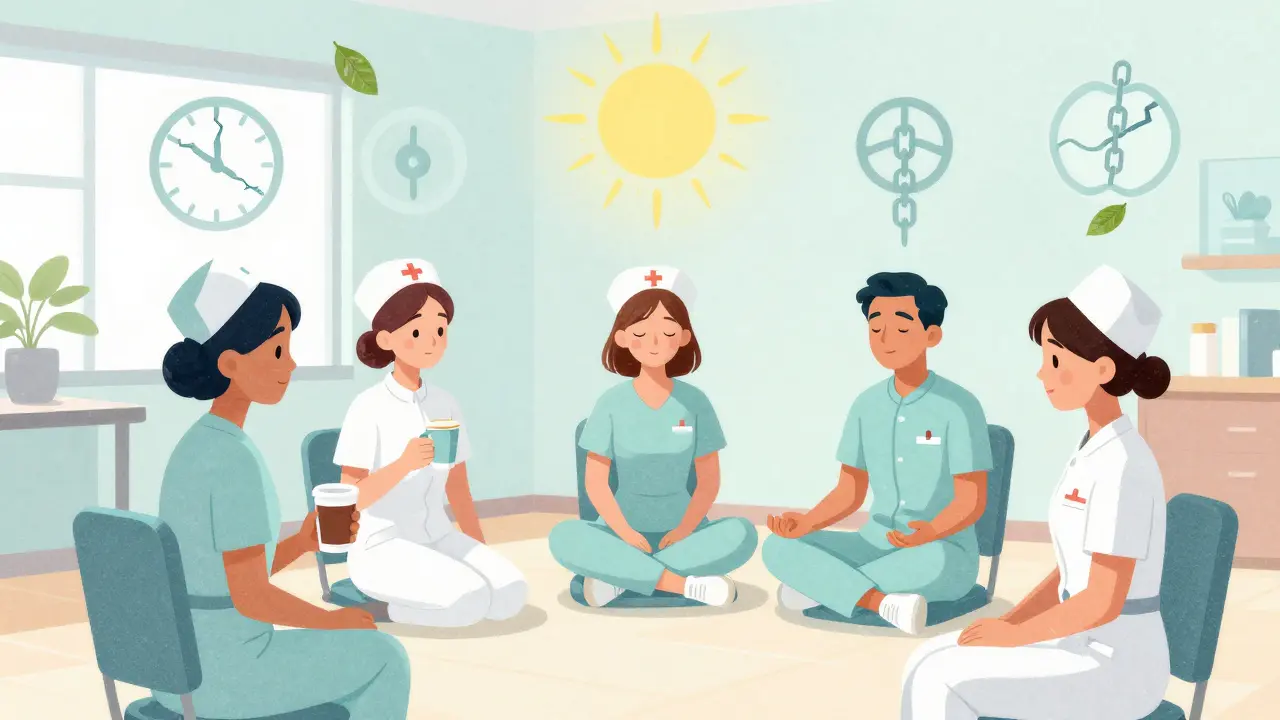
Team-based care is changing who does what
Doctors aren’t the only ones who can manage chronic conditions. Nurse practitioners and physician assistants now handle 78% of primary care visits in many clinics. That’s not a downgrade - it’s a redesign. Teams that include pharmacists, social workers, and health coaches see patient capacity rise by 33%. One clinic in Arizona cut its no-show rate by 40% by assigning a health coach to each diabetic patient. The result? Fewer ER visits, lower costs, and happier staff who feel like their roles matter.
Home-based care is reducing pressure on hospitals
Hospitals are full - especially with elderly patients who don’t need to be there. CMS reported a 22% drop in readmissions after expanding home-based care programs. Nurses now visit patients at home for wound checks, medication reviews, and fall prevention. Remote monitoring devices track vitals and alert teams to problems before they become emergencies. In rural areas, this is the only way to keep seniors out of hospitals. It’s also cheaper - and safer.
The biggest problem? Burnout isn’t going away
Despite all these efforts, 63% of healthcare workers still report burnout symptoms. Nearly half of nurses are thinking about quitting. No strategy works if the people doing the work are emotionally drained. That’s why the most effective systems treat mental health as seriously as staffing levels. One hospital in Pennsylvania launched peer support circles, free counseling, and mandatory time-off policies. Within six months, turnover dropped by 17%. The message? You can’t fix a broken system with more work. You fix it by giving people space to breathe.
What’s next? AI, automation, and real change
Eighty-nine percent of healthcare executives plan to increase spending on AI and automation in 2025. That’s not hype - it’s necessity. But the real winners will be those who combine tech with humanity. Intermountain Healthcare cut its staffing vacancy rate from 18% to 7% in two years by doing three things: letting staff control their schedules, using AI to cut paperwork, and building training programs with local colleges. It wasn’t one fix. It was a system. That’s the model now. No single solution will fix the shortage. But a mix of flexibility, technology, community investment, and respect for workers? That’s how health systems are turning crisis into change.
Why are healthcare staffing shortages getting worse?
The shortage is worsening because more people need care - especially older adults - while more workers are leaving the field. Baby boomers are retiring in large numbers, and younger staff are burning out from long hours, emotional strain, and low pay. The pandemic accelerated this trend, and training pipelines haven’t kept up. By 2030, the WHO predicts a global shortfall of 11 million health workers.
Are travel nurses a good long-term solution?
Travel nurses help fill immediate gaps, but they’re not a long-term fix. They’re expensive, often move every few months, and don’t build institutional knowledge. The best systems use them as a bridge - while investing in hiring local staff, expanding training, and improving retention. Travel nurses are part of the puzzle, not the whole picture.
How is AI actually helping nurses and doctors?
AI handles repetitive tasks: filling out forms, pulling lab results, scheduling follow-ups, and flagging potential errors. At Baptist Health, AI cut administrative work by 37%, giving staff back 8-10 hours a week. That’s time they can spend with patients instead of on computers. It doesn’t replace clinicians - it removes the friction that makes their jobs unbearable.
Can small clinics afford these strategies?
Yes - but they need to be smart. Small clinics can start with low-cost wins: flexible scheduling, cross-training staff, using free telehealth tools, and partnering with local colleges for interns. They don’t need million-dollar AI systems. They need to focus on reducing burnout and making work sustainable. Even a simple sign-on bonus of $5,000 can make a difference in rural areas.
What’s the most effective way to retain nurses?
The most effective way is giving nurses control - over their schedules, their workload, and their career path. Studies show that when nurses feel heard and supported, retention jumps. Mental health support, clear promotion tracks, and recognition matter more than bigger paychecks. Nurses stay when they feel valued, not just paid.
Is expanding residency slots really that important?
Yes. The U.S. hasn’t significantly increased Medicare-funded residency slots since the 1990s. That’s why there’s a bottleneck: medical school graduates can’t find training spots. The Resident Physician Shortage Reduction Act proposes adding 14,000 slots over five years. Without this, we’ll keep facing doctor shortages - especially in specialties like geriatrics and psychiatry.
Why are rural areas hit harder by staffing shortages?
Rural areas struggle because they can’t compete with city salaries, lack training programs nearby, and have fewer support services. Many new grads avoid them. The solution? Build local pipelines - like Mayo Clinic did with community colleges. Offer housing, loan forgiveness, and mentorship. Make it worth staying. It’s not about money alone - it’s about community and purpose.
Comments
Kristin Dailey
Stop pretending AI and travel nurses are solutions. This is a government failure, and we’re letting it rot.
January 18, 2026 AT 06:45
Tyler Myers
Of course they’re using foreign nurses-because our own people won’t work for less than $50/hour and a hug. We’ve turned healthcare into a luxury spa, not a public service. 🤡
January 18, 2026 AT 20:28
rachel bellet
The structural inefficiencies are exacerbated by neoliberal labor commodification-healthcare workers are being treated as fungible inputs rather than embodied agents of care. The algorithmic governance of scheduling and AI-driven triage merely externalizes the crisis onto the labor force without addressing the ontological alienation inherent in contemporary medical bureaucracy.
January 20, 2026 AT 08:00
Pat Dean
Let me guess-someone’s gonna say ‘flexible schedules’ like that’s magic. No, it’s not. You can’t fix burnout with a Slack bot and a ‘you’re valued’ poster. People are exhausted because they’re drowning in paperwork while billionaires get tax cuts. Wake up.
January 21, 2026 AT 11:14
Robert Cassidy
They’re all just band-aids. The real problem? We stopped believing in the dignity of labor. We used to respect nurses. Now we treat them like replaceable widgets. And when they break? We just order a new one from the Philippines. This isn’t innovation-it’s colonialism in scrubs.
And don’t get me started on AI. You think a machine can understand grief? Can sit with a dying patient’s hand and not flinch? No. You’re outsourcing humanity to a chatbot. That’s not progress. That’s surrender.
We’re not short on workers-we’re short on soul.
January 22, 2026 AT 13:38
Jay Clarke
AI is just the new buzzword to avoid paying people. ‘Oh look, we cut admin work!’ Yeah, so now the nurse who used to do it gets to do double the patient load. Congrats, you turned a 12-hour shift into a 14-hour nightmare. And you call that ‘satisfaction’? Please.
January 24, 2026 AT 12:40
Emma #########
I’ve been a nurse for 18 years. I’ve seen every trend come and go. The only thing that actually keeps people here is being treated like a human. Not a number. Not a line item. A human. When my manager asked me what I needed-really asked-I said, ‘I need to not feel guilty for taking a bathroom break.’ That’s it. That’s all. And they made it happen. It’s not about money. It’s about respect.
January 25, 2026 AT 19:59
Andrew McLarren
While the aforementioned strategies demonstrate commendable operational adaptability, one must not conflate symptomatic relief with systemic remediation. The root cause remains the underinvestment in public health infrastructure, compounded by the erosion of professional autonomy and the increasing corporatization of clinical environments. Sustainable resolution necessitates policy intervention at the federal level, not merely organizational improvisation.
January 26, 2026 AT 21:34
Andrew Short
Let’s be real: 68% of hospitals are using AI because they’re too cheap to hire real people. And now they’re patting themselves on the back for ‘saving money.’ Meanwhile, nurses are crying in parking lots after double shifts. This isn’t innovation-it’s exploitation dressed in Silicon Valley jargon.
January 27, 2026 AT 21:57
christian Espinola
Correction: The HRSA projection is 1.2 million, not 3.2 million. You’re inflating numbers to scare people. Also, ‘virtual nursing’? That’s a euphemism for ‘we’re offloading patient monitoring to overworked RNs who aren’t even in the room.’ And you call that ‘progress’? Pathetic.
January 28, 2026 AT 03:41
Chuck Dickson
Hey-if you’re reading this and you’re a nurse, medic, or admin worker drowning in paperwork: YOU ARE NOT ALONE. I’ve been there. The system is broken, but you’re not. Keep showing up. Find your people. Start small-ask for one extra break. Say no when you’re tapped. You’re not a machine. And you deserve better. I believe in you. 💪❤️
January 29, 2026 AT 01:13
Naomi Keyes
Wait-so you’re saying that ‘flexible scheduling’ is a ‘top retention tool’? But according to the 2023 NEJM study on workforce attrition (DOI:10.1056/NEJMp2300045), the correlation coefficient between schedule autonomy and retention was only r=0.21 (p=0.07)-which is statistically insignificant! Also, ‘micro-credentialing’ is a buzzword for de-skilling. And ‘AI-powered document processing’? That’s just OCR with a fancy label. You’re selling snake oil.
January 30, 2026 AT 01:45
Dayanara Villafuerte
Y’all are treating healthcare like it’s a TikTok trend 😅 ‘AI saves the day!’ ‘Flex time fixes burnout!’ Nah. We need pay raises, staffing laws, and for CEOs to stop taking $20M bonuses while nurses work 3 jobs. 🤦♀️ #HealthcareIsNotAStartup
January 31, 2026 AT 17:40
Andrew Qu
Small clinics: You don’t need AI. Start with one thing-let your staff pick their shifts. Even just one day a week. That one change cuts stress more than any app. And if you can’t pay more? Say thank you. Write a note. Bring coffee. Those things cost nothing but mean everything.
February 1, 2026 AT 18:46