

Medication Storage Safety Checker
Answer these 5 questions to see if your medication storage meets safety standards for preventing accidental poisoning in children and pets.
Safety Assessment
Every year, 60,000 children under age 5 end up in emergency rooms because they got into medications they weren’t supposed to. Pets aren’t safe either - dogs and cats are eating human pills, flavored vet meds, and even topical creams meant for skin. And here’s the scary part: most of these incidents aren’t accidents. They’re preventable. You didn’t leave the bottle out on purpose. But if it’s on the nightstand, in the bathroom cabinet, or tucked in a purse on the couch, it’s just one curious moment away from disaster.
Why Your Medicine Cabinet Isn’t Enough
Most people think child-resistant caps and locked cabinets are enough. They’re not. Child-resistant packaging stops about half of kids from opening bottles - and that’s if the cap is even on right. A 2021 study from Nationwide Children’s Hospital found that toddlers as young as 18 months can climb onto chairs, countertops, and even dresser drawers to reach meds. And pets? They’re even better at it. Dogs can chew through plastic vials in under two minutes. Cats? They’ll lick a drop of liquid ivermectin off the floor and be in critical condition within hours.The Real Rules for Safe Storage
The CDC, FDA, and American Academy of Pediatrics all agree: the only reliable way to keep meds away from kids and pets is locked, out-of-reach storage. Not just any lock. Not just any shelf. Here’s what actually works:- Lock it. Use a lockbox, gun safe, or tool chest with a key or combination. Simple latches don’t work. Kids learn to pop them open. Pets chew through them.
- Keep it high. At least 4 feet off the floor - but 5 feet is better. That’s above the reach of most climbers, even with furniture.
- Keep it dry and cool. Most pills degrade if they get damp or too hot. Store them between 68-77°F. Bathroom cabinets? Too humid. Kitchen pantries? Better - but only if they’re not near food.
- Keep the original bottle. Never transfer pills to pill organizers or snack jars. One in three medication errors happen because labels are missing. Kids don’t know what’s what. Pets don’t care. But you need to know exactly what’s inside.
- Separate human and pet meds. This is critical. Flavored dog pills taste like peanut butter or bacon. Human meds often look like candy. Storing them together increases mix-up risk by nearly 5 times. Keep pet meds in a different room - even a different cabinet.
Why Pet Medications Are Especially Dangerous
Vet meds aren’t just risky because they’re tasty. They’re dangerous because they’re made for animals - not people. A single dose of ivermectin meant for a 50-pound dog can kill a toddler. A dab of 5-fluorouracil cream - used for skin cancer in humans - is 100% fatal to cats. And horse dewormer paste? It’s sweetened, packaged like candy, and has killed over 200 dogs since 2018. A 2022 PetMD study tracked 1,200 cases where owners accidentally gave their pets human meds - or their kids got into pet meds. The most common mix-up? Heartworm pills mistaken for children’s vitamins. The most deadly? Liquid ivermectin. Just 5 milliliters contains ten times the toxic dose for a child. And it’s often stored right next to the family’s cough syrup.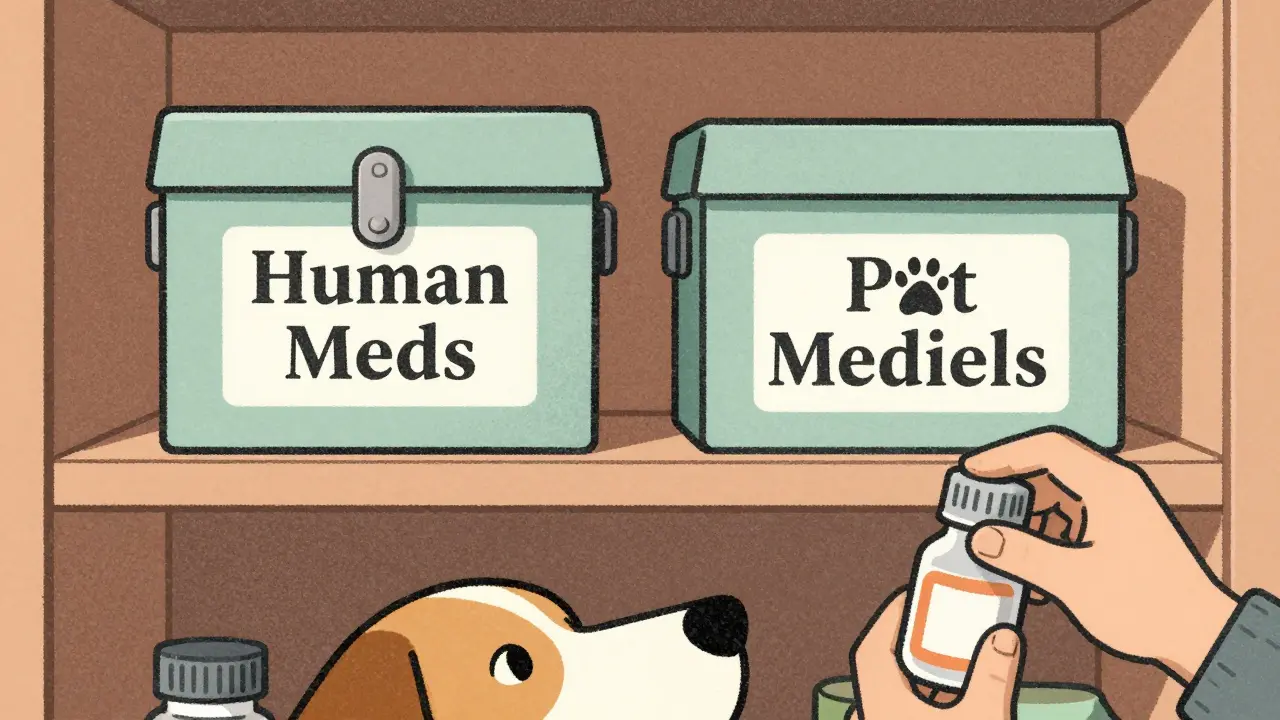
What Works in Real Homes
You don’t need to buy expensive gear. Many families use what they already have:- A small gun safe ($35-$150) on a high shelf - used by 78% of households that report zero incidents.
- An old toolbox with a padlock - sturdy, cheap, and out of sight.
- A wall-mounted lockbox (tested by Consumer Reports) - starts at $24.99 and fits in a closet.
What Doesn’t Work (And Why)
Here are the most common mistakes - and why they fail:- Leaving meds on the nightstand. 68% of parents admit to this. It’s convenient. But so is a child waking up at 3 a.m. and reaching for something shiny.
- Storing pet meds near food bowls. 45% of pet owners do this. That’s like leaving candy next to the cookie jar. Dogs don’t distinguish between breakfast and medicine.
- Flushing old pills. The FDA says don’t do it - it pollutes water. But 70% of people still do. Use a take-back program instead. There are over 11,000 drop-off sites now.
- Using child-resistant caps and calling it done. They’re a backup, not a solution. Kids learn to twist them. Pets bite through them.
Special Cases: Opioids, Topicals, and Elderly Users
Some medications need extra care:- Opioids and controlled substances must be stored in containers certified to resist tools for at least 30 minutes (UL TRTL-30x6). A regular lockbox isn’t enough.
- Topical creams like 5-fluorouracil or permethrin should be kept in a separate locked box - not just a drawer. Even a tiny smear on a child’s skin can cause serious harm.
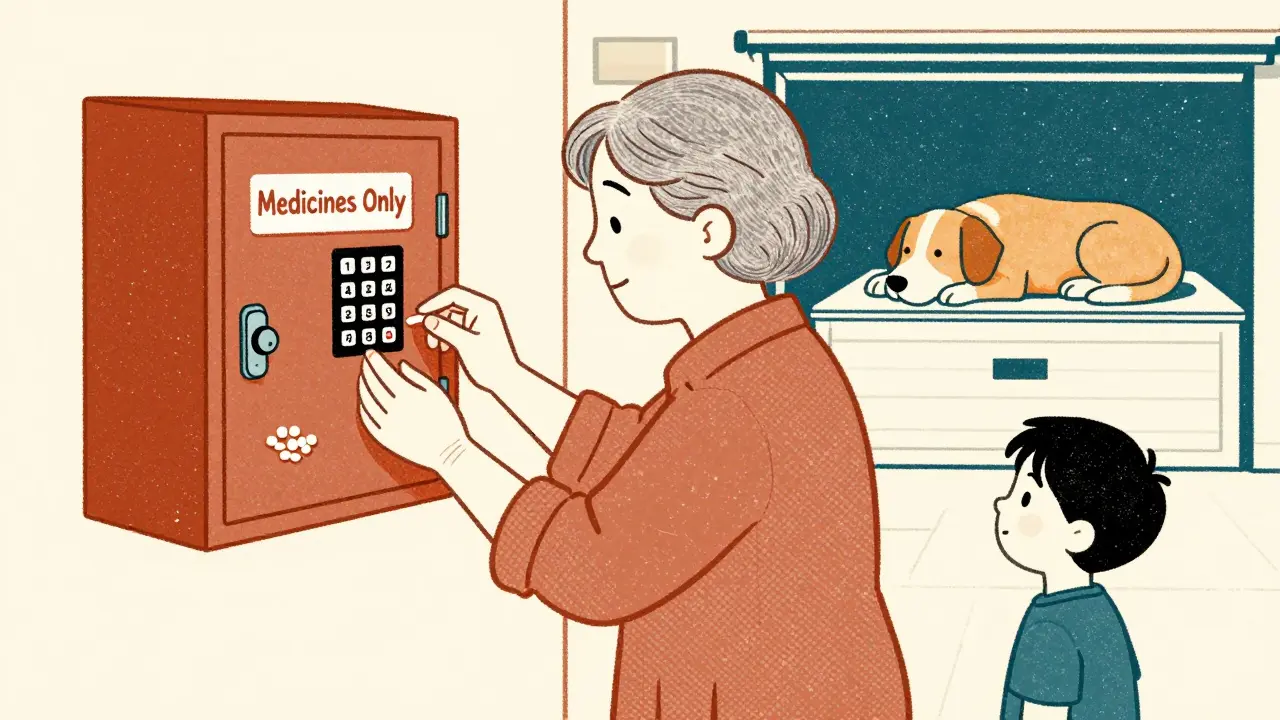
- If you’re older or have arthritis, child-resistant caps can be impossible to open. Solution? Install a lower lockbox with an emergency release - so you can get to your meds fast, but kids can’t.
How to Make This Stick
Changing habits takes time. The CDC says it takes 21 to 30 days of consistent practice to form a new routine. Here’s how to make it automatic:- Do a weekly check. Every Sunday, open your lockbox and count everything. Make sure nothing’s missing or expired.
- Use a visual reminder. Put a sticker on the door of your storage spot. “Medicines Only.”
- Teach everyone in the house. Even babysitters, grandparents, and teens need to know where meds are - and where they’re NOT.
- Don’t wait for a close call. If you’ve never had an incident, that’s good. But don’t assume you’re safe. You’re just lucky so far.
What’s Changing in 2026
New rules are coming. As of May 2023, all new pet medications in the U.S. must have clear pictograms on the label showing where to store them. The American Academy of Pediatrics updated its guidelines in February 2024: human and pet meds should be stored at least 15 feet apart. And by 2026, smart pill dispensers - that lock and alert you if someone tries to open them - will be in 12% of homes. But tech won’t fix bad habits. The CDC says the biggest drop in poisonings will come from people doing the simple things right: locking it up, keeping it high, and keeping it separate.The bottom line? You don’t need a fancy system. You just need to be consistent. One locked box. One rule. One habit. That’s all it takes to keep your child from swallowing a pill they thought was candy. That’s all it takes to keep your dog from licking a drop of vet medicine off the floor. You don’t have to be perfect. But you do have to be sure.
What’s the best place to store medications at home?
The best place is a locked box, at least 4 to 5 feet off the ground, in a dry, cool area like a kitchen pantry or bedroom closet. Avoid bathrooms - humidity ruins pills. Never store meds near food, toys, or pet bowls. Separate human and pet meds by at least 15 feet if possible.
Are child-resistant caps enough to keep kids safe?
No. Child-resistant caps stop about 50-80% of children from opening bottles - but only if they’re properly closed. Toddlers can figure out how to twist them open, especially after seeing adults do it. They also don’t stop pets. Locked storage is the only reliable method.
Can pets really open pill bottles?
Yes. In controlled tests, 65% of dogs opened standard pill vials within two minutes. They use their paws, teeth, or even noses to pop them open. Cats can knock bottles off shelves. Never assume your pet won’t get into meds - assume they will, and lock them up.
Why should I keep pet and human meds separate?
Because they’re dangerously different. Pet meds are often flavored to taste like meat or peanut butter - which kids love. Human meds can look like candy. Mixing them increases the chance of accidental ingestion by nearly 5 times. A single dose of ivermectin meant for a dog can kill a child. Keep them in different rooms if you can.
What should I do with expired or unused medications?
Don’t flush them or throw them in the trash. Use a DEA National Take Back Day drop-off site - there are over 11,000 nationwide. If that’s not available, mix pills with coffee grounds or cat litter, seal them in a bag, and throw them in the trash. Always remove labels first to protect your privacy.
How can I make medication storage easier if I have arthritis or trouble opening bottles?
Install a lower lockbox with an emergency release - something you can open quickly with one hand, but that kids can’t reach. Some lockboxes have push-button or keypad locks. Ask your pharmacist for non-child-resistant caps if needed - they’re allowed for seniors with mobility issues. Always keep your meds accessible to you, but out of reach to others.
Comments
Gregory Clayton
This is why America’s falling apart. You can’t even leave a pill bottle on the nightstand without some bureaucrat telling you to buy a gun safe? My grandma kept her meds in a drawer next to her candy. She lived to 92. Kids these days are just weak. Lock everything? Next they’ll tell us to chain the toilet paper.
January 8, 2026 AT 21:51
Catherine Scutt
Wow. Just… wow. You didn’t mention the fact that 70% of these incidents happen in homes where someone *thinks* they’re being careful. You think a lockbox is the answer? No. The answer is stopping people from hoarding meds like it’s a survivalist stockpile. I’ve seen people keep 6 months’ worth of opioids in a closet. That’s not health - that’s negligence dressed up as ‘precaution.’
January 10, 2026 AT 04:32
Darren McGuff
As a pharmacist for 22 years, I’ve seen this play out too many times. The real tragedy isn’t just the pills - it’s the *lack of awareness*. I had a mother come in last month because her 18-month-old swallowed a fentanyl patch that fell out of her bra. She thought it was just a ‘sticky bandage.’ Locking things up is step one. But we also need to teach people: if it’s not food, don’t assume it’s safe to touch. Even the ‘harmless’ stuff - like topical creams - can be deadly. And pets? They’re not just curious. They’re *smell-driven predators*. That ibuprofen? To them, it’s a treat. Period.
January 10, 2026 AT 15:25
Alicia Hasö
I want to thank you for writing this with such clarity and compassion. This isn’t just about safety - it’s about love. Every parent, every pet owner, every caregiver deserves to know how to protect the ones they cherish. I’ve shared this with my book club, my yoga class, even my neighbor’s babysitter. We’re all guilty of cutting corners. But one small change - like moving meds from the bathroom to a locked box in the bedroom - can mean the difference between a calm Sunday and a nightmare ER visit. You’ve given us the tools. Now let’s use them. Together.
January 12, 2026 AT 10:47
Drew Pearlman
Okay, I’ll admit it - I used to leave my wife’s blood pressure pills on the counter because I forgot to put them back. Then my 3-year-old grabbed one and held it up like a candy. I nearly had a heart attack. Since then, I bought a $27 lockbox from Amazon, put it on the top shelf of our closet, and now I never even think about it. It’s become automatic. Honestly? It’s easier than I thought. The hardest part was deciding which meds to put in there - turns out, everything. Even the fish oil. Kids don’t care if it’s ‘healthy.’ If it’s small and shiny, they’ll try to eat it. And my dog? He once ate a whole bottle of melatonin gummies I left on the coffee table. He slept for 18 hours. I thought he was dead. Don’t wait for that moment. Just lock it. Now.
January 13, 2026 AT 16:06
Ian Long
Some of you are overreacting. Locking up meds is fine, but this post sounds like we’re living in a dystopia where every pill is a bomb. I get it - kids and pets are vulnerable. But let’s not turn our homes into vaults. My sister stores her meds in a locked drawer in her kitchen cabinet - same drawer as the spices. No one’s ever opened it. Her toddler doesn’t even know what a pill is. The real issue isn’t storage - it’s supervision. If you’re leaving your house unattended with meds out, that’s the problem. Not the lack of a gun safe.
January 15, 2026 AT 05:02
Pooja Kumari
I’m from India and I’ve seen this in my family - my uncle kept his diabetes meds next to his chai sugar. His grandson, 4, thought they were candy. He ate five. They rushed him to the hospital. He survived, but his kidneys are damaged now. I cried for days. And my aunt? She kept her cat’s heartworm pills in the same drawer as her vitamins. One day, her 5-year-old daughter swallowed one. The vet said it was lucky the cat’s dose was low. But what if it wasn’t? I don’t care if it’s ‘inconvenient.’ I lock everything now. Even my hand cream. Because I don’t want to be the person who says, ‘I didn’t think it would happen.’ It already did. To us. And it can happen to you. Please. Just lock it.
January 16, 2026 AT 02:03
Jacob Paterson
Oh my god. Are you serious? You’re telling me I need to buy a lockbox because my kid might eat a Tylenol? That’s what we’ve come to? Next you’ll tell me to chain the cookies. My dog ate a Zyrtec once. He sneezed for an hour. He’s fine. Kids aren’t idiots. If they want it, they’ll get it - lockbox or not. This isn’t safety. It’s fear-mongering dressed up as parenting advice. And pet meds? My cat’s flea pill tastes like chicken. So does my kid’s gummy vitamin. Guess what? They’re different colors. I’m not raising a lab rat. I’m raising a human. Use your eyes. Not your wallet.
January 16, 2026 AT 18:32
Jerian Lewis
Someone mentioned flushing pills. DON’T. I’ve worked in wastewater management. We find antidepressants, antibiotics, even cancer drugs in our rivers. It’s not just ‘pollution’ - it’s bioaccumulation. Fish are changing sex. Frogs are growing extra legs. Your ‘convenient’ disposal is poisoning ecosystems. Take-back programs exist for a reason. And if you think your meds are ‘safe’ because you’re old and can’t open childproof caps? That’s not an excuse. It’s a liability. Get a lockbox with an emergency release. It’s $30. It’s not hard. Stop making excuses. Your neighbor’s kid might not be your problem - but their death? That’s on you if you didn’t act.
January 18, 2026 AT 17:49