
Statins Rhabdomyolysis Risk Calculator
Assess Your Risk of Statin-Induced Rhabdomyolysis
This tool helps you understand your personal risk based on statin type, medications, age, and other factors. Rhabdomyolysis is a rare but serious condition that can damage kidneys.
Your Statin
Risk Factors
Your Risk Assessment
Enter your information to see your risk assessment.
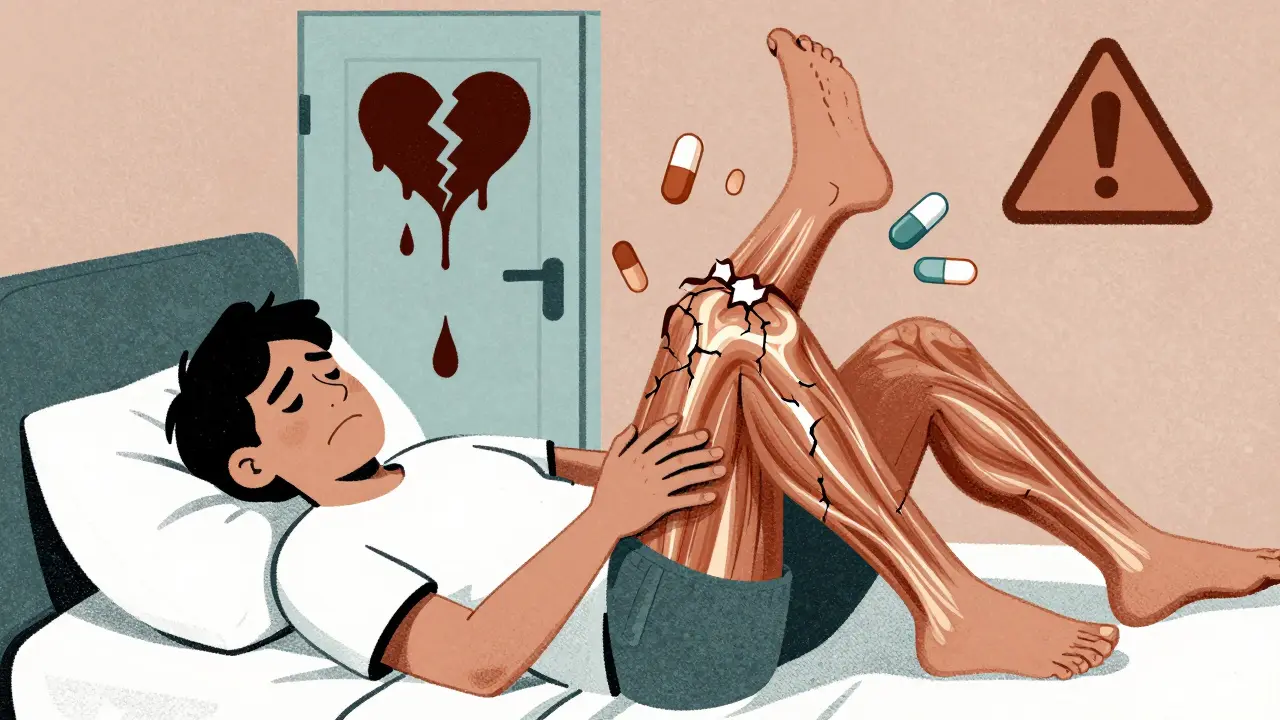
Imagine taking a pill every day to protect your heart, only to wake up with muscles so sore you can’t climb stairs. For most people, statins are safe and life-saving. But for a tiny fraction, they can trigger something far worse than muscle aches: rhabdomyolysis-a rapid, dangerous breakdown of muscle tissue that can wreck your kidneys and even kill you.
What Exactly Is Rhabdomyolysis?
Rhabdomyolysis isn’t just sore muscles. It’s when muscle cells die and spill their contents-especially a protein called myoglobin-into your bloodstream. Your kidneys try to filter it out, but myoglobin clogs them. That’s when things turn serious: acute kidney injury, electrolyte imbalances, and in the worst cases, death.Statins cause this in about 1.5 to 5 people per 100,000 each year. That’s rarer than being struck by lightning. But when it happens, it hits fast. Symptoms usually start with unexplained muscle pain, weakness, or cramps-often worse after exercise. Dark urine, like cola or tea, is a red flag. If you’re on a statin and feel this way, don’t wait. Get checked.
Why Do Statins Cause Muscle Damage?
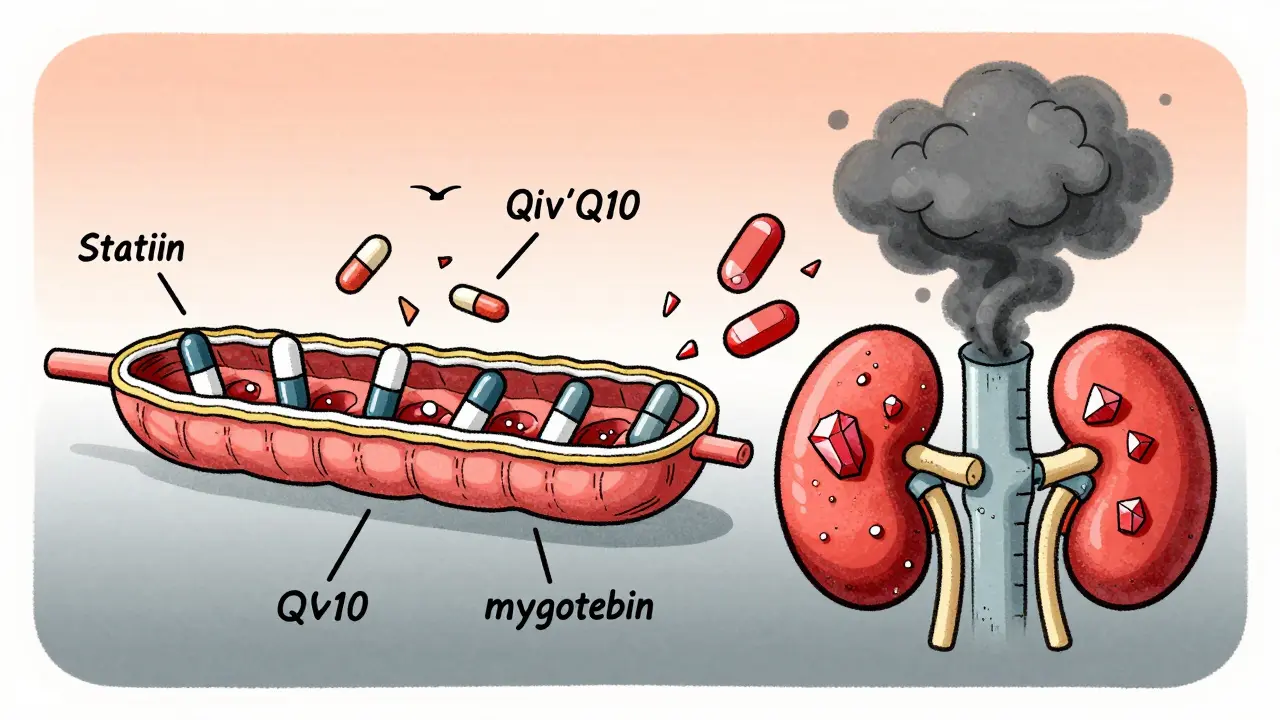
Statins work by blocking a liver enzyme called HMG-CoA reductase to lower cholesterol. But that same enzyme is part of a bigger pathway that makes more than just cholesterol. It also produces compounds your muscles need to stay healthy-like coenzyme Q10 (CoQ10) and isoprenoids that help with cell signaling and membrane stability.When statins block this pathway, muscle cells start to break down in multiple ways:
- They ramp up a system called the ubiquitin-proteasome pathway, which literally eats away at muscle proteins.
- CoQ10 levels drop, starving muscle cells of energy-especially during physical activity.
- Some statins, especially the lipophilic ones like simvastatin, can insert themselves into muscle cell membranes, making them fragile under stress like hiking or lifting weights.
It’s not one cause-it’s a mix. That’s why some people get symptoms on low doses, while others tolerate high doses just fine.
Not All Statins Are Created Equal
Some statins are much more likely to cause muscle damage than others. Here’s how they stack up:| Statin | Risk Level | Key Risk Factors |
|---|---|---|
| Simvastatin (80 mg) | Very High | 10x higher risk than 20 mg; FDA banned new prescriptions at this dose in 2011 |
| Lovastatin | High | Lipophilic; interacts strongly with CYP3A4 inhibitors like clarithromycin |
| Atorvastatin | Moderate to High | Also CYP3A4-metabolized; risk spikes with colchicine use |
| Pravastatin | Low | Water-soluble; less muscle penetration |
| Fluvastatin | Low | Minimal CYP3A4 involvement |
| Rosuvastatin | Low to Moderate | Lower risk than simvastatin, but still possible at high doses |
If you’re on simvastatin 80 mg, you’re in the highest-risk group. The FDA pulled the plug on new prescriptions of that dose in 2011 after the SEARCH trial showed 0.87% of users developed myopathy-10 times higher than those on 20 mg.
Drugs That Make Statin Risks Worse
Your statin’s danger skyrockets when mixed with certain other medications. Why? Because they interfere with how your body breaks down the statin.Statins like simvastatin, lovastatin, and atorvastatin are processed by an enzyme called CYP3A4. If you take something that blocks that enzyme, your statin builds up in your blood like a traffic jam.
- Clarithromycin (an antibiotic): Can spike simvastatin levels by 10 times. Case reports show this combo triggered rhabdomyolysis in elderly patients.
- Colchicine (used for gout): Increases atorvastatin toxicity. A 2021 case study in South Africa documented severe muscle damage in a patient on both.
- Fibrates (like gemfibrozil): Especially dangerous with simvastatin. Avoid this combo entirely.
- Some antifungals and HIV meds: Also inhibit CYP3A4. Always check with your pharmacist before adding anything new.
Pravastatin, fluvastatin, and rosuvastatin don’t rely on CYP3A4 as much. If you’re on multiple meds, switching to one of these might be safer.
Your Genes Might Be the Missing Piece
Some people are genetically wired to be more sensitive to statins. The SLCO1B1 gene controls how well your liver pulls statins out of your blood. If you have a variant called c.521T>C (Val174Ala), your body can’t clear the drug properly.People with two copies of this variant (homozygous) have a 4.5 times higher risk of muscle damage. That’s not rare-it affects about 1 in 20 people of European descent. In 2023, the Clinical Pharmacogenetics Implementation Consortium (CPIC) officially recommends: if you have this gene, don’t take more than 20 mg of simvastatin.
Genetic tests like OneOme RightMed ($249 as of 2023) can check this. Insurance rarely covers it unless you’ve already had muscle side effects. But if you’ve had unexplained muscle pain on statins, it’s worth asking your doctor about testing.
Who’s Most at Risk?
It’s not random. Certain people are more likely to develop rhabdomyolysis:- Age 65+: 78% of cases occur in older adults. Kidneys don’t filter as well, and muscle mass declines with age.
- Women: 62% of reported cases are female. Why? Possibly lower muscle mass and hormonal differences.
- People with kidney or liver disease: Slower drug clearance = higher exposure.
- Those who exercise intensely: Especially eccentric movements like downhill hiking or heavy weightlifting. That membrane instability theory? It kicks in when muscles are stretched under load.
- People on multiple medications: The more drugs you take, the higher the chance of a dangerous interaction.
One study of 1,247 statin users on PatientsLikeMe found 78% noticed muscle symptoms within the first 3 months. And 63% said exercise made it worse.
What Should You Do If You Suspect Rhabdomyolysis?
Don’t ignore it. Don’t tough it out. Here’s what to do:- Stop the statin-but only after calling your doctor. Don’t quit cold turkey without guidance.
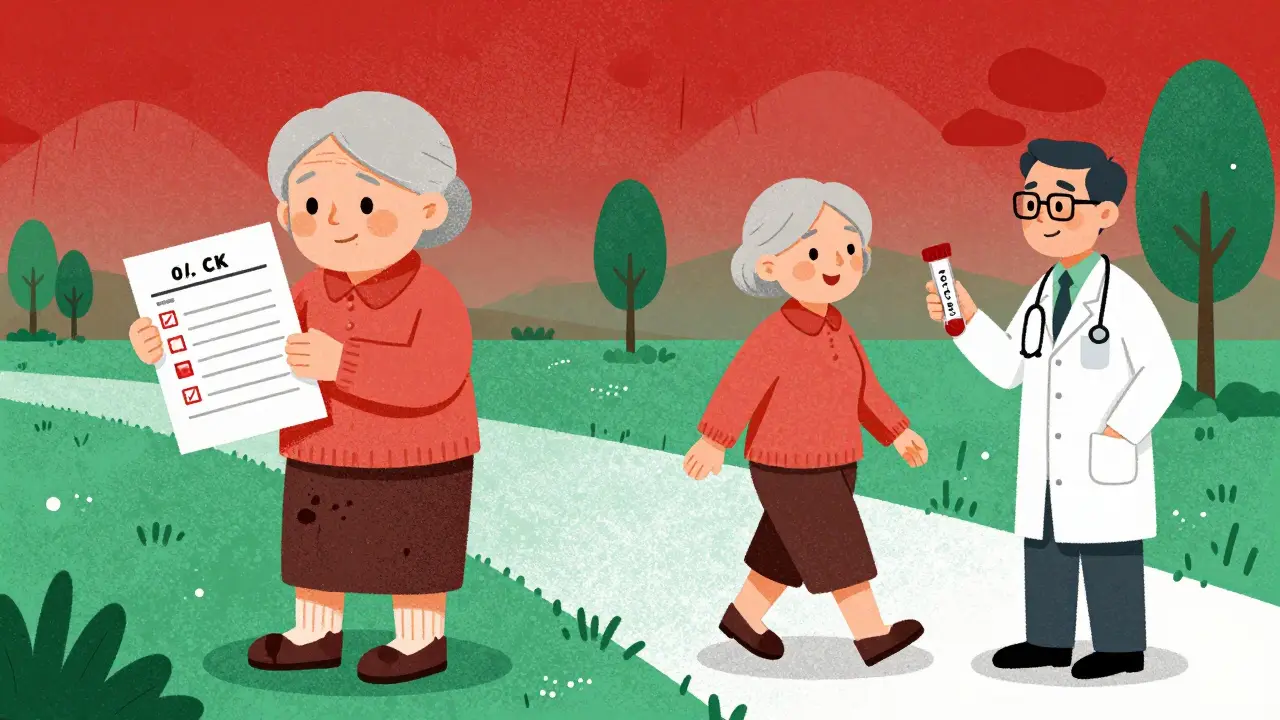
- Get a CK test. Creatine kinase is the blood marker for muscle damage. Levels above 10 times the normal limit mean you need urgent care.
- Hydrate. Drink water. Lots of it. This helps your kidneys flush out myoglobin.
- Go to the ER if: You have dark urine, extreme weakness, swelling, or confusion. This isn’t something to wait on.
Physical therapists recommend a simple screening tool: if you can’t lift your leg off the bed or stand on one foot without wobbling, your muscles are already compromised.
Can You Go Back on Statins After Rhabdomyolysis?
Most people who’ve had rhabdomyolysis shouldn’t take statins again. But here’s the twist: many people who think they’re statin-intolerant aren’t. A 2023 American College of Cardiology report found that 78% of patients who quit statins due to muscle pain could tolerate them again-with the right approach.How?
- Switch to a lower-risk statin (pravastatin or rosuvastatin).
- Reduce the dose and take it every other day.
- Avoid exercise for the first few weeks.
- Check for drug interactions.
- Consider CoQ10 supplements (evidence is mixed, but some patients report relief).
If you truly can’t tolerate statins, PCSK9 inhibitors like alirocumab or evolocumab are alternatives. But they cost over $5,850 a year. Most people can’t afford them without insurance.
The Bigger Picture: Is the Risk Worth It?
Let’s be real. Statins save lives. In the U.S. alone, they prevent about 500,000 heart attacks and strokes every year. For someone with heart disease, diabetes, or high cholesterol, the benefit is massive.The risk of rhabdomyolysis? Less than 0.005%. That’s like flipping a coin 20,000 times and getting heads once.
But if you’re healthy and taking a statin for prevention, the math changes. Your absolute risk of a heart event is lower, so the benefit is smaller. That’s why guidelines now emphasize personalized decisions-not just popping a pill because your doctor said so.
Ask yourself: Do I have a clear reason for taking this? Am I on the lowest effective dose? Have I checked for drug interactions? Could my symptoms be something else?
What’s Next? Better Tools on the Horizon
Science is catching up. In 2023, the STOMP trial identified 17 blood proteins that predict statin muscle damage with 89% accuracy. Imagine a simple blood test before you even start a statin-knowing your risk before you take the first pill.Researchers are also working on “muscle-sparing” statins. Early animal studies show promise: drugs that lower cholesterol without hitting muscle cells. These are still years away, but they’re coming.
For now, the best strategy is awareness. Know your risk. Know your meds. Know your body. And if something feels off-speak up. Your muscles are telling you something. Listen.
Can statins cause muscle pain without rhabdomyolysis?
Yes. Up to 29% of statin users report mild muscle aches, cramps, or weakness-this is called statin-associated muscle symptoms (SAMS). It’s not rhabdomyolysis. SAMS doesn’t raise CK levels above 10 times normal or cause kidney damage. But it’s common enough to make people quit statins. Often, switching statins or lowering the dose helps.
Is CoQ10 supplementation effective for statin muscle pain?
Some studies show modest relief, others show no benefit. CoQ10 levels drop on statins, so it makes sense theoretically. But clinical trials haven’t proven it consistently prevents or reverses muscle damage. It’s safe to try (100-200 mg/day), but don’t expect miracles. It won’t replace medical advice.
Should I get genetic testing for SLCO1B1 before starting a statin?
Not routinely-unless you’ve had muscle pain on statins before, or you’re planning to take high-dose simvastatin. Insurance rarely covers it for prevention. But if you’re at high risk (older, female, on multiple meds), asking your doctor about testing could prevent serious harm. The cost is around $250, and results can guide safer dosing.
Can exercise trigger rhabdomyolysis on statins?
Yes. Eccentric exercise-like downhill walking, heavy squats, or rowing-stretches muscles under tension, which may trigger membrane instability in statin users. The 2005 study showed this mechanism. Start slowly. Avoid sudden intense workouts. Walk, swim, or cycle instead of lifting heavy weights or hiking steep trails.
How do I know if my muscle pain is from statins or something else?
Timing matters. If pain started within weeks of beginning a statin, it’s likely related. If it’s symmetrical (both legs), worse after activity, and improves after stopping the drug, that’s classic. But other causes-like thyroid issues, vitamin D deficiency, or nerve compression-can mimic it. A simple blood test for CK and thyroid function can rule out other problems.
What happens if I ignore rhabdomyolysis symptoms?
You risk permanent kidney damage or even death. Myoglobin clogs kidney tubules, leading to acute kidney injury. Without treatment, electrolyte imbalances (like high potassium) can cause dangerous heart rhythms. Rhabdomyolysis is a medical emergency. Dark urine + muscle pain = go to the ER.
Comments
Edith Brederode
I took simvastatin for 3 months and started feeling like my legs were made of cement 🥲 One day I couldn’t get up from my couch without using my arms. Called my doc, got a CK test-levels were 8x normal. They switched me to pravastatin and I’m fine now. Don’t ignore it, girls. Your body talks, you just gotta listen.
January 20, 2026 AT 11:35
Arlene Mathison
Statins saved my life after my stent, but I had to ditch the 80mg simvastatin like it was hot lava. Switched to rosuvastatin 10mg and added CoQ10-no more cramps, no dark urine, no panic. If you’re on high-dose statins and feel weird, don’t be a hero. Get tested. Your kidneys don’t have a mute button.
January 21, 2026 AT 04:04
Carolyn Rose Meszaros
My mom had rhabdo from a statin + clarithromycin combo. She was in the hospital for 11 days. Kidneys almost failed. They didn’t even warn her about the antibiotic. I now carry a statin interaction card in my wallet. Seriously, if you’re on meds, talk to your pharmacist. They’re the unsung heroes of the healthcare system 💪
January 21, 2026 AT 17:19
Greg Robertson
I’m 71, on atorvastatin, and I hike every weekend. Never had an issue. But I also don’t take ibuprofen or NSAIDs with it, and I avoid grapefruit. Maybe it’s not the statin-it’s the combo. Listen to your body, but don’t assume every ache is a crisis. Balance is key.
January 21, 2026 AT 19:05
Courtney Carra
We treat statins like vitamins, but they’re pharmacological scalpels. We’ve normalized chemical intervention without acknowledging the cost to cellular integrity. The body isn’t a machine to be tuned-it’s a symphony. When you silence one instrument, the whole piece changes. Is it worth it? Only if you’ve truly weighed the silence against the song.
January 23, 2026 AT 02:01
thomas wall
It is utterly irresponsible that pharmaceutical companies are allowed to market these drugs with such minimal warnings. People are dying because doctors are too lazy to check for drug interactions or genetic markers. This isn’t medicine-it’s corporate negligence dressed in white coats. Shame on the FDA for not mandating genetic screening before prescription. This is preventable carnage.
January 24, 2026 AT 15:40
Art Gar
The entire premise of this article is flawed. Statins are overprescribed to healthy people for profit. Rhabdomyolysis is rare, yes-but so is heart disease in people with no family history, normal BMI, and no smoking. The real crisis is medicalization of normal aging. If you’re 50 and have borderline cholesterol, you don’t need a statin. You need better sleep, less sugar, and a walk after dinner.
January 25, 2026 AT 16:38
Crystal August
I’ve been on statins for 5 years. Never had symptoms. So why are we acting like everyone’s gonna drop dead? This article is fearmongering. If you’re scared, don’t take it. But don’t scare people who are fine. Also, CoQ10 is a scam. I’ve tried it. Nothing.
January 27, 2026 AT 05:40
Nadia Watson
I’m a nurse in rural Ohio. Saw a woman last month who thought her muscle pain was just "getting old." Turned out her CK was 12,000. She had no idea simvastatin and her antifungal were a deadly mix. We need better patient education. Not just pamphlets. Real conversations. Maybe even community workshops. People deserve to know what they’re swallowing. And yes, I’ve seen the SLCO1B1 test change lives. It’s not expensive. It’s essential.
January 27, 2026 AT 08:40
Manoj Kumar Billigunta
In India, many people take statins without any testing. I had a cousin who got rhabdo after taking rosuvastatin with a common painkiller. He survived, but lost 30% muscle mass. My advice: if you can’t afford testing, at least start with low dose, avoid exercise for first month, and drink water like your life depends on it. Because it does.
January 28, 2026 AT 09:41