
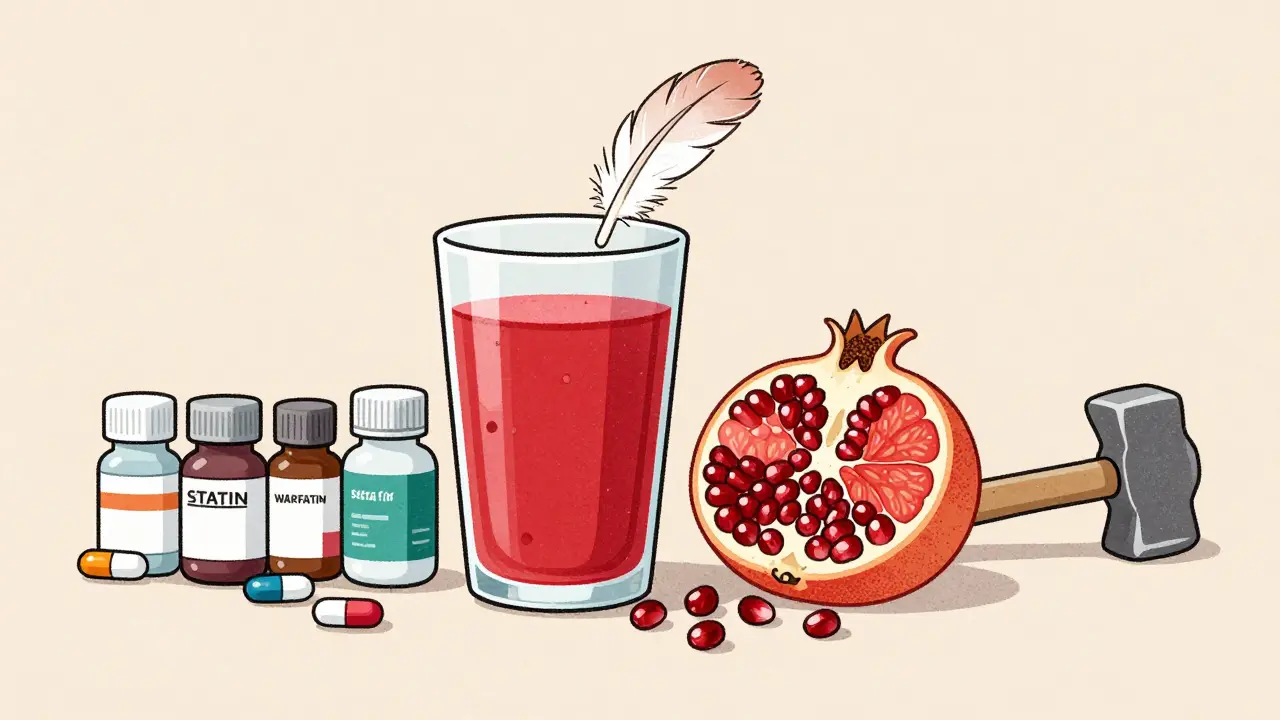
For years, you’ve heard the warning: grapefruit juice can mess with your meds. But what about pomegranate juice? You see it in smoothies, health stores, and ads claiming it’s a superfruit. Maybe you’ve even started drinking it daily for the antioxidants. Now you’re wondering-could it be just as dangerous as grapefruit? The short answer: no. Not based on real human evidence.
Why Everyone Got Worried
It all started in 2005. Researchers in Japan ran lab tests using human liver cells and found that pomegranate juice blocked the same enzyme-CYP3A4-as grapefruit juice. This enzyme breaks down about half of all prescription drugs. If it’s inhibited, drugs can build up in your blood, leading to side effects or toxicity. The results looked scary. Pomegranate juice was almost as potent as grapefruit juice in these test tubes. News outlets picked it up. Pharmacists started warning patients. Some even added pomegranate to the list of foods to avoid with statins, blood pressure meds, or antidepressants. But here’s the catch: test tubes don’t have stomachs. They don’t digest food. They don’t absorb nutrients the way your body does. What happens in a lab doesn’t always happen in a person.What Actually Happens in Humans
Between 2007 and 2013, several real-world studies tried to replicate those lab findings in people. They gave volunteers pomegranate juice-up to 250 ml a day-for days or weeks-and then measured how their bodies handled common medications. One study used midazolam, a drug almost entirely broken down by CYP3A4. People drank pomegranate juice for a week. Their blood levels of midazolam? No change. Another tested flurbiprofen, a painkiller processed by CYP2C9. Again, no difference in drug levels. A third looked at warfarin, the blood thinner. Even though pomegranate juice theoretically interferes with CYP2C9, patients drinking it daily for months showed stable INR levels-no spikes, no bleeding risks. The numbers tell the story. In human trials, pomegranate juice didn’t raise drug levels by more than 2%. That’s less than the natural variation your body sees from day to day. Compare that to grapefruit juice, which can boost drug levels by 300% or more. That’s not a tweak-it’s a red flag.Grapefruit vs. Pomegranate: The Real Difference
So why does grapefruit juice cause problems and pomegranate doesn’t? It comes down to concentration and location. Grapefruit contains furanocoumarins-compounds that permanently disable CYP3A4 enzymes in your gut lining. Once those enzymes are shut down, your body can’t break down drugs as they’re absorbed. That’s why even a small glass of grapefruit juice can have lasting effects. Pomegranate juice? It has punicalagins and ellagic acid. These compounds can block CYP enzymes in a dish. But they don’t survive digestion well. They’re broken down before they reach the gut wall in high enough concentrations to matter. Even if some do, they don’t bind permanently like grapefruit’s compounds do. Think of it like this: grapefruit is a sledgehammer. Pomegranate juice is a feather. One knocks out the system. The other just floats by.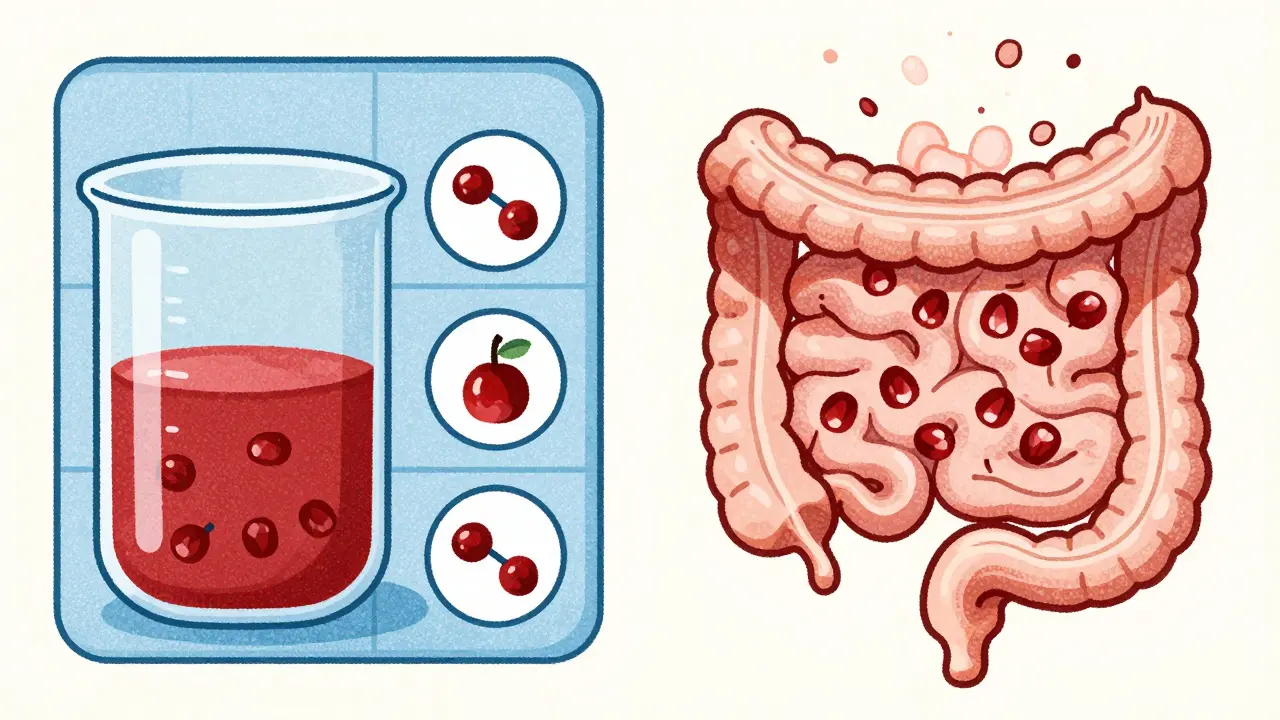
What the Experts Say Now
The American Society for Clinical Pharmacology and Therapeutics cleared this up in 2015: “Pomegranate juice does not require avoidance with CYP3A4 or CYP2C9 substrate drugs based on current clinical evidence.” That’s not a soft recommendation. That’s a firm stance from top pharmacologists. Dr. Stephen M. Stahl, a leading psychopharmacologist, put it plainly: “The risk of a pharmacokinetic interaction is negligible if pomegranate juice is consumed by patients receiving CYP2C9 substrates.” He’s not being casual-he’s basing this on years of clinical data. Even the FDA doesn’t list pomegranate juice as a drug interaction risk. Their official database includes over 85 medications that interact with grapefruit juice. Pomegranate juice? Not one.What About Supplements?
Here’s where things get tricky. If you’re drinking juice, you’re fine. But if you’re taking pomegranate extract capsules, that’s a different story. Extracts are concentrated. They can contain 10 to 20 times more active compounds than juice. There’s one case report from 2017 where a patient taking warfarin started a pomegranate extract supplement-and their INR jumped from 2.4 to 4.1. That’s a dangerous level. But this was one person, one supplement, no controls. It’s not proof. But it’s a red flag. Most patients can’t tell the difference between juice and extract. They see “pomegranate” on the label and assume it’s the same. That’s a problem. If you’re on warfarin, statins, or anything with a narrow therapeutic window, stick to juice. Skip the pills unless your doctor says otherwise.Real-Life Stories
On Reddit’s r/Pharmacy, over 40 pharmacists shared their experience. Nearly 90% said they never tell patients to avoid pomegranate juice. One wrote: “I’ve had patients on warfarin drink it daily for years. Their INR never budged. But grapefruit? I’ve seen INRs spike from 2.0 to 5.0 after one glass.” A patient on Drugs.com reported drinking pomegranate juice every morning for six months while on warfarin. Their INR stayed between 2.0 and 2.5-perfect range. No hospital visits. No bleeding. These aren’t outliers. They’re consistent with the science.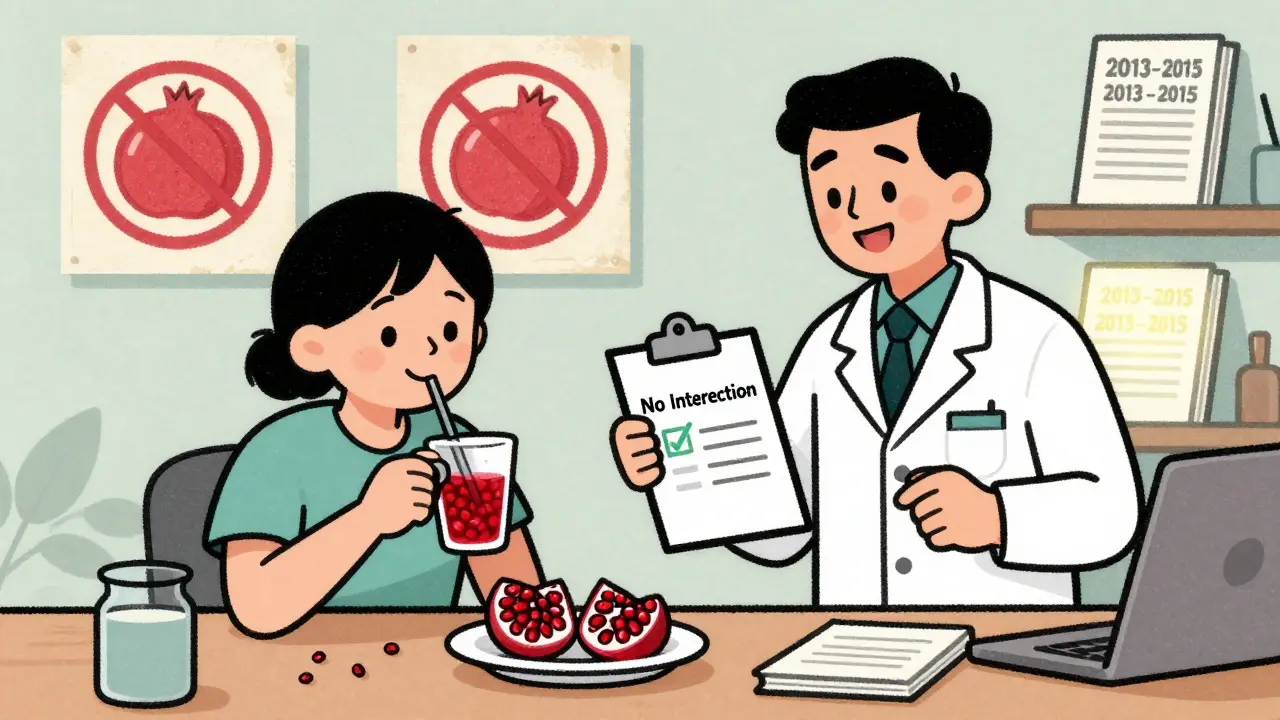
What Should You Do?
If you’re on medication and you like pomegranate juice: keep drinking it. No need to stop. But here’s what you should do:- Stick to juice. Avoid concentrated extracts unless approved by your doctor.
- If you’re on warfarin, keep monitoring your INR. Not because of pomegranate, but because diet, illness, and other meds can affect it.
- Don’t confuse pomegranate with grapefruit. If your doctor told you to avoid grapefruit, that still applies.
- Tell your pharmacist you drink pomegranate juice. They’ll confirm it’s safe.
Why This Misconception Persists
Why do so many doctors still think pomegranate juice is risky? Because the early lab studies were loud. They looked convincing. And once a warning gets printed in a textbook or posted on a hospital wall, it sticks. A 2016 survey found that 68% of physicians wrongly believed pomegranate juice required the same restrictions as grapefruit. That’s not ignorance-it’s outdated information. The medical community is catching up. But change moves slowly. If your doctor still tells you to avoid pomegranate juice, show them the data. Point them to the Clinical Pharmacology & Therapeutics studies from 2012 and 2013. Or the 2015 position statement. The evidence is clear.The Bottom Line
Pomegranate juice is not grapefruit juice. It doesn’t interact with medications the same way. The lab studies were misleading. The human studies are reassuring. You can enjoy your pomegranate juice without fear. No need to sacrifice flavor for safety. Just be smart: stick to juice, skip the extracts, and keep monitoring your meds if you’re on something critical like warfarin. The science didn’t just say it’s safe-it showed it’s safe. And that’s worth more than any warning label.Can I drink pomegranate juice while taking statins?
Yes. Multiple clinical trials have shown that pomegranate juice does not increase blood levels of statins like atorvastatin or simvastatin. Unlike grapefruit juice, which can cause dangerous spikes, pomegranate juice has no clinically significant effect on how your body processes these drugs. You can safely enjoy it with your statin.
Does pomegranate juice affect blood pressure medications?
No. Studies using medications like amlodipine, felodipine, and losartan found no change in drug levels or blood pressure control when participants drank pomegranate juice daily. The juice doesn’t interfere with the CYP3A4 enzyme in a way that matters in humans. You can continue your normal routine.
Is it safe to drink pomegranate juice with warfarin?
Yes, if you’re drinking the juice. Human studies show no effect on INR levels. However, avoid pomegranate extract supplements-they’re concentrated and could theoretically affect warfarin. Stick to juice, monitor your INR regularly (as you should anyway), and talk to your doctor if you notice unusual bruising or bleeding.
Why do some websites still warn about pomegranate juice?
Many websites still list it as a risk because they’re repeating outdated lab studies from 2005. Those studies showed potential in test tubes, but later human trials proved no real-world effect. The medical community has updated its guidelines, but online content lags behind. Always check if the source cites human clinical trials-not just lab results.
Should I avoid pomegranate juice if I’m on antidepressants?
No. Antidepressants like sertraline, fluoxetine, and escitalopram are metabolized by CYP enzymes, but studies show pomegranate juice doesn’t affect their levels. You can drink it without concern. The only exception is if you’re on a very narrow-therapeutic-index drug like carbamazepine-though even then, juice hasn’t shown issues in humans.
What’s the difference between pomegranate juice and pomegranate extract?
Juice is diluted-about 5% active compounds. Extracts are concentrated pills or powders with 10-20 times more of those compounds. While juice is safe, extracts haven’t been studied enough to rule out risk. If you’re on critical medications, avoid extracts unless your doctor approves them. Juice? No problem.
Comments
sue spark
Pomegranate juice is my morning ritual and I've been drinking it with my statin for years without a single hiccup. I don't get why people still panic about it. The science is clear and I'm not about to give up something I love because of a lab test from 2005.
December 16, 2025 AT 14:08
Tiffany Machelski
i was told to avoid it by my pharma but then i read this and now im confused. i mean like... if its safe why do so many sites still say dont? maybe i just need to ask my doc again
December 17, 2025 AT 11:13
SHAMSHEER SHAIKH
It is with profound respect for the scientific method and clinical rigor that I offer this commentary: The distinction between in vitro inhibition and in vivo pharmacokinetic interaction is not merely academic-it is foundational to evidence-based medicine. The cited human trials, particularly those involving midazolam and warfarin, demonstrate conclusively that pomegranate juice, when consumed in customary dietary quantities, does not exert a clinically meaningful effect on CYP3A4 or CYP2C9 substrate drugs. This is not a trivial observation; it is a correction of a widespread and potentially harmful misconception that has persisted due to the seductive simplicity of mechanistic extrapolation. I urge all healthcare professionals to update their counseling protocols accordingly.
December 19, 2025 AT 02:53
Josias Ariel Mahlangu
People are too trusting of modern medicine. They read one article and suddenly think they know more than their doctor. You think you're safe with pomegranate juice? What about the long-term effects? What about the kids? The elderly? You're playing with your health like it's a game.
December 19, 2025 AT 09:39
anthony epps
so juice good extract bad huh. makes sense. i drink the juice with my blood pressure pill and never thought twice. guess i dont need to stop.
December 20, 2025 AT 21:13
Andrew Sychev
THIS IS WHY MEDICINE IS BROKEN. Some guy writes a blog and suddenly everyone ignores 20 years of doctor warnings. I've seen patients end up in the ER because they listened to some Reddit post instead of their pharmacist. This isn't science-it's mob mentality. And now people think they're experts because they read one article. Wake up. Your body is not a lab. And no, your 'research' doesn't replace clinical experience.
December 22, 2025 AT 03:21
Kayleigh Campbell
So grapefruit is a sledgehammer, pomegranate is a feather... and yet somehow the feather still gets listed on every drug warning label like it's a weapon? Classic. The medical world is like a giant game of telephone where the original message gets lost and everyone just keeps shouting the same mistake. I'll keep drinking my juice. And maybe I'll send this article to my doctor. With popcorn.
December 22, 2025 AT 13:51
Aditya Kumar
whatever. i just drink the juice. dont care about the science. if my doc says its fine, its fine. dont wanna think about it.
December 22, 2025 AT 14:04