
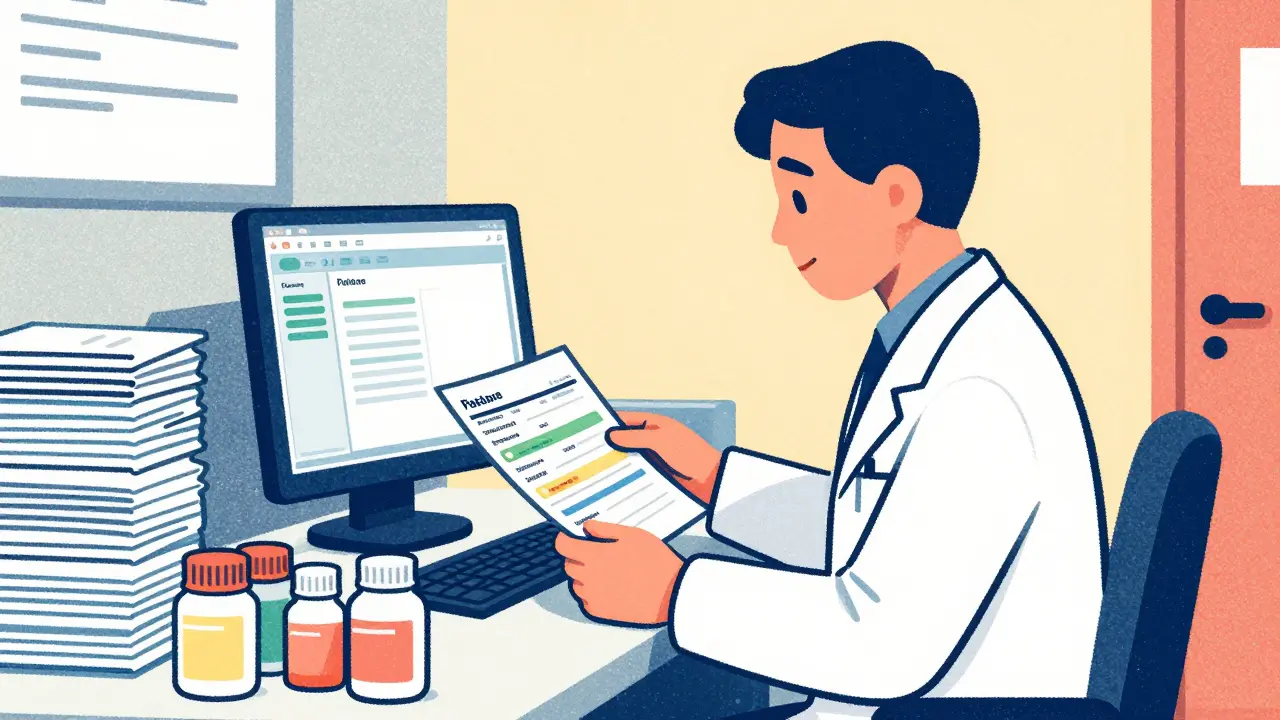
Making medical errors during medication transitions is a persistent issue in healthcare, costing lives and resources daily. In 2006, The Joint Commission made medication reconciliation a National Patient Safety Goal, but true progress required dedicated leadership. This is where Pharmacist-led substitution programs come in. These initiatives aren't just about swapping drugs; they represent structured clinical services where pharmacists identify, evaluate, and implement therapeutic medication substitutions to optimize therapy. By focusing specifically on formulary substitutions and deprescribing needs, these programs have become essential components of modern value-based care. As of 2026, the data shows that hospitals utilizing these strategies see significant improvements in patient safety and financial metrics.
The evolution of these programs began around 2010 when healthcare systems started recognizing that pharmacists possess unique expertise in medication management beyond traditional dispensing roles. According to the American Society of Health-System Pharmacists (ASHP), the shift happened because traditional methods weren't catching enough errors during admissions or discharges. Now, widespread adoption covers 87% of academic medical centers in the United States alone. The core value proposition here is hard numbers. Studies indicate a 49% reduction in adverse drug events and an 11% drop in 30-day readmissions. For hospital administrators wondering if the investment pays off, the answer is generally yes, with estimated savings ranging from $1,200 to $3,500 per patient by preventing complications.
How Implementation Works in Practice
Setting up a successful program isn't just about hiring a few extra staff members. It requires a specific operational model. The most effective structures employ dedicated medication reconciliation pharmacists supported by medication history technicians. You typically see a staffing ratio of one pharmacist to three or four technicians in high-volume settings. This setup ensures that technicians handle the heavy lifting of data collection while the pharmacist focuses on clinical decision-making. Most programs operate between 7 a.m. and 8 p.m. for community access, though Level I trauma centers often extend this to 24/7 coverage to catch every handoff error.
To get these teams working effectively, you need solid training protocols. Technicians aren't just clerks here; they need certification. Standard practice involves two hours of didactic instruction followed by five eight-hour supervised shifts. This rigorous training results in a 92.3% accuracy rate in medication history completion, which is critical for identifying discrepancies. When verification begins, the average patient reconciliation reveals 3.7 discrepancies between triage and actual medication history. That is nearly four mistakes per person before treatment even starts. Integrating this process into electronic health records is also non-negotiable. Systems must flag non-formulary medications automatically so that substitution protocols trigger when alternatives exist. Data shows that about 68.4% of non-formulary medications get appropriately substituted at admission when these digital flags are active.
| Metric | Traditional Physician/Nurse Led | Pharmacist-Led Substitution |
|---|---|---|
| Adverse Drug Events | Baseline | Reduced by 49% |
| 30-Day Readmissions | No significant change | Reduced by 11-22% |
| Complication Rates | Variable | Decreased by 29.7% |
| Cost Savings | Minimal | $1,200-$3,500 per patient |
Measuring Clinical Outcomes
When you look at the comparative analysis, the advantages of having pharmacists lead these efforts stand out. A systematic review covering over 100 articles found that 89% of studies demonstrated reduced 30-day readmissions with pharmacy-led programs. In contrast, only 37% of non-pharmacy initiatives showed similar success. High-risk patient populations benefit the most. We see the greatest gains with patients managing polypharmacy (taking five or more drugs), those aged over 65, and individuals with poor health literacy. Specifically, CMS HRRP diagnosis patients experienced a 22% greater reduction in readmissions when pharmacy substitution services were included in their care plan.
It's not just about keeping people out of the hospital; it's about safer medicine use. Programs incorporating deprescribing components, like the study conducted in Beirut, found that over half of recommendations focused on medication discontinuation rather than just switching drugs. This approach tackles the burden of unnecessary polypharmacy directly. However, acceptance plays a role. While physicians accepted depression recommendations about 30% of the time, comprehensive interventions proved superior. In trials comparing medication review alone versus comprehensive pharmacist intervention, the comprehensive group saw a hazard ratio of 0.62 for 30-day readmissions. To put that in plain terms, you would need to treat 12 patients to prevent one readmission using this method.

Navigating Barriers and Solutions
Despite the clear benefits, setting up these programs faces real-world hurdles. The biggest friction point is often physician resistance. About 43% of academic medical centers report doctors questioning substitution recommendations. Successful programs tackle this by building standardized communication protocols into the workflow. Instead of asking permission verbally for every swap, the electronic health record integration automatically flags opportunities, making the suggestion seamless. Another major barrier is time. Comprehensive management takes about 67 minutes per patient hospitalization. That's a lot of billable time consumed. Deploying technicians for data collection mitigates this, allowing the pharmacist to focus strictly on clinical judgment.
Reimbursement remains another sticky issue. Currently, fragmented payment models fail to cover the full cost of services in 68% of community settings. Medicare Part D covers some aspects, but administrative hurdles exist. However, policy is shifting. The 2024 CMS Interoperability and Prior Authorization Proposal includes provisions for better documentation, which could increase reimbursement rates by 18-22%. Furthermore, market growth is evident. The medication reconciliation services market reached $1.87 billion in 2022 and continues to grow. As we move further into 2026, post-acute care settings are adopting these models too. Skilled nursing facilities implementing pharmacist-led deprescribing jumped from 18% in 2020 to 42% by 2023. The Consolidated Appropriations Act of 2022 mandated reconciliation for Medicare Advantage beneficiaries, creating massive new demand.
Future Trends and Technology
Looking ahead, technology will drive the next wave of adoption. Recent innovations involve AI-assisted medication history tools. These systems reduce data collection time by 35%, significantly easing the workload on technicians. Academic medical centers are currently piloting these tools to handle the increasing complexity of patient profiles. Long-term viability looks strong given the consistent 49% reduction in adverse events shown in multi-center trials. Market analysts project the sector growing to $3.24 billion by 2027. However, sustainability varies by location. Rural settings face significant challenges, with only 22% of critical access hospitals having implemented comprehensive programs compared to 89% in urban centers due to pharmacist shortages.
Research priorities are also evolving. Current studies funded by organizations like NIMH focus on specific high-risk categories. Deprescribing anticholinergics in elderly patients has shown a 41% reduction in falls, while reducing proton pump inhibitor use cuts C. difficile infections by 29%. The trajectory points toward deeper integration with value-based care contracts. With 63% of Accountable Care Organizations including pharmacist-led substitution metrics in their quality agreements, institutional commitment is becoming the norm rather than the exception. Professional groups like ASHP continue to advocate for national protocols to standardize these practices across state lines.
Who is eligible for pharmacist-led substitution services?
Eligibility generally includes any patient transitioning care, but the greatest benefits are seen in patients aged over 65, those on multiple medications (polypharmacy), and individuals diagnosed with conditions covered by the Hospital Readmissions Reduction Program (HRRP).
What training is required for pharmacy technicians in these programs?
Technicians typically complete a minimum of two hours of didactic instruction followed by five eight-hour supervised shifts. Competency assessments show this training leads to a 92.3% accuracy rate in completing medication histories independently.
How does this differ from standard medication therapy management?
Standard MTM often focuses on chronic disease counseling. Substitution programs are active interventions specifically targeting formulary adherence and deprescribing needs during critical care transitions like admission or discharge.
Are these programs reimbursable by insurance providers?
Reimbursement is variable. Only 32 states currently have Medicaid programs that fully reimburse these services. Medicare Part D covers certain MTM elements, but many community settings still struggle with coverage gaps despite regulatory mandates.
What are the biggest barriers to implementation?
Time constraints and physician resistance are the top barriers. Time issues are managed by using technicians for data entry, while physician resistance is addressed through electronic health record integration and standardized communication protocols.
Comments
Victor Ortiz
The data presented here ignores significant overhead costs associated with staffing dedicated reconciliation roles. Hospital administrators often overlook the operational drag caused by shifting workflow responsibilities. You claim efficiency gains yet fail to address the training burden on existing clinical teams. Pharmacists are expensive resources and redirecting their focus impacts dispensing throughput. This metric of adverse event reduction assumes perfect adherence which rarely exists in practice. Real world variables like staff turnover will degrade these numbers quickly without constant supervision. The comparison to traditional models does not account for regional variance in medical culture. Implementing this across smaller facilities seems economically unviable based on current reimbursement models. Physicians resisting changes are likely correct about the loss of autonomy in prescribing decisions. We need longitudinal studies spanning five years before accepting these claims as permanent truths.
March 31, 2026 AT 00:18
Amber Armstrong
I think we really need to understand the human side of these transitions. When patients leave the hospital they feel overwhelmed easily. Having a pharmacist explain the changes helps reduce that fear significantly. My own mother struggled with similar issues during her last admission. She was confused by why some pills were stopped so suddenly. The staff there did not seem to prioritize explaining the new regimen fully. It took weeks before she actually started trusting the new medications again. If a dedicated pharmacist reviewed her list we might have prevented that confusion entirely. Financial savings are nice but keeping people safe matters more to families. We cannot measure safety solely by reading reports on paper charts either. Real world outcomes depend on how well the team communicates with the family daily. Technicians collecting history need to be gentle when asking sensitive questions about meds. Sometimes older patients hide prescriptions because they worry about judgment from us. Building trust through consistent follow ups is just as vital as the data accuracy itself. We need to keep pushing for models that prioritize care over profit margins constantly.
April 1, 2026 AT 20:49
dPhanen DhrubRaaj
it works here too sometimes but system differs bigly we find hard to train staff same way. rural areas lack pharmacist so how do they get this done without city help. cost is still high for government hospitals here. maybe technology like ai tools help us bridge gap better soon enough
April 2, 2026 AT 22:26
Vikash Ranjan
You are assuming all hospitals have the budget for such extensive training protocols. Many facilities operate on thin margins and cannot afford to lose billable hours for reconciliation tasks. The reduction in readmissions sounds impressive until you factor in the increased administrative load. Physician resistance mentioned in the text is actually the most logical outcome given current liability structures. Why would a doctor cede control of medication management to another specialist without compensation? This initiative feels like a solution looking for a problem rather than a fix for actual errors. The numbers cited likely cherry picked successful pilot sites rather than nationwide averages. It ignores the chaotic nature of emergency departments where speed trumps thoroughness.
April 3, 2026 AT 16:52
RONALD FOWLER
We all want safer medication practices and these programs clearly offer a path forward. Collaboration between disciplines remains the strongest asset we have in modern healthcare systems. Respecting the expertise of each team member allows for better patient outcomes overall. We should focus on shared goals instead of fighting over who controls the process. Standardized communication bridges gaps effectively when implemented correctly across departments. Everyone wins when patients go home safely and stay out of the hospital longer. Let us support innovation while maintaining professional boundaries respectfully.
April 3, 2026 AT 20:29
Biraju Shah
Stop making excuses for slow adoption when the evidence supports immediate action now. Patient safety should never wait for perfect funding models to align first. Hospitals claiming financial constraints are prioritizing margins over human lives unnecessarily. Mandates for these programs would force the necessary cultural shifts required today. The forty nine percent drop in adverse events demands urgent legislative backing immediately. We cannot afford to wait for voluntary buy in from resistant physician groups anymore.
April 4, 2026 AT 22:11
Cameron Redic
These initiatives always sound great on paper until you hit the messy reality of floor nurses ignoring protocols. Reimbursement gaps mean most community settings will fail to sustain these teams past the pilot phase. The market growth projections look nice but ignore the saturation point of available pharmacists. Rural hospitals remain completely left behind in this equation regardless of national goals.
April 5, 2026 AT 13:06
Marwood Construction
Regulatory compliance mandates suggest that documentation standards must evolve alongside these clinical interventions. Electronic health record integration requires rigorous security protocols to prevent unauthorized access. Liability frameworks need updating to protect pharmacists acting within approved substitution parameters. Standardization across state lines remains a critical hurdle for interstate healthcare delivery.
April 7, 2026 AT 09:29
William Rhodes
This transformation represents a fundamental shift towards value based care that we must embrace aggressively. Technology will solve the workforce shortages eventually if we demand faster innovation cycles. AI driven tools can amplify human capacity beyond our current limitations significantly. We must push hard for policy changes that reward quality outcomes above quantity of services provided. The future of medicine lies in collaborative multidisciplinary teams leading these efforts.
April 8, 2026 AT 15:10
Dan Stoof
What a fantastic vision for the future of patient safety!!!! These results are absolutely mind blowing!!!!!!!! The potential to save thousands of lives each year is incredible!!!!! We should celebrate these successes with enthusiasm!!!!!! Imagine the impact on families knowing their loved ones are safe!!!!!! Technology plus human expertise equals unstoppable progress!!!!! We need to shout this from rooftops!!!!!!
April 8, 2026 AT 16:12
Calvin H
Sure keeps the insurance companies happy while patients wait in line forever.
April 9, 2026 AT 19:19
Carolyn Kask
Good luck trying to implement this model anywhere outside of North American borders. Our healthcare infrastructure leads the world and these metrics prove domestic superiority over foreign methods. Funding gaps abroad are a direct result of inferior planning compared to our systems. We should export these standards globally instead of worrying about local budget cuts. American medical innovation drives global standards not the other way around.
April 10, 2026 AT 20:30