
Medication Substitution Risk Calculator
Substitutions during shortages can lead to serious health consequences. The article describes how a patient switched from brand-name Warfarin to a generic, resulting in a fatal bleeding event. This calculator shows your risk based on your specific situation.
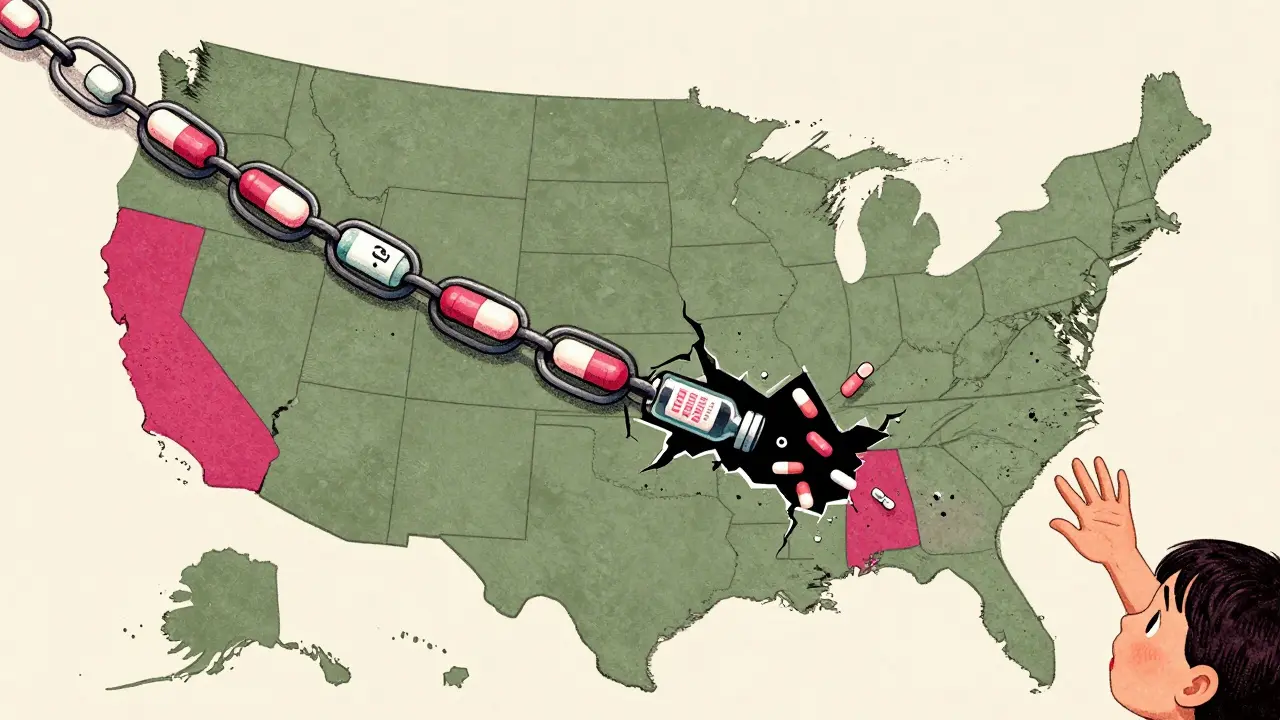
When you pick up your prescription, you assume the pill in your hand is safe, potent, and exactly what your doctor ordered. But behind that simple act is a global network so fragile that a single power outage, cyberattack, or shipping delay can put lives at risk. The pharmaceutical supply chain isn’t just about moving boxes-it’s the invisible line between life and death for millions of patients worldwide.
What Happens When the Chain Breaks?
In 2024, a software failure from CrowdStrike knocked out systems at 759 hospitals across the U.S. Overnight, pharmacies couldn’t access inventory records. Nurses couldn’t verify dosages. IV bags sat unclaimed. Critical medications like insulin, epinephrine, and chemotherapy drugs vanished from shelves. Pharmacists were forced to ration. Patients missed treatments. One mother in Ohio told her story on Reddit: "My 6-year-old with Type 1 diabetes went 36 hours without insulin because our pharmacy had no stock-and no way to know when it would arrive. His blood sugar spiked to 520. We almost lost him." This isn’t rare. The American Hospital Association found that 68% of U.S. hospitals made medication substitutions during 2023-2024 due to shortages. Nearly 30% of those substitutions led to measurable patient harm-ranging from allergic reactions to organ damage. A multiple sclerosis patient in Michigan reported that a 17-day delay in her Tysabri infusion resulted in two new brain lesions visible on her MRI. That’s not a statistic. That’s a life changed forever.The Cold Chain That Keeps Drugs Alive
Seventy-two percent of biologics-drugs like insulin, vaccines, and cancer treatments-require strict temperature control between 2°C and 8°C. Fifteen percent need ultra-cold storage below -60°C. One degree too warm, and the drug degrades. One hour too long in a broken fridge, and the entire batch becomes useless-or worse, dangerous. Real-time monitoring now covers 68% of high-value shipments, cutting temperature excursions by 42%. But that still leaves a third of critical drugs traveling without constant surveillance. In rural areas, where last-mile delivery often relies on aging refrigerated trucks or even unregulated couriers, 32% of shipments experience temperature breaches. In the Caribbean, hospitals face a supply chain pressure index of 8.1-far above the safe threshold of -0.5. Patients there regularly go weeks without life-saving drugs because the cold chain collapsed somewhere between the warehouse and the clinic.Counterfeits, Chaos, and the $77 Billion Problem
Every year, 1.5 million Americans suffer medication errors linked to supply chain failures. The cost? $77 billion. Much of this comes from counterfeit drugs slipping through cracks in the system. The FDA’s Drug Supply Chain Security Act (DSCSA) requires every prescription drug to have a unique 2D barcode by 2023. But compliance isn’t universal. Generic manufacturers, who make 90% of U.S. prescriptions, have supply chain protocols rated just 3.2 out of 5. Pfizer? 4.7. That gap isn’t just paperwork-it’s risk. In 2023, a batch of fake metformin from an unverified supplier made its way into U.S. pharmacies. It contained toxic levels of NDMA, a known carcinogen. Over 200 patients were hospitalized. The FDA traced it back to a single supplier in India with no track-and-trace system. Blockchain adoption has jumped 37% since 2020, with companies spending $12.7 million annually on traceability tech. But for every hospital that implements it, five still rely on paper logs and faxed invoices. That’s how fake drugs slip in. That’s how expired vaccines get delivered. That’s how patients die.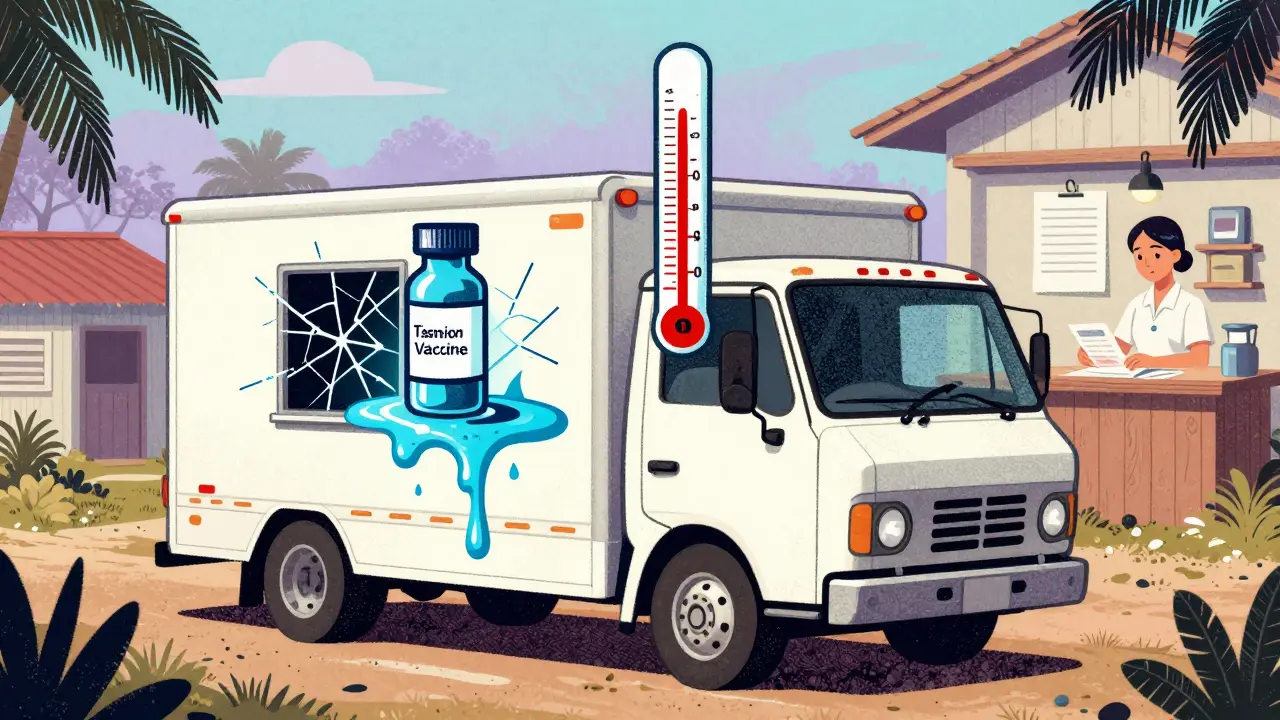
Why This Isn’t Just a U.S. Problem
Eighty-nine percent of developing nations rely on imported pharmaceuticals. When shipping costs spike, or a port shuts down due to war or weather, those countries don’t just face delays-they face death sentences. In sub-Saharan Africa, 40% of antiretroviral drugs for HIV patients are delayed by more than 60 days. In Haiti, after Hurricane Helene, 80% of insulin supplies vanished for over three months. Children died. Adults relapsed. The UNCTAD found that geopolitical disruptions hit pharmaceutical supply chains 28% harder than medical device chains-because 78% of active pharmaceutical ingredients (APIs) are made in just two countries: China and India. A single factory fire in Shanghai can ripple across continents. A trade embargo in India can starve a hospital in Lagos. The system isn’t broken-it’s designed to be fragile. And patients pay the price.The Hidden Cost of Shortages
Drug shortages don’t just mean "no medicine." They mean forced substitutions. A nurse told Becker’s Hospital Review: "We switched a patient from brand-name Warfarin to a generic because we had no choice. His INR spiked. He bled internally. We almost lost him." The system doesn’t account for biological differences between brands. Even small variations in fillers or coatings can alter absorption. For patients on narrow-therapeutic-index drugs-like digoxin, lithium, or seizure medications-those differences can be fatal. And it’s not just about drugs. A 2023 study found that 62% of hospitals delayed surgeries because they couldn’t get the sterile IV fluids or antibiotics needed for the procedure. That’s not a backlog. That’s elective death.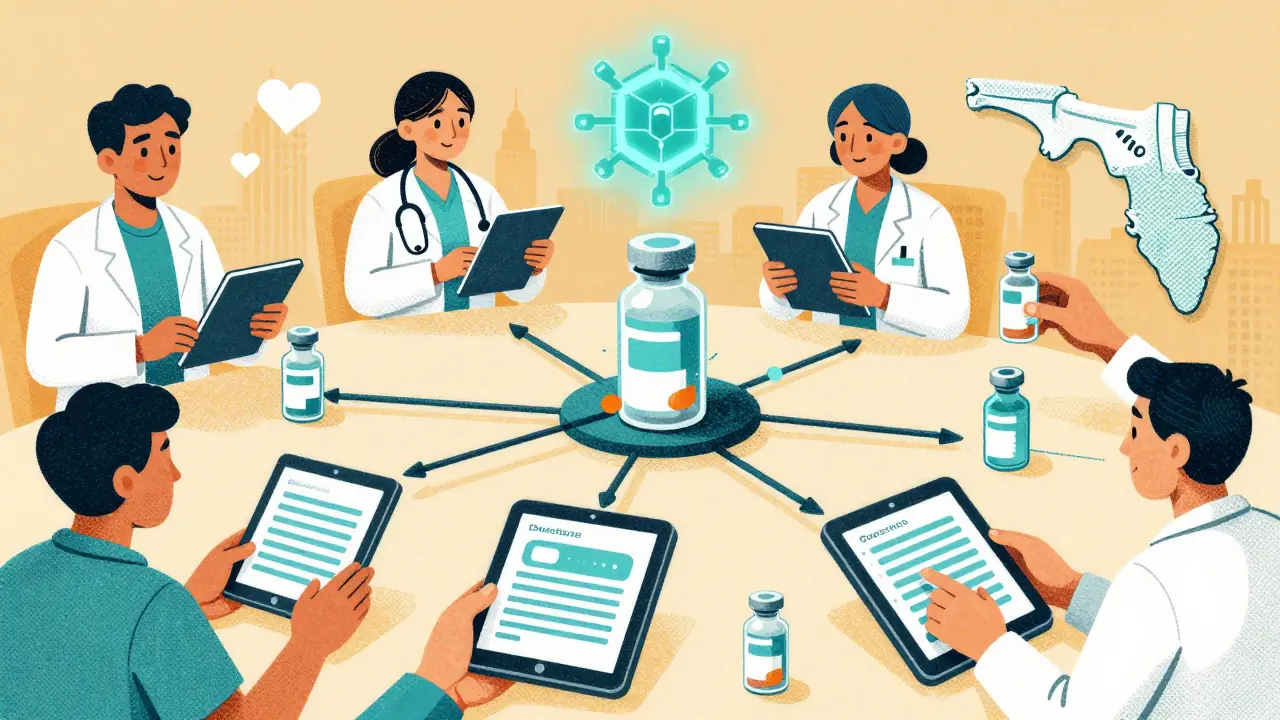
Who’s Fixing It-and Why It’s Not Enough
The FDA, WHO, and major distributors like McKesson and Cardinal Health are investing billions in traceability, AI forecasting, and cold chain upgrades. By 2028, 85% of high-value shipments will use blockchain. AI-driven demand forecasting is projected to cut shortages by 35% by 2027. But here’s the catch: implementation takes 12-18 months. Training staff takes 120+ hours. Integration with legacy systems? A nightmare. Seventy-six percent of hospitals say their old inventory software can’t talk to new barcode scanners. That’s why, even in 2026, we’re still seeing the same failures. The PharmChain certification program has trained 8,400 professionals. That sounds impressive-until you realize there are over 2 million healthcare workers managing medications in the U.S. alone. We’re training a drop in the ocean.What Needs to Change
We need three things-right now:- Universal serialization. Every drug, every vial, every pill pack must have a tamper-proof digital ID. No exceptions.
- Real-time global visibility. If a shipment leaves a warehouse in Singapore, we need to know its location, temperature, and condition at every stop-publicly, in real time.
- Strategic stockpiling. We can’t rely on just-in-time delivery for life-saving drugs. We need national reserves of insulin, epinephrine, antibiotics, and antivirals-enough to last six months during a crisis.
How Patients Are Already Fighting Back
Patients aren’t waiting for governments to act. On Reddit’s r/HealthIT, pharmacists share real-time shortage alerts. On RateMDs, people report delays and substitutions. A group in Texas started a decentralized network to redistribute unused insulin from wealthier clinics to rural ones. A nonprofit in Florida now tracks drug availability across 1,200 pharmacies using open-source software. These aren’t just grassroots efforts-they’re survival tactics. And they’re working. Where they’ve been adopted, medication delays have dropped by 41%. We don’t need more reports. We need action. Because every time a patient misses a dose because the supply chain failed, it’s not an accident. It’s a choice.Can a broken supply chain really kill someone?
Yes. Drug shortages and counterfeit medications directly contribute to patient deaths every year. In 2023, over 1.5 million Americans suffered medication errors linked to supply chain failures, and hundreds died from treatment delays or toxic substitutions. For patients with chronic conditions like diabetes, cancer, or epilepsy, even a few days without their medication can lead to organ failure, hospitalization, or death.
Why are drug shortages still happening in 2026?
Because the system is built on thin margins, single-source suppliers, and outdated tracking methods. Most drugs rely on one factory overseas for their active ingredient. If that factory shuts down, there’s no backup. Regulatory delays, lack of investment in cold chain tech, and poor communication between manufacturers and pharmacies mean shortages aren’t prevented-they’re just managed after they happen.
Are generic drugs less safe because of supply chain issues?
Not inherently-but they’re more vulnerable. Generic manufacturers often operate with lower budgets, fewer audits, and less investment in traceability. While the active ingredient is chemically identical, the fillers, coatings, and manufacturing environments can differ. When supply chains are chaotic, these differences become dangerous. A patient switching from brand to generic during a shortage may experience unexpected side effects or reduced effectiveness.
What’s being done to fix the pharmaceutical supply chain?
The FDA mandates full electronic tracing by 2025, and blockchain adoption is rising. Companies are investing in AI to predict shortages and real-time temperature sensors. But progress is slow. Only 62% of manufacturers are compliant with new tracking rules. Training programs exist, but they reach a fraction of the workforce. True change requires mandatory standards, public transparency, and national stockpiles-not just corporate upgrades.
How can I protect myself if my medication runs out?
Talk to your pharmacist and doctor immediately. Ask if there’s a therapeutically equivalent alternative. Use apps like DrugShortages.org or join patient forums to track real-time availability. Never substitute a medication without medical approval-even if it looks the same. Keep a 14-day emergency supply on hand if possible, and advocate for better tracking at your local hospital or clinic.
Comments
Divya Mallick
The global pharma supply chain is a circus run by Indian and Chinese factories with zero accountability. You think your insulin is safe? Think again. Over 60% of APIs come from regions where regulatory oversight is a joke. The FDA? They inspect one factory every three years. Meanwhile, patients in Ohio are dying because a single power outage in Hyderabad took down a whole batch of metformin. This isn't negligence-it's systemic betrayal. And don't even get me started on how Western pharma outsources production to avoid liability while still pricing drugs at US rates. We're not just broken-we're complicit.
Every time you take a pill, you're gambling with your life. And the corporations? They're counting on it.
Blockchain won't fix this. Only nationalizing API production will.
March 1, 2026 AT 23:34
Pankaj Gupta
While the emotional weight of this post is undeniable, the data presented requires contextual calibration. The 72% figure for temperature-sensitive biologics is accurate, but the 32% breach rate in rural areas conflates transient excursions with clinically significant degradation. Not all temperature deviations result in loss of potency-many are within tolerance thresholds defined by ICH guidelines. Similarly, while counterfeit drugs are a grave concern, the FDA’s detection rate for illicit APIs has improved by 41% since 2020, and the DSCSA compliance rate among Tier 1 distributors is now 89%.
The real bottleneck isn’t technology-it’s workforce training. Hospitals lack pharmacists trained in supply chain risk assessment, not infrastructure. Investing in certified pharmacovigilance technicians may yield greater ROI than blockchain alone.
March 2, 2026 AT 13:32
Alex Brad
Patients are dying because we treat medicine like a commodity, not a right. We need national stockpiles now. Not in 2028. Now.
March 3, 2026 AT 05:13
Renee Jackson
Thank you for shedding light on this critical issue with such depth and precision. The human stories embedded in these statistics-like the mother whose child nearly lost his life due to an insulin shortage-are not anomalies. They are systemic failures that demand urgent, coordinated action.
While technological advancements like blockchain and AI forecasting are promising, true progress will only occur when policy aligns with compassion. We must prioritize patient safety over profit margins, invest in resilient infrastructure, and ensure that every individual, regardless of zip code or income, has guaranteed access to life-saving medications.
This is not merely a logistical challenge. It is a moral imperative.
March 3, 2026 AT 06:00
RacRac Rachel
YESSSS this is so real 😭 I had to drive 90 miles last year because my local pharmacy had no epinephrine. My kid has severe allergies. We almost didn’t make it. 🚑
And guess what? The pharmacy didn’t even have a backup supplier on file. Zero contingency plan. Zero communication. Just a shrug and a "sorry, we’ll call around."
Meanwhile, big pharma is making billions while we’re out here playing Russian roulette with our prescriptions. I started a local network with other parents-we pool extra meds, share alerts, and call out pharmacies that don’t update their stock. It’s not perfect, but it’s keeping kids alive. 💪
Why aren’t we doing this nationwide?? We need a #MedicationEmergencyNetwork. Tagging @FDA @WHO @CDC
March 3, 2026 AT 18:15
Jane Ryan Ryder
Oh wow. A 77 billion dollar problem. How tragic. Did you also cry when your Uber Eats got delayed? No? Then why are we treating medicine like a luxury item?
Let me guess-you think if we just throw blockchain at it, everything will be fine?
Newsflash: the same companies that profit from drug prices are the ones running the supply chain. They don’t want it fixed. They want it predictable. And patients? They’re just cost centers with pulse.
Fix the pricing. Stop outsourcing to India. Nationalize production. Or stop pretending you care.
And stop using words like "cracked firewall." You’re not a cybersecurity analyst. You’re a marketing intern with a thesaurus.
March 4, 2026 AT 21:34
Callum Duffy
The complexity of the pharmaceutical supply chain is indeed formidable, and the consequences of its fragility are profoundly human. However, it is worth noting that many of the challenges outlined are not unique to pharmaceuticals-they reflect broader systemic issues in global logistics, particularly concerning just-in-time inventory models and geopolitical concentration.
While calls for universal serialization and strategic stockpiling are compelling, they must be balanced against the economic realities of global trade. The infrastructure required to implement such changes at scale would demand unprecedented public-private collaboration, not merely technological adoption.
Perhaps the most sustainable path forward lies not in radical overhaul, but in incremental, regionally tailored resilience-enhancing local manufacturing capacity, diversifying supplier networks, and embedding pharmacovigilance into community health systems.
March 6, 2026 AT 19:14
Levi Viloria
There’s a quiet revolution happening outside the headlines. In rural Alabama, a retired pharmacist started a community-run drug relay using donated coolers and volunteer drivers. In Puerto Rico, a clinic uses solar-powered refrigerators to keep insulin viable during blackouts. These aren’t charity projects-they’re survival networks built by people who refused to wait for Washington.
The real innovation isn’t blockchain. It’s human ingenuity. We don’t need more reports. We need to fund the grassroots. Every pharmacy, every clinic, every church basement that’s keeping meds alive deserves a grant-not a hashtag.
March 7, 2026 AT 22:18
Richard Elric5111
The pharmaceutical supply chain, as presently constituted, is a manifestation of the epistemic crisis of late capitalism: a system optimized for efficiency at the expense of ontological security. The reduction of life-sustaining pharmacological agents to mere commodities, subject to market volatility and logistical fragility, constitutes a metaphysical failure-a denial of the body’s intrinsic value in favor of algorithmic abstraction.
Blockchain, while technologically elegant, remains a palliative solution. It does not address the underlying axiological distortion: the commodification of biological necessity. To restore dignity to the patient, we must reconceptualize medicine not as a product, but as a public good-a commons, safeguarded not by corporate logistics, but by collective ethical commitment.
Until we treat the human body as sacred, not transactional, all technological interventions are merely rearranging deck chairs on the Titanic.
March 8, 2026 AT 17:40