
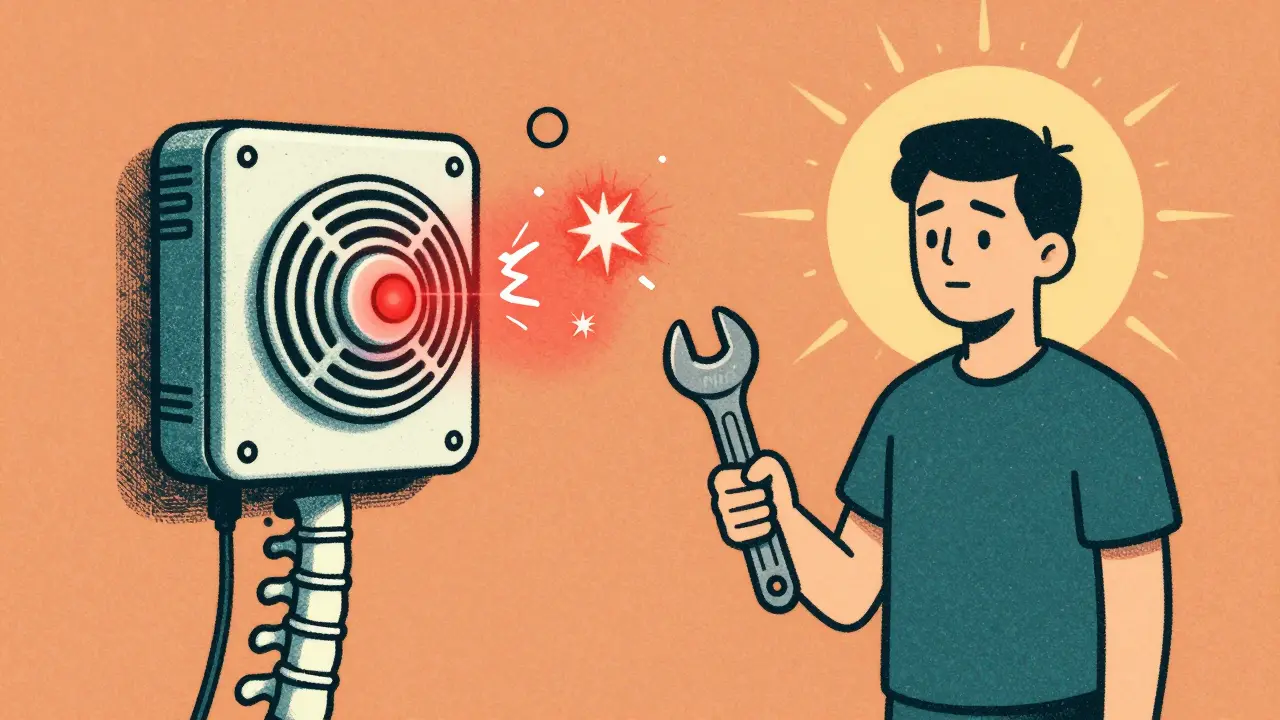
Most people think pain means something is broken. If your back hurts, your disc must be damaged. If your knee aches, the cartilage is worn out. This idea is so deeply rooted that even doctors sometimes reinforce it. But what if pain isn’t a direct message from damaged tissue? What if it’s more like an alarm system that’s gone haywire? That’s the core idea behind Pain Neuroscience Education - and for millions of people with long-term pain, it’s changing everything.
Why Traditional Pain Advice Often Fails
For decades, the go-to advice for chronic pain was simple: rest, avoid movement, and treat the structure. Get an MRI. Find the tear. Fix the problem. But for many, this didn’t work. People were told to stop lifting, avoid bending, and protect their spine - only to find their pain got worse, not better. Why? Because pain doesn’t always match damage. A 2023 review of over 200 studies found that up to 80% of people with chronic low back pain show no structural abnormalities on MRI, yet still report severe pain. Meanwhile, many people with clear disc degeneration or arthritis feel zero pain. This disconnect isn’t rare - it’s the norm. The body doesn’t have a pain meter. It has a threat detector. And sometimes, that detector gets too sensitive. Traditional pain education tells patients: "Your pain is from tissue damage." Pain Neuroscience Education (PNE) says: "Your pain is from a brain that’s learned to overprotect you." It’s not about lying to patients. It’s about updating their understanding with science.How Pain Really Works: The Brain’s Alarm System
Pain isn’t a signal that travels from your back to your brain like a phone call. It’s more like a news alert. Your body sends a mix of signals - heat, pressure, chemical changes - to the brain. The brain then decides: "Is this dangerous?" If yes, it produces pain. If no, it ignores it. Think of it like a smoke alarm. If you burn toast, it goes off. That’s normal. But if the alarm starts going off every time someone walks by, or even when the humidity rises - that’s not because there’s a fire. It’s because the alarm is oversensitive. That’s what happens in chronic pain. The nervous system becomes hypersensitive. This is called central sensitization. In chronic pain, the spinal cord and brain start amplifying signals. Even light touch can feel painful. A gentle hug might hurt. Walking downstairs might feel risky. This isn’t "faking it." It’s real neurobiology. Studies using fMRI scans show that after PNE, the brain’s pain centers - like the insula and amygdala - become less active. The brain literally learns to stop overreacting.What PNE Actually Teaches
PNE isn’t a treatment. It’s a learning experience. A typical session lasts 30 to 45 minutes and is usually led by a physical therapist, occupational therapist, or pain specialist trained in neuroscience. It doesn’t replace movement - it makes movement safer. Here’s what you’ll learn:- Pain is an output of the brain, not an input from tissue damage.
- Nerves don’t have pain receptors - they have threat detectors.
- Stress, fear, sleep loss, and emotions can turn up the volume on pain.
- Your nervous system can change - that’s neuroplasticity.
- Movement doesn’t hurt your body; fear of movement makes pain worse.
Why PNE Works Better Than Other Approaches
Compare PNE to traditional pain education. One group is told: "Avoid lifting. Your disc is bulging." Another is told: "Your brain is being overly protective. Let’s slowly move to calm it down." The results? A 2022 review in the Journal of Orthopaedic & Sports Physical Therapy found PNE improved disability scores 4.7 points higher than traditional education. When PNE was added to physical therapy, pain reduction jumped from 5.3 to 10.8 points on a 100-point scale. That’s not just statistically significant - it’s life-changing. PNE also outperforms placebo education. In one study, patients who got "fake" pain education (e.g., "rest more") saw little change. Those who got real neuroscience education reduced pain catastrophizing by 35% more. Why? Because understanding reduces fear. Fear increases muscle tension, stress hormones, and inflammation - all of which feed pain. Even cognitive behavioral therapy (CBT), often used for chronic pain, doesn’t always match PNE’s impact. A 2022 comparison found PNE had 68% patient satisfaction versus CBT’s 62%. The difference? PNE targets the biological mechanism of pain directly. CBT targets thoughts and behaviors. PNE changes how the brain sees danger.
Who Benefits Most - and Who Doesn’t
PNE works best for chronic pain lasting more than 3 months - especially conditions like fibromyalgia, chronic low back pain, complex regional pain syndrome, and tension headaches. In 82% of studies, patients with long-term pain saw real improvements. But it doesn’t work as well for everyone. People with acute pain - like a recent ankle sprain or post-surgery recovery - rarely benefit. Their pain is usually a true warning. PNE won’t fix a broken bone. It also struggles with patients who have severe cognitive impairment (MMSE score below 24) or very low health literacy. If someone can’t follow a metaphor about a smoke alarm, the lesson won’t stick. In these cases, simplified language like "your body is too alert" works better than "neuroplasticity." And here’s the catch: PNE doesn’t promise pain elimination. It promises pain redefinition. Patients who expect to be pain-free after one session often quit. Those who expect to understand their pain - and slowly rebuild trust in their body - succeed.Real Stories: From Fear to Freedom
One woman, 42, had fibromyalgia for 12 years. She took six pain pills daily. She couldn’t walk her dog. She avoided hugs. After six PNE sessions combined with graded movement, she cut her pills to one every three days. She started walking again. She now hugs her grandchildren without wincing. A man in his 50s had chronic back pain for 15 years. He thought movement would "wear out" his spine. He used a cane. After learning his brain was overreacting, he started gentle walking. Within 8 weeks, he stopped using the cane. He didn’t get "cured." He got his life back. On Reddit’s r/ChronicPain, a user named "PainWarrior87" wrote: "The smoke alarm metaphor changed everything. I stopped fearing movement. I’ve hiked again. I cut my opioids by 75%." These aren’t outliers. They’re the rule.How Clinicians Are Using PNE Today
PNE is now standard practice in 68% of U.S. physical therapy clinics focused on pain. In the UK, it’s growing fast - especially in NHS pain clinics. The European Pain Federation recommends delivering PNE within the first three sessions of care. Clinicians use simple tools: hand-drawn diagrams, printed handouts, short videos. The "Explain Pain Handbook" by Butler and Moseley is the most widely used resource - used by 87% of therapists surveyed. Training takes 3-6 months to master. The International Spine and Pain Institute offers a 24-hour certification course (costing $495), with 85% completion rates. Digital tools are catching up. The "Pain Revolution" app, launched in 2019, has over 186,000 downloads. Virtual reality trials are underway - early results show 30% better knowledge retention than traditional methods. And now, Medicare in the U.S. reimburses PNE under CPT codes 97160-97164. That’s huge. It means clinics can afford to offer it - and patients can access it without huge out-of-pocket costs.
What’s Next for Pain Neuroscience Education
The future of PNE is personalization. Researchers are now testing "biomarker-guided PNE" - tailoring education based on brain scans or stress hormone levels. One NIH-funded trial (R01AR079255) is testing a new version called Acute Pain Neuroscience Education (APNE) for post-surgical patients. Early results suggest it may reduce opioid use by 40%. The biggest challenge? Training enough clinicians. Only 28% of practicing physical therapists in the U.S. feel confident delivering PNE. That’s why universities are adding it to curricula - up from 12% in 2010 to 72% in 2023. The goal isn’t to replace exercise or manual therapy. It’s to make them work better. PNE + movement = a powerful combo. One study showed combining PNE with exercise improved outcomes by 30-40% more than either alone.What You Can Do
If you’ve been told your pain is "all in your head," you’re not alone. But PNE doesn’t say pain is imaginary. It says pain is real - but your brain is misreading the signal. Ask your therapist: "Do you use Pain Neuroscience Education?" If they look confused, they might not be trained. Look for therapists who mention "neuroplasticity," "central sensitization," or "Explain Pain." Read the book: "Explain Pain" by David Butler and Lorimer Moseley. It’s not a quick fix - it’s a shift in perspective. Start moving - gently. Pain isn’t your enemy. Fear of pain is.Frequently Asked Questions
Is Pain Neuroscience Education just talk therapy?
No. PNE is not talk therapy. It’s science education. While it shares some goals with cognitive behavioral therapy (CBT), PNE focuses on teaching the biology of pain - how nerves, the spinal cord, and the brain process signals. It doesn’t try to change your thoughts. It changes your understanding of why you feel pain. Many patients find this reduces anxiety naturally, without needing traditional therapy.
Can PNE help with acute pain like a sprained ankle?
PNE is designed for chronic pain - pain lasting longer than 3 months. For acute injuries like a sprained ankle, pain is usually a true warning signal from damaged tissue. PNE won’t help much here. In fact, studies show only 11% of acute pain cases benefit. But researchers are now testing a modified version called APNE (Acute Pain Neuroscience Education) for post-surgery patients, and early results are promising.
Why does PNE use metaphors like "smoke alarm"?
Complex brain science is hard to understand. Metaphors make it stick. Comparing pain to a smoke alarm that’s too sensitive helps people visualize why movement doesn’t hurt - even if it feels like it does. Studies show patients who hear these analogies remember the concepts longer and are more likely to move again. The metaphor isn’t meant to be perfect - it’s meant to be useful.
Does PNE work for everyone?
Not everyone. It works best for people with chronic pain who are stuck in fear-avoidance cycles. It’s less effective for those with severe cognitive issues, very low health literacy, or those who expect immediate pain relief. About 17% of patients in reviews say it was "too much science" or didn’t help. But for those who stick with it, the change in how they experience pain is often profound.
Do I need to see a specialist to get PNE?
You don’t need a specialist, but you do need someone trained. Physical therapists, occupational therapists, and some physicians offer PNE. Look for providers who mention "Pain Neuroscience Education," "Explain Pain," or "Therapeutic Neuroscience Education." Certification isn’t required, but most effective practitioners have completed at least 24 hours of training. The International Spine and Pain Institute offers a widely recognized course.
Comments
Byron Boror
This is just another liberal brainwashing scheme. Pain is pain. If your back hurts, it's damaged. Stop pretending science can magic away real injury. I've seen too many people get fooled by this nonsense and end up worse off. Stop overcomplicating things with your fancy neuroscience jargon. The truth is simple: rest, ice, and stop being weak.
March 13, 2026 AT 06:46
Lorna Brown
I love how this reframes pain not as a flaw but as a miscommunication. The smoke alarm analogy is perfect. I used to think my chronic pain meant I was broken. Turns out my nervous system was just stuck in panic mode. Once I stopped fighting it and started gently retraining it, everything changed. It’s not denial-it’s recalibration. And yes, movement was the key, but only after I stopped fearing it. The body isn’t your enemy. Fear is.
March 14, 2026 AT 16:11
Rex Regum
Oh wow, another 'your pain is all in your head' con job. Next they'll tell me my broken leg is just a misunderstood metaphor. 🤡 I bet these therapists charge $300/hour to tell you your nerves are 'oversensitive.' Meanwhile, real people with real injuries are being told to 'meditate through the fracture.' This is dangerous pseudoscience wrapped in pretty words. Wake up, sheeple.
March 16, 2026 AT 00:32
Kelsey Vonk
This made me cry 😭 I had fibromyalgia for 10 years and everyone told me to 'just push through.' I thought I was crazy. Then I read Explain Pain and realized... I wasn't broken. My body was just screaming because it was exhausted. I started walking 5 minutes a day. Now I hike. I hug my kids. I'm not 'cured'... but I'm alive again. Thank you for writing this.
March 16, 2026 AT 16:05
Emma Nicolls
I never thought i could feel better after 15 years of pain but this changed everything. i started moving slow and now i dont fear my body anymore. its not magic its just science. i wish more doctors knew this
March 16, 2026 AT 20:14
Jimmy V
PNE works because it cuts through the noise. No fluff. No fear-mongering. Just biology. Your brain isn't lying. It's overworked. Like a server running 24/7 with no maintenance. Stop treating symptoms. Fix the system. Movement + education = unstoppable combo. Done right, this beats opioids, surgery, and placebo every time.
March 17, 2026 AT 19:14
Richard Harris
i read this last night and it finally made sense. i always thought my pain meant i was weak. turns out my nervous system was just over-caffeinated. i started walking again. no big goals. just 10 minutes. now i can play with my grandkids without wincing. thank you for the clarity
March 19, 2026 AT 01:11
Kandace Bennett
OMG this is sooo basic neuroscience 🤦♀️ How is this even controversial? Anyone with a brain knows pain is a perception. The fact that we still treat it like a broken pipe is why healthcare is broken. If you're still clinging to 'structural damage = pain,' you're 30 years behind. Get with the program. 💯
March 20, 2026 AT 07:12
Tim Schulz
Oh look, another TED Talk in essay form. "Your pain is just a smoke alarm." Wow. Revolutionary. Next they’ll tell me my fever is just a misinterpreted text message from my liver. 🤡 I’ve got degenerative disc disease and a herniated L4-L5. My MRI looks like a Rorschach test for a mad scientist. You think metaphors fix that? Try telling that to the guy on disability who can’t stand for 2 minutes. This is intellectual vanity dressed as compassion.
March 22, 2026 AT 02:36
Jinesh Jain
Interesting. I live in India. We don't have access to this kind of education. Most people just take painkillers or rest forever. I wonder if this works in cultures where people don't have access to therapists or MRI machines. Maybe the metaphor still works if you say 'your body is too alert' instead of 'central sensitization'.
March 22, 2026 AT 18:33
douglas martinez
The clinical evidence supporting Pain Neuroscience Education is robust and replicable. It is not a fad. It is an evidence-based paradigm shift grounded in neuroplasticity and biopsychosocial models of pain. Clinicians who dismiss it are operating on outdated paradigms. Integration into standard care is not optional-it is imperative for sustainable pain management outcomes.
March 23, 2026 AT 06:06
Sabrina Sanches
I didn't believe it until I tried it... I mean, I was so scared to move... I thought I was destroying myself... But now I walk... I garden... I hug... And I'm not 'cured'... But I'm not a prisoner anymore...
March 23, 2026 AT 23:39
Shruti Chaturvedi
this is so important for people in developing countries too. we dont have fancy scans or therapists but we can still teach the idea that pain is not always damage. simple words like 'your body is too alert' can help. i shared this with my aunt who has back pain for 20 years. she started walking now. small change big difference
March 25, 2026 AT 00:26
Lorna Brown
I read your comment about the smoke alarm and it clicked. I’ve been telling my patients the same thing for years. The real breakthrough isn’t the metaphor-it’s the permission. Permission to move. Permission to not be broken. Permission to trust your body again. That’s the real medicine.
March 25, 2026 AT 15:39