
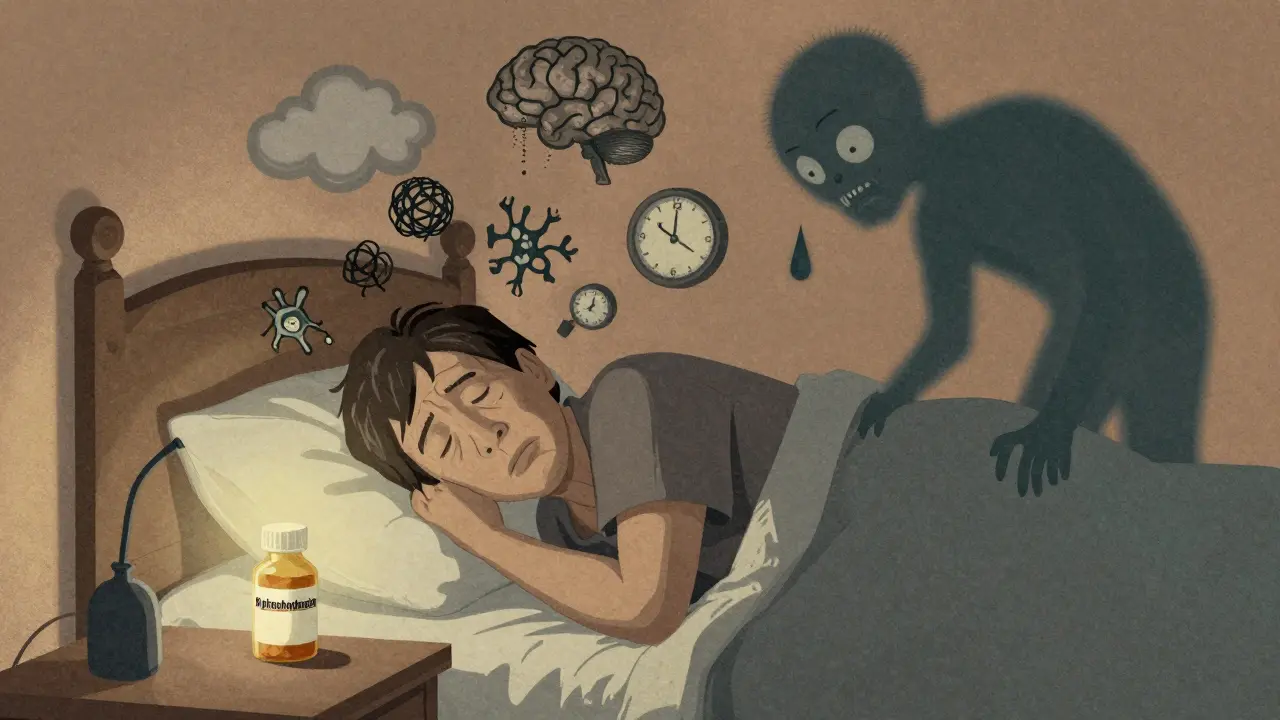
Millions of people reach for diphenhydramine every night hoping to fall asleep faster. Brands like Benadryl, Unisom, and ZzzQuil promise quick relief - and for some, they deliver. But what happens the next morning? That heavy fog in your head? The dry mouth, the dizziness, the feeling you didn’t really rest at all? If you’ve been using diphenhydramine for more than a few nights, you’re not just risking a bad day - you might be putting your long-term brain health on the line.
How Diphenhydramine Really Works (And Why It’s Not What You Think)
Diphenhydramine is an antihistamine - the same class of drug used for allergies. But unlike newer antihistamines like loratadine or fexofenadine, it crosses into your brain easily. That’s why it makes you sleepy. It blocks histamine, a chemical that keeps you alert. But it doesn’t stop there. It also blocks acetylcholine, a key neurotransmitter for memory, focus, and muscle control. This is called anticholinergic activity - and it’s the reason why this drug is so risky, especially as you get older.
When you take 50 mg of diphenhydramine, it hits your bloodstream in about an hour. You feel drowsy. You fall asleep. Sounds good, right? But here’s the catch: your body doesn’t clear it quickly. In someone over 65, it can take up to 18 hours to fully leave your system. That means if you take it at 10 p.m., you’re still feeling its effects at 4 p.m. the next day. A 2021 study found 68% of users reported impaired thinking, slower reaction times, and poor memory the next morning - compared to just 12% in the placebo group. That’s not just grogginess. That’s functional impairment.
The Hidden Dangers: More Than Just a Hangover
Most people think side effects like dry mouth or dizziness are just the price of a good night’s sleep. But the real dangers are far worse.
- Increased dementia risk: A 2024 study tracking over 3,000 adults over 65 found that long-term use of diphenhydramine raised the risk of dementia by 54%. That’s not a small bump. That’s a major increase tied directly to how the drug disrupts brain chemistry.
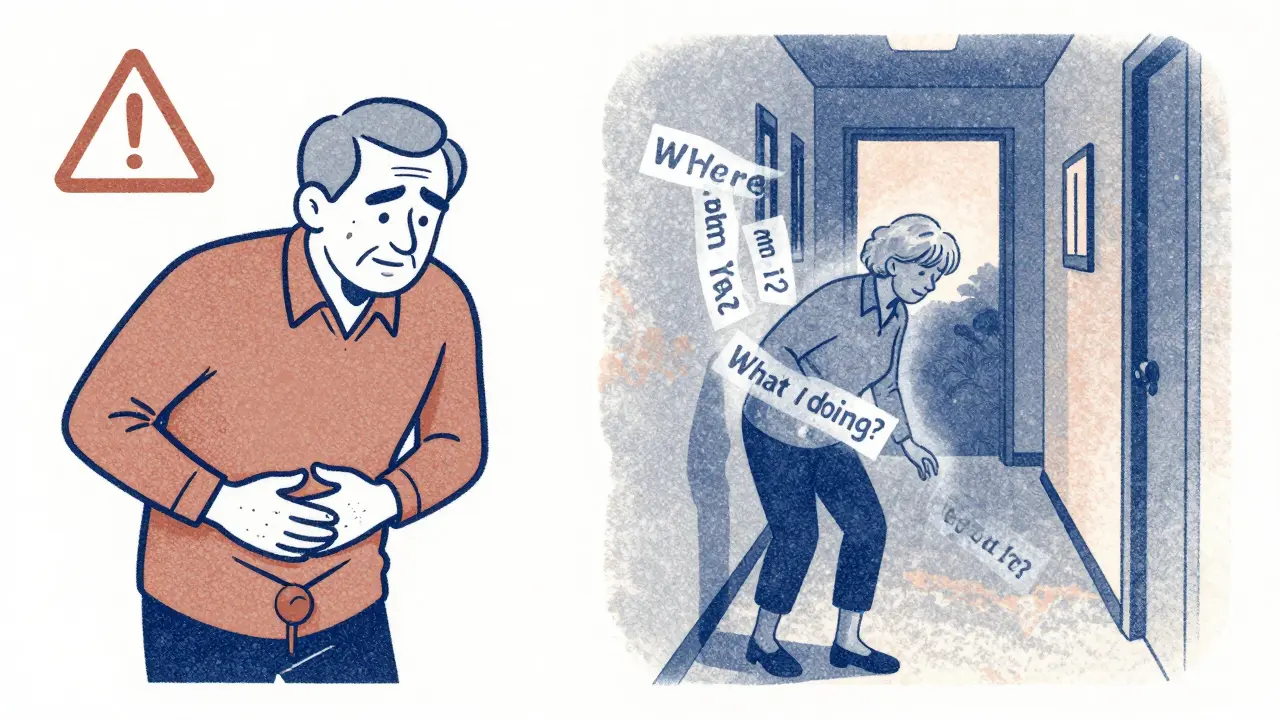
- Urinary problems: For men over 65 with prostate issues, diphenhydramine can cause sudden urinary retention - meaning you literally can’t pee. This isn’t rare. One study found 8.2% of older men using it experienced this.
- Falls and accidents: Dizziness and delayed reflexes lead to falls. WebMD data shows 43% of users over 65 reported falls or accidents linked to next-day drowsiness.
- Confusion and hallucinations: The FDA updated warnings in 2023 to include serious mental side effects like hallucinations, paranoia, and extreme confusion - especially in children and older adults.
And here’s the kicker: it stops working. After just seven days of regular use, 68% of people say it no longer helps them fall asleep. Your body builds tolerance fast. So you start taking more. Or you take it every night. That’s when the real damage begins.
Who Should Never Use It - Even Once
There are groups for whom diphenhydramine isn’t just risky - it’s dangerous.
- Adults over 65: The American Academy of Sleep Medicine says it’s the worst possible choice for older adults. Their bodies process it slowly, increasing side effects and dementia risk.
- People with glaucoma: It can trigger sudden, painful pressure buildup in the eye.
- Men with enlarged prostates: Risk of urinary retention spikes.
- Anyone with heart conditions: It can cause rapid heartbeat or irregular rhythms.
- Pregnant or breastfeeding women: No safe dose has been established.
- Children under 12: The FDA warns it can cause excitability, seizures, and hallucinations in young kids.
Even if you’re young and healthy, using it for more than 14 days straight goes against FDA guidelines. And yet, a 2022 study found 73% of users kept taking it beyond that limit.
What Actually Works - Without the Risk
You don’t need a pill to sleep better. Here are the alternatives that science actually supports.
Melatonin (2-5 mg)
This is your body’s natural sleep hormone. Taking a low dose (2-5 mg) 30-60 minutes before bed helps reset your internal clock. A 2023 meta-analysis found it helped 62% of users fall asleep faster. It doesn’t cause next-day grogginess. It doesn’t affect memory. It’s not addictive. And unlike diphenhydramine, it’s safe for long-term use.
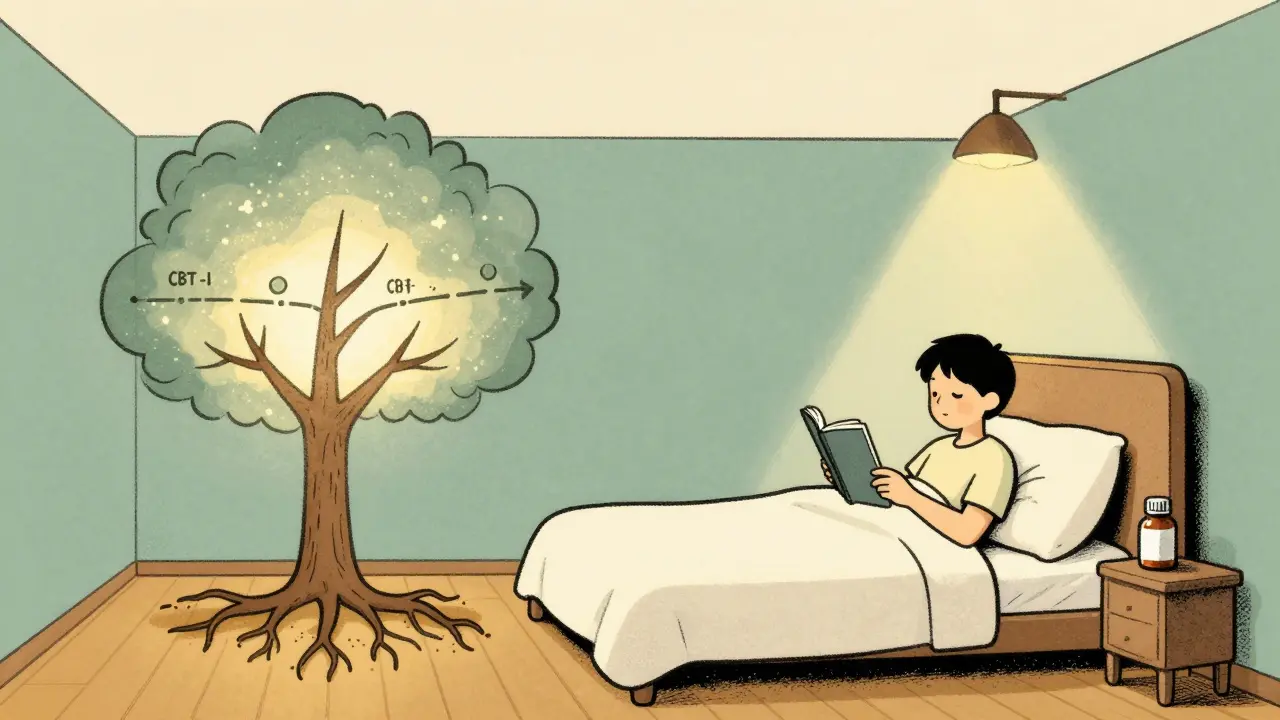
Cognitive Behavioral Therapy for Insomnia (CBT-I)
This is the gold standard - and it’s not a pill. CBT-I teaches you how to break the cycle of anxiety around sleep. It includes techniques like stimulus control (only using bed for sleep), sleep restriction (limiting time in bed to match actual sleep), and cognitive restructuring (changing thoughts like “I’ll never sleep again”).
Studies show CBT-I works for 70-80% of people. And the benefits last - often for years after treatment ends. The American Academy of Sleep Medicine says it’s the first-line treatment for chronic insomnia. Yet most people never hear about it because doctors rarely recommend it.
Prescription Options (Short-Term Only)
If your insomnia is severe and short-term, doctors may prescribe zolpidem (Ambien) or eszopiclone (Lunesta). These are stronger than OTC options and carry their own risks - including dependency and complex sleep behaviors (like sleepwalking). But they’re still safer than diphenhydramine for short-term use under medical supervision.
Non-Sedating Antihistamines (For Allergies Only)
Don’t confuse diphenhydramine with cetirizine (Zyrtec) or fexofenadine (Allegra). These don’t cross into your brain. They won’t make you sleepy. They’re safe for driving, working, and daily life. If you’re taking diphenhydramine for allergies and hoping to kill two birds with one stone - stop. Get the right drug for the right job.
Why People Keep Using It - And Why They Should Stop
On Amazon, diphenhydramine sleep aids have a 4.1-star rating. Why? Because for some people, it works - at first. Users say things like “I fell asleep in 10 minutes” or “It’s the only thing that helps.” But the negative reviews tell the real story: “Next-day grogginess is unbearable,” “I feel like a zombie,” “It stopped working after two weeks.”
On Reddit, people over 50 talk about morning confusion and trouble urinating. Younger users report better results - but even they admit it’s not sustainable. The truth? It’s a Band-Aid on a broken bone. It masks the problem without fixing it.
The market is shifting. Melatonin sales grew 22% in 2023. Diphenhydramine’s share of the OTC sleep aid market dropped from 42% in 2018 to 35% in 2023. People are waking up - literally and figuratively - to the risks.
What to Do If You’re Currently Using It
If you’ve been taking diphenhydramine for more than two weeks, don’t quit cold turkey. Talk to your doctor. Here’s a practical plan:
- Stop using it for sleep after 14 days - no exceptions.
- Replace it with melatonin (2-5 mg) for the next 2-4 weeks.
- Start a sleep diary: note bedtime, wake time, how you felt in the morning.
- Try CBT-I. Many online programs are affordable and effective (like Sleepio or CBT-I Coach app).
- Review all your medications. Many common drugs - including some antidepressants and blood pressure pills - can worsen sleep. Your doctor can help.
And if you’re over 65? Stop now. The risk isn’t worth it. Your brain doesn’t need another anticholinergic burden.
The Bottom Line
Diphenhydramine isn’t a sleep aid. It’s a sedative with dangerous side effects. It doesn’t improve sleep quality - it just knocks you out. And over time, it harms your brain, your balance, your bladder, and your ability to think clearly.
The real solution isn’t stronger pills. It’s better habits. Better timing. Better support. Sleep isn’t a problem to be fixed with a chemical. It’s a natural process that can be restored - without drugs.
There are safer, smarter ways to sleep. You just have to choose them.
Comments
Vatsal Srivastava
Diphenhydramine is just pharmaceutical laziness dressed up as a solution
People don't want to fix sleep hygiene they want a chemical nap
Meanwhile melatonin is the only thing that actually respects your circadian rhythm
And CBT-I? That's the real upgrade
But no one wants to do the work
February 2, 2026 AT 23:44
Brittany Marioni
Thank you so much for this incredibly important, well-researched, and compassionate breakdown!
I've seen so many older relatives struggle with this-especially after losing a spouse or retiring-and they just think, 'Oh, it's just a little pill,' but it's so much more than that.
The dementia risk? The urinary retention? The falls? These aren't 'side effects'-they're life-altering consequences.
Please, please share this with your grandparents, your neighbors, your local senior centers.
Knowledge is power-and this is life-saving knowledge.
Also, melatonin isn't a magic bullet, but it's a gentle nudge, not a sledgehammer.
And CBT-I? It's literally the gold standard-and it's often covered by insurance now!
You're doing important work here.
February 3, 2026 AT 08:31
Bob Hynes
bro i took zzzquil for like 3 years straight cause i thought it was 'natural' because it was in a little bottle with stars on it
turns out i was just slowly turning into a walking zombie
my girlfriend said i stopped making eye contact and started talking in monotone
switched to melatonin and now i actually dream again
also i started reading before bed instead of scrolling
my brain feels like it got a reboot
also why is everyone still buying this stuff like it's a snack?
February 4, 2026 AT 10:45
Akhona Myeki
India has the highest rate of diphenhydramine use in South Asia
pharmacies sell it like candy
no prescription needed
grandma takes it every night for 'peaceful sleep'
she says she dreams less now
and forgets where she put her glasses
but she says 'it's fine, it helps me rest'
we need public health campaigns here
not just blog posts
also melatonin is available over the counter now
but no one knows about it
everyone still buys Benadryl because it's cheap
February 5, 2026 AT 19:23
Chinmoy Kumar
wait so diphenhydramine causes dementia??
i thought it was just the alcohol
my uncle took it for 10 years
he's 78 now and can't remember my name
but he still says 'it's the only thing that works'
is this really true??
because i've been taking it for a month
and i feel kinda foggy in the morning
but i thought it was just stress
should i stop??
or is it too late??
February 6, 2026 AT 00:56
Brett MacDonald
the real tragedy isn't the drug
it's that we've outsourced sleep to chemistry
we used to have routines
darkness
candles
quiet
now we have screens and sedatives
and we call it 'self care'
the brain isn't a machine you can reboot with a pill
it's a living thing
and you can't trick it
you can only confuse it
and then wonder why it's broken
February 6, 2026 AT 21:11
Sandeep Kumar
western medicine is a scam
they sell you pills instead of teaching you discipline
india knows real sleep
we sleep on floors
we wake with the sun
we don't need your fancy melatonin
your CBT-I is just therapy capitalism
take a cold shower
go to bed early
stop eating junk
that's how you sleep
not with pills from big pharma
February 7, 2026 AT 18:22
Gary Mitts
so you're telling me the thing that got me through grad school is now a dementia bomb?
thanks for the heads up
guess i'll just start drinking whiskey instead
at least that's honest
February 8, 2026 AT 05:01
Anthony Massirman
my dad took this for 15 years
he fell twice
one time he broke his hip
they didn't even connect it to the pill
he thought he was just 'getting old'
we found out when his neurologist asked what he was taking
he said 'oh that little blue thing'
that's when we knew
he's 82 now
he's on melatonin
and he sleeps better than he has in a decade
and he remembers my birthday
February 9, 2026 AT 22:35
Solomon Ahonsi
why are we still talking about this
it's 2024
people are still buying this like it's a gift card
amazon reviews are full of 'best sleep aid ever'
the comments are full of 'next day zombie'
no one connects the dots
the system is broken
and we're all just zombies
February 10, 2026 AT 06:16
George Firican
The human condition has always been one of tension between the desire for immediate relief and the long-term cultivation of well-being
Diphenhydramine represents the triumph of the former over the latter
We live in an age of pharmacological convenience where the body is treated as a machine to be tuned with chemicals rather than a complex organism to be nurtured through rhythm, ritual, and rest
The anticholinergic burden is not merely a physiological phenomenon-it is a cultural one
It reflects our collective abandonment of the sacredness of sleep
We have replaced the quiet darkness of twilight with the electric glare of screens and the chemical haze of sedation
And in doing so, we have forgotten that sleep is not a problem to be solved, but a process to be honored
The brain does not heal through force
It heals through stillness
And stillness cannot be purchased
It must be cultivated
CBT-I is not a treatment
It is a return
February 12, 2026 AT 02:04
phara don
so if i take melatonin at 10pm do i still need to turn off my phone at 9pm?
or is the melatonin enough?
also can i still have coffee at 4pm?
just want to know the rules
🙏
February 13, 2026 AT 09:55
Hannah Gliane
OMG I'M SO GLAD YOU FINALLY SAID THIS
I've been screaming about this for years
My mom took this for 20 years
She had dementia
She had falls
She couldn't urinate
And the doctors never asked what she was taking
It's criminal
And now she's on melatonin
And she's smiling again
But why did it take 20 years for someone to write this?
WHY??
😭
February 15, 2026 AT 07:49
Murarikar Satishwar
This is exactly the kind of post that needs to go viral
Not just because it's accurate
But because it's compassionate
Too many people feel ashamed for using diphenhydramine
They think they're weak
But this isn't about willpower
It's about misinformation
And marketing
Pharmaceutical companies don't care if you're a zombie
They care if you buy the next bottle
Let's stop the shame
Let's start the education
And let's make melatonin and CBT-I as easy to find as Benadryl
February 17, 2026 AT 00:02