
Methotrexate-NSAID Interaction Risk Calculator
Input Parameters
Risk Assessment
Quick Summary: What You Need to Know
- Methotrexate and NSAIDs can interact dangerously by reducing kidney function, causing drug levels to spike.
- Risk varies significantly between low-dose (rheumatoid arthritis) and high-dose (cancer) regimens.
- Patients with existing kidney issues (eGFR <60) face a much higher risk of acute kidney injury.
- Monitoring blood work within 48-72 hours of starting NSAIDs is critical for safety.
- Safer pain alternatives like acetaminophen exist for patients on this therapy.
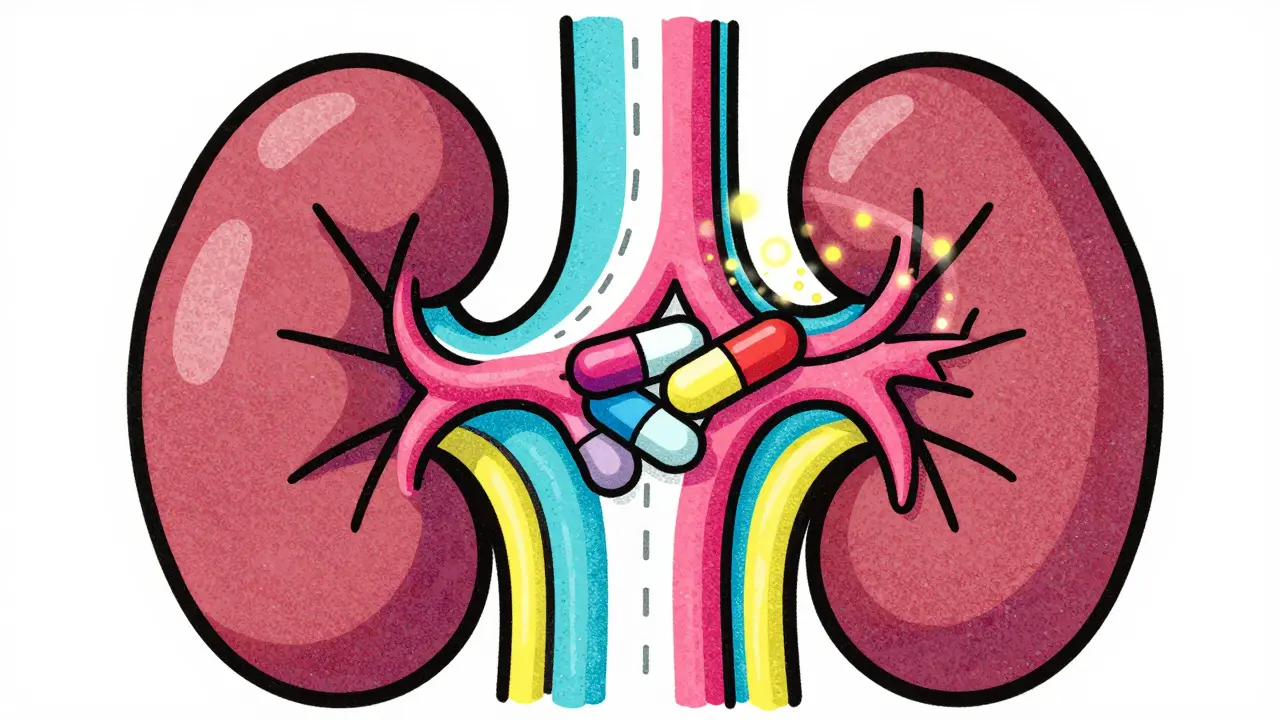
If you take Methotrexate a medication commonly used for rheumatoid arthritis and cancer, you might be prescribed painkillers for a flare-up or a headache. It feels routine, right? You grab the NSAIDs non-steroidal anti-inflammatory drugs like ibuprofen or naproxen from the cabinet. But this combination hides a silent danger. Your kidneys work hard to filter waste, and when these two drugs meet, they can slow that process down dramatically. This isn't just theory; it's a documented clinical risk affecting thousands of patients annually.
We aren't talking about a mild stomach upset. We are talking about Renal Toxicity damage to the kidneys caused by medications and dangerously high levels of methotrexate staying in your blood. Why does this happen? Because NSAIDs constrict blood flow to the kidneys, and methotrexate relies on those kidneys to get out of your system. When the exit door gets blocked, the drug builds up. Let's break down exactly what goes on in your body and how you can stay safe.
How Methotrexate Works in the Body
To understand the risk, you first need to know how your body handles methotrexate. This drug is a powerhouse. It was first synthesized back in 1947 and has saved countless lives since. For autoimmune conditions like rheumatoid arthritis, doctors use low doses, typically between 5 and 25 mg once a week. For cancer treatments, the doses are much higher, often exceeding 150 mg daily.
Once you take a dose, about 60% of it gets absorbed into your bloodstream. It reaches peak concentration anywhere from 45 minutes to 6 hours later. Here is the crucial part: your kidneys are responsible for clearing this drug from your system. At lower doses, your body eliminates it with a half-life of 3 to 10 hours. But if you are on high-dose therapy, that half-life stretches to 8 to 15 hours. The elimination isn't linear. It follows a saturation curve, meaning your kidneys can only process so much at once. If you add anything that slows them down, the system backs up.
Methotrexate binds to proteins in your blood about 50% of the time. The rest circulates freely, waiting to be filtered. This protein binding is another area where interactions can occur. If another drug displaces methotrexate from these proteins, more free drug becomes available, increasing the risk of toxicity. This is why understanding the pharmacokinetics matters. It's not just about taking a pill; it's about how that pill travels through your body.
The NSAID Interaction Mechanism
So, what happens when you introduce NSAIDs into the mix? NSAIDs include common over-the-counter drugs like ibuprofen, naproxen, and diclofenac. They are fantastic for pain and inflammation, but they work by inhibiting prostaglandins. Prostaglandins are chemicals that keep blood vessels in your kidneys dilated. When NSAIDs block them, blood flow to the kidneys drops by about 15 to 20%.
This reduction in blood flow means less methotrexate gets filtered out. Studies show that methotrexate clearance can decrease by 25 to 40% when combined with NSAIDs. Imagine your kidneys are a highway. Methotrexate is the traffic. NSAIDs are a roadblock. Suddenly, the traffic backs up, and levels in your blood rise. In some cases, serum methotrexate levels can jump by 25 to 50% just from adding an NSAID.
There is also a competitive inhibition aspect. Both methotrexate and some NSAIDs use the same transporters in the kidney tubules to get excreted. They compete for the same exit door. This is particularly relevant for drugs like ketorolac, which is known to be a potent inhibitor. It can increase methotrexate levels by up to 50%, making it one of the riskiest NSAIDs to combine with this therapy.
High-Dose vs. Low-Dose Risk Profiles
Not all methotrexate use carries the same level of danger. The risk depends heavily on the dose you are taking. If you are undergoing high-dose therapy, typically defined as greater than 500 mg per square meter of body surface area, the stakes are incredibly high. A 2022 meta-analysis found that adding NSAIDs to high-dose methotrexate increases the risk of severe toxicity by 4.7 times. We are talking about life-threatening myelosuppression, where your bone marrow stops making blood cells, and acute kidney injury.
For patients with rheumatoid arthritis on low-dose methotrexate (25 mg or less weekly), the picture is more nuanced. A 2021 systematic review found no statistically significant increase in serious adverse events for patients with normal kidney function. However, that safety net vanishes if your kidneys are already struggling. If your eGFR (estimated glomerular filtration rate) is below 60 mL/min/1.73m², the risk of adverse events jumps by 3.2 times. This distinction is vital. Many patients assume low-dose means low risk, but pre-existing conditions change the equation entirely.
| Therapy Type | Dose Range | NSAID Risk Level | Key Monitoring Need |
|---|---|---|---|
| High-Dose (Oncology) | >150 mg/m² | Critical | Levels at 24, 48, 72 hours |
| Low-Dose (RA) | 5-25 mg weekly | Moderate | Creatinine & CBC biweekly |
| Renal Impairment | Any dose, eGFR <60 | High | Avoid NSAIDs entirely |
Signs of Renal Toxicity and Monitoring
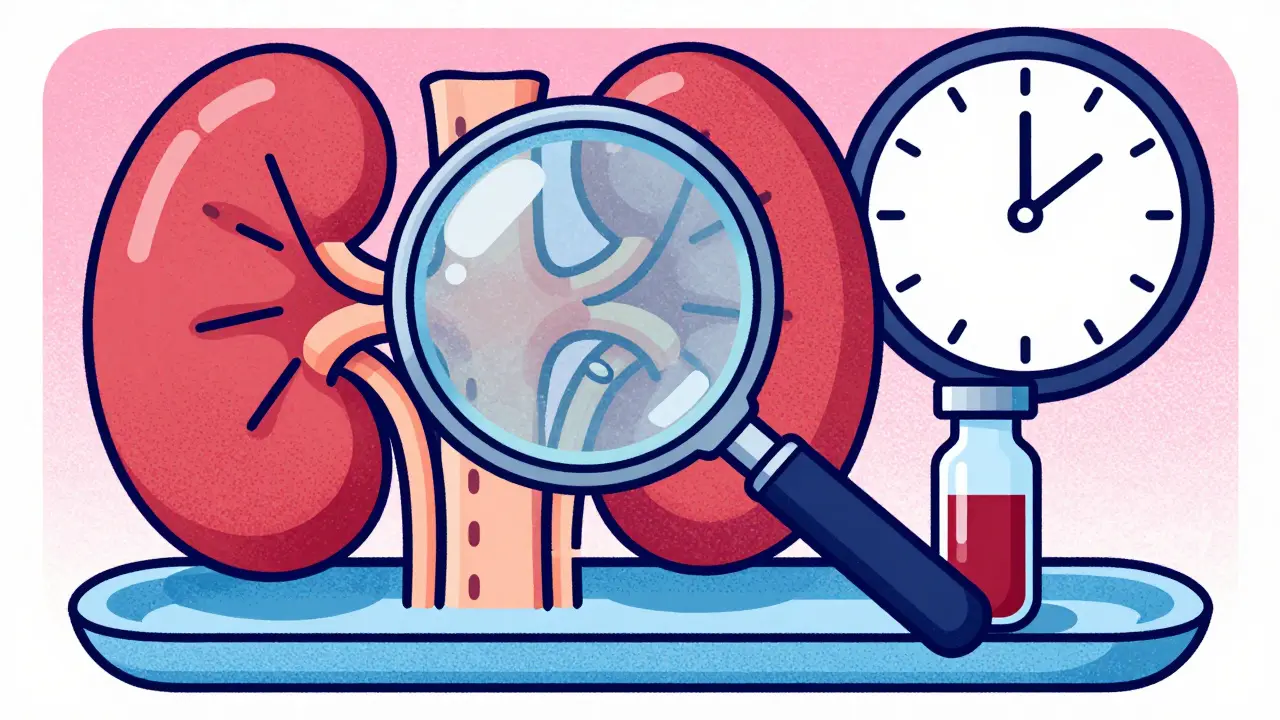
How do you know if your kidneys are under attack? Often, you don't feel anything immediately. A 2020 systematic review noted that 63% of mild-to-moderate renal impairment cases were asymptomatic. You might not feel pain or see changes in urine output. That is why blood tests are non-negotiable. Serum creatinine is the standard marker for kidney function. If this level rises, it means your kidneys are struggling to filter waste.
When NSAIDs are added to methotrexate therapy, creatinine elevations typically occur within 48 to 72 hours. This window is critical. If you start a new painkiller, you need to get your blood drawn within that timeframe. Waiting a month is too late. By then, significant damage could have already occurred. Alongside kidney function, you must monitor your complete blood count (CBC). Methotrexate toxicity can suppress your white blood cells, leaving you vulnerable to infections. A drop in white blood cell count, like the one reported by a patient who fell to 1.8 × 10⁹/L, is a medical emergency.
Other symptoms of toxicity include severe fatigue, mouth ulcers, and nausea. If you experience these after starting an NSAID, stop the painkiller immediately and contact your doctor. Do not wait for your next scheduled appointment. These are warning signs that your drug levels are too high.
Safer Alternatives for Pain Management
Living with rheumatoid arthritis often means living with pain. You need relief, but you cannot sacrifice your kidneys. Fortunately, there are alternatives. Acetaminophen (paracetamol) is generally considered safer for kidney function. It works differently than NSAIDs and does not inhibit renal prostaglandins. You can typically take up to 3 grams a day, provided your liver is healthy.
If acetaminophen isn't enough, talk to your doctor about low-dose opioids for short-term use. They have their own risks, but they don't carry the same renal toxicity profile as NSAIDs when combined with methotrexate. Another strategy is to optimize your disease-modifying antirheumatic drugs (DMARDs). If your underlying inflammation is better controlled, you might need fewer painkillers overall. Celecoxib is a COX-2 selective inhibitor that shows lower interaction potential compared to traditional NSAIDs, increasing methotrexate levels by only 10-15% in some studies, but it still requires caution.
Avoiding NSAIDs entirely is the gold standard for patients with renal impairment. The European League Against Rheumatism recommends absolute avoidance for patients over 65 or those with any degree of kidney issues. It's a tough pill to swallow when you are in pain, but protecting your organ function is the priority. Long-term kidney damage is irreversible, whereas pain can often be managed with other methods.
Real-World Patient Experiences
Data from clinical trials is one thing; real life is another. On patient forums like CreakyJoints, many people share stories of being prescribed NSAIDs without a warning. One user described taking naproxen for knee pain without a kidney check. Within three days, they developed severe nausea and a dangerous drop in white blood cells. It took two weeks of leucovorin rescue therapy to recover. Leucovorin is a form of folinic acid used to counteract methotrexate toxicity. Having to go through that rescue process is traumatic and could have been prevented.
Conversely, other patients report taking ibuprofen occasionally for years without issues. The difference? Monitoring. One user noted their doctor checks creatinine and CBC every four weeks religiously. This regular surveillance catches problems before they become emergencies. The Arthritis Foundation's 2022 survey supports this: 41% of patients had adverse events when NSAIDs were added without monitoring, compared to only 9% when protocols were followed. Your safety depends on the vigilance of your healthcare team and your own advocacy.
Management Protocols and Best Practices
If you and your doctor decide the benefits of an NSAID outweigh the risks, you must follow strict protocols. The American College of Rheumatology suggests using the lowest effective dose for the shortest duration. Do not take NSAIDs daily if you can take them only when needed. Spacing your doses helps too. Try to separate your methotrexate and NSAID administration by at least 12 hours. This minimizes the overlap of peak drug concentrations in your blood.
For high-dose therapy, the rules are stricter. The National Comprehensive Cancer Network mandates checking methotrexate levels at 24, 48, and 72 hours if NSAIDs are co-prescribed. This ensures levels drop to safe ranges before the next dose. Pharmacists also play a key role. A 2023 study showed that pharmacist-led medication management reduced interaction rates by 63%. Don't be afraid to ask your pharmacist to review your medication list. They are trained to spot these conflicts.
Emerging research is also looking at genetic factors. Some people carry the SLC19A1 80G>A polymorphism, which makes them more susceptible to methotrexate accumulation. While genetic testing isn't standard yet, it might become part of routine care in the near future. Until then, the best defense is a strong partnership with your doctor and consistent blood monitoring.
Can I take ibuprofen with methotrexate?
You should generally avoid taking ibuprofen with methotrexate, especially if you have any kidney issues. If your doctor approves it, use the lowest dose for the shortest time and get blood tests within 48-72 hours to check kidney function.
What are the symptoms of methotrexate toxicity?
Symptoms include severe fatigue, mouth ulcers, nausea, vomiting, and signs of infection like fever. If you notice these after starting a new medication, contact your healthcare provider immediately.
Is acetaminophen safe with methotrexate?
Yes, acetaminophen is generally considered safer than NSAIDs for patients on methotrexate because it does not affect kidney blood flow in the same way. However, always follow dosage limits to protect your liver.
How often should I check my kidney function?
If you are on stable methotrexate therapy, regular checks are usually every 4-8 weeks. If you start an NSAID, you need a check within 48 to 72 hours to ensure your kidneys are handling the combination well.
What is leucovorin rescue?
Leucovorin is a medication used to reverse the effects of methotrexate toxicity. It is given when drug levels become too high to prevent damage to healthy cells, particularly in the bone marrow and kidneys.
Next Steps for Your Safety
Take control of your medication safety today. First, review your current prescriptions with your pharmacist. Ask specifically about the methotrexate-NSAID interaction. Second, keep a log of your painkillers. Note when you take them and how much. Third, never skip your blood tests. They are your early warning system. Finally, communicate openly with your rheumatologist. If you are in pain, tell them. There are many ways to manage pain without risking your kidneys.
Remember, your kidneys are vital for life. They filter toxins and balance your fluids. Protecting them ensures you can continue your treatment without life-altering complications. Knowledge is your best defense. Stay informed, stay monitored, and stay safe.
Comments
Elaine Parra
You people need to stop ignoring the facts about drug interactions. It is irresponsible to mix these substances without proper monitoring. The consequences are severe and often permanent. I have seen too many cases where negligence leads to hospitalization. Your kidneys are not meant to filter this kind of chemical warfare. Stop treating medication like candy and start respecting the biology. We need stricter regulations on what doctors prescribe together. This is not a debate about personal freedom when health is on the line. The data is clear and the risks are documented. Ignorance will not save you from toxicity levels spiking in your blood.
March 26, 2026 AT 23:51
Linda Foster
It is imperative to consider the pharmacological implications of concurrent therapy. The reduction in glomerular filtration rate is a significant concern for many patients. Medical professionals must adhere to established guidelines regarding NSAID usage. Patient safety remains the primary objective in all clinical decisions. One must evaluate the eGFR levels before initiating any new regimen. The potential for acute kidney injury cannot be overstated in this context.
March 28, 2026 AT 05:06
Chris Farley
Actually the kidneys heal themselves most of the time. People are too scared to take what they need for pain. The body is resilient and adapts to stressors naturally. You do not need to panic over every single interaction listed in a pamphlet. Many doctors are just covering their own backsides with these warnings. Real life experience often contradicts the textbook scenarios we read about. Trust your own body signals over some generic medical advice.
March 28, 2026 AT 11:45
Jacob Hessler
i think its bad tho and you should listen to the docs. my uncle took this stuff and he got really sick in the end. dont play around with your health just because you want to save money on tests. the kidneys are important for filtering blood and stuff. if you mess them up you are in big trouble forever. listen to the experts and not random people on the internet.
March 29, 2026 AT 01:57
Amber Gray
so true everyone needs to know this 🚨 dont ignore the signs of kidney trouble. its super dangerous if you mix them up wrong. i saw someone lose their function because they were careless. take care of yourself and your family 🙏🏼
March 30, 2026 AT 03:55
Anil Arekar
We must approach this subject with a sense of responsibility and care for one another. The interaction between these medications is a matter of public health importance. Education is the key to preventing adverse outcomes in clinical settings. Patients should be empowered with knowledge about their treatment plans. Open communication between the patient and physician is essential for safety. We should all strive to maintain the integrity of our health systems.
March 31, 2026 AT 11:11
Chris Crosson
That is a very good point about communication between doctors and patients. It really helps when everyone is on the same page regarding medication. I have found that asking about side effects upfront makes a big difference. People should feel comfortable discussing their full medical history. Safety is definitely the top priority for everyone involved.
April 2, 2026 AT 05:55
Katie Putbrese
Why are you taking these drugs if you do not understand the risks. You need to be more careful with your own body. It is not just about the medicine but how you live your life. People ignore the warnings until it is too late to fix the damage. You should be ashamed of yourself for not reading the label. Stop being so careless and pay attention to what you put inside you.
April 2, 2026 AT 08:40
Namrata Goyal
only the educated understand this level of medical complexity. most people are just too simple to grasp the pharmacology involved. you need a degree to really know what is happening in your body. do not expect common sense to save you from toxicity. the elite in medicine know better than the general public.
April 2, 2026 AT 22:29
Brandon Shatley
my friend had this happen and it was scary to watch. he took the pills and then his legs swelled up big. the doctor said his kidneys were not working right anymore. we went to the hospital and they had to stop the meds. it takes a long time to recover from that kind of damage. you should really check with your doctor before mixing anything. i hope nobody else goes through what he did.
April 3, 2026 AT 14:43
Jefferson Moratin
Medicine is a complex field that requires deep understanding. Many people overlook the interactions between common drugs. The kidneys play a vital role in filtering these substances. When methotrexate is introduced, the balance shifts significantly. NSAIDs can block the excretion pathways that the body relies on. This accumulation leads to toxicity levels that are dangerous. Patients often do not realize the severity of the situation until it is too late. We must educate ourselves on these pharmacological nuances. The body is a system of interconnected parts. Disrupting one element causes a ripple effect throughout the whole organism. History has shown us the consequences of ignoring such warnings. Modern medicine demands vigilance from both doctors and patients alike. Ignorance is not a valid defense when health is at stake. We should strive for better knowledge in our communities. Only then can we prevent unnecessary harm from occurring.
April 3, 2026 AT 16:01
Caroline Dennis
Renal clearance is key here for elimination kinetics. Pharmacokinetics dictate the therapeutic window significantly. Bioavailability changes with concurrent NSAID administration. Monitor serum creatinine levels frequently during therapy. Dose adjustments are often required based on GFR metrics. Adherence to protocols prevents nephrotoxicity events.
April 4, 2026 AT 20:24
Mihir Patel
This is literally the most important thing I have read today.
April 6, 2026 AT 05:34