
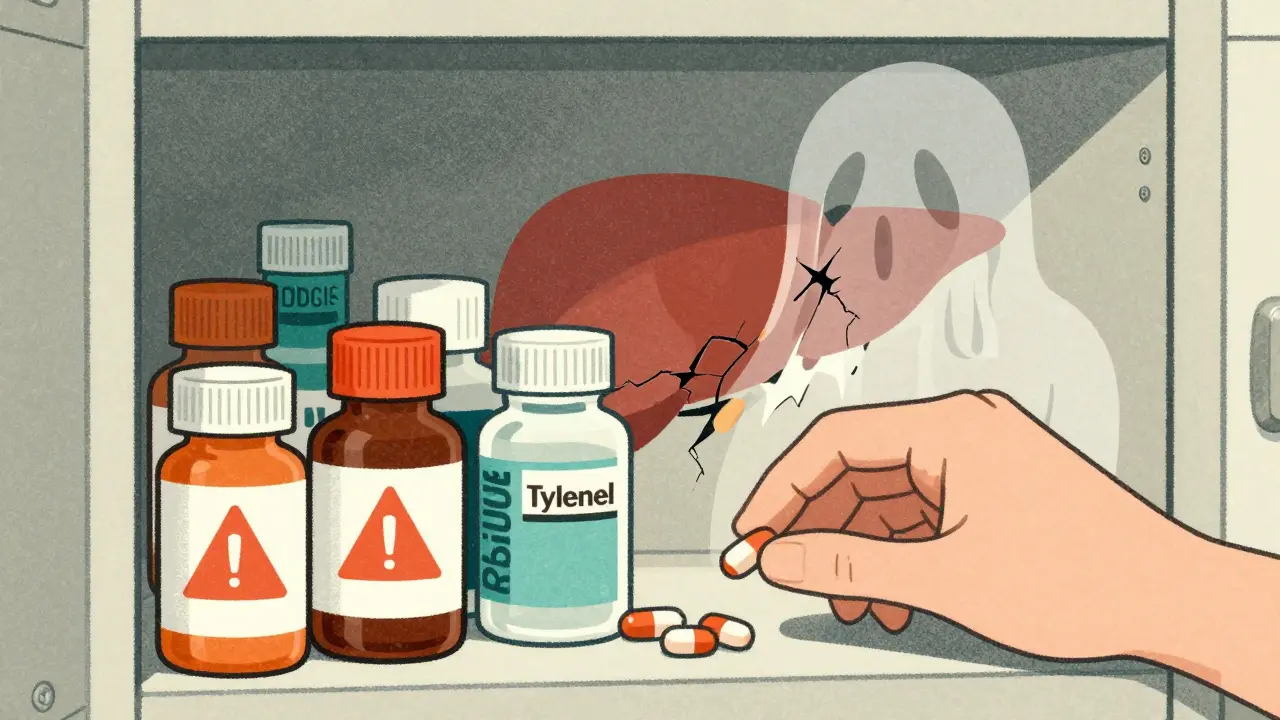
Every year, over 1.3 million people in the U.S. end up in the emergency room because of medication mistakes. Many of these aren’t accidents-they’re the result of myths people believe are true. You’ve probably heard them: "OTC meds are harmless," "If one pill helps, two will help more," or "I can stop my antibiotics when I feel better." These aren’t just harmless rumors. They’re dangerous. And they’re more common than you think.
Myth: Over-the-Counter Medications Are Completely Safe
It’s easy to think OTC drugs are harmless because you can buy them without a prescription. But that’s exactly why they’re risky. Acetaminophen-the active ingredient in Tylenol and hundreds of other pain relievers-is the leading cause of acute liver failure in the U.S. The FDA lowered the daily maximum dose to 3,000 mg in 2011 after years of data showed people were accidentally overdosing. How? Because they took Tylenol for a headache, then took a cold medicine that also had acetaminophen, then took another painkiller later. That’s three doses in one day. Just eight extra-strength tablets (4 grams) can push you past the safe limit.
Every year, acetaminophen overdose sends 56,000 people to the ER, hospitalizes 26,000, and causes 500 deaths. That’s more than heroin overdoses. And it’s entirely preventable. The fix? Always check the active ingredients on every bottle. If it says "acetaminophen," "APAP," or "paracetamol," you’re taking it. Don’t stack it with other meds unless your doctor says it’s safe.
Myth: Taking More Will Make It Work Better
"I took two ibuprofen and it didn’t help, so I took two more." This is one of the most common mistakes-and one of the most dangerous. Ibuprofen (Advil, Motrin) is fine at the right dose: 200-400 mg every 4-6 hours, not more than 1,200 mg in 24 hours. But go over that? Your risk of stomach bleeding jumps by 4.5 times, according to a 2017 JAMA study. The same goes for naproxen, aspirin, and even some cold meds that contain NSAIDs.
It’s not about being "stronger." It’s about your body’s limits. Your liver and kidneys process these drugs. Pushing beyond the label dose doesn’t speed up relief-it overwhelms your system. And if you’re on blood pressure meds, kidney disease, or have a history of ulcers, even the recommended dose can be risky. Always start low. Wait. Then talk to your pharmacist before increasing it.
Myth: You Can Stop Taking Medication When You Feel Better
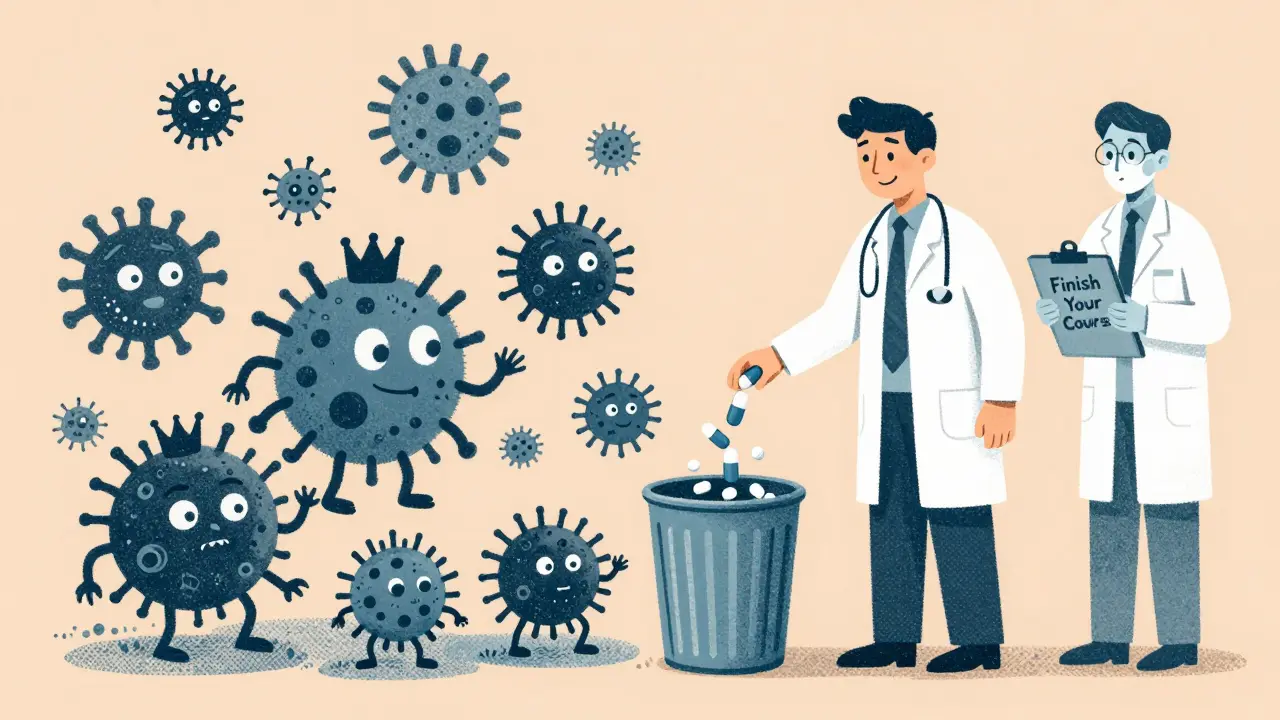
This myth kills. Especially with antibiotics. You take amoxicillin for a sinus infection. Day 3: your nose clears up. You feel fine. So you toss the rest. Big mistake.
The CDC says 30% of antibiotic courses are stopped early. That’s not just lazy-it’s fueling a global crisis. When you don’t finish the full course, the strongest bacteria survive. They multiply. They evolve. And now you’ve created a superbug. In the U.S. alone, antibiotic-resistant infections cause 35,000 deaths each year. That’s more than car accidents.
Same goes for blood pressure pills, thyroid meds, or antidepressants. Feeling better doesn’t mean the problem is gone. Stopping early can cause relapses, worse symptoms, or even permanent damage. If you’re feeling better, that’s good. But finish what you started-or talk to your doctor before quitting.
Myth: Natural or Herbal Products Are Always Safe
"It’s natural, so it can’t hurt." That’s what people say about St. John’s Wort, ginkgo biloba, echinacea, and other supplements. But "natural" doesn’t mean safe. St. John’s Wort, often used for mild depression, cuts the effectiveness of birth control pills by 15-33%. That’s not a small risk-it’s a pregnancy risk.
Ginkgo biloba, taken for memory or circulation, can thin your blood. When mixed with warfarin (Coumadin), it increases bleeding risk by 50%. That’s not theoretical. There are real cases of brain bleeds and internal bleeding tied to this combo.
Even garlic pills, fish oil, and vitamin E can interfere with surgery or blood thinners. The National Center for Complementary and Integrative Health found that 65% of supplement users believe they’re harmless. They’re wrong. Always tell your pharmacist and doctor what you’re taking-even if it’s "just a herb."
Myth: Mixing Alcohol with Prescription Meds Is Fine If You’re Responsible
"I had one glass of wine with my pain pill. It’s fine." No, it’s not.
Alcohol and opioids (like oxycodone, hydrocodone, or codeine) are a deadly mix. A 2020 study in Addiction Biology found that combining them increases the risk of respiratory depression-your breathing slows to a stop-by 800%. That’s not an exaggeration. That’s a number from peer-reviewed research.
Even with common meds, alcohol can be dangerous. It boosts drowsiness from antihistamines, makes blood pressure meds less effective, and can trigger liver damage when taken with acetaminophen. Your liver doesn’t care if you call it "a glass of wine" or "a shot of whiskey." It just sees alcohol-and it’s already busy processing your meds.
Bottom line: If your prescription label says "avoid alcohol," it’s not a suggestion. It’s a warning. And it’s backed by science.
Myth: Generic Drugs Are Inferior to Brand Names
"Why would I take the generic? It’s cheaper-that means it’s weaker." This myth costs lives. And money. The FDA requires generics to have the same active ingredient, strength, dosage form, and bioequivalence as the brand name. That means they work the same way, in the same amount of time. The difference? The inactive ingredients-fillers, colors, coatings. Nothing that affects how the drug works.
Studies show generics are just as effective. The American Pharmacists Association confirms that generics meet the FDA’s strict 80-125% bioequivalence range. That’s not a loophole-it’s a science-based standard. And it’s why generics save patients and insurers $200 billion a year in the U.S.
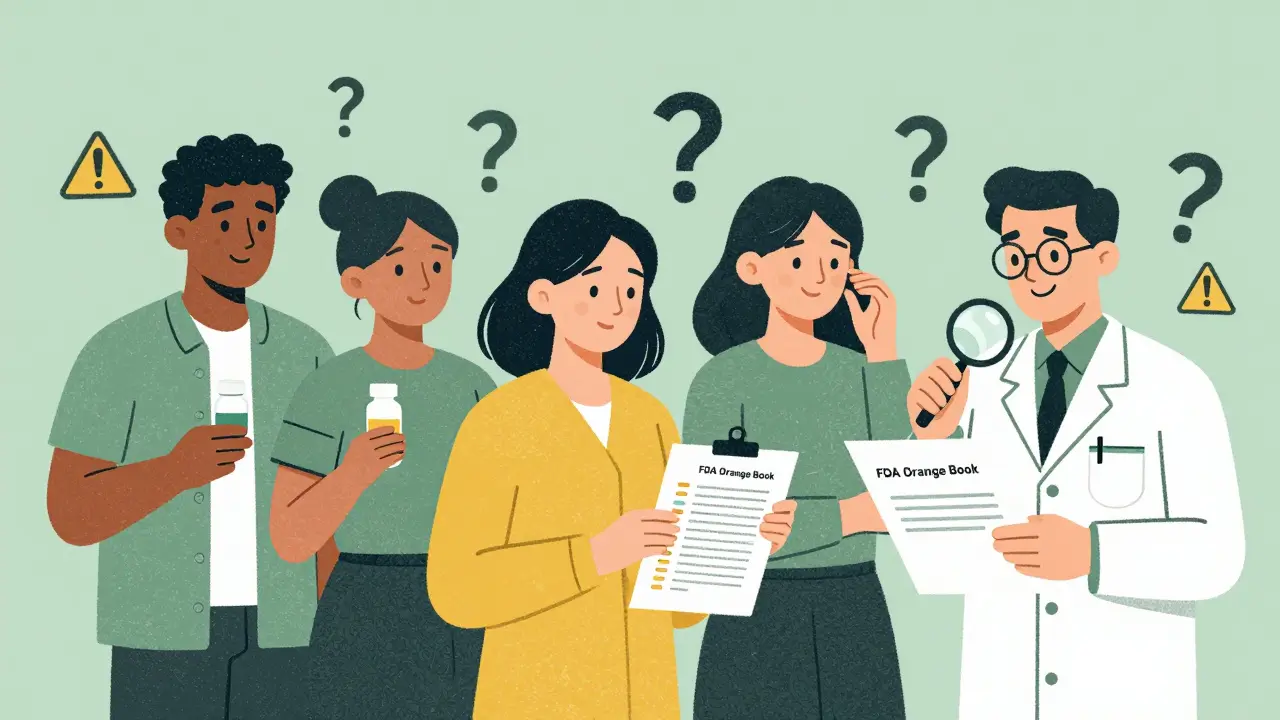
Switching to a generic isn’t a compromise. It’s a smart choice. If you’re worried, ask your pharmacist. They can show you the FDA’s Orange Book data. You’ll see: same drug. Same results. Lower price.
What You Can Do: 5 Proven Ways to Stay Safe
Knowing the myths is step one. Doing something about it is step two. Here’s what actually works:
- Do a brown bag review. Every six months, bring every pill, capsule, patch, and supplement you take to your doctor or pharmacist. No judgment. Just honesty. Studies show this cuts medication errors by 63%.
- Use the 5 Rights. Before you take any pill, ask: Is it the right patient (me)? Right drug? Right dose? Right route (swallowed, injected, etc.)? Right time? If you’re unsure, stop. Call your pharmacy.
- Ask for the teach-back method. After your doctor explains your meds, say: "Can you explain this to me like I’m 12?" Then repeat it back. A 2020 study found this boosted patient understanding from 42% to 89%.
- Use one pharmacy. If you use multiple pharmacies, they can’t see what else you’re taking. One pharmacy means one full record. That’s how pharmacists catch dangerous combos before you take them.
- Set reminders. Use a pill organizer or an app like Medisafe. Users of these tools reduce dosing errors by 37%. That’s not a gimmick-it’s a life-saver.
Why This Matters More Than Ever
Preventable medication errors cost the U.S. healthcare system $42 billion every year. That’s money spent on ER visits, hospital stays, and long-term care that never needed to happen. The FDA now requires clearer warnings on OTC labels-especially for acetaminophen. Pharmacies are using AI tools to flag risky combinations before you even leave the counter. But none of that matters if you believe the myths.
Medication safety isn’t about being perfect. It’s about being informed. It’s about asking questions. It’s about not assuming. It’s about knowing that the little bottle in your medicine cabinet can save your life-or end it.
Next time you pick up a prescription-or grab a bottle of painkillers from the shelf-pause. Ask: "Is this something I really understand?" If the answer is no, don’t take it. Go talk to your pharmacist. They’re trained to help you. And they’ve heard every myth before.
Can I take two different OTC pain relievers together?
Only if you know what’s in each one. Many OTC pain relievers contain the same active ingredient-like acetaminophen or ibuprofen. Taking two at once can easily lead to overdose. Always check the Drug Facts label. If both have the same ingredient, don’t combine them. If you’re unsure, ask your pharmacist.
Are natural supplements regulated like prescription drugs?
No. Prescription drugs go through years of testing before approval. Supplements don’t. The FDA can’t require proof of safety or effectiveness before they’re sold. That means a supplement labeled "pure ginkgo" might contain fillers, contaminants, or even hidden prescription drugs. Always be cautious. If it sounds too good to be true, it probably is.
What should I do if I miss a dose?
It depends on the medication. For most, take it as soon as you remember-if it’s within a few hours. If it’s close to your next dose, skip the missed one. Never double up unless your doctor says to. For antibiotics, blood thinners, or heart meds, always call your pharmacist. Doubling up can be dangerous.
Can I share my prescription meds with someone else?
Never. Even if they have the same symptom. Your prescription is based on your weight, allergies, other meds, and health history. What’s safe for you could be deadly for someone else. Sharing prescription drugs is illegal and dangerous.
How do I know if my medication has been recalled?
Check the FDA’s website or sign up for recall alerts from your pharmacy. Many pharmacies now send text alerts if your medication is recalled. If you’re unsure, call your pharmacy. They track recalls and will notify you if your drug is affected.
Why do pharmacists ask so many questions when I pick up my prescription?
They’re not being nosy-they’re protecting you. Pharmacists check for drug interactions, duplicate therapies, allergies, and dosing errors. They catch mistakes doctors miss. Every question is part of a safety net. Answer them honestly. It’s the best way to avoid harm.
Next Steps: What to Do Today
Don’t wait for a crisis. Take action now:
- Go through your medicine cabinet. Pull out every bottle, including supplements and OTC drugs.
- Write down the name, dose, and why you take each one.
- Bring that list to your next doctor or pharmacy visit.
- Ask: "Are any of these unsafe to take together?"
- Set a reminder on your phone to do this every six months.
Medication safety isn’t complicated. It’s about paying attention. It’s about asking questions. And it’s about not believing everything you hear. The facts are out there. You just need to look for them-and trust the experts who’ve spent years studying them.
Comments
Kasey Summerer
So let me get this straight... I can't take Tylenol with my cold medicine, but I can chug a whole bottle of NyQuil like it's Gatorade? 🤡
Also, why is the FDA only now telling us this? I've been stacking pills since 2012 and somehow I'm still typing this.
Also also: I'm pretty sure my cat takes more meds than I do, and she's got a better attitude.
January 17, 2026 AT 00:38
kanchan tiwari
THEY'RE LYING TO US. EVERY SINGLE ONE OF THEM. The pharmaceutical companies? They put acetaminophen in EVERYTHING. Even your toothpaste. I saw a video. A woman in Ohio took 3 pills and her liver turned into a purple balloon. The government doesn't want you to know this. They're scared. The real danger? The nanobots in the pills. They're listening. And they're watching your fridge.
January 17, 2026 AT 19:30
john Mccoskey
The entire premise of this article is rooted in a flawed assumption: that people are rational actors. They're not. Humans are pattern-seeking, confirmation-biased, dopamine-driven organisms who will take two Advil because 'it didn't work the first time' while simultaneously believing that 'natural' means 'God-approved.' The real crisis isn't misinformation-it's the collapse of epistemic humility. We've replaced critical thinking with Google autocomplete and now we're surprised when our kidneys fail? Of course we are. We stopped asking 'why' and started asking 'how soon can I feel better?' The answer to that question is never a pill. It's a reckoning.
January 18, 2026 AT 04:37
Ryan Hutchison
This is why America’s falling apart. We got people thinking herbal tea is safer than FDA-approved meds. You think a guy in India boiling roots in a pot knows more about your liver than a lab with 40 years of peer-reviewed data? That’s not wisdom-that’s ignorance with a yoga mat. And don’t get me started on generics. If you’re too cheap to pay for brand name, maybe you should’ve thought about that before you ate 3 pizzas last night. This isn’t a public health crisis. It’s a personal responsibility crisis.
January 18, 2026 AT 23:44
Stephen Tulloch
Honestly? I love how this article casually drops '65% of supplement users believe they’re harmless' like it’s a shocking revelation. 🤦♂️
Bro. We live in a world where people buy 'detox tea' that costs more than their rent. The real tragedy isn’t the acetaminophen-it’s that we’ve turned healthcare into a wellness influencer aesthetic. I took ginkgo biloba because my TikTok feed said it 'boosts mental clarity.' I didn’t get smarter. I just got a 20% discount on my next yoga retreat. The system’s broken. Not because of the meds. Because of the memes.
January 19, 2026 AT 04:20
Joie Cregin
I used to be the person who stopped antibiotics when I felt better. Then my mom got sepsis from a sinus infection she 'treated herself.' She’s fine now, but she has a scar on her chest from the chest tube they had to insert. I still have nightmares about that hospital room.
So yeah. I’m the person who asks the pharmacist 17 questions every time I pick up a script. I’m the person who brings my brown bag. I’m the person who says 'no' to the free sample because I don’t know what’s in it.
It’s not paranoia. It’s love. For myself. For my family. For the people who didn’t get to come home.
January 20, 2026 AT 01:59
Melodie Lesesne
I’m so glad someone finally said this. I work at a pharmacy and people are *so* confused. Last week a guy asked if he could take his blood pressure pill with his energy drink. I said no. He said, 'But it’s just one.' I said, 'It’s not just one. It’s a chemical war in your body.' He nodded like he understood. Then he bought two more energy drinks.
It’s not about being perfect. It’s about being curious. And asking. And listening. Even if it feels silly.
January 20, 2026 AT 10:07
Corey Chrisinger
The irony is that the more we medicalize everything, the more we lose trust in our own bodies. We’ve been taught that every ache needs a pill, every mood needs a chemical fix. But what if the real solution isn’t in the bottle? What if it’s in sleep? In movement? In community? The system profits from dependency. The truth? Your body is smarter than your prescription label. But you’ve been conditioned to forget that.
So we’re stuck in this loop: take more → feel worse → take more → repeat. It’s not the meds that are the problem. It’s the belief that we need them to be okay.
January 21, 2026 AT 00:58
Bianca Leonhardt
I’m so tired of people acting like this is some new revelation. I’ve been a nurse for 22 years. I’ve watched people die because they thought 'natural' meant 'safe.' I’ve seen kids with liver failure because their mom gave them Tylenol for a fever and didn’t know the cold medicine had it too. You don’t get to be a hero by ignoring science. You get to be a statistic. Stop being lazy. Read the label. Or don’t. But don’t act surprised when your body breaks.
January 22, 2026 AT 00:25
Travis Craw
i just wanted to say thank you for this post. i didnt know about the 3000mg limit for tylenol. i always thought it was 4000. i took a cold med last week and didnt realize it had acetaminophen too. im kinda scared now. but im gonna go check my meds today. thanks for making me think before i swallow something.
January 23, 2026 AT 06:23
Nicholas Gabriel
One of the most important things I’ve learned in 15 years of pharmacy? The biggest risk isn’t the drug-it’s the silence. People don’t tell their doctors about their supplements. They don’t tell their pharmacists about the alcohol they drink. They don’t tell their partners about the pills they skip. And then-boom. Emergency room. ICU. Funeral. The truth? The system is designed to catch mistakes. But it can’t catch what you won’t say. So speak up. Even if it’s awkward. Even if you feel dumb. Even if you think it’s ‘not a big deal.’ It’s always a big deal.
January 23, 2026 AT 12:02
Cheryl Griffith
I used to think generics were 'cheap knockoffs.' Then I switched to generic metoprolol after my insurance dropped the brand. Same pill. Same results. Same heartbeat. I saved $80 a month. I started buying my dog’s heart medication in generics too. He’s 14 and still chasing squirrels. If the FDA says it’s the same, then it’s the same. Stop paying for the logo. Pay for the science.
January 23, 2026 AT 14:33
swarnima singh
you know what they dont tell you? that the same companies that make the pills also own the news channels. they want you scared. they want you taking more. they want you dependent. the real danger? not the medicine. the system. the money. the greed. i stopped taking everything. now i drink chamomile tea and meditate. my blood pressure is lower. my anxiety is gone. they hate that. they really hate that.
January 24, 2026 AT 19:05
Isabella Reid
I used to be the person who rolled their eyes at 'brown bag reviews.' Then I brought mine in-and found three expired antibiotics, a bottle of melatonin I didn’t know I was still taking, and a random pill I thought was a vitamin but turned out to be my ex’s anxiety med. I didn’t even know it was in my bag.
Turns out, I’m not as organized as I thought. And that’s okay. What matters is that I asked. And now I know. Thanks for the nudge.
January 26, 2026 AT 11:30