
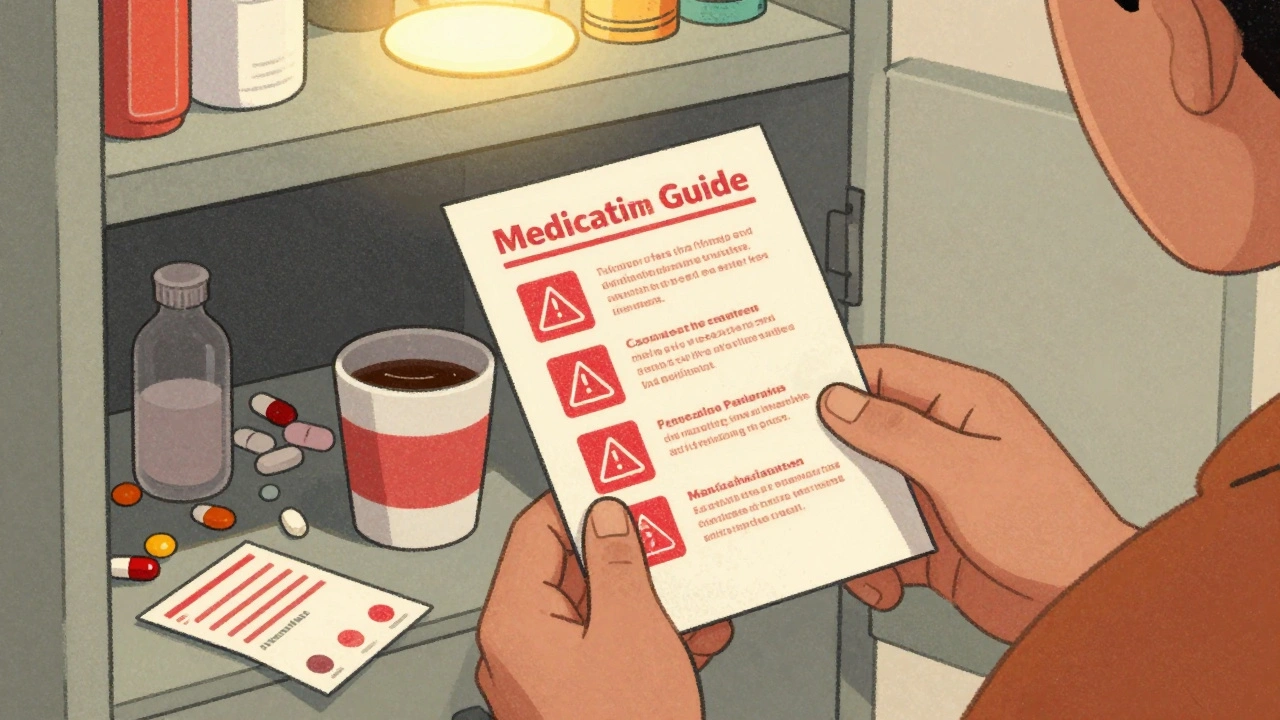
Every time you pick up a prescription, there’s a small paper booklet tucked inside the bag - often ignored, tossed in a drawer, or thrown away. But that little guide isn’t just paperwork. It’s a lifeline. For certain high-risk medications, the Medication Guide is the only FDA-mandated document that tells you, in plain language, what could go wrong - and how to stop it.
What Exactly Is a Medication Guide?
A Medication Guide is not a pharmacy label or a drug pamphlet you get from your doctor’s office. It’s a legally required patient information sheet, approved by the U.S. Food and Drug Administration (FDA), that comes with specific prescription drugs. These aren’t for every medication - only about 150 out of thousands on the market. But they’re required for the ones that can seriously hurt you if used wrong. The FDA steps in when a drug has risks that are serious enough to affect whether someone should take it at all. Think of drugs like opioids for chronic pain, certain antidepressants, biologics for autoimmune diseases, or medicines that can cause rare but deadly side effects like liver failure or brain infections. For these, the FDA says: patients need to know. Not just in medical jargon, but in words they can actually understand. Manufacturers create these guides, but they don’t get to decide what goes in. The FDA reviews every word. They require clear section headings, bolded warnings, and language no higher than a sixth-grade reading level. No fluff. No vague statements. Just facts: what the drug is for, what it can do to you, what you must avoid, and when to call your doctor right away.Why These Guides Are Different From Other Patient Info
You might think, “I already got instructions from my pharmacist.” Or, “My doctor explained it.” But here’s the catch: those conversations are fleeting. Pharmacy counseling sheets? They vary wildly by location. Some are detailed, some are one-page bullet points. The FDA doesn’t review them. If a pharmacist forgets to mention a dangerous interaction, you might never know. That’s where Medication Guides stand apart. They’re standardized. Every copy of the guide for a specific drug - whether you pick it up in New York or Nebraska - is identical. And it’s been vetted by the FDA to make sure it’s accurate, complete, and clear. Compare it to the package insert - the thick booklet doctors get. That’s written for medical professionals. It’s full of clinical trial data, pharmacokinetics, and dosing tables. A Medication Guide strips all that away. It answers three questions: What’s this for? What bad things can happen? What do I do if they do? A 2022 study in the Journal of the American Pharmacists Association found patients with low health literacy understood the risks 37% better with a Medication Guide than with standard pharmacy handouts. That’s not a small gap. That’s the difference between spotting warning signs early - and missing them entirely.What’s Actually in a Medication Guide?
You don’t need to read every line, but you should scan these key sections:- Brand and generic name - Make sure it matches what your doctor prescribed.
- Approved uses - Is this drug really meant for what you’re taking it for? Off-label use happens, but the guide only lists FDA-approved reasons.
- Serious risks and side effects - This is the most important part. Look for words like “WARNING,” “BLACK BOX,” or “DO NOT USE IF.” These are not suggestions. They’re red flags.
- What to avoid - Alcohol? Other meds? Certain foods? Some drugs can cause deadly reactions when mixed.
- When to call your doctor - Not “if you feel weird.” Specific symptoms like chest pain, confusion, swelling, or sudden weakness. These guides tell you exactly what’s dangerous.
- Storage and disposal - Some drugs need refrigeration. Others must be flushed or taken to a drop-off site to prevent misuse.
Why So Many People Ignore Them
Let’s be honest: most people don’t read them. A Reddit thread from September 2023 with nearly 300 pharmacist responses showed 63% said patients rarely open the guide. Why?- It looks like a wall of text.
- They already talked to their doctor.
- They think it’s just legal paperwork.
- They’re overwhelmed, tired, or scared.
How to Actually Use a Medication Guide
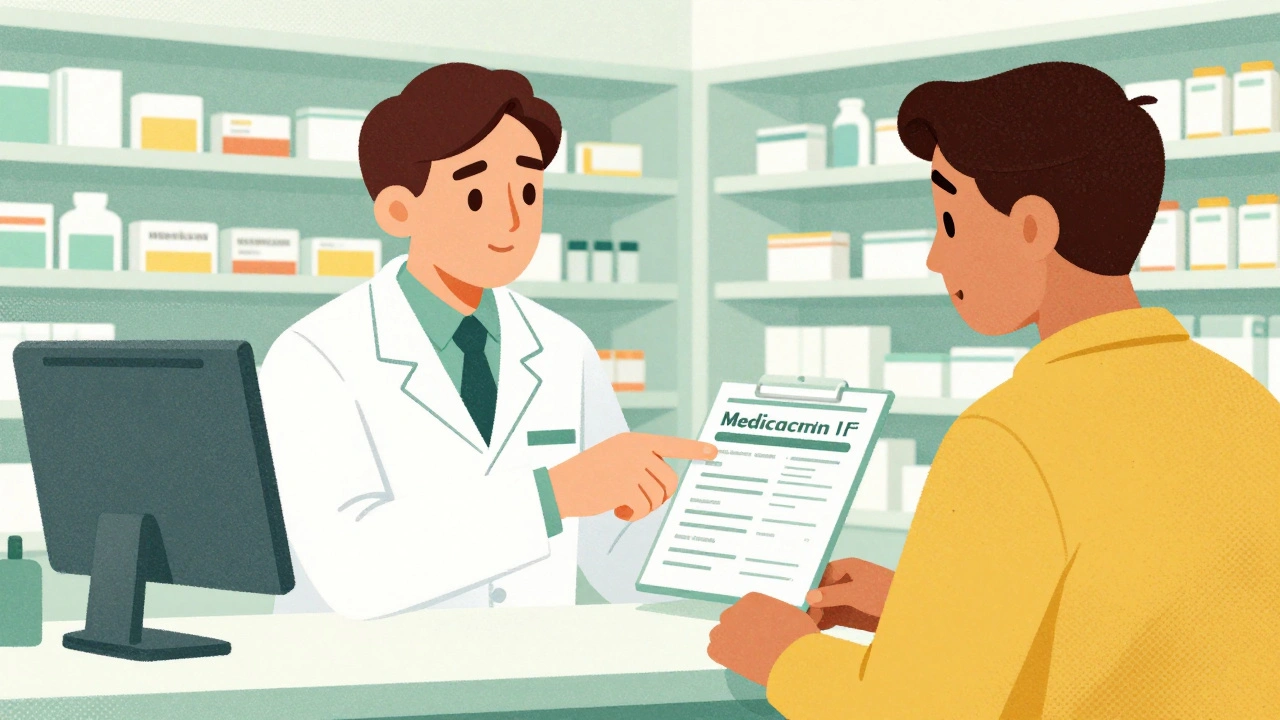
You don’t need to memorize it. But you do need to engage with it. Here’s how:- Ask for it - Don’t wait. If you don’t see it, ask the pharmacist: “Is there a Medication Guide for this?” By law, they have to give it to you.
- Read the bold warnings - Skip the rest if you have to. Focus on the red flags.
- Ask one question - “What’s the one thing I should watch for that means I need to go to the ER?”
- Keep it - Store it with your other meds. You’ll need it when you refill or see a new doctor.
- Share it - If you live with someone who helps manage your care, give them a copy. They might catch something you miss.
The Bigger Picture: Safety That Works
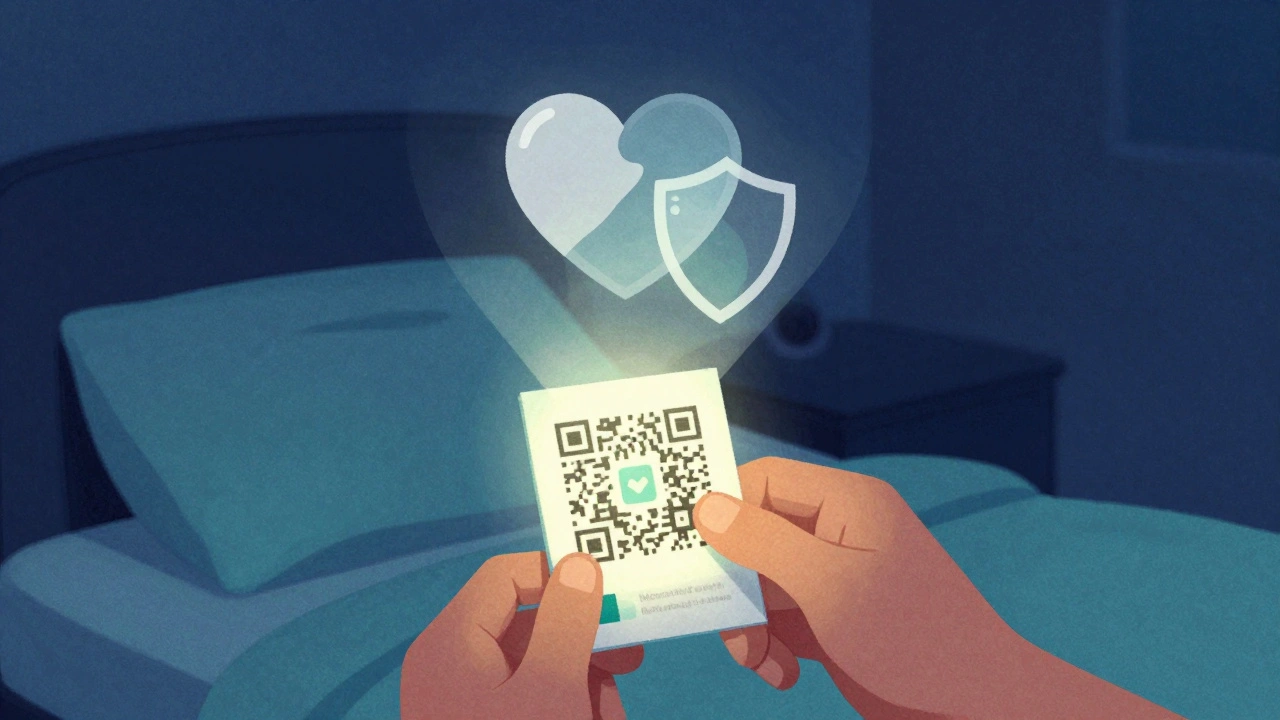
The FDA doesn’t require these guides because they’re perfect. They require them because they work. A 2023 meta-analysis in The Lancet found that for drugs with required Medication Guides, serious adverse events dropped by nearly 20% compared to similar drugs without them. That’s thousands of hospitalizations and deaths prevented each year. The system isn’t flawless. Pharmacists still run out of guides. Some manufacturers delay shipments. Patients still don’t read them. But the data is clear: when these guides are used properly, they save lives. The FDA is now updating them. New versions will include visual icons for risk levels, multilingual translations, and QR codes linking to video explanations. The first interactive guide - for the diabetes drug Jardiance - launched in May 2023. Patients scan a code and get personalized risk assessments. This isn’t just paperwork. It’s a safety net. And it only works if you use it.What’s Next for Medication Guides?
The FDA’s 2023-2025 plan includes big changes:- Standardized visual risk icons by Q3 2024 - color-coded warnings you can spot at a glance.
- Multilingual versions in the top 25 non-English languages by Q1 2025.
- Integration with electronic health records so pharmacists get alerts when a patient is prescribed a guide-requiring drug.
- Electronic delivery options - you can now request the guide as a PDF or app-based version.
Final Thought: Don’t Skip the Guide
You wouldn’t drive a car without reading the manual for the airbag. Why take a drug that could harm you without reading the guide that tells you how to stay safe? Medication Guides aren’t perfect. But they’re the best tool we have - and they’re legally required for a reason. If you’re on a high-risk medication, that little booklet might be the only thing standing between you and a serious complication. Don’t toss it. Don’t ignore it. Read the bold parts. Ask one question. Keep it handy. It’s not just information. It’s protection.Are Medication Guides required for every prescription?
No. Medication Guides are only required for about 150 prescription drugs - roughly 5% of all medications - that carry serious, potentially life-threatening risks. These include opioids, certain psychiatric drugs, biologics, and medications with rare but severe side effects. Most common prescriptions like antibiotics or blood pressure pills do not require one.
Can I get a Medication Guide electronically instead of paper?
Yes. Since October 2022, the FDA allows pharmacies to provide Medication Guides electronically if the patient requests it. You can receive it as a PDF via email, text, or through a pharmacy app. Some newer guides even include QR codes that link to video explanations or interactive risk tools. But you must ask for it - pharmacists won’t offer it unless you say so.
What if my pharmacy doesn’t have the Medication Guide?
If your pharmacy runs out, they’re legally required to get it for you. Call the manufacturer’s customer service number listed on the guide’s website or ask your pharmacist to order it. You can also download a copy directly from the FDA’s website. Never take the medication without the guide if it’s required - and never accept a substitute like a generic handout.
Do I need to read the Medication Guide every time I refill?
Yes. Even if you’ve taken the drug before, the guide can be updated. New risks, dosing changes, or drug interactions may be added. The FDA requires a new guide to be given with every refill. Don’t assume the old one still applies. Always check the date and compare it to what you had before.
Who makes sure the information in the guide is accurate?
The pharmaceutical company writes the first draft, but the FDA reviews and approves every version before it’s printed. The agency checks for clarity, accuracy, and completeness. They require specific sections, plain language, and prominent warnings. No guide can be distributed without FDA sign-off. If a guide is later found to be misleading, the FDA can force the company to revise or recall it.
Comments
Mark Curry
Been taking my MS med for 3 years now. I read the guide every time I refill. One time I noticed a new warning about fever and confusion - called my neurologist right away. Turned out it was just a bug, but I’m glad I checked. That little paper saved me from panicking over nothing. 🙏
December 5, 2025 AT 06:51
Ali Bradshaw
I used to toss these things in the drawer. Then my aunt had a bad reaction to her antidepressant. Turns out the guide had a warning about mixing it with herbal supplements. She didn’t read it. I started reading mine. Now I keep them in a folder with my meds. Simple habit. Big difference.
December 5, 2025 AT 16:56
an mo
THE FDA ISN’T YOUR FRIEND. THEY’RE A BUREAUCRATIC MONSTER THAT USES THESE GUIDES TO CONTROL YOU. THEY’RE NOT PROTECTING YOU - THEY’RE PROTECTING PHARMA. THE ‘BLACK BOX’ WARNINGS ARE DESIGNED TO SCARE YOU INTO OBEDIENCE. YOU THINK THEY WANT YOU HEALTHY? THEY WANT YOU DEPENDENT.
December 7, 2025 AT 05:27
William Chin
It is imperative that patients recognize the regulatory framework underpinning the Medication Guide protocol. The FDA’s mandate is not discretionary; it is codified under Title 21 CFR Part 208. Failure to disseminate these documents constitutes a violation of federal law. I have personally filed complaints with the Office of Prescription Drug Promotion regarding non-compliant pharmacies. Compliance is non-negotiable.
December 7, 2025 AT 18:17
Ada Maklagina
my pharmacist gave me the guide for my blood thinner but didn’t say a word. i read it later that night. turns out i was supposed to avoid grapefruit. i’d been eating it every morning. oops. now i keep it on my fridge with a sticky note. simple stuff but it matters.
December 9, 2025 AT 16:10
Harry Nguyen
Oh great. Another government pamphlet to make us feel safe while the drug companies rake in billions. You think reading a 6th-grade handout stops people from overdosing on opioids? Wake up. The real problem is that doctors prescribe these like candy. The guide is a legal shield, not a safety net. And don’t get me started on QR codes - next they’ll be scanning barcodes to get your permission to die.
December 10, 2025 AT 17:20
Michael Dioso
Look, I’ve been in this game 20 years. I’ve seen people die because they didn’t read the guide. And I’ve seen people ignore it and live fine. But here’s the truth - if you’re on something that needs a Medication Guide, you’re not in the ‘mild side effects’ club. You’re in the ‘if you mess up, you’re dead’ club. So yeah, read the damn thing. No, it’s not fun. No, it’s not pretty. But neither is a brain bleed. And don’t tell me your doctor explained it - they were probably rushing between 12 patients. This isn’t a suggestion. It’s your last line of defense. Stop being lazy. Your life’s on the line.
December 11, 2025 AT 06:40
Mark Curry
^^ I get what you’re saying, but I think you’re missing the point. It’s not about blaming patients. It’s about giving them the tools. My mom didn’t know what PML was until she read the guide. Now she checks her symptoms every week. That’s not fear. That’s awareness. And yeah, doctors are rushed. That’s why the guide has to stand on its own. It’s not perfect - but it’s the only thing that’s consistent across every pharmacy in the country. That’s worth something.
December 12, 2025 AT 05:10