
Prior Authorization Timeline Calculator
Calculate Approval Timeline
Understanding Your Risk
Estimated Approval Time
Potential Consequences
This estimate shows the potential health impacts based on your expected approval time.
Action Plan
This section will provide personalized steps based on your scenario.
Why Prior Authorization Can Kill
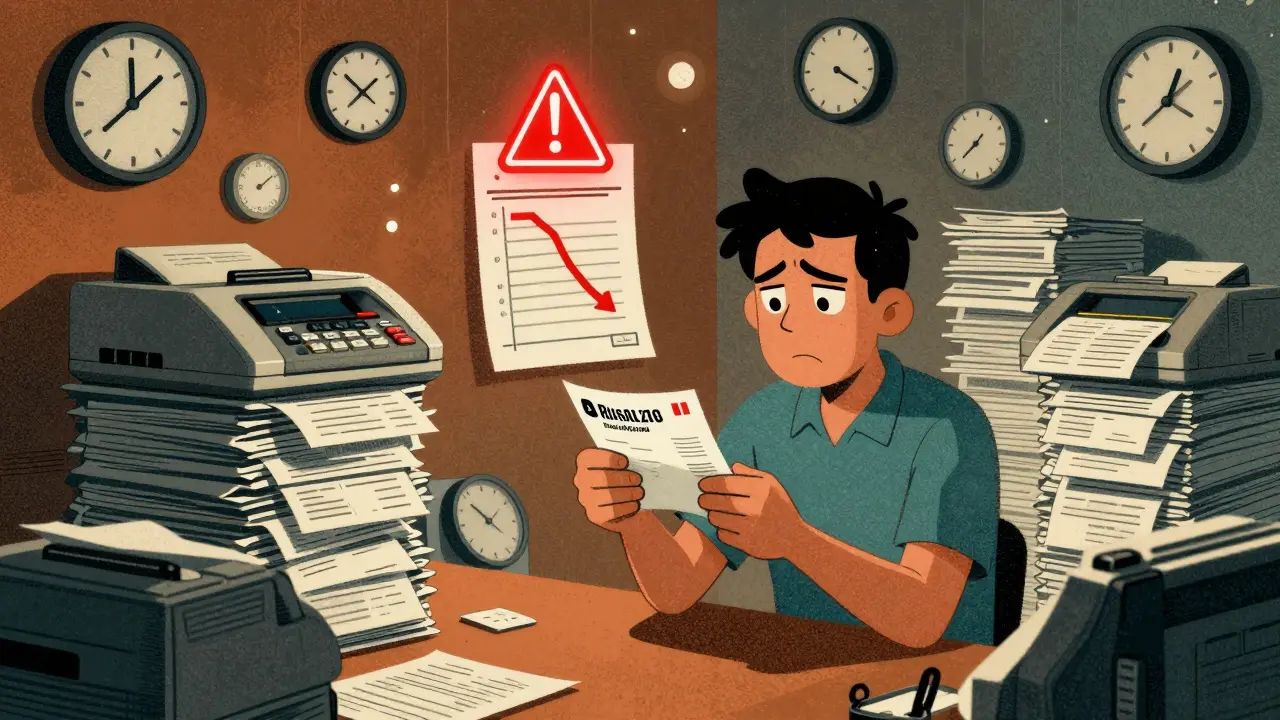
Imagine you’re prescribed a life-saving medication. Your doctor signs off. You’re ready to fill it. Then you’re told: you need approval first. That approval could take days. Or weeks. And if it’s delayed, your condition could worsen - fast.
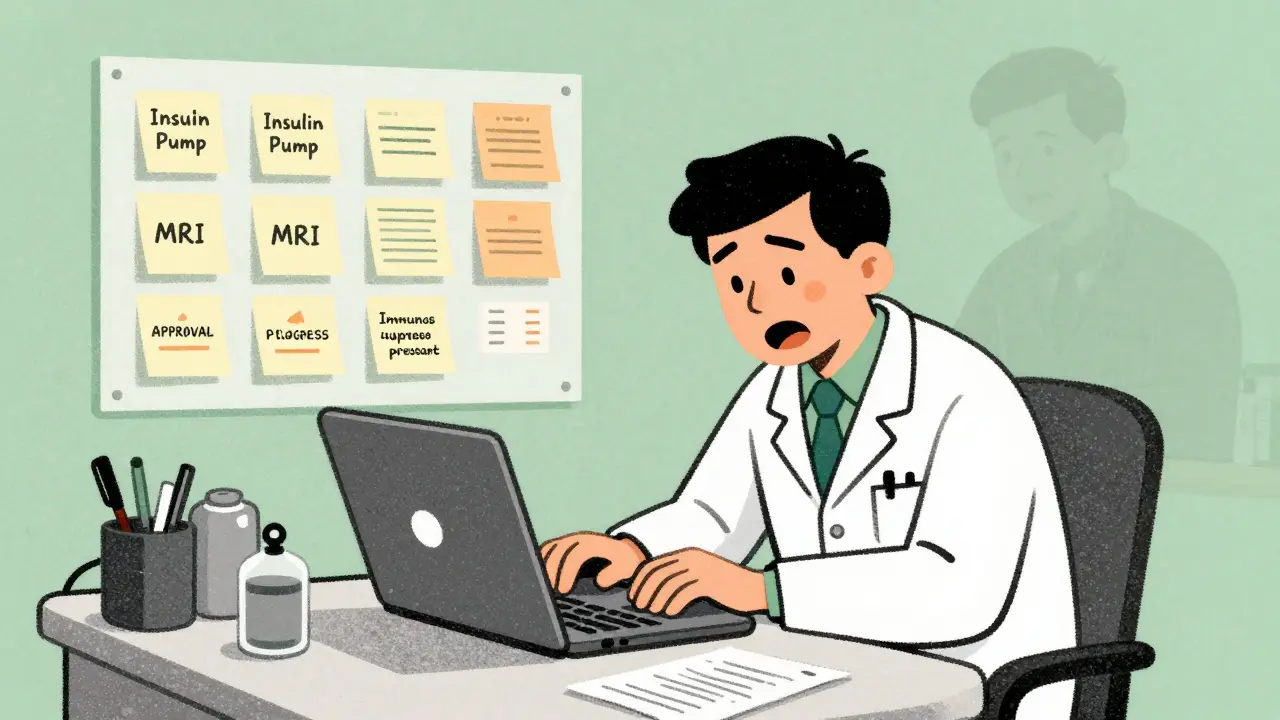
This isn’t hypothetical. In 2023, a diabetic patient in Texas went 11 days without insulin because her insurance wouldn’t approve her pump. She ended up in the ER with diabetic ketoacidosis. A transplant patient in Florida waited 18 days for an immunosuppressant. He developed organ rejection. A man with epilepsy died after his family couldn’t afford his meds while waiting for approval. These aren’t rare cases. They’re symptoms of a broken system.
Prior authorization was meant to stop unnecessary treatments. Instead, it’s now a major cause of dangerous treatment gaps. Over 35 million Medicare Advantage patients face this hurdle every year. For specialty drugs - the kind that cost over $1,000 a month - nearly 60% of commercial plans require prior approval. And 85% of those requests still go through fax machines, phone calls, or paper forms. That’s not efficiency. That’s chaos.
How Prior Authorization Actually Works (And Why It’s So Slow)
Prior authorization isn’t a single rule. It’s a patchwork of policies that vary wildly by insurer, state, and even the drug you’re taking.
Medicare Part A and B rarely require it. But Medicare Advantage? They demand it for 83% of specialty drugs. Medicaid varies by state - one drug might need approval in 12% of cases in one state, and 89% in another. Commercial insurers use it for 20% of generic drugs, 30% of brand-name meds, and nearly two-thirds of high-cost specialty treatments.
Here’s how it breaks down:
- You get a prescription
- Your doctor’s office calls or faxes the insurer with clinical notes, diagnosis codes, and proof the drug is necessary
- The insurer reviews it - often manually - and either approves, denies, or asks for more paperwork
- You wait. And wait. And wait
The average approval time? Four to seven business days. For urgent cases? The law says 72 hours. But in practice, many patients wait longer. And if your case is denied? You start the appeal process. That can add another two to four weeks.
Doctors and staff spend an average of 16 hours a week just managing these requests. That’s two full workdays. And for what? To delay care that’s already been deemed medically necessary by your doctor.
The Real Cost: Treatment Gaps That Lead to Death
Prior authorization doesn’t just waste time. It kills.
A 2023 JAMA Oncology study found that cancer patients who waited more than 28 days for treatment had a 17% higher risk of death. Why? Because cancer doesn’t pause for paperwork. Neither do seizures, heart failure, or autoimmune flare-ups.
Surveys of 945 physicians show:
- 93% have seen treatment delays because of prior auth
- 91% have seen patients’ health get worse as a result
- 82% have had patients quit treatment entirely because the process was too hard
- 34% have seen serious adverse events - like hospitalizations or deaths - directly tied to delays
And it’s not just about drugs. MRIs, CT scans, surgeries, oxygen tanks - all require approval. One patient needed a wheelchair. The insurer took 19 days to approve it. She fell twice during that time. Broke her hip.
These aren’t edge cases. They’re the norm. And the people hit hardest? Low-income patients, those with chronic illnesses, and older adults. They’re less likely to have the time, energy, or support to fight through bureaucracy.
What’s Being Done? The Slow Push for Change
There’s momentum - but it’s moving at fax speed.
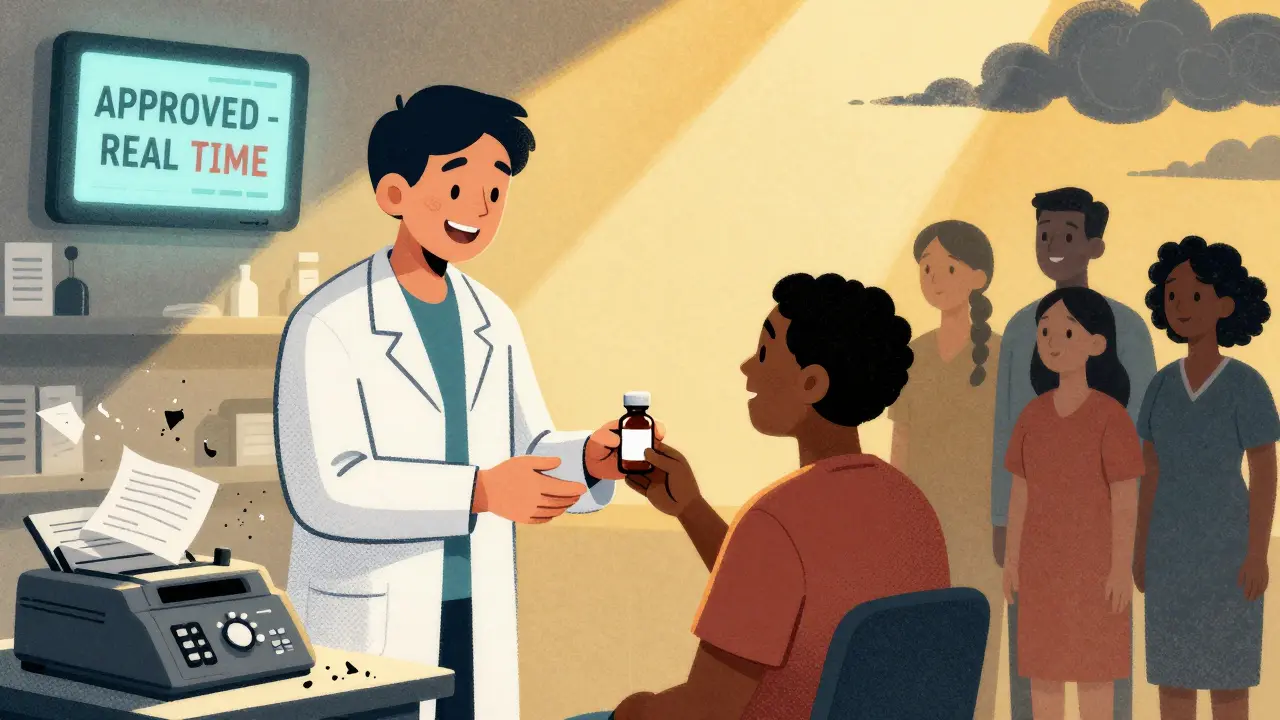
In January 2024, CMS announced a new rule: by December 2026, all Medicare Advantage and Medicaid managed care plans must use electronic prior authorization systems with real-time decision-making. That’s huge. Right now, only 15% of requests are processed electronically. The rest? Fax, phone, mail.
Thirty-two states have passed reform laws since 2021. California now requires emergency authorizations within 24 hours. New York limits approvals to 72 hours for urgent cases. Colorado bans step therapy for mental health drugs.
Technology is helping too. AI tools like Kyruus and Apricus Analytics are cutting approval times by 45-60% in pilot programs. The HL7 DaVinci Project’s PDEX standard - now used by 87% of major health systems - lets doctors check prior auth status right inside their electronic health records. No calls. No faxes. Just a click.
But here’s the catch: 63% of Medicaid programs still use fax machines. And 41% of doctors say things haven’t improved at all.
What You Can Do: A Practical Guide to Avoiding Delays
You can’t fix the system overnight. But you can protect yourself.
For Patients:
- Ask upfront. When your doctor prescribes a drug, ask: “Does this need prior authorization?” Don’t assume. 63% of delays are avoided when patients ask this at the time of the prescription.
- Know your plan. Log into your insurer’s website. Look up the drug. See if it’s on formulary. See if prior auth is required. If it’s not clear, call customer service - and take notes.
- Use patient assistance programs. Many drug makers offer free or low-cost samples for people waiting on approval. Ask your doctor or pharmacist. These aren’t charity - they’re a lifeline.
- Keep records. Save every email, fax confirmation, phone call log. If you’re denied, you need proof you tried.
For Doctors and Care Teams:
- Use electronic prior auth tools. Practices that switched from fax to digital saw approval times drop from 5.2 days to 1.8 days.
- Build templates. Standardized forms for common drugs cut documentation time by 40%.
- Set up a dedicated prior auth team. One person trained to handle this full-time improves approval rates by 22%.
- Use bridge therapy. For high-risk patients, give a 7-14 day supply of meds while waiting. Yes, it costs you. But it’s cheaper than an ER visit.
The Bottom Line: This Isn’t About Saving Money - It’s About Saving Lives
Prior authorization was sold as a way to control costs. And yes, it reduces spending - by 15-22% on high-cost services. But the cost to patients? It’s measured in missed treatments, hospitalizations, and deaths.
Healthcare isn’t a ledger. It’s human. And when you delay a drug that stops seizures, or an MRI that catches a tumor, you’re not saving money. You’re gambling with lives.
The fix isn’t complicated: go digital. Set time limits. Ban fax machines. Make decisions in real time. Stop treating patients like insurance puzzles.
Until then, if you’re on a chronic medication - or caring for someone who is - don’t wait for the system to change. Start now. Ask the questions. Document everything. Push back. Your life depends on it.
Frequently Asked Questions
What medications most often require prior authorization?
Specialty drugs - those costing over $1,000 per month - are the most likely to require prior authorization. This includes cancer treatments, immunosuppressants for transplant patients, biologics for rheumatoid arthritis or Crohn’s disease, and high-cost insulin formulations. Even some brand-name medications for diabetes, multiple sclerosis, and hepatitis C require approval. Generic drugs rarely need it, unless they’re part of a step therapy protocol.
How long should prior authorization take?
For non-urgent requests, federal rules require Medicaid to respond within 14 days. For urgent cases - like a life-threatening condition - the deadline is 72 hours. Medicare Advantage and commercial insurers don’t have federal time limits, but industry standards suggest 3-5 business days. In reality, many patients wait 7-14 days. If you’re waiting longer than a week for a non-urgent request or more than 72 hours for an urgent one, you should file a formal appeal.
Can I get my medication while waiting for approval?
Yes - but it depends. Many drug manufacturers offer 7-14 day starter kits or samples to patients waiting for approval. Your doctor can request these directly. Some pharmacies also carry short-term supplies under emergency protocols. If you’re in a crisis - like uncontrolled seizures or worsening heart failure - ask your doctor to file an urgent prior auth request and request a bridge therapy supply. Don’t wait until you’re sick to ask.
What if my prior authorization is denied?
You have the right to appeal. Start by asking your doctor for a letter of medical necessity - this should include your diagnosis, why the drug is essential, and why alternatives won’t work. Then submit a formal appeal to your insurer. Many denials are overturned on appeal, especially with strong clinical support. If the appeal is denied, you can request an external review by an independent third party. Keep copies of everything. And don’t give up - 40% of appeals are successful.
Is there a way to avoid prior authorization altogether?
Sometimes. If your drug is on your plan’s formulary and doesn’t require prior auth, you’re in the clear. Some insurers offer automatic prior auth for patients with stable, long-term conditions. Ask your doctor if your condition qualifies for an exception. Also, Medicare Advantage plans are required to make prior auth decisions in real time for certain high-risk drugs by 2026. Until then, your best bet is to use electronic prescribing, verify benefits upfront, and work with a pharmacy that has direct access to your insurer’s system.
Comments
Kathy McDaniel
This hit me hard. My mom waited 3 weeks for her chemo drug last year. They kept asking for 'more documentation' like she was applying for a loan. She cried in the car one day saying she felt like a burden. We got it approved eventually but not before she missed two treatments. Don't let bureaucracy win.
January 28, 2026 AT 02:09
Candice Hartley
I've been on insulin for 12 years. Every time my pump refills, I hold my breath. One time they denied it because my A1c was 'too high'. Like I chose this.
January 28, 2026 AT 11:41
Kirstin Santiago
I work in a clinic and we've switched to ePA tools. Approval time dropped from 6 days to under 2. Doctors are less burned out. Patients actually get meds. It's not magic. It's just not using fax machines in 2024.
January 29, 2026 AT 09:32
Kegan Powell
We treat healthcare like a spreadsheet but people are not numbers. A seizure doesn't wait for a form to be signed. A tumor doesn't pause for a fax machine to warm up. This system isn't broken. It was designed this way to protect profits not lives. And we're all complicit by staying silent.
January 30, 2026 AT 08:13
Paul Taylor
The real issue is the profit motive. Insurance companies aren't charities. They're corporations. Prior auth exists because it's cheaper to deny than to pay. And they know most patients won't fight. They count on exhaustion. The only thing that changes this is collective pressure. Patient advocacy groups. Class actions. Public shaming. Stop accepting it as normal. It's not.
January 30, 2026 AT 18:54
Desaundrea Morton-Pusey
This is why I hate the government. Everything gets turned into a nightmare bureaucracy. They say 'electronic systems' but that's just more red tape with a computer. The real solution? No more insurance. Just pay cash or go to Canada. Simple.
February 1, 2026 AT 03:48
Murphy Game
They're lying. This isn't about cost control. It's about data harvesting. Every time you get denied, they log it. They build profiles. They sell your medical vulnerability to pharma and investors. The fax machines? They're a smokescreen. The real game is AI predicting who'll give up and die quietly.
February 2, 2026 AT 13:30
Anjula Jyala
Prior auth is a predatory algorithm disguised as policy. It targets chronic illness because those patients are predictable. High cost. Low mobility. High compliance. Perfect for extraction. The 85% fax statistic? That's not incompetence. That's intentional obfuscation. You're not supposed to win. You're supposed to surrender.
February 2, 2026 AT 20:19
suhail ahmed
In India we don't have this mess but we have other nightmares. Still. I get it. When your kid needs a drug and the system says 'no' because of a form? That's not healthcare. That's cruelty with a corporate logo. The fix? Kill the middlemen. Let doctors prescribe. Let patients get meds. Let tech help not hinder.
February 3, 2026 AT 11:04
astrid cook
I'm so tired of people acting like this is new. It's been like this for decades. The only difference now is we have social media to scream into the void. And guess what? No one's listening. The system doesn't care. You're just another statistic waiting to break.
February 5, 2026 AT 01:22
April Williams
If you're not screaming at your insurance company every single day, you're letting them kill you. Stop being polite. Send emails. Call 10 times a day. File complaints with the state AG. Don't apologize for demanding your life. They don't apologize for taking it.
February 6, 2026 AT 21:19
Harry Henderson
STOP WAITING. Start now. Call your pharmacy. Ask for samples. Demand bridge therapy. Print this article. Take it to your doctor. Make them fight. If they won't, find one who will. Your life isn't a queue. It's a priority. And you deserve to be treated like one. No more waiting. No more silence. Go.
February 8, 2026 AT 17:23