
When you’re trying to lose weight, not all low-carb diets are created equal. Two of the most popular options-keto and Atkins-sound similar, but they work differently, feel different, and last differently. If you’ve tried cutting carbs and hit a wall, you’re not alone. The real question isn’t whether low-carb works-it’s which version fits your life.
How Keto and Atkins Actually Work
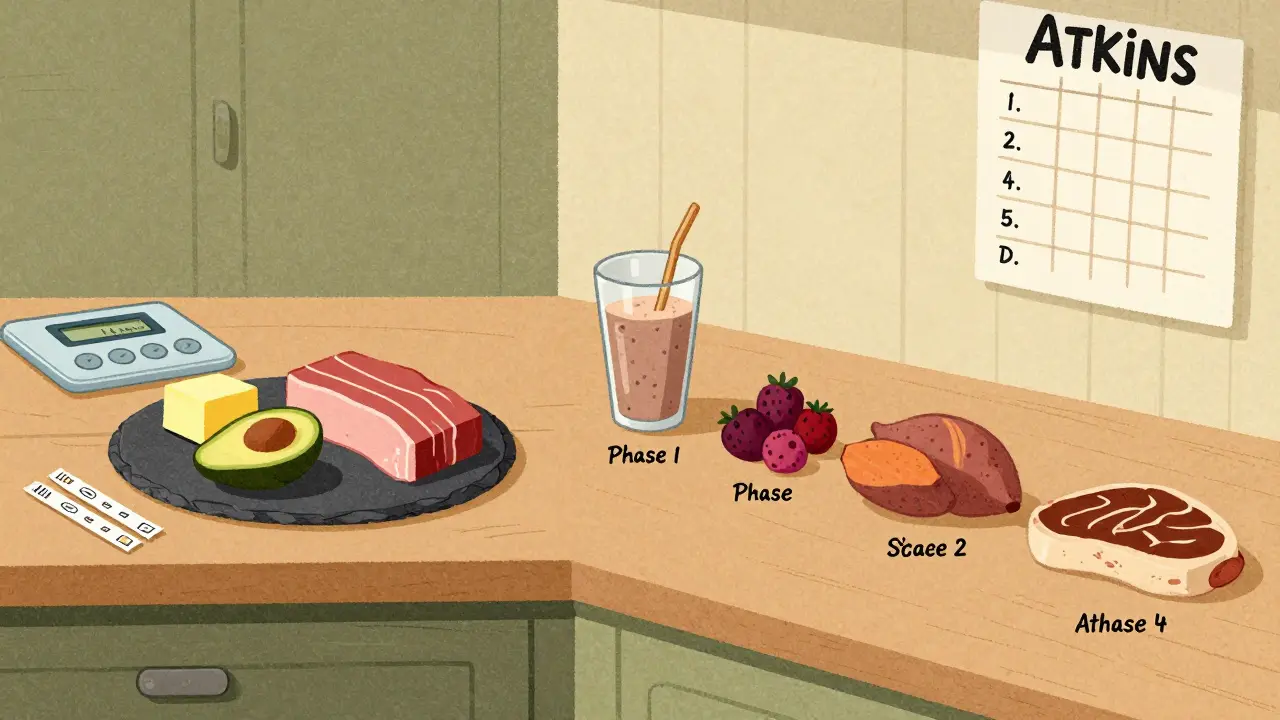
The keto diet was originally developed in the 1920s to treat epilepsy. It forces your body into a state called ketosis, where it burns fat instead of sugar for fuel. To get there, you need to eat very little carbs-usually under 50 grams a day-and get 75-90% of your calories from fat. Protein is kept moderate because too much can turn into glucose and kick you out of ketosis. It’s strict. No guessing. No flexibility. Atkins, on the other hand, was built for long-term weight loss. Created by Dr. Robert Atkins in 1972, it’s designed in phases. Phase 1 (Induction) is the toughest: only 20-25 grams of net carbs per day for two weeks. That’s similar to keto. But then it slowly lets you add carbs back in-25 grams, then 50, then 80, and finally up to 100 grams a day in Phase 4. The idea? Find your personal carb tolerance so you can keep the weight off without feeling deprived.Macros: What You’re Actually Eating
Here’s where they split apart. On keto, fat is your main fuel source. You’re eating butter, oils, fatty cuts of meat, avocados, and nuts. Protein stays low enough to avoid triggering gluconeogenesis-the process where your body turns protein into sugar. That’s why keto dieters avoid chicken breast in large amounts and lean meats in general. Atkins doesn’t care as much about protein. You can eat more of it. In fact, the original Atkins plan encouraged high-protein foods like steak, eggs, and fish. Fat is still important, but not to the extreme. In Phase 1, fat makes up about 60-70% of calories. By Phase 4, it’s closer to 40%. Protein stays around 20-30%. That means Atkins gives you more room to eat lean meats, tofu, and legumes later on.Food Rules: Whole Foods vs. Packaged Options
Keto pushes whole, unprocessed foods. If it comes in a box with a label you can’t read, it’s probably off-limits. Real butter, not margarine. Avocados, not keto bars. Grass-fed beef, not processed sausage. That’s because even small amounts of hidden sugar or fillers can break ketosis. Atkins has a whole product line-shakes, bars, cookies, and frozen meals. They’re marketed as “diet-friendly” and approved for each phase. Many people rely on them, especially in the early stages. There’s nothing wrong with that, but it means you’re not necessarily eating clean. You’re eating low-carb, even if it’s processed. A 2023 Trustpilot review found that while 62% of Atkins users liked the convenience, 47% complained about artificial ingredients and the long-term cost.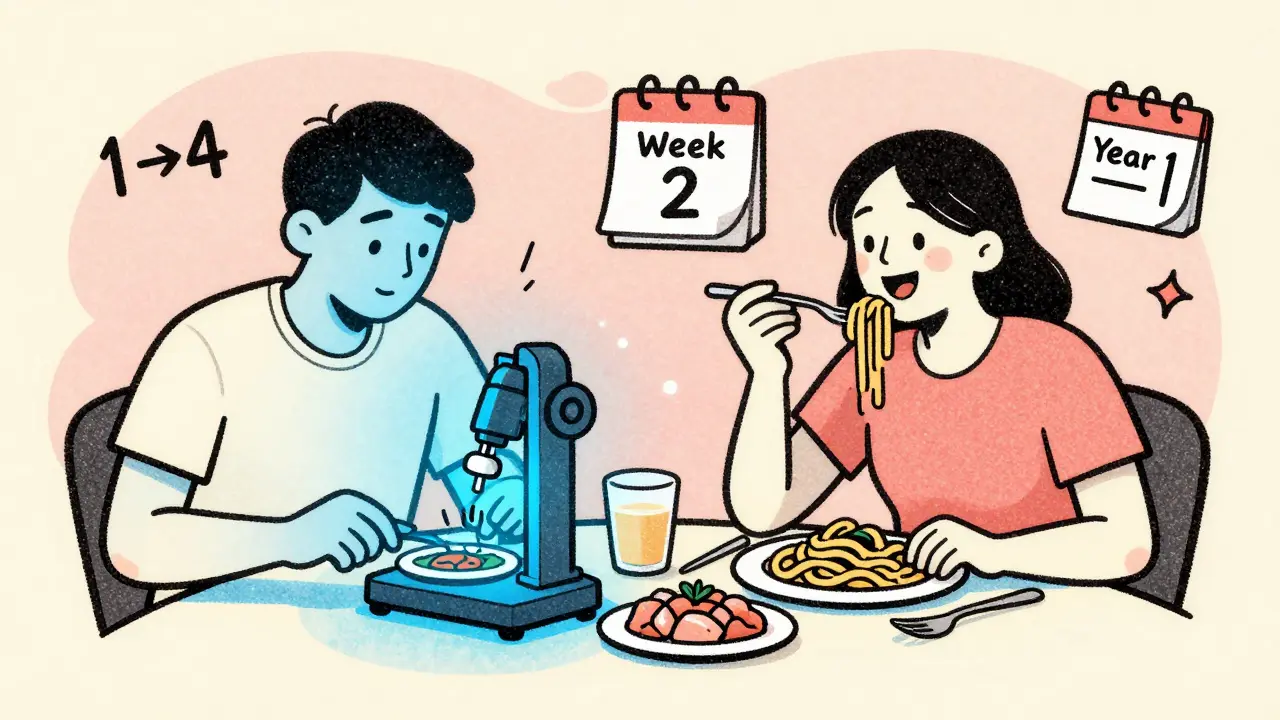
Short-Term Results: Who Loses Weight Faster?
In the first three months, both diets deliver. A 2014 study showed people on keto lost an average of 44 pounds in a year-far more than those on standard low-calorie diets. Another study in 2013 found that obese adults with type 2 diabetes on Atkins lost weight, lowered their blood sugar, and needed fewer medications. But here’s the catch: both diets are most effective in the short term. A 2022 study in the American Journal of Clinical Nutrition found that after six months, keto lost 12.1 pounds on average, while Atkins lost 9.8. By 24 months? The difference vanished. Both lost about 7-8 pounds-similar to a standard low-fat diet. So if you want quick results, keto might feel more dramatic. But if you’re thinking long-term, the speed doesn’t matter as much as what happens after.Long-Term Sustainability: Can You Stick With It?
This is where Atkins has a real edge. Most people can’t live on 20 grams of carbs forever. The keto flu-headaches, fatigue, brain fog-hits 70-80% of new dieters in the first two weeks. And then there’s the social isolation. No pizza. No bread. No birthday cake. It’s isolating. Atkins lets you ease into it. Phase 2 isn’t just a step-it’s a transition. You start adding back berries, nuts, and low-carb veggies. By Phase 4, you’re eating like someone who’s learned how to balance carbs, not someone who’s permanently on a starvation diet. A 2023 survey found that 48% of Atkins users were still following their plan after 12 months. Only 35% of keto dieters made it that far. One Reddit user wrote: “I tried keto for six months. Lost 30 pounds. Then I went to a wedding. A single slice of cake broke my ketosis. I gave up.” Another said: “Atkins 40 let me eat sweet potatoes again. I didn’t feel like I was cheating. I just ate less.”Cost, Tools, and Support
Keto requires more tools. You might buy ketone strips to test your urine or blood. A monthly supply costs $40-60. Apps like Carb Manager and KetoDiet help track macros. You need to weigh food. Count every gram. It’s science-heavy. Atkins gives you structure. Their website has phase calculators, carb counters, and meal plans. They even offer printable grocery lists. You don’t need to test your ketones. You just follow the phase. It’s simpler. Less technical. More like a roadmap than a lab experiment.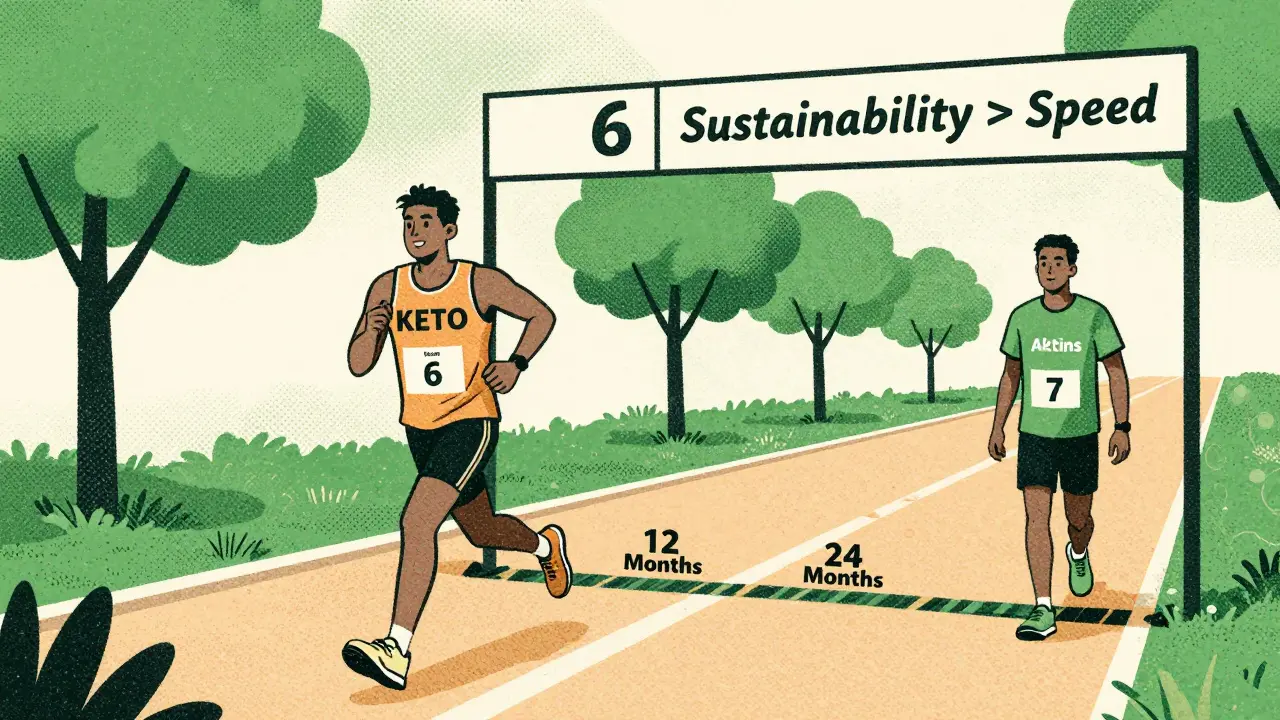
Who It Works For
Keto works best for people who want rapid results, enjoy strict routines, and don’t mind avoiding social foods. It’s popular with younger adults (18-34) who are tech-savvy and motivated by data. If you’re okay with tracking every bite and you’re not worried about eating out, keto can be powerful. Atkins suits those who want to lose weight, then keep it off. It’s better for older adults (35-54) who want flexibility. If you like the idea of eventually eating pasta again-just less of it-Atkins gives you a path. It’s less about perfection and more about progress.What Experts Say
Dr. David Ludwig from Harvard says keto can produce “impressive short-term weight loss,” but the extreme restriction makes it hard to stick with. Dr. Walter Willett, former chair of nutrition at Harvard, believes Atkins’ phased approach offers a “more practical path” for long-term success. The Mayo Clinic is clear: over time, low-carb diets aren’t better than other diets for weight loss. The American Diabetes Association says they help in the short term but warns that long-term safety data is still limited. And then there’s the fat issue. High saturated fat intake-common in both diets-can raise LDL cholesterol. Dr. Neal Barnard from the Physicians Committee for Responsible Medicine warns this could increase heart disease risk, even if the scale drops.Bottom Line: Which One Should You Choose?
If you want to lose weight fast and don’t mind being strict for a while, keto might be your starting point. But if you want to lose weight and keep it off, Atkins gives you a realistic exit ramp. Neither diet is magic. Both require cutting sugar, processed foods, and refined carbs. The real difference is sustainability. Keto is like a sprint. Atkins is like a marathon with rest stops. Try keto if you’re willing to live like a scientist for six months. Try Atkins if you want to learn how to eat differently for life.Can you switch from keto to Atkins?
Yes. Many people start with keto for rapid fat loss, then move into Atkins Phase 2 or 3 to add back more carbs and improve sustainability. The key is to monitor how your body responds-especially to blood sugar spikes and hunger cues. Transitioning slowly, over 2-4 weeks, helps avoid rebound weight gain.
Which diet is better for type 2 diabetes?
Both diets can improve blood sugar control in the short term. A 2013 study showed Atkins reduced HbA1c levels and lowered medication needs in obese adults with type 2 diabetes. Keto also shows strong results, especially in the first 6 months. But long-term, the most important factor isn’t the diet-it’s consistent carb control. Atkins’ phased approach may offer better sustainability for managing diabetes over time.
Do you need to count calories on keto or Atkins?
Technically, no. Both diets rely on appetite suppression from ketosis and protein/fat satiety. But in practice, many people still overeat-especially on keto, where high-fat foods are calorie-dense. If weight loss stalls, tracking calories for a few weeks can reveal hidden excess. Atkins Phase 4, in particular, requires calorie awareness because carb intake increases.
Is the keto flu real?
Absolutely. The keto flu-headaches, fatigue, dizziness, irritability-happens in 70-80% of people in the first 1-2 weeks. It’s caused by electrolyte loss (sodium, potassium, magnesium) as your body sheds water and switches fuel sources. Drinking broth, eating salty foods, and taking magnesium supplements can reduce symptoms. Most people feel better after day 10.
Can you do Atkins without buying their products?
Definitely. Atkins-branded foods are convenient, but not required. You can follow the carb guidelines using whole foods: eggs, chicken, leafy greens, nuts, cheese, and low-sugar berries. The real value of Atkins is its structure-not its snacks. Many people succeed using free online carb counters and meal plans without spending a dime.
Comments
Ashlyn Ellison
Atkins Phase 4 let me eat sweet potatoes again without guilt. Keto had me crying over a slice of pizza at my niece’s birthday. I didn’t lose weight faster on keto, but I lost my social life. Atkins gave me back my Sundays.
February 7, 2026 AT 06:24
Kathryn Lenn
Oh wow, another ‘low-carb is magic’ article. Where’s the study on long-term liver damage from eating 100g of saturated fat daily? Oh right, because Big Keto and Big Atkins fund all the ‘research.’
Also, ‘no need to count calories’? Bro, butter is liquid gold. You eat 3 sticks of it and think you’re ‘in ketosis’? You’re just eating fat bombs and calling it science.
Wake up. It’s not the carbs. It’s the calories. Always has been. Always will be.
February 7, 2026 AT 08:34
Monica Warnick
Ugh, I tried keto for 90 days. Lost 28 pounds. Then I ate one damn croissant at brunch and my body went full rebellion. I gained back 14 in two weeks. I was so angry. I cried in the shower. I thought I was strong. Turns out I’m just weak. And hungry. All the time.
Atkins? I tried it last year. Phase 1 was hell. Phase 2? I started eating berries again. Phase 3? I had a slice of sourdough. Phase 4? I’m eating oatmeal. For breakfast. With honey. And I’ve kept off 20 pounds for 14 months. No ketone strips. No apps. Just… eating. Like a normal person.
Keto is a cult. Atkins is a lifestyle. One makes you a scientist. The other makes you human.
Also, the keto flu? Yeah. I was so dehydrated I thought I was dying. Drank 3 liters of broth in one day. My husband thought I was possessed. I was. By carbs.
And don’t get me started on the ‘keto bars.’ They taste like chalk and plastic. I’d rather eat a Twinkie than another one of those things.
My mom’s on Atkins. She’s 67. Lost 35 pounds. Still goes out to dinner. Still has wine. Still eats pasta once a week. She’s healthier than I’ve ever been. And she didn’t need a PhD to do it.
Stop overcomplicating this. Cut sugar. Eat real food. Move your body. That’s it. The rest is marketing.
And yes, I still crave bread. But now I know how to eat it without hating myself.
February 8, 2026 AT 16:17
Brett Pouser
As someone who’s tried both, I’ll say this: keto was like being on a spaceship. Everything was calculated. No room for error. You’d weigh your chicken breast like it was gold. I loved the control… until I didn’t.
Atkins? Felt like coming home. It gave me room to breathe. Phase 2 was the turning point. I added back mushrooms and avocado. Then strawberries. Then a tiny bit of rice. It didn’t feel like cheating. It felt like freedom.
And yeah, the processed Atkins bars? I used them. No shame. They kept me from eating pizza at 2am. Sometimes, convenience wins.
Also, the keto flu? Real. I drank pickle juice like it was Gatorade. My roommate thought I was weird. I was. But I survived.
Now? I eat low-carb, but not ‘keto.’ I eat whole foods. I don’t count grams. I just avoid sugar and white flour. And I’ve never been leaner.
Bottom line: don’t chase perfection. Chase sustainability.
February 10, 2026 AT 10:39
Joshua Smith
I’m a Type 2 diabetic and I’ve tried both. Keto dropped my A1c from 8.2 to 5.9 in 4 months. Amazing. But I couldn’t keep it up. Too much stress. Too much isolation.
Switched to Atkins Phase 3 last year. My A1c is 6.1 now. Still great. But I sleep better. I’m not constantly paranoid about hidden carbs. I can go to restaurants. I can enjoy Thanksgiving.
Also, the idea that keto is ‘better’ for diabetes? Maybe short-term. But long-term? Consistency beats intensity. Atkins taught me how to live with carbs, not fight them.
And honestly? I’d rather be alive and happy than ‘in ketosis’ and miserable.
February 10, 2026 AT 12:47
Marie Fontaine
Atkins 40 changed my life 😊 I used to think low-carb meant no fun. Now I eat black beans, sweet potatoes, and dark chocolate 🍫✨ No more keto guilt. Just balance. And I’m still losing weight slow and steady 💪
February 12, 2026 AT 01:28
John Watts
Let me tell you something real: the real winner here isn’t keto or Atkins. It’s the person who stops obsessing over macros and starts listening to their body.
I started keto because I wanted to look like a fitness model. I ended up with anxiety, insomnia, and a hatred for avocado.
I switched to Atkins because I wanted to feel good, not just look good.
Now I eat when I’m hungry. Stop when I’m full. I don’t count carbs. I don’t test ketones. I just eat real food - eggs, greens, meat, nuts, fruit - and I move every day.
Lost 40 pounds in 10 months. No drama. No supplements. No apps.
You don’t need a diet. You need a rhythm.
And if you’re still reading this? You’re already halfway there.
February 13, 2026 AT 21:04
Ken Cooper
yo so i tried keto for 3 months and yeah i lost 25 lbs but i was so tired all the time and my brain felt like it was wrapped in cotton
then i switched to atkins phase 2 and suddenly i could think again like my brain was back online
and i can eat a whole dang sweet potato now and i dont feel like a monster
also the keto bars are the worst thing ever invented next to kale smoothies
atkins got me to eat real food not packaged crap
and i dont need a phone app to tell me if i’m in ketosis
just eat less sugar. its not rocket science
February 14, 2026 AT 05:32
Susan Kwan
Of course keto ‘works’ faster. It’s starvation with extra steps.
Atkins is just keto with a loophole. A loophole called ‘Phase 4.’
Let me guess - you’re one of those people who thinks ‘sustainability’ means ‘I can eat pasta on Fridays.’
Newsflash: if your diet requires you to ‘ease into’ carbs, you were never meant to be low-carb.
Real change doesn’t come with phases. It comes with discipline.
Or are you just tired of being hungry?
February 16, 2026 AT 01:28
Angie Datuin
I started with keto. Lost 30 pounds. Then I hit a wall. Couldn’t sleep. Mood swings. I cried during a movie about dogs.
I switched to Atkins. Didn’t even try the bars. Just followed the carb numbers with real food.
Now I eat rice. I eat fruit. I eat bread. And I still weigh 50 pounds less than I did two years ago.
It’s not about the diet. It’s about not giving up.
February 16, 2026 AT 11:49
John McDonald
Both diets work if you stick to them. But the real difference? Keto is for people who want to be told exactly what to do. Atkins is for people who want to be told what to do… and then slowly get to choose.
I’m in my 40s. I don’t want to be a scientist. I want to be healthy. And happy.
Atkins gave me that. Keto gave me a spreadsheet.
Choose the one that lets you live - not just survive.
February 18, 2026 AT 06:12
glenn mendoza
It is of paramount importance to recognize that the efficacy of any dietary regimen is contingent upon individual physiological variance, metabolic adaptability, and long-term behavioral adherence.
While ketogenic protocols demonstrate statistically significant short-term reductions in adiposity, the sustainability of such extreme macronutrient restriction is empirically unsupported beyond the 18-month horizon.
Conversely, the phased carbohydrate reintroduction model inherent to the Atkins framework facilitates neurobehavioral reintegration, thereby enhancing compliance through graduated autonomy.
Furthermore, the psychological burden associated with perpetual ketosis - including social alienation, cognitive fatigue, and dietary monotony - constitutes a significant barrier to long-term success.
Therefore, from a clinical and behavioral standpoint, the Atkins method presents a more viable, evidence-informed, and human-centered pathway for durable weight management.
February 19, 2026 AT 14:17
Andrew Jackson
Atkins? You mean the diet that lets you eat ‘low-carb’ cookies made by Big Food? That’s not health. That’s surrender.
Keto is the only real low-carb diet. Everything else is just carb-counting with a smile.
And don’t get me started on ‘Phase 4.’ That’s not a diet. That’s a betrayal of your goals.
If you can’t handle 20g of carbs a day for life, you never wanted to lose weight. You just wanted to feel better for a few months.
Real men don’t eat sweet potatoes. Real men eat steak, butter, and eggs - and they don’t look back.
February 19, 2026 AT 23:20
Kathryn Lenn
Wow. Look who’s back. The ‘I ate one croissant and gave up’ person. Classic.
Let me guess - you’re still blaming the diet. Not your willpower.
Atkins Phase 4? That’s not sustainability. That’s just giving up with a fancy name.
Real change doesn’t come with ‘phases.’ It comes with discipline. And if you need a ‘path’ to eat less sugar… you’re not ready.
And don’t tell me ‘I can eat bread now.’
You didn’t win. You just stopped fighting.
February 21, 2026 AT 05:27