
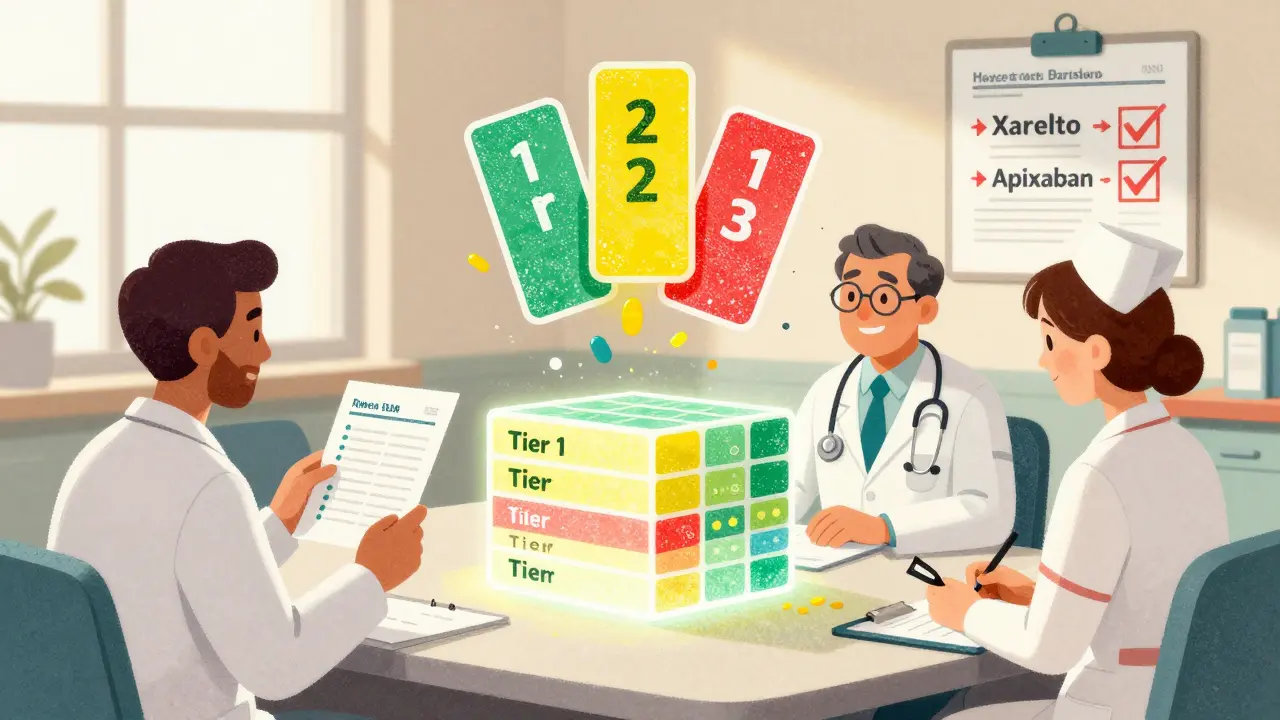
When a patient in a nursing home is switched from one drug to another-say, from brand-name Xarelto to apixaban-without their doctor directly ordering it, that’s not a mistake. It’s therapeutic substitution, and it’s guided by something called an institutional formulary. These aren’t just lists of approved drugs. They’re legally required, evidence-based systems that determine which medications can be swapped in hospitals, clinics, and long-term care facilities-and who gets to decide.
What Exactly Is an Institutional Formulary?
An institutional formulary is a living document created and managed by a healthcare facility to control which drugs are used and when substitutions can happen. Unlike insurance formularies that decide what your plan covers, institutional formularies focus on what happens inside a hospital, nursing home, or clinic. They’re designed to ensure patients get safe, effective, and cost-efficient medications-without needing a new prescription every time a cheaper or better option exists.
Florida’s Statute 400.143 (2025) gives us one of the clearest definitions: it’s a list of drugs a facility uses so pharmacists can swap a prescribed medication with another that has the same clinical effect. That’s the key: same effect, different chemical structure. This isn’t about generics replacing brands-it’s about swapping one drug class for another, like switching from a different anticoagulant or antidepressant, if evidence says it’s just as safe and effective.
These formularies aren’t static. They’re updated constantly based on new studies, side effect reports, and cost data. The American Journal of Health-System Pharmacy calls them the result of a rigorous evaluation process led by expert panels who decide what gets in-and what gets out.
Who Runs the Formulary? The Committee Rules
You can’t just pick drugs based on price or convenience. Florida law requires every facility with a formulary to have a formal committee made up of three key people: the medical director, the director of nursing services, and a certified consultant pharmacist. That’s not optional. It’s the law.
This committee doesn’t just meet once a year. They’re responsible for writing clear policies, setting objective criteria for drug selection, and monitoring outcomes every single quarter. They track things like how many substitutions happened, whether patients had adverse reactions, and if costs went down without harming care.
The pharmacist brings the drug knowledge. The medical director brings clinical judgment. The nursing director brings frontline experience-because nurses are the ones giving the meds, noticing side effects, and catching errors. This team approach is what makes institutional formularies work better than top-down insurance decisions.
How Substitution Works in Practice
Let’s say a patient is prescribed a brand-name statin for high cholesterol. The formulary committee has reviewed the data and found that a generic version works just as well, costs 80% less, and has the same safety profile. Under the formulary, the pharmacist can substitute it without waiting for a new prescription.
But here’s the catch: it only works if the drugs are proven to be therapeutically equivalent. That means not just similar, but clinically interchangeable. The FDA has a list of approved equivalents, but institutional formularies often go further-using real-world data from their own patients to decide what works best in their setting.
Most formularies use a tiered system:
- Tier 1 (Preferred): Lowest cost, highest evidence, first choice
- Tier 2 (Non-preferred): Still effective, but more expensive
- Tier 3 (Restricted): Only used if clinical need overrides cost
Patients don’t usually pay more for Tier 2 or 3 drugs in institutional settings-unlike insurance plans. But prescribers might need to jump through hoops to get approval for non-formulary drugs. That’s where friction starts.
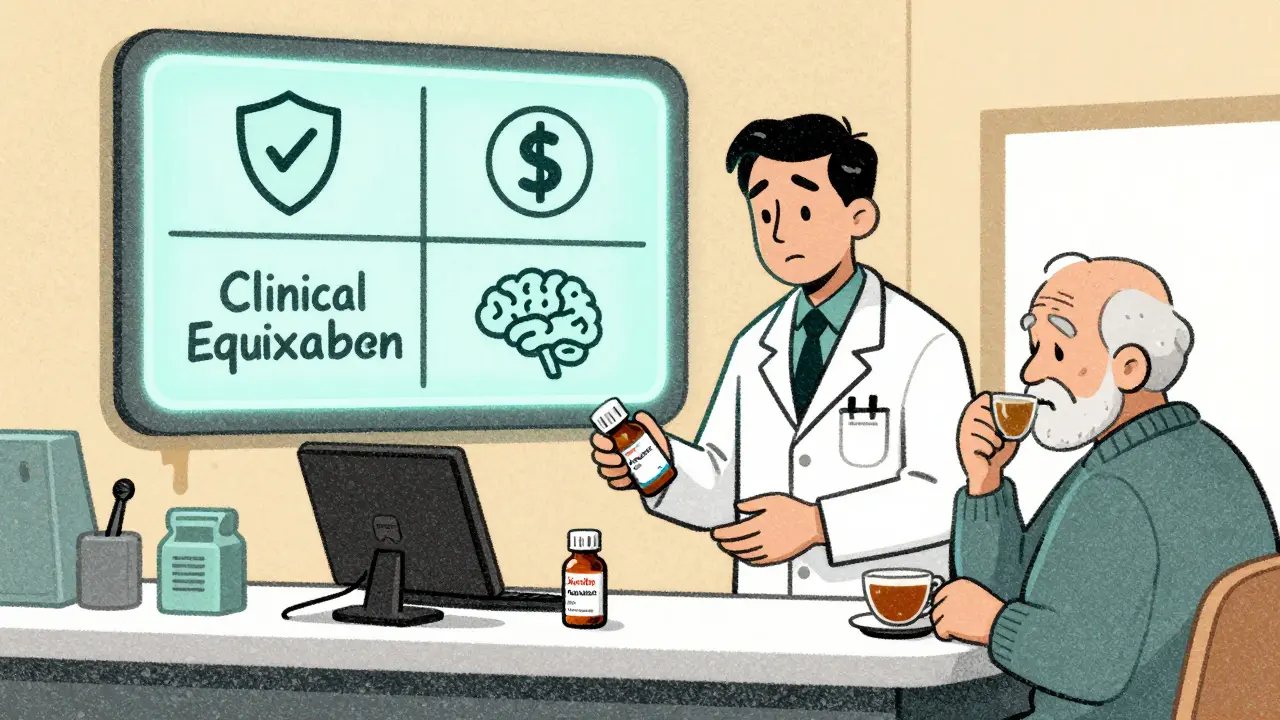
Formulary vs. Insurance Formulary: Key Differences
People often confuse institutional formularies with insurance formularies. They’re not the same.
Insurance formularies are about coverage-what your plan will pay for. If a drug isn’t on the list, you might pay full price or get denied. Institutional formularies are about substitution-what the facility can swap in without a new order.
Insurance formularies are managed by pharmacy benefit managers (PBMs) and are designed to drive down costs by negotiating rebates. Institutional formularies are managed by clinical teams and are designed to improve safety and consistency.
For example: a patient might be on a non-formulary drug covered by their insurance. But if they’re admitted to a hospital with a strict formulary, the hospital pharmacist might switch them to a formulary-approved alternative-regardless of what their insurance covers. That’s because the hospital’s priority is clinical safety and continuity, not billing.
Real-World Impact: Wins and Woes
The data shows institutional formularies work. Studies cited in the American Journal of Health-System Pharmacy found they reduce adverse drug events by 15% to 30%. In one Florida nursing home, quarterly monitoring caught seven dangerous drug interactions in the first year alone-interactions no one would’ve spotted without the system.
But there are downsides. A pharmacist on Reddit shared a case where a patient was switched from Xarelto to apixaban in a nursing home, then switched back to Xarelto when they went to the hospital. The patient got confused. Their family panicked. The medical records didn’t clearly track the change.
Doctors are split. A 2023 AMA survey found 62% support formularies for safety, but 78% hate the paperwork when they need a non-formulary drug for a complex patient. One oncologist said, “I had to fill out a seven-page form just to prescribe a drug my patient has been on for five years.”
Patient advocacy groups like AARP worry about informed consent. If a patient doesn’t know their medication changed, they can’t report side effects or ask questions. In long-term care, where residents often have dementia or limited communication, this is a serious blind spot.
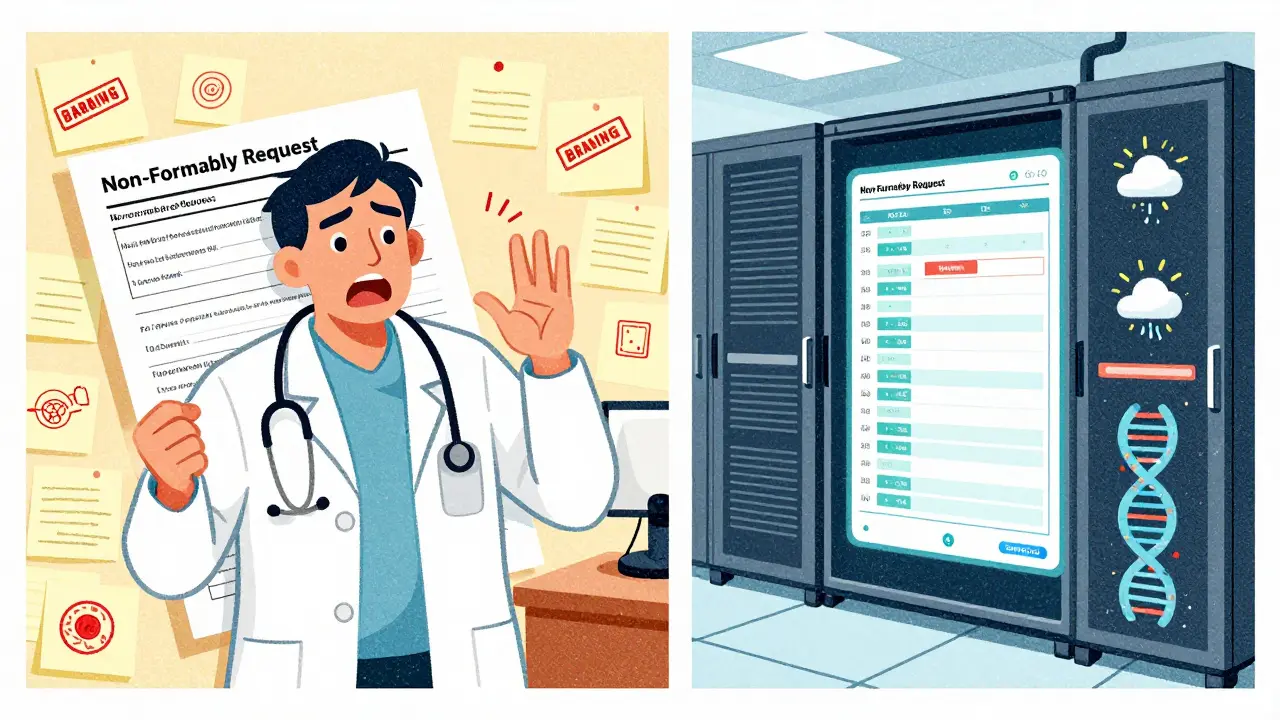
Implementation Challenges
Setting up a formulary isn’t plug-and-play. Facilities face real hurdles:
- EHR integration: 68% of Florida facilities reported problems syncing their electronic records with formulary rules. Alerts don’t always pop up. Substitutions don’t get logged.
- Staff training: Nurses need to know what substitutions are allowed and when to flag them. It takes 4 to 8 weeks just to get everyone on the same page.
- Documentation: Every policy, every change, every quarterly review must be written down and kept on file. One facility reported spending 25 hours a quarter just on paperwork.
Tools like the AMCP Formulary Management Toolkit and Florida’s official guide help-but they don’t fix broken software. The biggest wins come when pharmacies work directly with EHR vendors to build formulary triggers into the system-like auto-alerting when a non-formulary drug is ordered.
Where Is This All Heading?
The future of institutional formularies is getting smarter-and faster.
Starting in Q3 2025, Medicare will tie formulary compliance to nursing home quality ratings. That means facilities with poor substitution tracking could lose funding. It’s a big incentive to get it right.
By 2026, Gartner predicts 80% of healthcare systems will use AI to adjust formularies in real time-based on patient outcomes, lab results, and even weather patterns (yes, cold weather affects drug metabolism). Some hospitals are already testing pharmacogenomic data-using a patient’s DNA to decide which drugs to include.
And Florida isn’t alone anymore. As of 2024, 32 states have laws similar to Statute 400.143. The trend is clear: institutional formularies are becoming standard, not optional. The question isn’t whether to adopt them-it’s how to do it well.
Final Thoughts
Institutional formularies aren’t about cutting corners. They’re about cutting confusion. They’re about making sure that when a patient moves from a nursing home to a hospital to rehab, their meds don’t become a guessing game.
Done right, they save lives. Done poorly, they create gaps in care. The difference comes down to three things: clinical expertise, clear communication, and real-time data. It’s not about saving money-it’s about saving patients from the unintended consequences of a broken system.
Comments
Laura Gabel
This whole formulary thing is just another way for hospitals to save a buck while pretending they care about patients. Nurses are overworked, doctors are buried in paperwork, and patients? They're just numbers in a spreadsheet. I've seen it firsthand.
March 19, 2026 AT 20:13
jerome Reverdy
Honestly, I think institutional formularies are one of the most underappreciated tools in clinical practice. The committee model-pharmacist, med director, nursing lead-is genius. It’s not about cost-cutting; it’s about standardizing evidence-based care. When done right, it prevents adverse events before they happen. The real issue is EHR integration. If your system doesn’t alert you when a non-formulary drug is ordered, you’re flying blind.
March 20, 2026 AT 06:16
Aileen Nasywa Shabira
Oh wow, so now we’re using AI to adjust drug regimens based on WEATHER PATTERNS? Next they’ll tell us to take statins only on Tuesdays because the moon phase affects LDL. This is what happens when bureaucrats start thinking they’re doctors. Someone’s getting a bonus for this nonsense.
March 20, 2026 AT 13:23
Jeremy Van Veelen
You speak of formularies as if they’re some sacred clinical artifact. Let’s be real: this is pharmaceutical consolidation disguised as patient safety. The same PBMs that dictate insurance formularies are the ones advising these institutional panels. The ‘evidence’? Curated by reps with free lunches and speaker fees. And don’t get me started on the ‘therapeutic equivalence’ myth-two drugs can have the same half-life but wildly different side effect profiles in real-world populations. This isn’t science. It’s corporate policy dressed in white coats.
March 22, 2026 AT 05:18
Lauren Volpi
So we're telling old people their meds change without telling them? And we're surprised they get confused? This isn't healthcare. It's a logistics exercise with a side of moral bankruptcy.
March 22, 2026 AT 08:13
Paul Ratliff
lol i work in a nursing home and this is 100% true. we had a guy switch from xarelto to apixaban and back 3 times in 2 weeks. no one told him. his daughter cried. we had to print out a paper list just to keep track. the ehr is a joke.
March 22, 2026 AT 19:32
SNEHA GUPTA
The institutional formulary system, while imperfect, represents a rare convergence of clinical pragmatism and systemic accountability. It is not merely about cost containment, but about the ethical imperative of reducing therapeutic fragmentation. When a patient transitions across care settings, continuity of pharmacotherapy is not a luxury-it is a fundamental right. The challenge lies not in the model itself, but in the infrastructural neglect that prevents its full realization. A system grounded in evidence, multidisciplinary input, and real-time feedback is not bureaucratic overreach. It is the bare minimum of responsible care.
March 24, 2026 AT 08:18
Gaurav Kumar
USA is the only country where you need a 7-page form to prescribe a drug your patient has been on for 5 years. Meanwhile, in India, we just use clinical judgment. No committees. No tiers. Just doctors and patients. This is why American healthcare is broken. You turned healing into a spreadsheet. 🤦♂️
March 24, 2026 AT 20:37
David Robinson
I’ve been in this game for 22 years and let me tell you-formularies are the single biggest reason why patients die in transition. You think nurses are trained? They’re not. You think EHRs alert you? They don’t. You think families are informed? They’re not. I had a patient on warfarin for a decade. Got admitted. Switched to apixaban without documentation. Got discharged. Went back on warfarin. INR hit 8.5. Nearly bled out. The formulary committee didn’t even log the switch. That’s not policy. That’s malpractice by committee. And you want to expand this? To Medicare? You’re playing Russian roulette with people’s lives.
March 24, 2026 AT 22:08
lawanna major
This is actually one of the most hopeful things I’ve read in healthcare in years. Formularies aren’t perfect, but they’re a step toward consistency, safety, and accountability. The real heroes are the pharmacists and nurses who catch the errors before they happen. Yes, the paperwork sucks. Yes, the tech is outdated. But we’re moving from chaos to structure-and that’s something to build on, not tear down. Keep pushing for better EHR integration. Keep training staff. Keep listening to patients. We’re not there yet, but we’re on the right path.
March 26, 2026 AT 19:21