
Gut Bacteria Drug Effect Predictor
How Gut Bacteria Affect Your Medication
Select your medication to see how gut bacteria might influence its effectiveness or side effects. This tool is for educational purposes only and should not replace medical advice.
Your Results
Effect on Your Medication
Clinical Impact
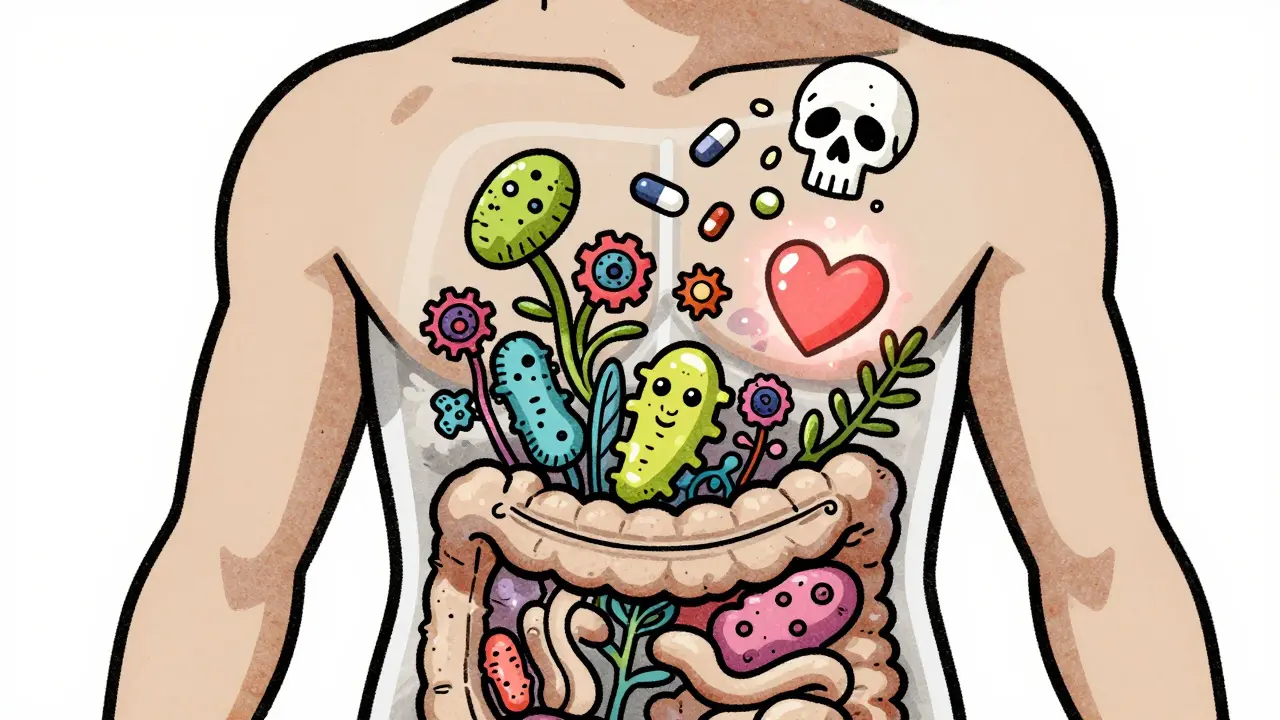
Every time you take a pill, your gut bacteria are also taking it. Not in the way you might think - they don’t swallow it. But they change it. And that change can turn a life-saving drug into a dangerous one, or make it completely useless. This isn’t science fiction. It’s happening right now in millions of people, and doctors are only beginning to understand why some patients get sick from medications that work fine for others.
Why Your Pills Don’t Work the Same for Everyone
For decades, doctors assumed drug reactions were mostly about liver enzymes, kidney function, and genetics. But that model kept failing. Why did one patient get severe diarrhea from chemotherapy while another didn’t? Why did a common heart drug stop working in some people, even at the right dose? The answer wasn’t in the person’s DNA - it was in their gut. A landmark 2019 study from Yale showed that gut bacteria were responsible for 20% to 80% of toxic metabolites circulating in patients’ blood after taking certain drugs. That means up to four out of five harmful side effects from some medications weren’t caused by the body’s own metabolism - they were caused by bacteria. These microbes break down drugs in ways human cells never could. Sometimes they activate them. Sometimes they poison them. Take irinotecan, a chemotherapy drug used for colon cancer. About 30-40% of patients develop life-threatening diarrhea because gut bacteria convert a harmless metabolite - SN-38-glucuronide - back into its toxic form, SN-38. This happens because of a single bacterial enzyme: beta-glucuronidase. Studies found that patients with higher levels of this enzyme had 87% more severe diarrhea. That’s not random variation. That’s predictable.How Gut Bacteria Rewire Your Medications
Your gut holds over a trillion bacteria. They’re not just passive residents - they’re chemical factories. They have enzymes that do things human enzymes can’t: break apart azo bonds, remove chlorine atoms, strip off sugar groups, reduce nitro groups. These reactions are rare in human biology but common in microbes. Here’s what they do to common drugs:- Prontosil: An old antibiotic that only works because gut bacteria cut it apart to release sulfanilamide. Without them, it’s useless. In mice given antibiotics, its effectiveness dropped from 90% to 12%.
- Irinotecan: As mentioned, gut bacteria reactivate its toxic form, causing diarrhea. Blocking beta-glucuronidase cuts diarrhea severity by 60-70% in trials.
- Digoxin: A heart drug. In about 10% of people, a bacterium called Eggerthella lenta breaks it down completely. That’s why some patients need double the dose - their gut bacteria are eating the drug before it can work.
- Clonazepam: An anti-seizure medication. Germ-free mice had 40-60% higher blood levels than normal mice, meaning gut bacteria normally help clear it out. Take antibiotics? You might overdose.
- Lovastatin: A cholesterol drug. Long-term antibiotics can reduce its effectiveness by 35% because gut microbes help activate it.
The Antibiotic Paradox
Here’s the twist: the drugs you take can wreck your microbiome - and that changes how future drugs work. Antibiotics are the most obvious offenders. A single course can wipe out key bacterial species for months, sometimes years. That’s why a patient who once tolerated a drug fine might suddenly have side effects after a round of amoxicillin for a sinus infection. But even non-antibiotic drugs do it. Metformin, a diabetes drug, increases the abundance of Akkermansia muciniphila, which improves insulin sensitivity - a good thing. But it also reduces other bacteria that help metabolize certain antidepressants. SSRIs like fluoxetine can alter gut pH and bile acid flow, which changes which bacteria survive. These shifts aren’t side effects - they’re drug-microbiome feedback loops. One patient might take metformin and feel better. Another might take it and develop anxiety - not because the drug failed, but because their microbiome changed in a way that altered how their brain processed serotonin.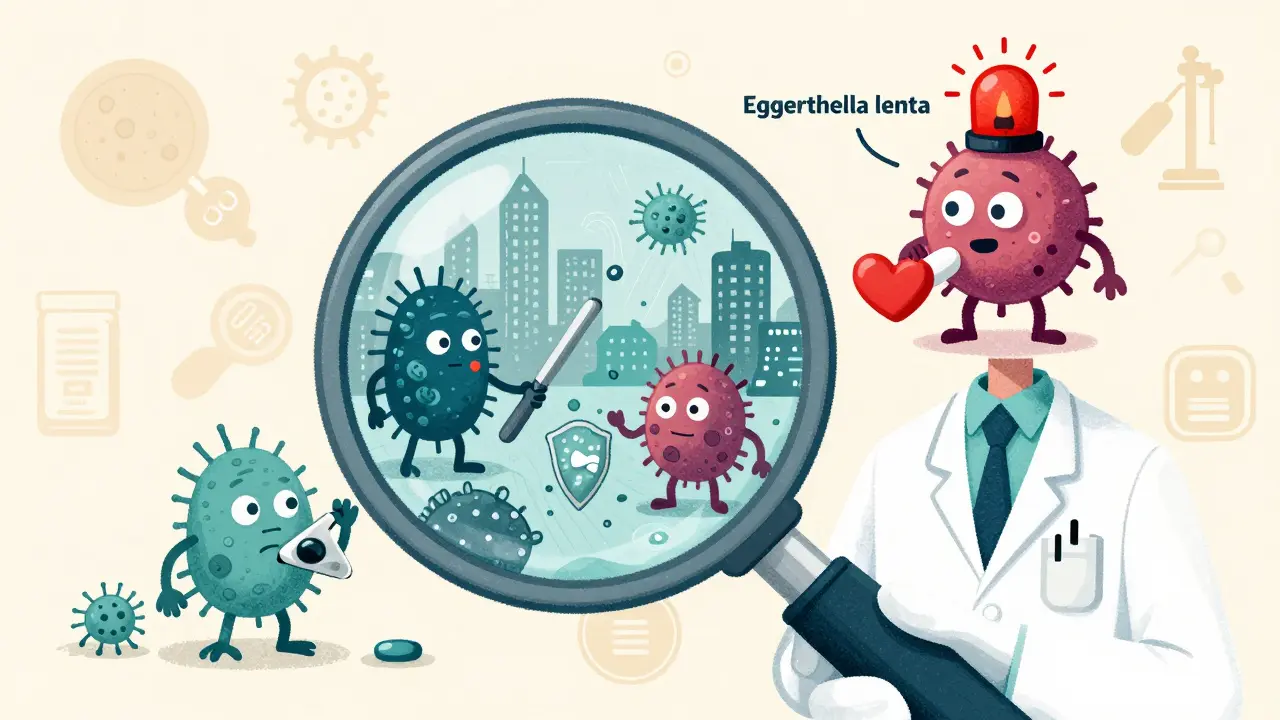
How Doctors Are Starting to Fight Back
This isn’t just theory. It’s becoming clinical practice. In oncology, hospitals in the U.S. and Europe are now testing patients’ stool samples before giving irinotecan. If beta-glucuronidase levels are high, they give a simple inhibitor - a pill taken alongside chemotherapy - that blocks the enzyme. In Phase II trials, this cut severe diarrhea by 60%. Pharmaceutical companies are changing how they test drugs. Pfizer and Merck now screen new compounds against human gut bacteria in lab cultures before they even reach human trials. If a drug gets broken down too fast - or turned toxic - they redesign it. This adds $2.5 million to development costs, but saves hundreds of millions by avoiding dangerous post-market recalls. The FDA and EMA now require microbiome interaction studies for drugs with narrow therapeutic windows - especially cancer treatments. In 2023, 65% of new oncology drug applications included microbiome data. Neurology and cardiology are catching up.What This Means for You
If you’ve ever had an unexpected reaction to a drug - nausea, dizziness, diarrhea, or worse - your microbiome might be why. And if you’re on long-term medication, your gut bacteria are probably changing your drug’s effect without you knowing. Right now, there’s no routine test for your drug-metabolizing bacteria. But that’s coming. Metagenomic stool tests - which sequence all the bacterial genes in your gut - can already identify key drug-metabolizing enzymes with 95% accuracy. The cost? $300-$500. Insurance doesn’t cover it yet, but it’s only a matter of time. Some clinics are already offering personalized probiotics. In early trials, patients receive tailored bacterial strains designed to either block harmful drug breakdown (like beta-glucuronidase inhibitors) or boost activation (like for prontosil-like prodrugs). One trial, NCT05102805, is testing a probiotic blend that prevents digoxin breakdown in patients with Eggerthella lenta. The future isn’t just about taking the right drug. It’s about taking the right drug with the right bacteria.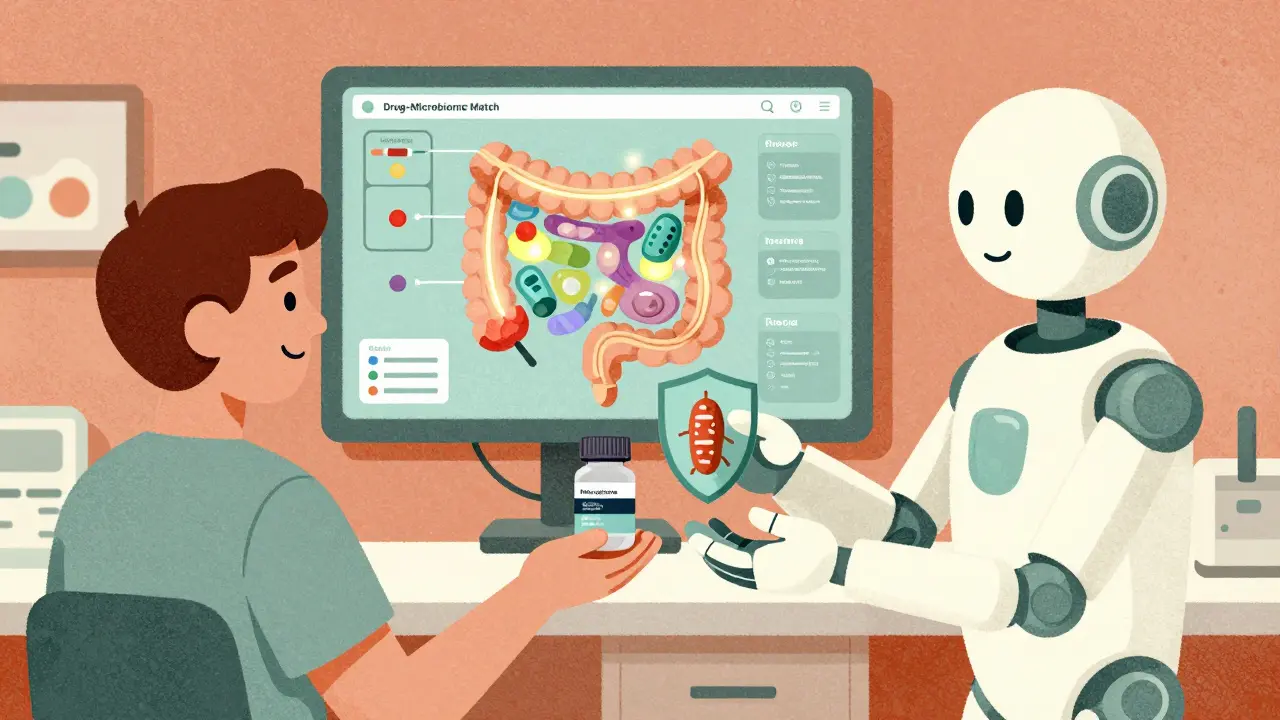
The Big Picture: Precision Medicine Gets Personal
This isn’t just about avoiding side effects. It’s about making drugs work better. Imagine a world where your doctor doesn’t just check your liver enzymes before prescribing a drug - they check your gut map. They know your bacteria turn your antidepressant into a weaker version. So they prescribe a different one. Or they give you a short course of a probiotic first - not to fix your digestion, but to fix your medication. The NIH has poured $14.7 million into this research between 2023 and 2025. The goal? To build dosing algorithms that adjust drug amounts based on your microbiome profile. Early models predict they could cut adverse drug reactions by 25-35%. That’s not a small number. In the U.S. alone, 1.3 million emergency room visits each year are caused by bad drug reactions. Many of them are preventable - if we stop ignoring the trillions of tiny workers living in your intestines.What’s Next
The next five years will see microbiome testing become part of standard drug prescriptions - especially for cancer, heart disease, and psychiatric conditions. You might get a simple stool test before starting a new medication. Your doctor might recommend avoiding certain foods or antibiotics while on treatment. Or you might get a probiotic designed specifically for your drug. This isn’t about replacing medicine. It’s about completing it. We’ve spent decades studying how drugs interact with human biology. Now we’re learning how they interact with the invisible ecosystem inside us. The next breakthrough in drug safety won’t come from a new chemical. It’ll come from understanding the bugs that live in your gut - and learning how to work with them.Can gut bacteria make my medication completely ineffective?
Yes. The bacterium Eggerthella lenta breaks down digoxin, a heart medication, in about 10% of people - making it useless unless the dose is doubled. Antibiotics can also wipe out bacteria that help activate certain drugs, like prontosil, reducing effectiveness from 90% to 12%.
Do probiotics help with drug side effects?
Some do - but not all. Probiotics sold in stores usually don’t target drug metabolism. However, experimental strains are being developed to block harmful bacterial enzymes like beta-glucuronidase. In trials, these reduced chemotherapy-induced diarrhea by 60-70%. They’re not yet available over the counter.
Should I stop taking antibiotics if I’m on long-term medication?
Never stop antibiotics without talking to your doctor. But if you’re on a drug like lovastatin, digoxin, or irinotecan, tell your doctor you’re on antibiotics. They may need to monitor your drug levels or adjust your dose. Antibiotics can reduce drug effectiveness or increase toxicity by altering your gut bacteria.
Is there a test I can take to see how my gut affects my drugs?
Yes - but not widely available yet. Metagenomic stool tests can identify bacterial genes responsible for drug metabolism with 95% accuracy. Costs range from $300-$500. Some research hospitals offer this for patients on high-risk medications. Insurance doesn’t cover it, but it’s expected to become standard within 5 years.
Why don’t doctors know about this yet?
Until recently, the tools to study the microbiome were too expensive and slow. Now, with faster sequencing and better data, the evidence is clear. Major drug companies and regulators are catching up - but clinical guidelines take time. Many doctors still think of the gut as just a digestive system, not a drug-processing organ.
Comments
Himanshu Singh
whoa this is wild i had no idea my gut was basically a drug chemist 😱 i took amoxicillin last year and my anxiety spiked for months-maybe my bacteria ate my antidepressant?!
December 28, 2025 AT 20:23
Jasmine Yule
This is the most important medical revelation since penicillin. Seriously. We’ve been treating the body like a closed system when it’s actually a symbiotic ecosystem. Doctors need to start treating gut health like vital signs. My mom’s chemo side effects vanished after they tested her microbiome. This isn’t fringe science-it’s the future.
December 29, 2025 AT 16:15
Greg Quinn
It’s funny how we’ve spent centuries trying to control nature with chemistry, only to realize the real control lies in the quiet, invisible partnerships we’ve ignored. The gut isn’t just processing drugs-it’s negotiating them. Maybe the real question isn’t ‘why does this drug fail?’ but ‘who else is at the table?’
December 30, 2025 AT 01:58
Lisa Dore
I’m so glad this is getting attention! I’ve been telling my friends for years that probiotics aren’t just for ‘gut health’-they’re drug co-pilots. My cousin’s doctor finally adjusted her statin dose after her microbiome test showed low activation bacteria. She went from dizzy all day to feeling like her old self. This is personal medicine, y’all.
December 31, 2025 AT 01:57
Sharleen Luciano
How is this not common knowledge yet? The fact that we’re prescribing life-altering drugs without even screening for microbial metabolism is criminal negligence. I’ve read the Yale papers, the FDA guidelines, the clinical trials-it’s all there. Yet your average GP still thinks ‘gut flora’ is a buzzword for yogurt ads. The medical establishment is decades behind. And no, ‘eating kimchi’ won’t fix it.
December 31, 2025 AT 09:36
Alex Ronald
Biggest takeaway: antibiotics aren’t just killing bad bugs-they’re deleting your drug-response profile. I had a 3-day course of cipro for a UTI and my ibuprofen stopped working for migraines for 6 months. No one told me that. If you’re on chronic meds, treat antibiotics like nuclear codes-only use them if absolutely necessary, and tell your doctor you’re on them.
December 31, 2025 AT 20:54
Teresa Rodriguez leon
Of course your gut is breaking down your meds. You eat garbage, you drink sugar water, you stress out every day-of course your microbiome is a toxic wasteland. No wonder your antidepressants don’t work. It’s not the drug. It’s you. Fix your life before blaming science.
January 1, 2026 AT 07:52
Paige Shipe
While I appreciate the scientific rigor presented herein, I must respectfully contest the assertion that microbiome testing is ‘only a matter of time’ for mainstream adoption. The regulatory apparatus governing pharmacokinetics remains entrenched in somatic-centric paradigms, and the commercial interests of pharmaceutical entities are not aligned with decentralized, patient-driven metabolic profiling. Moreover, the term ‘bugs’ is scientifically imprecise and undermines the gravity of the subject.
January 2, 2026 AT 20:00
Emma Duquemin
OMG I just got chills. Imagine if your pill came with a little QR code that said: ‘Hey, your gut has 87% beta-glucuronidase-take this blocker pill too.’ This isn’t sci-fi, it’s 2025. I’m getting my stool test next month. If I can tweak my microbiome to make my anxiety meds work better, I’ll be dancing in the kitchen. We’re not just humans anymore-we’re biotech ecosystems. And I’m here for it. 🤖💚
January 3, 2026 AT 09:23
Fabian Riewe
My dad’s on digoxin and his doc never even mentioned his gut. He kept saying the dose was ‘too low’-turns out his bacteria were eating it. After a simple stool test, they added a probiotic strain that blocks Eggerthella. His heart rate stabilized in two weeks. Why isn’t this standard? It’s cheaper than hospital visits. And it’s not magic-it’s biology.
January 5, 2026 AT 01:08
Amy Cannon
It is indeed a most fascinating and profoundly consequential development in the field of pharmacological science that the human intestinal microbiota may serve as a primary modulator of drug bioavailability and metabolic fate. One must acknowledge, however, that the colloquial usage of terms such as ‘bugs’ and ‘eat the drug’ may, in certain contexts, detract from the scholarly gravitas of this emergent paradigm. Nevertheless, the implications for precision medicine are nothing short of revolutionary, and I eagerly anticipate the day when microbiome profiling becomes as routine as lipid panels.
January 6, 2026 AT 10:12
Jim Rice
Wait, so you’re telling me I’ve been taking the wrong pills for years because of some bacteria? What about all the people who don’t have ‘good’ gut bacteria? Are they just screwed? And how do we know this isn’t just another fad like gut cleanses and charcoal pills? This sounds like a marketing ploy for expensive stool tests. I’ve been fine for 40 years-why change now?
January 8, 2026 AT 08:41
Manan Pandya
This is exactly why I started testing my patients' microbiomes before prescribing long-term medications. One patient had severe constipation on metformin-turns out her Akkermansia was low, and her gut couldn’t process the drug properly. We added a targeted prebiotic, and her glucose dropped 20% without changing the dose. This isn’t magic. It’s precision. If you’re on any chronic med, ask your doctor about microbiome testing. It’s not expensive-it’s essential.
January 9, 2026 AT 09:34