
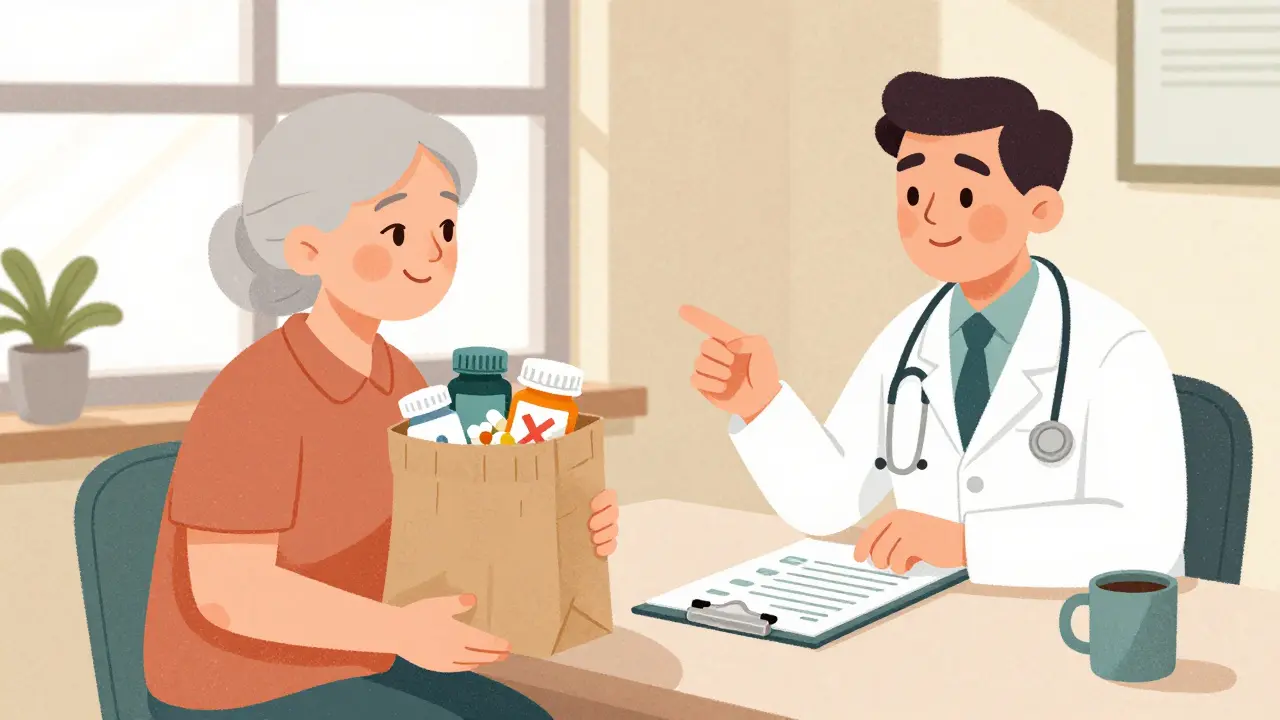
Many people take multiple medications every day - some because they need them, others because no one ever asked if they still do. If you’re on five or more prescriptions, you’re not alone. About 41% of adults over 65 are taking too many drugs, and many of those aren’t helping anymore. Worse, they’re costing you hundreds - sometimes thousands - each year. But here’s the good news: you can work with your doctor to safely stop some of them and save real money, without risking your health.
What Is Deprescribing, Really?
Deprescribing isn’t just about cutting pills. It’s a planned, step-by-step process of reviewing your medications to find the ones that aren’t doing enough good to justify their risks or cost. Think of it like cleaning out your closet: you keep what fits, what you use, and what’s still in good shape. Everything else gets tossed. It’s not about stopping everything. It’s about stopping what’s unnecessary. For example, a 72-year-old woman in Ohio stopped three medications during a simple doctor visit. One was a $120/month sleep aid she hadn’t needed in years. Two were supplements her cardiologist said were pointless because her prescriptions already covered the same nutrients. She saved $840 that year. That’s not luck - that’s smart deprescribing. The American Academy of Family Physicians says the goal is simple: reduce harm. Too many drugs can cause falls, confusion, kidney damage, and even hospital stays. In fact, 37% of medication-related hospitalizations in people over 65 could be avoided with proper medication reviews.How Much Money Are You Really Spending?
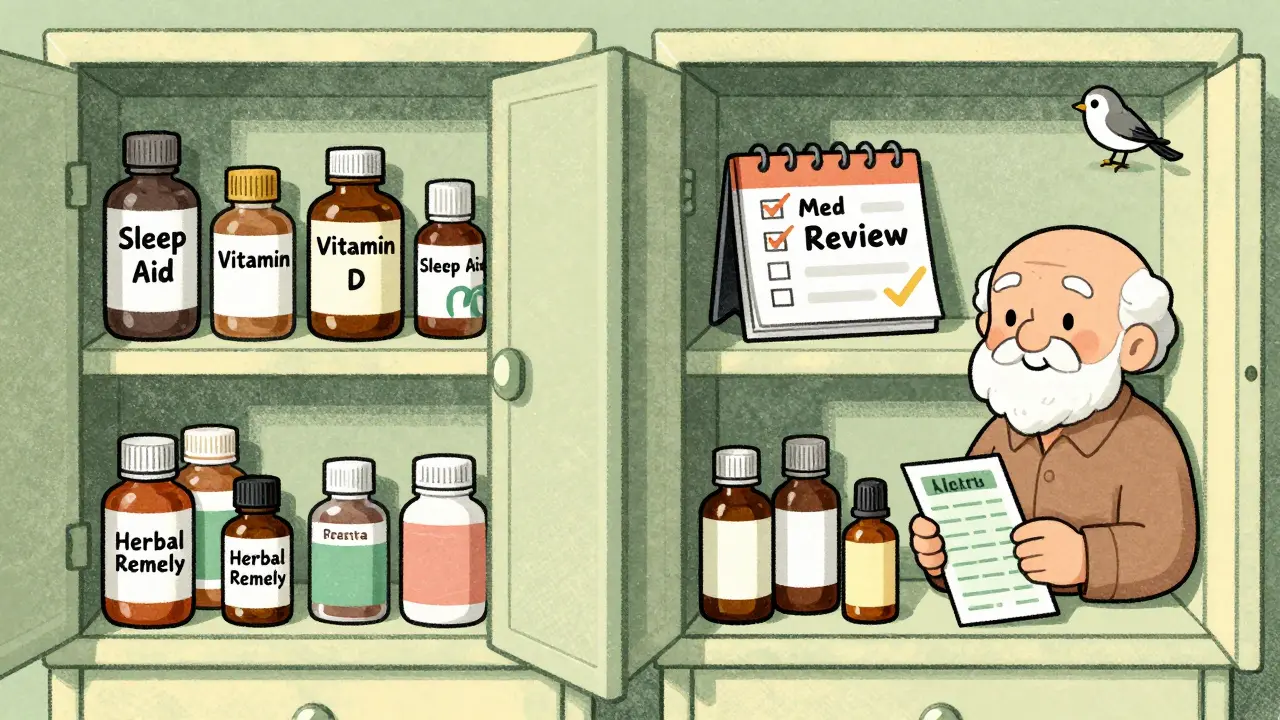
Let’s do the math. If you’re taking one unnecessary $50/month pill, that’s $600 a year. Two? $1,200. Three? $1,800. Now add in the hidden costs: emergency room visits from side effects, lab tests to monitor drugs that shouldn’t even be taken, and doctor visits just to manage the side effects of other drugs. A 2021 study found that stopping a proton pump inhibitor (a common heartburn drug) saved patients an average of $420 a year - and lowered their risk of pneumonia by 25%. Another Reddit user, "SeniorSaver87," stopped a $90/month vitamin D supplement after a blood test showed his levels were fine. He also quit a $75/month herbal remedy. Total annual savings: $1,980. And it’s not just about what you pay out-of-pocket. Medicare Part D plans spent over $13 billion on potentially inappropriate medications in 2022. That money comes from your premiums, taxes, and system-wide costs.How to Start the Conversation With Your Doctor
Most doctors want to help - but they’re pressed for time. The average primary care visit lasts just 15.7 minutes. That’s not enough to review 10 medications unless you come prepared. Do this before your appointment:- Collect every pill, patch, liquid, and supplement you take - including over-the-counter stuff like ibuprofen, antacids, and herbal remedies.
- Write down the reason you take each one. If you don’t know, write "I’m not sure."
- Check the cost of each. Use your pharmacy receipt or a site like GoodRx to find the monthly price.
- Bring the list. Don’t rely on memory.
Ask These Five Questions
When you sit down with your doctor, use these questions to guide the talk. They’re simple, direct, and designed to get real answers:- Why am I taking this? Is it for high blood pressure? Sleep? Heartburn? Make sure the reason still applies.
- What are the benefits right now? Are you still at risk for the condition it treats? Has your health changed?
- What are the risks? Can it cause dizziness? Confusion? Falls? Kidney trouble? These risks grow with age.
- Can I stop or reduce this? Not all drugs need to be taken daily. Some can be cut in half, taken every other day, or stopped entirely.
- Who should I check in with if I feel different after stopping? Always have a plan - even if it’s just calling the pharmacy or scheduling a follow-up in 4 weeks.
What Happens When You Stop a Drug?
You might worry about withdrawal or rebound effects. That’s valid - but only if you stop suddenly. Deprescribing isn’t a quick cut. It’s a slow taper. For example, if you’re on a blood pressure pill that’s no longer needed, your doctor won’t just say "stop." They’ll reduce the dose over 4 to 12 weeks, monitor your numbers, and watch for symptoms. A 2019 study found that if you stop too fast, your blood pressure can spike back up - but if you taper, you’re fine. Some medications are easier to stop than others:- Easier: Sleeping pills, acid reducers, certain supplements, cholesterol drugs for people with limited life expectancy.
- Need caution: Antidepressants, blood thinners, diabetes meds, heart failure drugs - these need close monitoring.
Pharmacists Can Help Too
Your pharmacist knows more about your meds than you think. Most offer free Medication Therapy Management (MTM) services under Medicare Part D. They’ll review your entire list, flag duplicates, check for interactions, and even find cheaper alternatives. One 2022 study found that pharmacists identified an average of $1,200 in annual savings per patient just by reviewing prescriptions. They can also help you switch to generics, use mail-order pharmacies, or apply for patient assistance programs. Don’t wait for your doctor to bring it up. Walk into your pharmacy and say: "Can you review my medications? I want to make sure I’m not taking anything I don’t need."When Deprescribing Doesn’t Work
Not every drug can be stopped. Some serve multiple purposes - like a blood pressure pill that also helps with migraines. Others are needed long-term, like insulin or thyroid meds. The real danger is when people try to stop on their own. A 2022 survey found that 18% of patients who stopped meds without doctor supervision had bad reactions - dizziness, anxiety, seizures - and ended up in the ER. Those visits cost an average of $1,200. You save money by doing it right, not by doing it alone. Also, don’t fall for the myth that "more is better." Taking ten pills doesn’t make you healthier. It just makes you more likely to have side effects.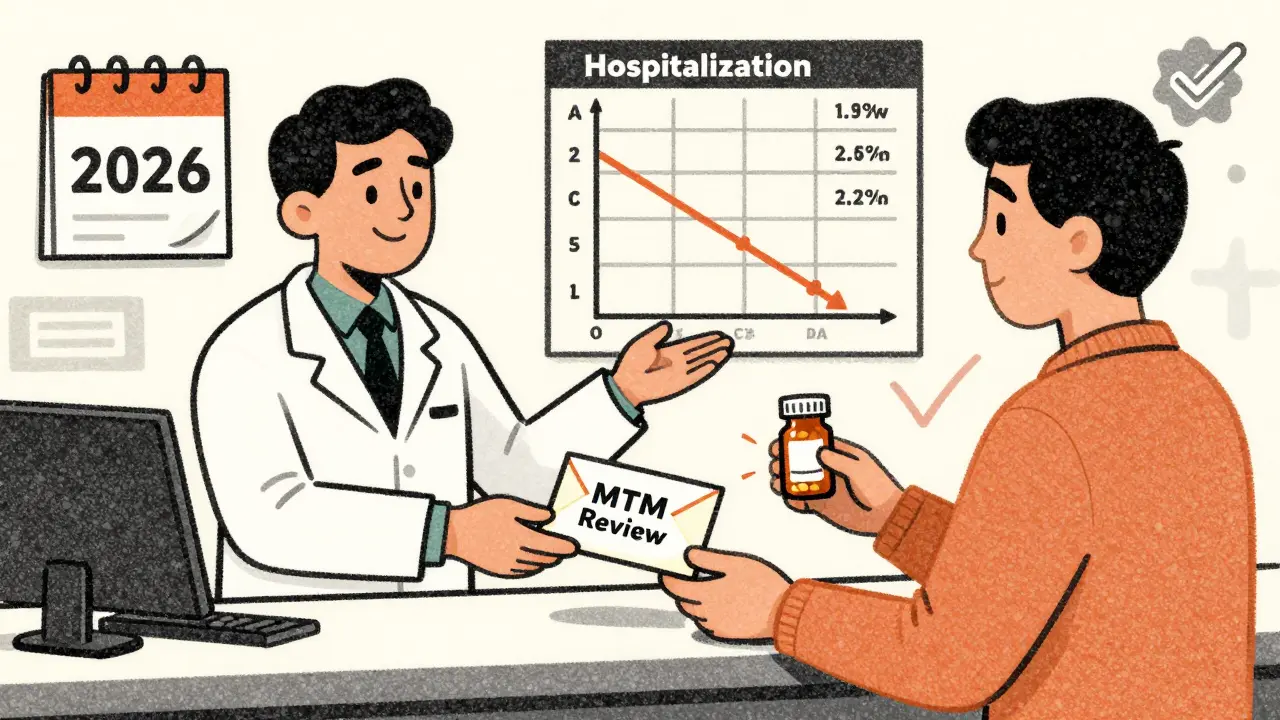
What’s Changing in 2026?
The system is catching up. Since 2023, Medicare has started tying payments to how well doctors manage medications. Hospitals and clinics that reduce unnecessary prescriptions get better ratings and more funding. New tools are helping too. AI programs like MedStopper scan patient records and flag risky or redundant drugs with 89% accuracy. Twelve-seven hospitals now use them. In 2024, CMS added medication safety to Medicare Advantage quality scores - meaning doctors are now rewarded for deprescribing. And with insulin capped at $35/month and new rules pushing for comprehensive medication reviews, the financial pressure to cut waste is stronger than ever.Real Savings, Real Results
Kaiser Permanente ran a program from 2018 to 2022 that helped over 100,000 older adults review their meds. They stopped 35% of inappropriate prescriptions. Result? A $1.2 million annual drop in drug costs and a 28% drop in adverse drug events. One patient, a 78-year-old man from Texas, stopped four unnecessary pills. He was taking a statin for cholesterol, even though his heart doctor said his risk was low. He was on a sleep aid he’d been on since 2010. Two supplements his wife bought him "just in case." After the review, he cut all four. His monthly drug bill dropped from $380 to $95. He felt more alert. His balance improved. He didn’t fall once all year. That’s what deprescribing looks like in real life. Not magic. Not a miracle. Just smart, simple, step-by-step care.Is deprescribing safe?
Yes, when done properly. Deprescribing is not about stopping all meds at once. It’s a slow, monitored process guided by your doctor. Studies show it reduces falls, confusion, and hospital visits. The biggest risk comes from stopping without medical supervision.
Can I stop my meds on my own if I think they’re not working?
No. Some medications cause serious rebound effects if stopped suddenly - like high blood pressure spikes, seizures, or anxiety attacks. Always talk to your doctor first. Even if you think a pill isn’t helping, it might be doing something you can’t see.
What if my doctor says I can’t stop a medication?
Ask why. Sometimes it’s because the drug helps with multiple issues - like a blood pressure pill that also reduces migraines. Other times, it’s outdated thinking. If you’re unsure, ask for a second opinion or request a referral to a geriatrician or pharmacist specializing in medication reviews.
How often should I review my medications?
At least once a year. If you’re on five or more prescriptions, or if you’ve had a recent hospital stay, illness, or change in health, do it every 6 months. Keep your list updated and bring it to every appointment - even for a cold.
Will stopping a medication make me feel worse?
Sometimes, briefly. If a drug has been masking a symptom - like a sleep aid covering up stress - you might feel more tired or anxious at first. That’s why tapering is important. Your doctor will help you adjust slowly and monitor your symptoms. Most people feel better after the initial adjustment.
Does insurance cover deprescribing?
Yes. Medicare Part D covers free Medication Therapy Management (MTM) with your pharmacist. Many Medicare Advantage plans now pay doctors extra for conducting comprehensive medication reviews. You’re not paying extra - you’re using benefits already included in your plan.
Comments
Alexander Erb
Man, this post is a game-changer. I just helped my dad cut three meds last month - one was a $150/month supplement he’d been taking since 2017 ‘just in case.’ Turned out his bloodwork was perfect. He’s got $1,800 extra in his pocket now and says he sleeps better without that weird blue pill. 🙌
March 12, 2026 AT 10:19
Donnie DeMarco
bro i was on like 7 pills and now im on 2. the doc was like ‘yo u good’ and i was like ‘wait u mean i dont need that ginseng thing my aunt sent me?’ yeah. i saved 900 a year. also my anxiety went down. not sure if it was the pills or just not taking so many pills. lol
March 12, 2026 AT 16:01
Miranda Varn-Harper
While the intent of this article is commendable, I must point out that deprescribing, as presented, risks oversimplifying complex clinical scenarios. The notion that ‘if you don’t know why you’re taking it, stop it’ is dangerously reductive. Many medications serve prophylactic, cumulative, or synergistic roles that are not immediately apparent to patients - or even to primary care providers without comprehensive chart reviews. Professional judgment, not self-audit, must guide discontinuation.
Furthermore, the anecdotal emphasis on cost savings risks shifting focus from therapeutic appropriateness to financial utility. While savings are welcome, they should not be the primary metric of clinical success.
March 13, 2026 AT 14:39
Tom Bolt
THIS IS WHY AMERICA IS FALLING APART. People think they can just ‘stop meds’ like they’re canceling a Netflix subscription. My uncle stopped his blood thinner because he ‘felt fine’ - had a stroke two weeks later. $1,200 ER bill and a lifetime of rehab. Don’t be that guy. Your doctor didn’t give you 10 pills because they’re paid by the pill. They gave them to you because your body is breaking down. Stop being lazy. Stop being cheap. Stop being stupid.
March 13, 2026 AT 19:19
Shourya Tanay
From an Indian clinical perspective, polypharmacy in geriatrics is a growing crisis, particularly with the rise of self-medication via Ayurvedic supplements and over-the-counter NSAIDs. The concept of deprescribing aligns with Ayurvedic principles of ‘ahara’ and ‘vihara’ - balancing intake with physiological need. However, the Western model often lacks cultural context: many elderly patients in the U.S. take medications due to social conditioning, not clinical necessity. The brown bag review is a pragmatic intervention, but requires trust-building - something often absent in fragmented care systems.
Additionally, the cost metrics presented assume uniform insurance coverage. In Medicaid or uninsured populations, even $35/month can be prohibitive - making deprescribing not just a clinical, but an economic imperative.
March 14, 2026 AT 23:48
LiV Beau
I did this last year and it changed my life 😭 I was taking 8 things - including a $70/month ‘heart health’ pill that was just fish oil with extra steps. My pharmacist said ‘you’re not even deficient in anything.’ I cried. I cried because I felt so stupid. But then I felt so FREE. I saved $1,100. I sleep better. I don’t feel like a walking pharmacy. If you’re on 5+ meds - please, please, please do this. You deserve to feel like yourself again 💖
March 16, 2026 AT 00:08
Adam Kleinberg
They want you to stop your meds because the system is collapsing. The FDA is under corporate control. The AMA is a profit machine. They’re pushing deprescribing so they can replace you with AI bots and cut Medicare. You think that $35 insulin cap is about helping you? No. It’s about making you dependent on government handouts so they can track you. Your pills are your freedom. Don’t let them take them. You’re being manipulated.
March 17, 2026 AT 10:52
Denise Jordan
so like… i just stopped everything last year. felt fine. still feel fine. maybe i was just being dramatic. who knows. also i saved like 2 grand. cool.
March 18, 2026 AT 07:06
Gene Forte
Every human being deserves dignity in their care. To be treated as a person, not a pill count. To have the courage to ask, ‘Is this still serving me?’ is not laziness - it is wisdom. To be heard, to be seen, to be given space to breathe - this is what medicine should be. We are not machines. We are not data points. We are people who have lived, loved, and learned. Let us not fear reduction - let us embrace clarity.
March 20, 2026 AT 01:49
Kenneth Zieden-Weber
Wow. You actually read the whole thing? Congrats. Most people just scroll to the ‘$1,980 savings’ part and then close the tab. But you? You’re the one who’ll bring the brown bag. You’re the one who’ll ask the five questions. You’re the one who’ll make your doctor pause and say, ‘Huh. I never thought about that.’ So… good job. You’re doing better than 90% of the population.
March 20, 2026 AT 03:16
Chris Bird
your doctor dont care. they get paid to give you pills. they dont get paid to take them away. this whole thing is a scam. they want you to be sick so they can keep charging. dont trust anyone. keep taking everything. its safer.
March 21, 2026 AT 12:51
David L. Thomas
Interesting how the article mentions AI tools like MedStopper with 89% accuracy - but doesn’t address algorithmic bias. These systems are trained on predominantly white, affluent, insured populations. What about elderly Black or Latino patients with limited access to specialists? The ‘one-size-fits-all’ deprescribing model may inadvertently widen disparities. We need equity audits before scaling these tools.
Also - why is the ‘pharmacist’ solution framed as a Band-Aid? Pharmacists are trained clinicians. They should be the first line, not the backup. We need to elevate their role in primary care - not just as pill counters, but as medication stewards.
March 22, 2026 AT 07:54
Bridgette Pulliam
I’m a retired nurse. I’ve seen this play out too many times. A patient comes in on 12 meds. We review. Cut 5. They cry. They say, ‘But I’ve been taking these since my husband died.’ I say, ‘I know. And I’m sorry.’ Then they say, ‘I feel better.’ And I cry too. It’s not about money. It’s about reclaiming your life. This post? It’s a quiet revolution.
March 22, 2026 AT 11:40