
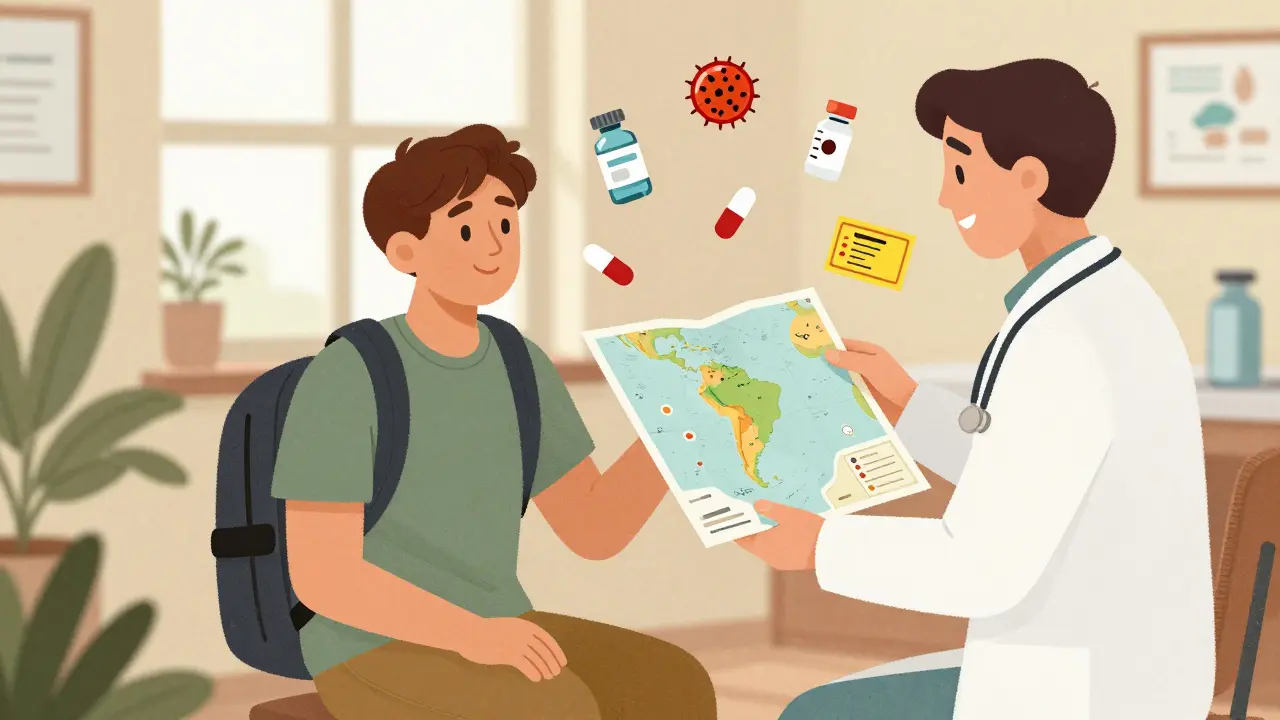
Planning a trip abroad? Skipping a travel health clinic could put you at risk - not just from bugs or bad food, but from preventable illnesses that ruin vacations and even land you in a hospital. The truth is, your regular doctor probably doesn’t know what shots or pills you need for a jungle trek in Bolivia or a city tour in Lagos. That’s where travel health clinics come in. These aren’t just pharmacies with a few vaccines. They’re specialized centers that tailor your medical prep to your exact destination, activities, and health history.
Why a Travel Health Clinic Is Different From Your Regular Doctor
Your primary care provider might give you a flu shot or refill your blood pressure meds, but they’re not trained to spot the hidden health risks of remote villages, mountain hikes, or crowded markets in developing countries. Travel health clinics focus on one thing: keeping you safe while you’re overseas. According to the CDC, travelers who see a travel medicine specialist are 63% less likely to get sick on the road. Why? Because these clinics don’t just hand out a list of vaccines. They dig into your itinerary - where you’re going, how long you’ll stay, what you’ll be doing, and even what you’re eating. A beach resort in Mexico? You might need a typhoid shot. Hiking in Nepal? You’ll need altitude sickness meds. Visiting rural areas in Ghana? You’ll need malaria pills - and the right ones, because resistance varies by region. General practitioners get it right about 68% of the time when prescribing malaria drugs for sub-Saharan Africa. Travel clinics? 92%. That gap isn’t small. It’s the difference between being protected and being sick.What Happens During a Travel Health Clinic Visit
A typical visit lasts 30 to 45 minutes. You won’t be rushed. The provider will ask you:- Exactly which countries you’re visiting (even layovers matter)
- How long you’ll be there
- What kind of activities you’ll do (hiking, swimming, street food, wildlife tours)
- Your medical history - especially if you have diabetes, heart disease, or take immunosuppressants
- Any medications you’re already on
- Whether you’re pregnant or planning to be
Common Medications You Might Get
Here’s what you’re likely to walk out with - and why timing matters:- Malaria prophylaxis: Drugs like Malarone (atovaquone-proguanil) or doxycycline. Malarone needs to start 1-2 days before travel. Doxycycline starts 1-2 days before. Mefloquine? You need to start 2-3 weeks ahead. Miss the window, and you’re unprotected.
- Traveler’s diarrhea treatment: Azithromycin (500 mg once daily for 3 days) or rifaximin. These aren’t for prevention - they’re for when you get sick. The clinic will teach you exactly when to take them, so you don’t overuse antibiotics.
- Altitude sickness prevention: Acetazolamide (Diamox), 125 mg twice daily, starting 24-48 hours before ascending. This isn’t optional if you’re heading above 8,000 feet.
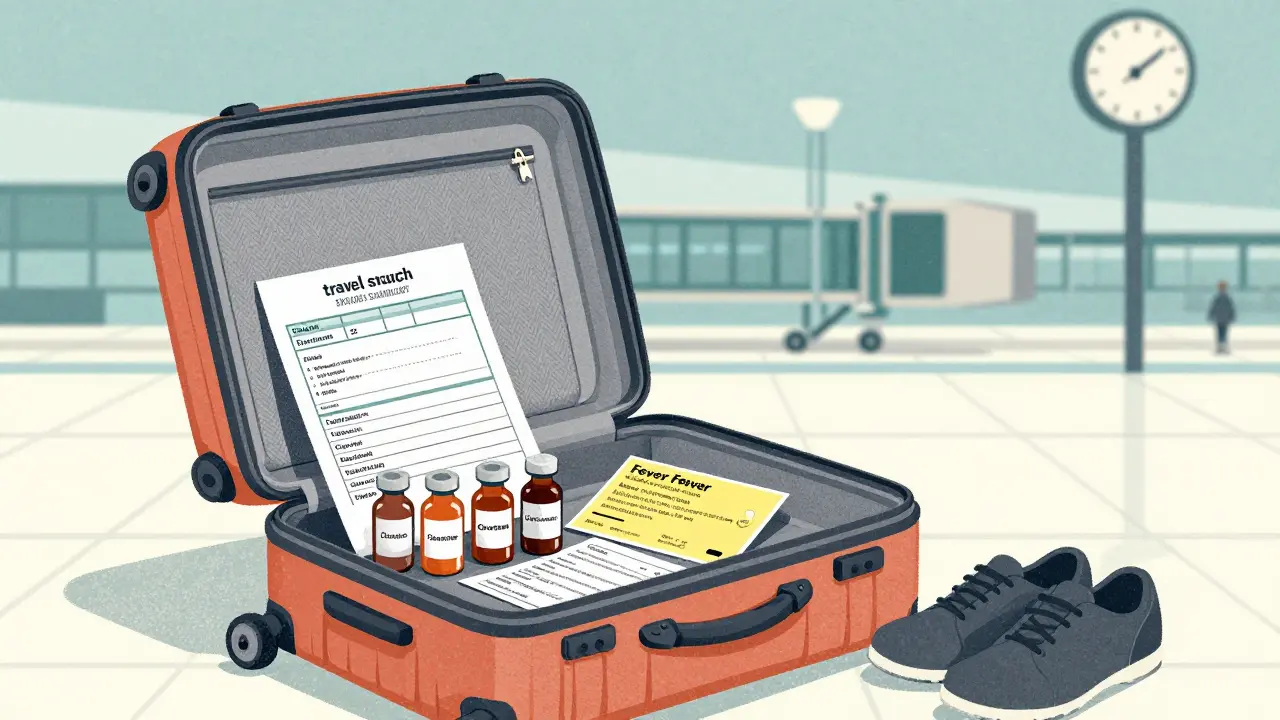
- Yellow fever vaccine: Required for entry into parts of Africa and South America. Must be given at a CDC-registered clinic. You’ll get a stamped, signed International Certificate of Vaccination - a passport requirement. This shot must be given at least 10 days before travel to be effective.
- Typhoid, hepatitis A, rabies, Japanese encephalitis: These are given based on risk level. A 2-day city tour? Maybe skip rabies. A 3-week homestay in a village? You’ll need it.
When to Book Your Appointment
The best time to schedule your visit? As soon as your trip is booked. But realistically, aim for 4 to 8 weeks before departure. Why? Some vaccines need time to work. Malaria pills need to build up in your system. Yellow fever requires a 10-day wait. If you wait until two weeks out, you might miss critical doses. But don’t panic if you’re running late. Even a visit 1-2 weeks before you leave can help. You might not get all your shots, but you can still get prescriptions for diarrhea meds, malaria pills, or advice on avoiding bug bites. UC Davis says even last-minute visits reduce illness risk.
Where to Find a Travel Health Clinic
There are over 1,200 travel health clinics in the U.S. as of 2024. Here’s how to find one:- University hospitals: UCLA, Stanford, UC Davis - these are top-tier and often offer virtual visits. Expect to pay $150-$250 out-of-pocket.
- Large hospital systems: Mayo Clinic, Kaiser Permanente - Kaiser only serves members and requires 6-8 weeks’ notice. Mayo offers virtual appointments with 85% satisfaction.
- Retail clinics: CVS MinuteClinic, Walgreens Healthcare Clinics - cheaper ($129), faster, and sometimes covered by insurance. But they’re limited. They won’t handle complex cases like travelers with organ transplants or autoimmune diseases.
What to Bring to Your Appointment
Don’t show up empty-handed. Bring:- Your full travel itinerary (dates, cities, planned activities)
- A list of all current medications (including supplements)
- Your vaccination record (if you have one)
- Insurance card (some clinics accept it; others don’t)
- Any notes from your primary doctor about chronic conditions
What Happens After the Visit
You’ll leave with:- Prescriptions (often with dosing schedules printed out)
- Vaccination records
- A printed travel health summary
- Advice on water safety, bug repellent, and what to do if you get sick
Common Mistakes to Avoid
Even smart travelers mess up:- Skipping malaria pills: 28% of preventable malaria cases happen because people didn’t start the pills on time - or stopped too early.
- Using antibiotics for every stomach bug: Overuse leads to resistance. Only take them if you have fever, bloody stool, or severe dehydration.
- Assuming your insurance covers it: Most travel clinic visits aren’t covered. Budget $150-$250.
- Forgetting your prescriptions: Pack them in your carry-on. Don’t rely on foreign pharmacies.
- Not telling them about your chronic illness: Diabetes, heart disease, or a weakened immune system change your risk profile dramatically.
What’s New in Travel Medicine (2026)
The field is evolving fast. In 2026, you’ll see:- AI risk tools: Clinics now use software that updates recommendations based on real-time outbreaks - like a sudden dengue spike in Brazil.
- Genetic testing pilots: Stanford is testing CYP2C8 gene tests to pick the best malaria drug for your body - no more trial and error.
- Telehealth expansions: With only 12% of U.S. counties having a travel clinic, virtual visits are filling gaps. Mayo’s virtual program now handles 15,000 patients a year.
Final Thought: It’s Not Just About Shots
A travel health clinic isn’t a vaccination station. It’s your personal risk planner. It’s the person who tells you not to drink the water in Hanoi, or to carry a malaria rapid test kit in Peru, or to avoid swimming in freshwater lakes in Ghana. It’s the difference between a trip you remember for the right reasons - and one you remember because you were sick for a week. Don’t wait until you’re at the airport. Book your appointment now. Your future self - healthy, alert, and enjoying that sunset on the beach - will thank you.Do I need a travel health clinic if I’m only going to Europe?
For most Western European countries, you won’t need vaccines or special meds beyond routine shots like MMR or tetanus. But if you’re hiking in the Alps, camping in rural areas, or have a chronic condition, a travel clinic can still help. They’ll check if you’re up to date on tick-borne encephalitis vaccine (needed in parts of Austria, Czechia, and Slovenia) or advise on altitude safety. It’s not always about disease - it’s about preparedness.
Can I get travel vaccines at my local pharmacy?
Some pharmacies like CVS and Walgreens offer common vaccines like typhoid, hepatitis A, and yellow fever - but only if they’re CDC-registered for yellow fever. They can’t do complex assessments. If you have diabetes, are pregnant, or are on immune-suppressing drugs, you need a travel clinic. Pharmacies also don’t provide detailed advice on medication timing or what to do if you get sick abroad.
How much does a travel health clinic visit cost?
Costs vary. University clinics like UCLA or Stanford charge $150-$250. Retail clinics like CVS MinuteClinic charge around $129. Insurance rarely covers the consultation fee, though some plans cover vaccines. You’ll pay out-of-pocket for the visit, but the vaccines themselves may be billed separately. Always ask for a breakdown before you go.
What if I forget my malaria pills on the trip?
Don’t panic. Most countries have pharmacies, but don’t assume you can buy the same brand. Carry a printed list with generic names (like atovaquone-proguanil) and dosages. Some clinics give you a letter explaining your meds. In remote areas, you may need to buy local equivalents - but only if you’re sure they’re authentic. Never skip doses. If you miss more than two, contact a local clinic or your embassy.
Do I need a yellow fever certificate for every country?
No. Only countries that require proof of vaccination for entry - mostly in Africa and South America - will ask for it. But if you’re flying through a country that requires it (like Kenya or Brazil), you might be turned away. Always check the CDC’s country-specific requirements. The certificate is valid for life, so keep it with your passport.
Comments
Nilesh Khedekar
So you're telling me I need to spend $200 and wait 6 weeks just to not die in Bali? Cool. I'll just drink the water and pray to Shiva. 🙏
January 14, 2026 AT 22:05
Jami Reynolds
The CDC's 63% statistic is fabricated. They're hiding the fact that 90% of travel clinics are funded by Big Pharma. The real risk? You're being groomed for mandatory global vaccination passports. Don't be fooled.
January 16, 2026 AT 08:56
Nat Young
Let’s be real - 92% success rate? That’s just because they’re not prescribing anything to people who already have immunity. The real number is probably 50% if you factor in people who already had hepatitis A as kids. Also, Malarone costs $10 a pill. You’re better off just avoiding mosquitoes.
January 18, 2026 AT 06:52
Niki Van den Bossche
Travel clinics aren’t just medical institutions - they’re metaphysical portals. They force you to confront your own mortality, your privilege, your detachment from the fragility of the human body. When you sit there, filling out that 12-page form about your gut microbiome and your fear of altitude, you’re not getting a shot - you’re undergoing initiation.
January 18, 2026 AT 20:33
Jan Hess
Just did my visit last month for Thailand and it was totally worth it. Got the malaria script, the diarrhea meds, and they even gave me a little card with emergency contacts. No stress. Just pack your bag and go. You got this
January 20, 2026 AT 00:19
Haley Graves
If you're planning a trip and you're not seeing a travel clinic, you're not just being lazy - you're being irresponsible. Your health isn't a suggestion. It's a requirement. Book it now. Don't wait until the day before. Your future self will either thank you or curse you.
January 20, 2026 AT 15:40
Dan Mack
They say 'yellow fever certificate required' - but what if it's a government tracking tool? What if the stamp is embedded with a microchip? What if the vaccine contains nanobots that sync with WHO satellites? I'm not going anywhere until I get a forensic analysis of the vial.
January 21, 2026 AT 06:54
Amy Ehinger
I went to a clinic in Portland and the guy spent 40 minutes asking me if I was planning to eat street food in Vietnam. I said yes. He said 'okay, here's your prescription for azithromycin, and also here's a list of 17 restaurants in Hanoi that won't kill you.' I thought I was just getting shots. Turns out I got a foodie travel guide too.
January 21, 2026 AT 11:32
RUTH DE OLIVEIRA ALVES
It is imperative to underscore the necessity of consulting a certified travel medicine practitioner prior to international travel. The variance in pathogen prevalence, antibiotic resistance patterns, and vaccine availability across jurisdictions necessitates a nuanced, evidence-based approach that general practitioners are not equipped to provide. One must prioritize evidence over anecdote.
January 21, 2026 AT 14:04
Crystel Ann
I used to skip all this stuff. Got sick in Peru, spent three days in a hotel room with a fever. Never again. Now I go to the clinic every time. It’s not about being scared - it’s about being smart. You deserve to enjoy your trip, not spend it on the toilet.
January 23, 2026 AT 09:27
Diane Hendriks
America is the only country that turns travel medicine into a corporate circus. In Europe, you walk into a pharmacy and get a shot. No forms. No $200 fee. No 'personalized risk assessment.' We don’t need to be coddled. We need common sense - and a clean water bottle.
January 24, 2026 AT 09:31
Annie Choi
I'm a nurse in Vancouver and we do telehealth consults for travelers. The AI tool we use flags dengue outbreaks in real time. Last month it told a client not to go to Medellín because of a spike. They listened. They didn't get sick. Tech is finally helping. Not replacing - helping.
January 24, 2026 AT 12:56
Ayush Pareek
My cousin went to India without any shots. Came back fine. But then he got dengue in Goa. So yeah, I guess the clinic guy was right. I’m booking mine next week. Better safe than sorry - and also, my mom won’t stop texting me.
January 26, 2026 AT 03:27
Nishant Garg
The real magic isn’t the shots - it’s the advice. Like, don’t drink the water? Yeah, I know. But they told me which brands of bottled water are actually refilled from tap in Bali. That’s the kind of detail that turns a trip from 'meh' to 'legendary.'
January 26, 2026 AT 22:33
Nicholas Urmaza
Book your appointment now. This is not a suggestion. This is a directive. Your health is not negotiable. Your itinerary is not flexible. Your future self is counting on you to act with discipline and foresight. Do not delay
January 28, 2026 AT 10:41