
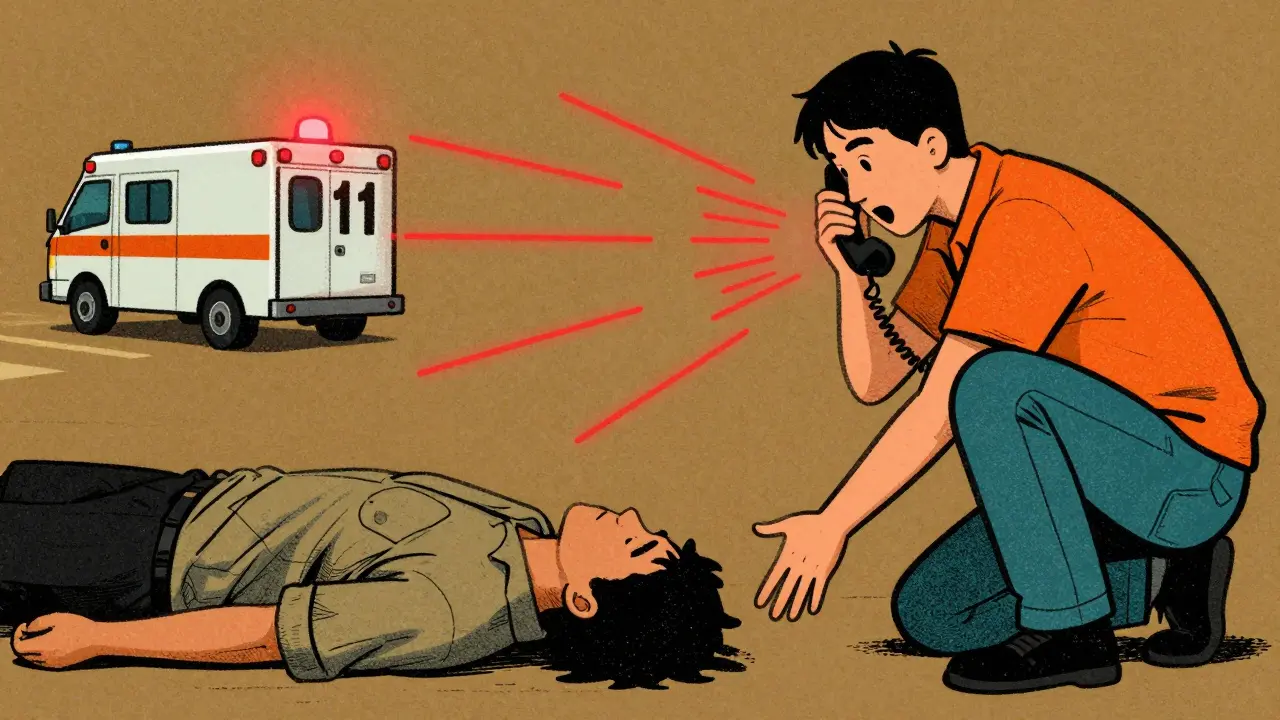
When someone overdoses, every second counts. You might be the only person who can save their life before emergency services arrive. This isn’t theoretical - it’s real. In 2021, over 107,000 people in the U.S. died from drug overdoses. Most of those deaths happened because no one knew what to do. But here’s the truth: overdose response isn’t about being a medical expert. It’s about knowing three simple things: call for help, keep them breathing, and stay with them.
Step 1: Call for Help Immediately
Before you do anything else - before checking their breathing, before reaching for naloxone - call emergency services. In the UK, dial 999. In the U.S., dial 911. Don’t wait. Don’t think they’ll wake up on their own. Don’t assume someone else will call. If you’re alone, put the phone on speaker and keep talking while you act. Paramedics can guide you. They’ve heard it all. They’d rather you call too early than too late.
Studies show that calling for help reduces death risk by 35%. Even if you’re scared, even if you think they’re just passed out, call anyway. Many overdose deaths happen because bystanders delay calling - they’re afraid of police, or they think the person will be fine. That’s a deadly myth. The brain starts dying after four minutes without oxygen. You don’t have time to hesitate.
Step 2: Check Breathing and Airway
Now, check if they’re breathing. Look for chest movement. Listen for breaths. Feel for air on your cheek. Don’t rely on whether they’re moving or making noise. Gasping, snoring, or irregular breathing? That’s not normal. That’s a sign they’re not getting enough oxygen. This is called agonal breathing - it’s the body’s last gasp before stopping completely.
If they’re breathing normally, roll them into the recovery position. This keeps their airway open and prevents choking. To do it: gently roll them onto their left side. Bend their top leg at the knee so it’s at a 90-degree angle. This stops them from rolling back. Tilt their head back slightly so the chin lifts. This opens the airway. Place their bottom arm under their head. Now, check again. Are they still breathing? Good. Stay with them. Watch their chest. If breathing slows or stops, you’ll need to act fast.
Step 3: Start Rescue Breathing If They’re Not Breathing
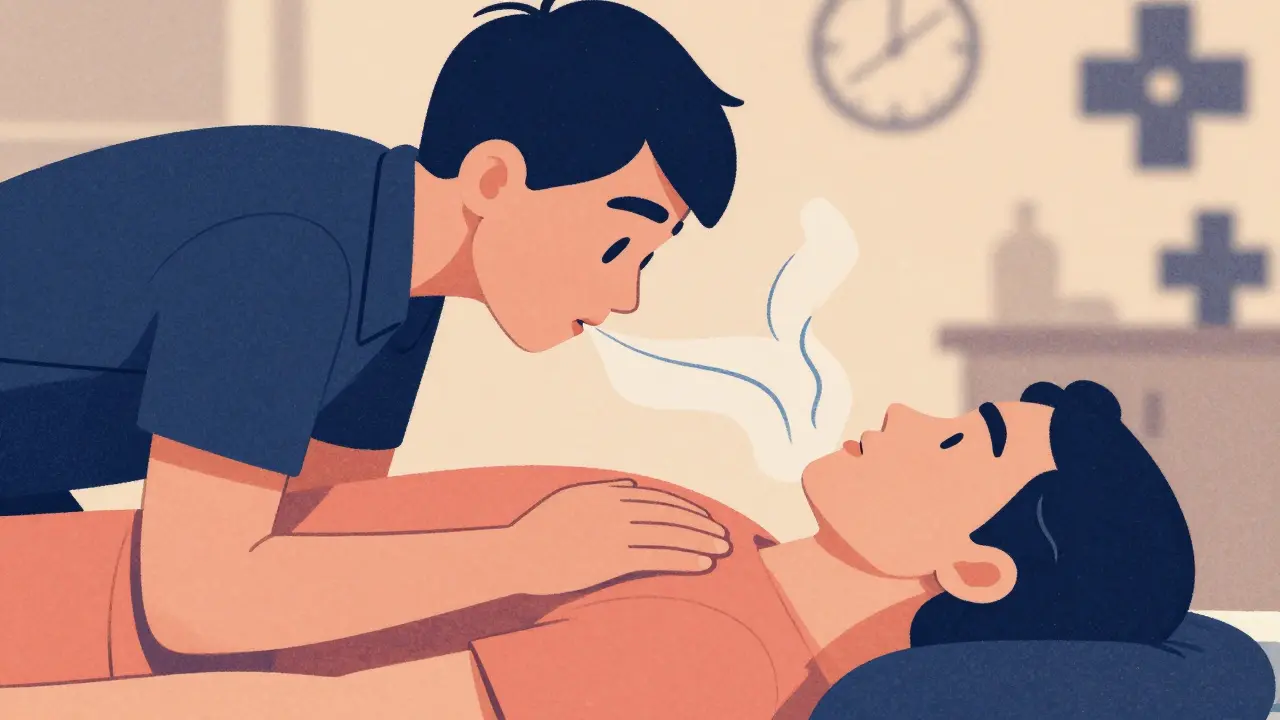
If they’re not breathing - or only gasping - start rescue breathing right away. You don’t need a mask. You don’t need special equipment. Just use your mouth. Pinch their nose shut. Tilt their head back. Lift their chin. Take a normal breath, seal your lips over theirs, and blow for about one second. Watch for their chest to rise. If it doesn’t, reposition their head and try again. Give one breath every 5 to 6 seconds. That’s about 10 to 12 breaths per minute. Don’t overinflate. You’re not trying to blow up a balloon. Too much air pushes into the stomach and causes vomiting. That’s dangerous.
Rescue breathing alone can keep someone alive for 10 to 15 minutes. You don’t need chest compressions unless they’ve stopped having a pulse. In opioid overdoses, breathing stops before the heart does. So focus on breaths, not pumps. Keep going. Even if you’re tired. Even if your arms ache. Your breath is their lifeline.
Step 4: Use Naloxone If Available - But Only for Opioids
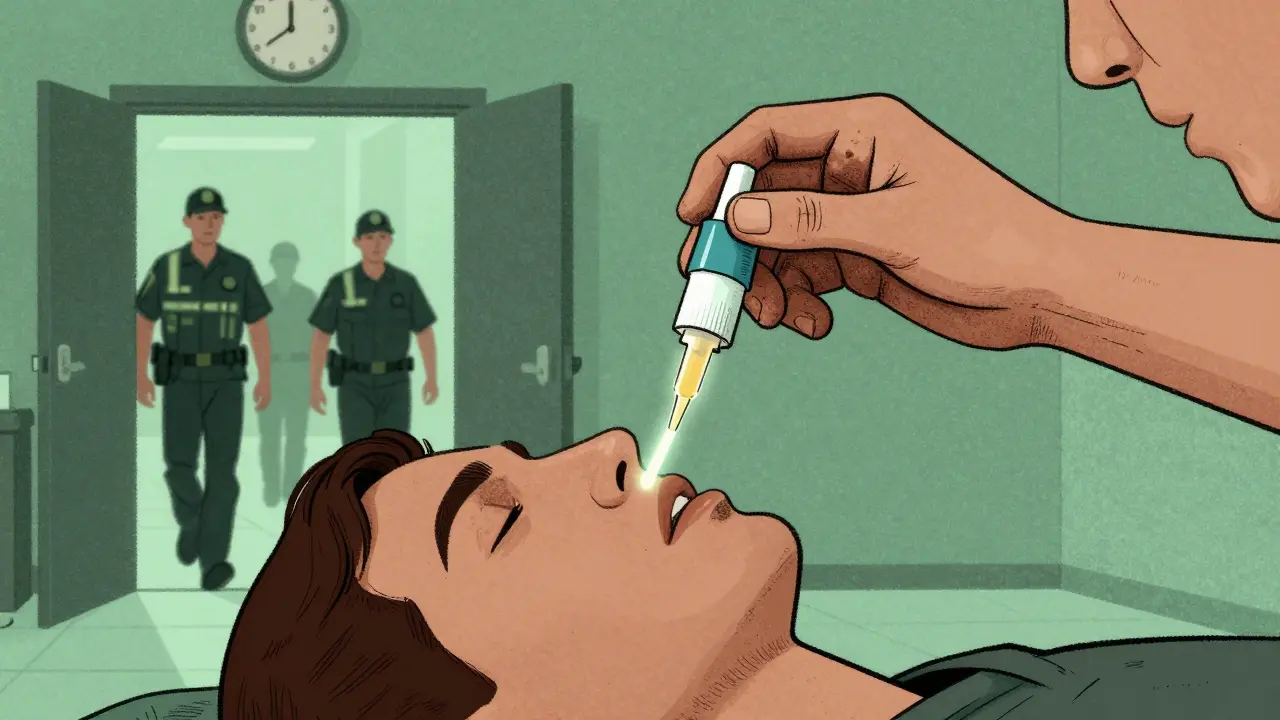
If you have naloxone (Narcan), use it - but only if you suspect an opioid overdose. That includes heroin, fentanyl, oxycodone, or prescription painkillers. Naloxone doesn’t work on alcohol, cocaine, meth, or benzodiazepines. Giving it won’t hurt, but it won’t help either. So if you’re unsure, give it anyway. The risk of giving naloxone when it’s not needed is very low. The risk of not giving it when it’s needed? Death.
Most naloxone comes in a nasal spray. Spray half the dose into one nostril. If they’re still not breathing after 2 to 3 minutes, give the second half in the other nostril. Don’t wait. Don’t think it’s working because they moved. Naloxone can wear off in 30 to 90 minutes. The overdose might come back. That’s why calling 999 is still critical - even after you give naloxone.
Remember: naloxone is not a cure. It’s a pause button. It buys time. You still need medical help.
Step 5: Monitor and Stay With Them
Don’t leave them alone. Not for a second. Even if they wake up. Even if they seem fine. They might slip back into unconsciousness. Check their breathing every 2 to 3 minutes. Watch for changes in skin color - blue lips or fingertips mean low oxygen. Keep them warm. Don’t put them in a cold shower or ice bath. That’s a myth. Cold can trigger dangerous heart rhythms, especially with stimulants like cocaine or MDMA.
If they’re having a stimulant overdose - think cocaine, meth, or ecstasy - they might be overheating. Their body temperature could spike above 40°C (104°F). In that case, cool them down gently: remove heavy clothing, fan them, apply damp cloths to their neck, armpits, and groin. Don’t use ice. Don’t give them water unless they’re fully awake and alert. Too much fluid too fast can cause dangerous electrolyte imbalances.
For alcohol overdose, the biggest danger is choking. Keep them on their side. Never let them lie flat. If they vomit, turn them quickly to the side. Clear their mouth. Stay calm. Vomiting is common. It doesn’t mean they’re fine. It means their body is trying to protect itself.
What Not to Do
Don’t shake them. Don’t slap them. Don’t try to make them walk. Don’t put them in a bath. Don’t give them coffee or food. Don’t assume they’re just sleeping. Many overdose deaths happen because someone mistakes unconsciousness for deep sleep. In fact, 28% of overdose deaths occur this way.
Don’t wait to see if they recover on their own. You’re not a doctor. You’re a lifeline. Your job is to keep them alive until professionals arrive. And that means staying with them, no matter how long it takes.
Why This Works
Communities that train people in full overdose response protocols have reversed over 12,000 overdoses with a 98.7% survival rate. That’s not luck. That’s science. The key isn’t naloxone alone. It’s the full sequence: call, breathe, monitor, stay. When you combine all four steps, survival jumps from 50% to nearly 99%.
The most common mistake? People forget to call 999 because they think naloxone is enough. One Reddit user wrote: “I gave naloxone, but I didn’t call. I thought they’d wake up. They didn’t.” He later learned the person died. That’s why calling first - and staying until help arrives - is non-negotiable.
What to Expect When Help Arrives
Paramedics will check vital signs: breathing rate, pulse, oxygen levels. They’ll give oxygen, start IV fluids, and may give more naloxone. They’ll transport them to the hospital even if they seem okay. Overdose can cause delayed complications - heart rhythm problems, lung damage, brain swelling. You’ll be asked what they took. Be honest. It helps them treat faster. Don’t worry about legal consequences. In the UK and most U.S. states, Good Samaritan laws protect you if you call for help.
What if I don’t have naloxone?
You don’t need naloxone to save a life. Rescue breathing alone can keep someone alive for 10 to 15 minutes. If they’re not breathing, start giving breaths right away. Call 999 immediately. Stay with them. Monitor their breathing. Naloxone helps, but it’s not required. Your actions - calling, breathing, staying - are what matter most.
Can I give naloxone to someone who didn’t take opioids?
Yes, but it won’t help. Naloxone only reverses opioid overdoses. It has no effect on alcohol, cocaine, meth, or benzodiazepines. Giving it won’t hurt them, but it won’t fix their breathing either. If you’re unsure what they took, give it anyway - it’s better to try than to do nothing. But remember: rescue breathing is still the most important step.
How do I know if someone is overdosing and not just drunk or asleep?
Look for three signs: unresponsiveness to loud noise or pain, slow or irregular breathing (less than 8 breaths per minute), and blue or pale skin. If they can’t be woken up by shouting or shaking, and their breathing is shallow or stopping - it’s an overdose. Sleep doesn’t cause blue lips. Alcohol doesn’t cause breathing to stop completely. Trust your gut. If something feels wrong, act.
Is it safe to give rescue breathing to someone who’s overdosed?
Yes. The risk of disease transmission during rescue breathing is extremely low. The CDC says the chance of catching HIV or hepatitis from mouth-to-mouth is nearly zero. If you’re uncomfortable, use a cloth or barrier if one is available - but don’t delay. Breathing for them is more important than fear. Your breath is their oxygen.
What should I do if they vomit during rescue breathing?
Turn them onto their side immediately. Clear any vomit from their mouth with your fingers. Tilt their head back slightly to keep the airway open. Then, resume rescue breathing. Vomiting is common in overdoses, especially with alcohol or opioids. It doesn’t mean you’re doing something wrong. It means their body is reacting. Keep going. Stay calm. Your quick action can prevent choking and death.
Comments
Marie Fontaine
Just read this and honestly? I’m crying. Not because it’s sad, but because it’s so simple and nobody teaches this. I had a friend overdose last year and I froze. I didn’t know what to do. Now I carry Narcan in my purse. I even taught my coworkers. You’re not a hero for doing this-you’re just human. 🙏
February 10, 2026 AT 08:29
Lyle Whyatt
Look, I’ve been an EMT for 18 years and I’ve seen every trope in the book-from people trying to ‘wake up’ overdosed teens by slapping them to others who just sit there like statues waiting for someone else to act. But here’s the cold hard truth: the protocol you laid out isn’t just good advice-it’s the bare minimum of what any decent human being should know. I’ve lost people because bystanders thought, ‘They’re just drunk.’ That’s not ignorance-it’s negligence. And this guide? It’s the antidote to that kind of thinking. Every single step matters. Call first. Breathe for them. Stay. Don’t let fear of judgment or legal consequences override the fact that someone’s brain is dying right now. I’ve trained hundreds. I wish I could hand this out to every high school student. No one should ever have to say, ‘I didn’t know.’
February 10, 2026 AT 14:11
Andy Cortez
bro this is all just government propaganda to get people to call 911 so they can get arrested. i gave my bro narcan once and he woke up and was fine. no need to call. they just wanna lock people up. plus, i heard paramedics charge $10k for a ride. why would i pay that? lol
February 12, 2026 AT 12:23
Kathryn Lenn
Oh wow, another ‘life-saving guide’ from someone who’s clearly never seen a real overdose. Let me guess-you also think the moon landing was real? The whole ‘call 911’ thing is a trap. Most hospitals don’t even treat addicts-they just pump them full of saline and kick them out. And naloxone? It’s a placebo. I’ve watched people come back from overdoses after being left alone for 20 minutes. You’re just feeding fear. Also, why are we assuming everyone overdoses from opioids? What about the 40% from stimulants? Nobody talks about that. This is performative activism with a side of medical ignorance.
February 14, 2026 AT 10:23
Frank Baumann
Okay, I’ve been in this world for too long. I’ve seen friends die because people were too scared to call. I’ve also seen people get arrested for having Narcan. I’ve seen cops show up and immediately start interrogating the victim instead of helping. So yeah, I get why some people hesitate. But here’s the thing-no one is saying you have to be a hero. Just be a person. Call 911. Say ‘I think my friend overdosed.’ That’s it. Don’t worry about what happens after. Worry about whether they’re breathing right now. I’ve done this three times. I’ve held someone’s hand while they gasped. I’ve cried in the back of an ambulance. You don’t need to be trained. You just need to care. And if you’re still sitting here arguing about legality or science? Then you’re not the one who’s going to save a life. You’re just another ghost watching from the sidelines.
February 14, 2026 AT 11:39
Scott Conner
wait so if they're not breathing but you give them breaths, they can survive 10-15 min? that's wild. i thought you needed chest compressions. also, is it really safe to do mouth to mouth? like, what if they have hiv or something? just curious lol
February 16, 2026 AT 08:11
Ken Cooper
Hey, just wanted to say thank you for writing this. I’m a dad, and my 19-year-old son struggled with pills last year. I didn’t know what to do-until I found this exact guide. I printed it out. I laminated it. I put it on the fridge. I taught my whole family. My wife even got trained at the community center. We didn’t need Narcan-thank God-but we knew what to do. And when he passed out last December? We called 911, rolled him on his side, started breathing for him, and stayed with him until the paramedics came. He’s alive today because of this. I’m not a hero. I’m just a dad who learned how to save his kid. Please, share this. Everyone needs to see it.
February 17, 2026 AT 22:38
Susan Kwan
Wow. So the solution to the opioid crisis is… teach people how to do CPR? That’s it? No harm reduction? No decriminalization? No clean supply? Just ‘breathe for them’ while the system keeps criminalizing addiction? Cute. You’re treating the symptom while the disease eats the whole body. But hey, at least you feel good about yourself, right?
February 18, 2026 AT 09:07