
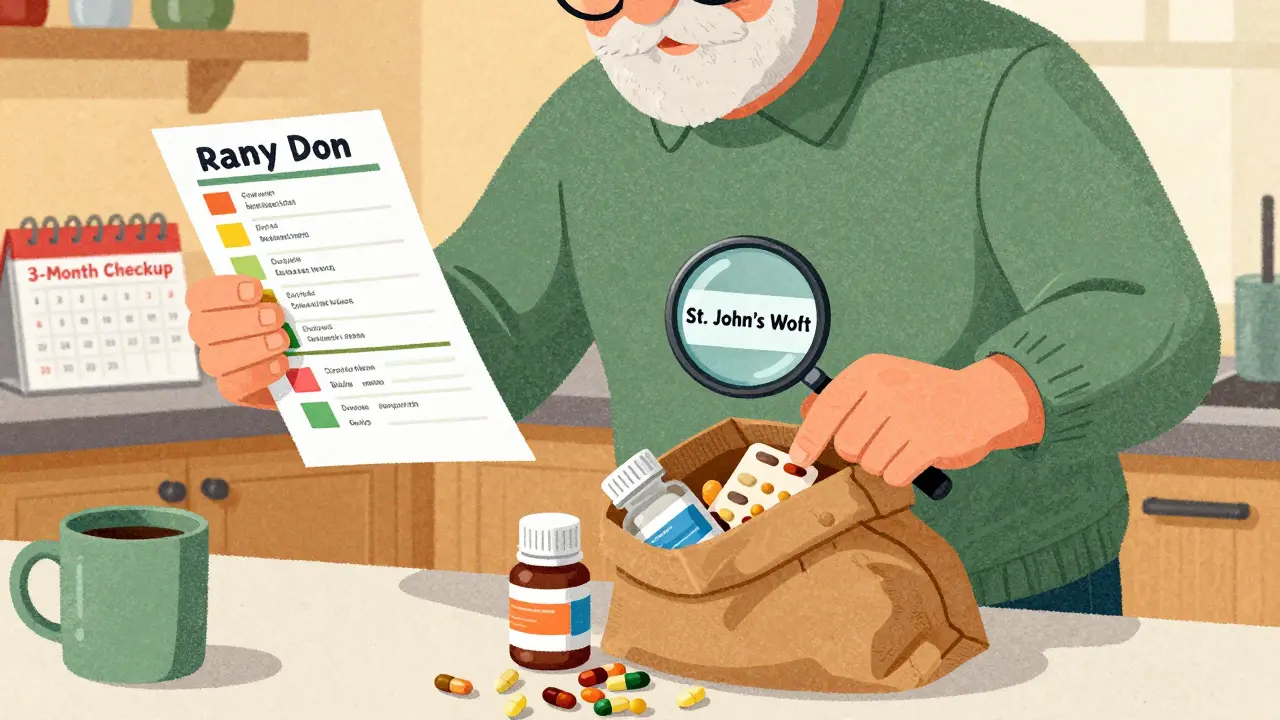
Every year, thousands of people in the U.S. end up in the hospital or worse because someone didn’t know what medications they were taking. It’s not always a doctor’s mistake. Sometimes, it’s because the patient forgot to mention that they take aspirin every day, or that their cousin gave them a bottle of turmeric pills for ‘inflammation.’ These small oversights add up. The FDA estimates medication errors cause about 7,000 deaths annually. The good news? Keeping a simple, updated medication list can prevent most of them.
Why Your Medication List Matters More Than You Think
Think of your medication list like a backup plan for your health. It’s not just for emergencies. It’s for every doctor visit, pharmacy refill, or hospital admission. When you’re rushed, stressed, or in pain, you won’t remember every pill you took last week. But a written or digital list? That doesn’t forget. The Joint Commission, which sets safety standards for U.S. hospitals, made medication reconciliation - the process of comparing your list to what doctors think you’re taking - a mandatory safety step in 2023. Why? Because 68% of patients don’t update their lists after leaving the hospital, according to the University of Michigan. That means doctors might prescribe a new drug that clashes with something you’re already taking - like warfarin and a new herbal supplement - and you won’t even know it’s dangerous until it’s too late. A 2023 study in the Annals of Internal Medicine found that when pharmacists checked medication lists against pharmacy records, they cut adverse drug events by over 31%. That’s not a small number. That’s life or death.What to Include on Your Medication List
A good list isn’t just a scribble on a napkin. It needs details. Here’s what to write down for every medication:- Drug name - both brand and generic (e.g., Lipitor or atorvastatin)
- Strength and dose - 10 mg, 500 mg, etc.
- How often - once daily, twice a day, every 6 hours
- How you take it - by mouth, injection, patch, inhaler
- Why you take it - ‘for blood pressure,’ ‘for joint pain,’ ‘for sleep’
- When you last took it - especially important if you miss a dose
- Who prescribed it - doctor’s name or clinic
- Over-the-counter drugs - ibuprofen, antacids, cold medicine
- Vitamins and minerals - vitamin D, iron, B12
- Herbal supplements - garlic pills, St. John’s wort, ginkgo
- Topical creams and eye drops
- Any allergies or bad reactions - ‘Rash with penicillin,’ ‘Stomach cramps with sulfa’
Paper vs. Apps vs. EHRs - Which One Works Best?
There’s no one-size-fits-all. Here’s how the options stack up:| Method | Pros | Cons |
|---|---|---|
| Paper (e.g., FDA ‘My Medicines’) | Works without power or internet. Easy to carry. Loved by older adults. | 43% become outdated within 6 months. Hard to share with multiple doctors. |
| Smartphone apps (Medisafe, MyTherapy, CareZone) | Reminders reduce missed doses by 28%. Can sync with pharmacies. Easy to update. | Only 35% of people over 65 use them. Can be confusing. Not always shared with doctors. |
| EHR-integrated (MyChart, Epic, etc.) | Real-time updates from your clinic. Accessible to providers. Integrated with prescriptions. | Only available if your doctor uses it. Not always accurate if you don’t update it yourself. |
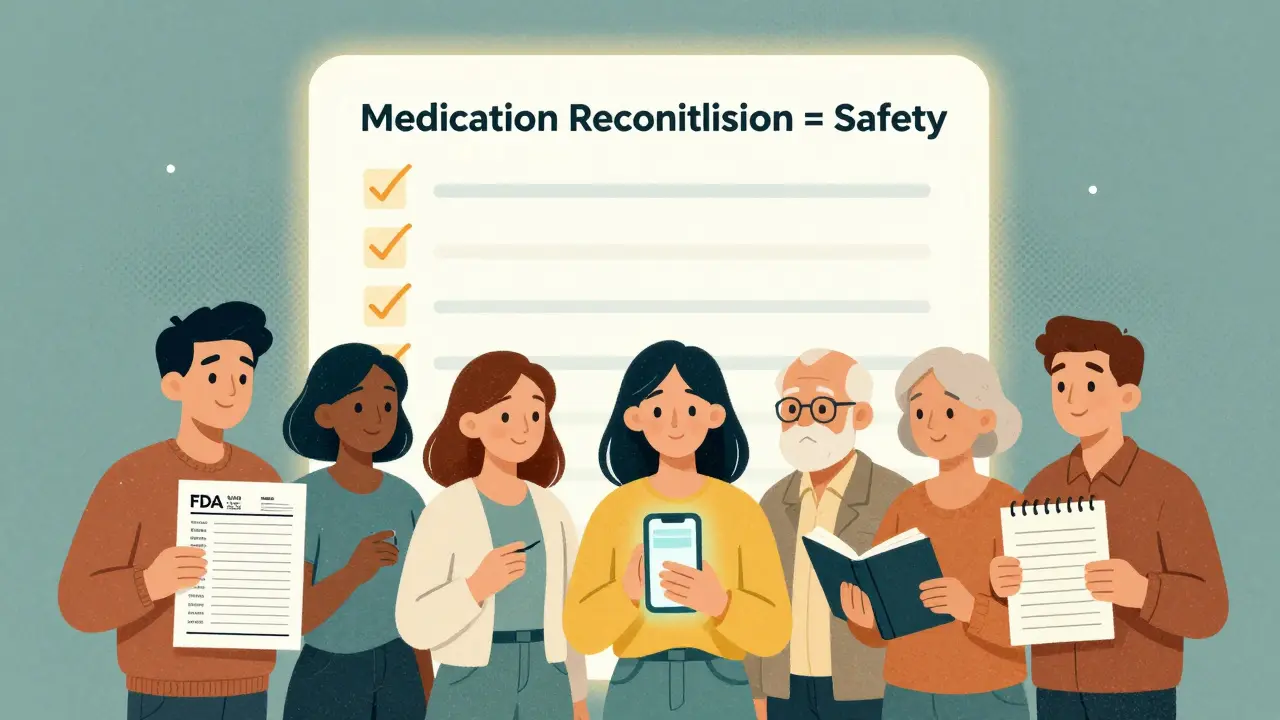
How to Keep It Updated - Without It Becoming a Chore
The biggest problem? People forget to update their lists. A Mayo Clinic survey found 53% of patients don’t update their list after changing a medication. Here’s how to fix that:- Do a ‘brown bag’ check every 3 months. Empty your medicine cabinet into a bag. Bring it to your next appointment. Your pharmacist or doctor can compare what’s there to what’s on your list.
- Set a monthly reminder. Pick a day - like the first Sunday of each month. Look at your pill bottles. Add or remove anything that changed.
- Take a photo of each new prescription. When you get a new bottle, snap a picture of the label. Save it in a folder called ‘Medications’ on your phone. That’s your instant backup.
- Update after every hospital visit or ER trip. That’s when changes happen. Don’t wait.
What to Do When You See a Doctor or Go to the ER
Never walk into a clinic or ER without your list. Not ‘I think I take…’ - bring the actual list. When you arrive, hand it to the nurse or front desk. Say: ‘I’ve updated this today. Please make sure this is in my record.’ If they don’t ask for it, ask them. Say: ‘I keep a list of all my meds. Can we make sure it’s in your system?’ A nurse in New York told Reddit she caught three potentially fatal drug interactions in one month just by checking patients’ lists. That’s not luck. That’s vigilance.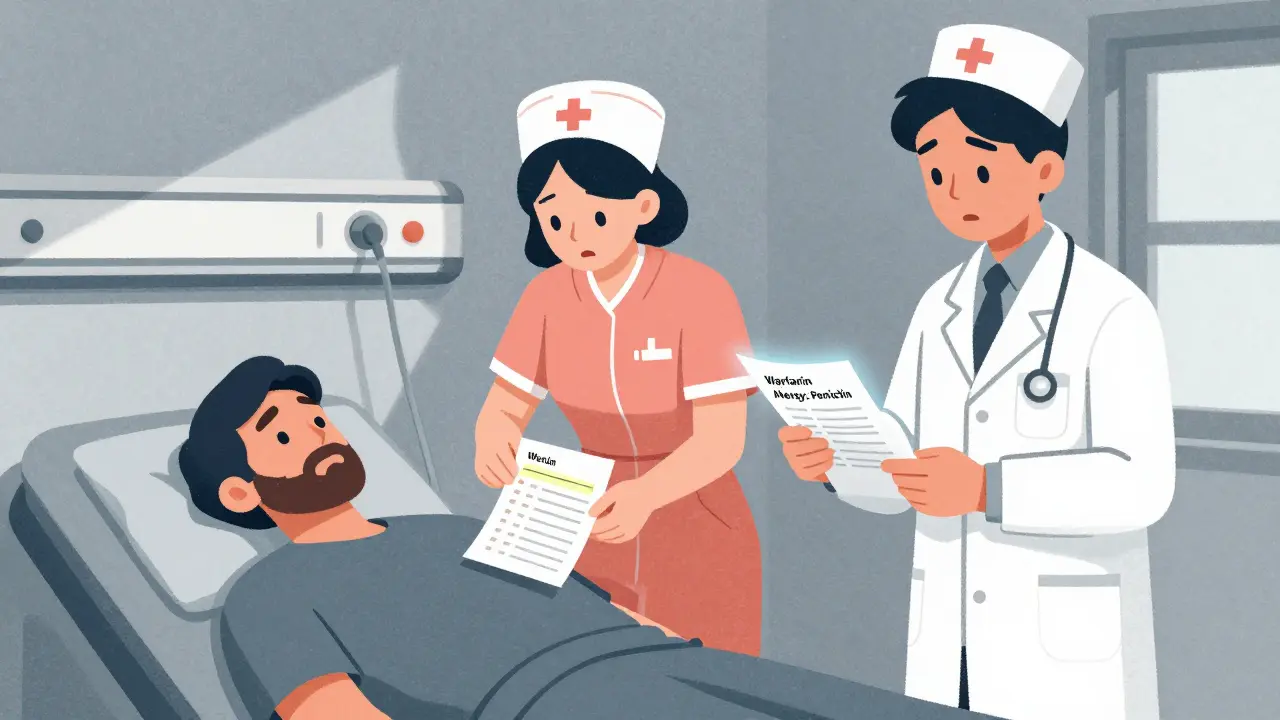
Common Mistakes and How to Avoid Them
- Mistake: Only listing prescription drugs. Solution: Include every pill, patch, and drop - even the ones you think don’t count.
- Mistake: Writing ‘as needed’ without explaining when. Solution: Write ‘for headaches, up to 2 per day’ or ‘for chest pain, only if symptoms occur’.
- Mistake: Letting someone else manage your list. Solution: Even if your child helps, you must review and approve it. You’re the one taking the pills.
- Mistake: Trusting memory. Solution: If you can’t show it on paper or screen, it doesn’t exist in a medical emergency.
Where to Get Help
You don’t have to do this alone.- Your pharmacist - Most offer free medication therapy management (MTM) under Medicare Part D. They’ll review your list, spot interactions, and help you organize.
- Your doctor’s office - Ask if they have a medication list form you can fill out before your visit.
- Online tools - The FDA’s ‘My Medicines’ template is free and downloadable. The American Heart Association also offers printable trackers.
- Family members - If you’re helping an aging parent, sit down with them monthly. Use their phone or a printed form. Make it a routine.
Final Thought: Your List Is Your Safety Net
Medication errors aren’t rare. They’re predictable. And they’re preventable. You don’t need fancy tech. You don’t need to be a medical expert. You just need to write it down - and keep it current. Start today. Grab a piece of paper. Open your medicine cabinet. Write down everything. Then, next time you see a doctor, hand it to them. Say: ‘This is what I’m taking.’ That one action could save your life.What if I take a lot of medications? How do I keep track?
If you take five or more medications - which 76% of people over 65 do - use a digital app with reminders and a printable version. Apps like Medisafe or MyTherapy let you scan pill bottles and auto-fill details. But always carry a printed copy. In an emergency, no one can access your phone if you’re unconscious.
Should I include vitamins and supplements?
Yes. Supplements like fish oil, vitamin D, or St. John’s wort can interact with prescription drugs. For example, St. John’s wort can make blood thinners like warfarin less effective. The ECRI Institute says your list must include all non-prescription items - including herbal remedies - to be accurate.
How often should I update my medication list?
Update it every time your meds change - new prescription, stopped drug, changed dose. At minimum, review it every 3 months. Set a calendar reminder for the first Sunday of every quarter. That’s when you do your brown bag check.
Can my doctor update my list for me?
They should verify it, but you’re responsible for keeping it accurate. Doctors rely on what you tell them. If you forget to mention a new OTC painkiller, they won’t know it’s there. Always bring your list - don’t assume they have it.
What if I don’t have a printer? Can I use my phone?
A digital list is better than nothing. Use a notes app, Google Docs, or a medication app. But make sure you can show it quickly. Save a screenshot or PDF you can pull up without logging in. In an emergency, seconds count.
Are there free templates I can use?
Yes. The FDA offers a free ‘My Medicines’ template with space for all medications, allergies, and emergency contacts. The American Heart Association also has printable versions. Search ‘FDA My Medicines template’ - it’s the most trusted and widely used.
Comments
Rod Wheatley
I’ve been using Medisafe for my mom’s 12 meds-she forgets half the time, but the app pings her like a drill sergeant. She even started taking her fish oil again because it reminded her. I printed a backup and taped it to her fridge. Simple, but it works. No more ER trips for ‘what did she take?’
January 21, 2026 AT 19:05
Amber Lane
My grandma’s list is on a sticky note in her purse. She won’t use apps. But she knows to bring it. That’s all that matters.
January 22, 2026 AT 12:14
Gerard Jordan
Just started using the FDA template 📋✨ My 78-year-old uncle was skeptical-now he carries it in his wallet like a lucky charm. He says, ‘If I’m unconscious, I want them to know I don’t take that green pill anymore.’ 😅
January 22, 2026 AT 23:04
Stephen Rock
Of course you need a list. Everyone knows that. But you’re ignoring the real problem: doctors don’t read them. I’ve seen 3 people die because the chart said ‘allergies: none’ while the patient’s list had 5 red flags. The system is broken. Your list won’t save you.
January 24, 2026 AT 00:57
Roisin Kelly
Yeah right. Like the FDA gives a damn. They’re just pushing this so Big Pharma can track what you’re taking. My aunt’s list got flagged because she took turmeric. Now they won’t prescribe her blood pressure meds. This is surveillance dressed as safety.
January 25, 2026 AT 13:18
Philip Williams
The data is unequivocal: medication reconciliation reduces adverse events by over 30%. The Joint Commission’s mandate isn’t bureaucratic-it’s evidence-based. Yet, we still see patients presenting with polypharmacy lists that omit OTCs, supplements, and topical agents. This isn’t negligence; it’s systemic ignorance. Pharmacists must be integrated into primary care teams, not relegated to dispensers. Until then, patient education remains the only viable bulwark against iatrogenic harm.
January 26, 2026 AT 06:15
Andrew Rinaldi
I used to think this was overkill. Then my dad had a stroke and the ER team found a hidden interaction between his blood thinner and the ginkgo he’d been taking for ‘memory.’ He’s fine now. But I realized: we don’t need more tech. We need more honesty. With ourselves. With our doctors. With our families. Write it down. Even if it’s messy. Even if you hate it. Just write it down.
January 28, 2026 AT 06:01
michelle Brownsea
Let me be clear: if you’re not using the FDA’s ‘My Medicines’ template, you’re not just being careless-you’re endangering lives. And if you’re using a ‘notes app’ or a ‘screenshot,’ you’re demonstrating a fundamental misunderstanding of medical safety protocols. There is no excuse. No ‘I’m too busy.’ No ‘I don’t have a printer.’ Your life is not a suggestion. It’s a responsibility. Update it. Every. Single. Time.
January 30, 2026 AT 03:52
Rod Wheatley
Just saw someone reply saying doctors don’t read lists. That’s true sometimes-but if you hand it to the nurse and say, ‘I updated this today, please make sure it’s in the system,’ they’ll do it. I’ve seen it. Nurses aren’t robots-they’re tired, but they care. Don’t assume they’ll find it. Make them see it.
January 31, 2026 AT 07:22