
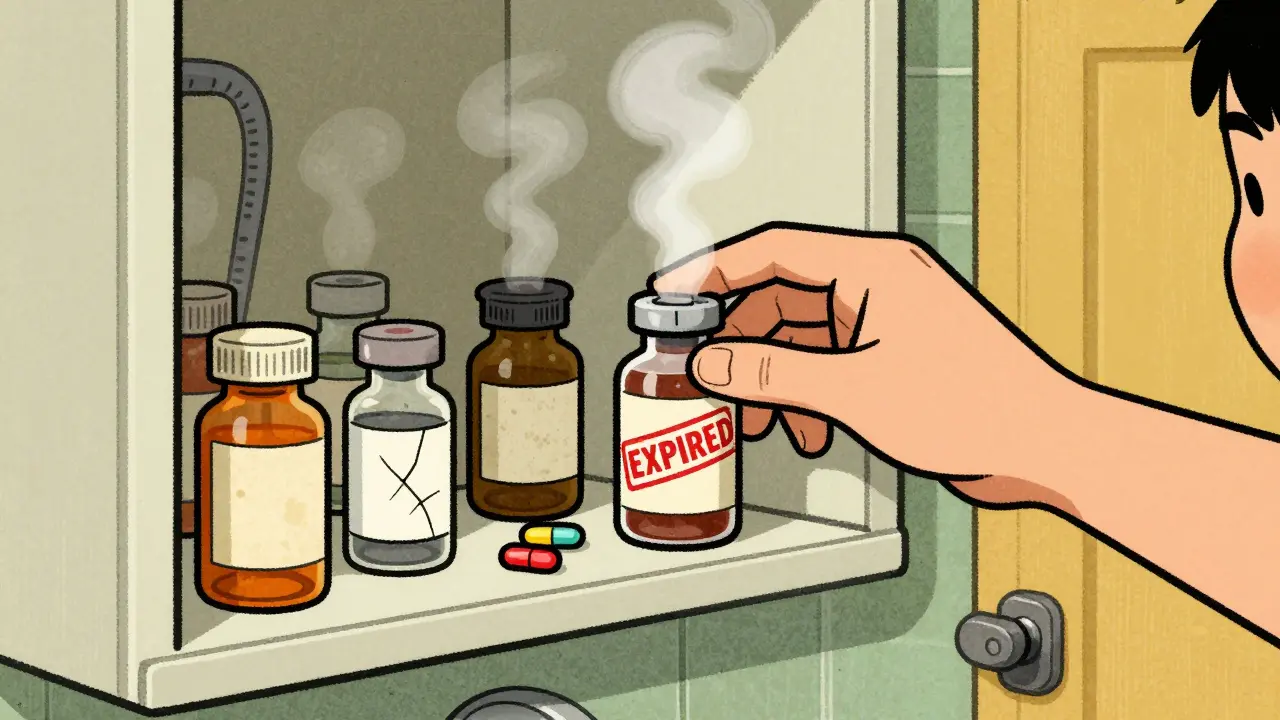
Every year, thousands of people accidentally take expired medicine-not because they’re careless, but because they never checked. It’s easy to forget about that bottle of painkillers tucked behind the toothpaste or the old antibiotic left over from last winter’s cold. But here’s the truth: expired medications aren’t just useless. They can be dangerous.
Why Expired Medications Are a Real Risk
You might think, “If it’s just a few months past the date, what’s the harm?” The answer isn’t as simple as it seems. The FDA says expired drugs can lose potency, change chemical structure, or even become toxic. Tetracycline antibiotics, for example, can damage your kidneys if taken after expiration. Liquid insulin, nitroglycerin, and epinephrine injections don’t just stop working-they can fail at the moment you need them most. A Yale New Haven Health study found that humidity from bathroom showers cuts medication strength by 15-25% in just six months. That means your allergy pill or blood pressure med might be giving you only 60-70% of the dose it should. For older adults, cluttered cabinets increase the chance of grabbing the wrong pill by 37%, leading to dangerous interactions. And for kids? Colored pills in unmarked bottles are a magnet for curiosity. In 2022, U.S. poison control centers handled over 67,500 cases of children swallowing meds from home cabinets.When to Check Your Medicine Cabinet
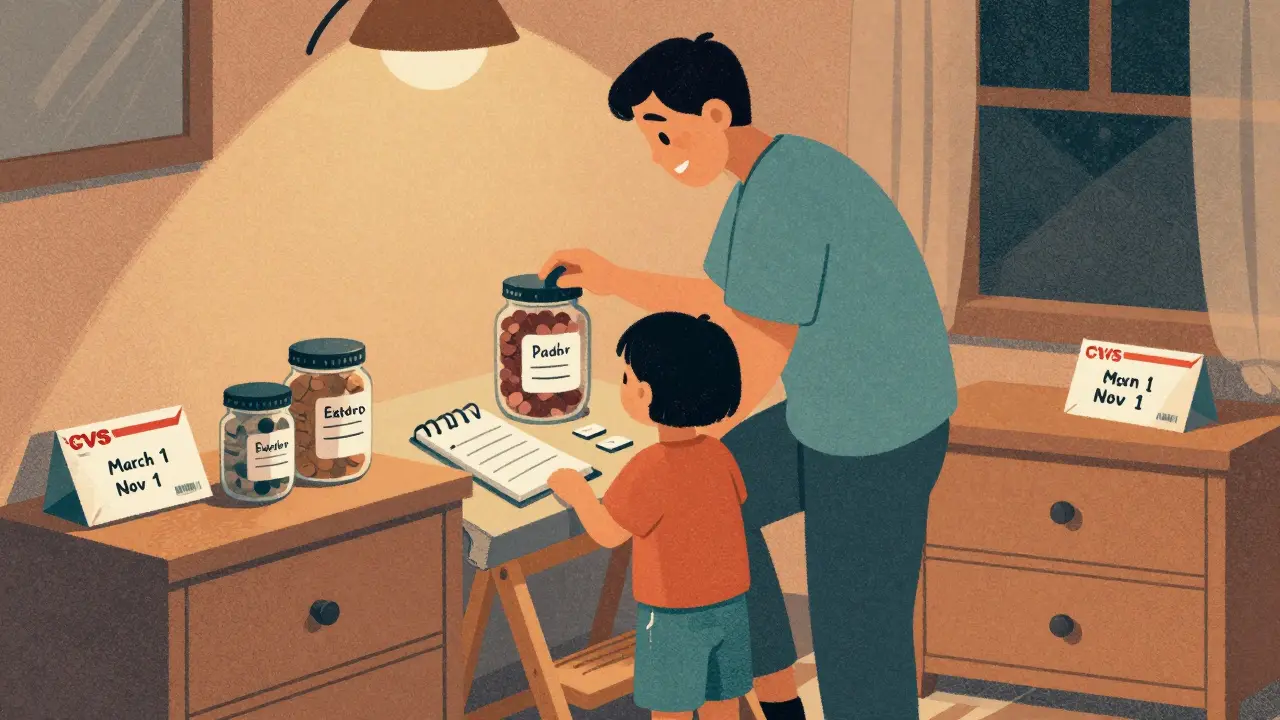
Don’t wait for a crisis. Experts agree: check twice a year. The easiest way to remember? Tie it to daylight saving time. Spring forward in March, fall back in November. That’s when you change your smoke detector batteries-so while you’re up there with the ladder, grab your medicine cabinet too. There’s also a hard rule for prescriptions: if it’s been more than a year since you filled it, toss it-even if the label says it’s good for another two years. The National Kidney Foundation says this applies to all prescription drugs, no exceptions. Why? Because once opened, exposure to air, light, and moisture starts breaking them down faster than the printed expiration date suggests.What to Look For: The Visual Checklist
Don’t just read the date. Look at the medicine itself. Here’s what to watch for:- Color changes-Pills that are faded, spotted, or darker than usual
- Smell-Medications that smell sour, musty, or chemical
- Texture-Tablets that crumble, capsules that stick together, or ointments that separate
- Cloudiness-Liquid medicines like eye drops, insulin, or antibiotics that look murky
- Unmarked containers-If you can’t read the label or don’t remember what it is, throw it out
Where to Store Medications Properly
Your bathroom cabinet is the worst place for medicine. Steam from showers, heat from the dryer, and moisture from the sink all wreck potency. The same goes for the kitchen above the stove or a windowsill where sunlight hits. Instead, pick a dry, cool spot-like a bedroom drawer, a kitchen cabinet away from the sink, or a high shelf in a closet. Temperature should stay between 68°F and 77°F. If you live somewhere hot or humid, consider a small airtight container with a silica gel pack to soak up moisture. Pro tip: Avoid keeping all your meds in one place. Keep your emergency epinephrine or nitroglycerin in your purse or coat pocket, not tucked away in the back of a drawer. If you need it in a crisis, you need to find it fast.What Belongs in a Basic Medicine Cabinet
You don’t need a pharmacy in your home, but you do need essentials for minor emergencies. Here’s what to keep stocked:- Adhesive bandages (at least 20, assorted sizes)
- Gauze pads (10 or more)
- Medical tape
- Digital thermometer (no mercury)
- Alcohol wipes (10+)
- Hydrogen peroxide (for cleaning minor cuts)
- Petroleum jelly (for chapped skin or minor burns)
- Scissors with blunt tips
- Tweezers (for splinters or ticks)
How to Dispose of Expired Medications Safely
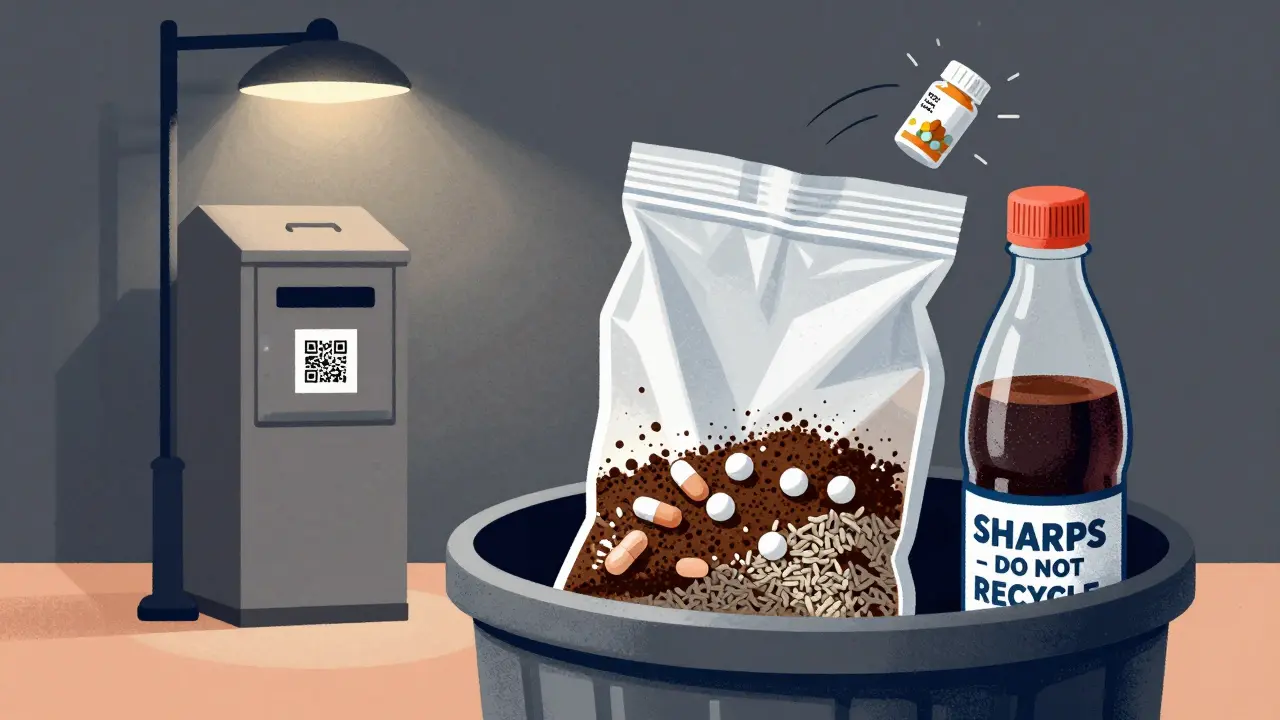
Never flush pills down the toilet or toss them loose in the trash. That pollutes waterways and puts kids and pets at risk. The best option? Use a drug take-back program. The DEA runs National Prescription Drug Take Back Day twice a year, and over 11,000 collection sites-pharmacies, police stations, hospitals-accept meds year-round. As of January 2024, there were 14,623 active locations nationwide. Can’t get to one? Here’s the FDA-approved home method:- Remove pills from original bottles.
- Mix them with something unappetizing-used coffee grounds, cat litter, or dirt. Use at least two parts filler to one part medicine.
- Put the mixture in a sealed plastic bag or container.
- Scratch out your name and prescription info from the empty bottle.
- Throw the sealed container in the trash.
Special Cases: Medications That Must Be Discarded Immediately
Some medicines are too risky to keep past their date. Never use these if they’re expired:- Tetracycline antibiotics - Can cause kidney damage
- Insulin - Loses potency fast; can lead to dangerous blood sugar spikes
- Nitroglycerin - Used for chest pain; if expired, it won’t work during a heart attack
- Liquid antibiotics - Break down quickly; can cause antibiotic resistance if underdosed
- Epinephrine auto-injectors - Life-saving for severe allergies; if expired, they may not deliver the full dose
- Eye drops - Once opened, they’re good for only 28 days, even if the bottle says longer
How to Prevent Future Clutter
After you clean out your cabinet, make a plan to keep it clean:- Write the fill date on every new prescription with a permanent marker
- Ask your pharmacist for disposal instructions when you pick up a new med
- Don’t hoard “just in case” pills. If you haven’t used it in a year, you probably won’t
- Use QR code labels if available. Some health systems now offer stickers you scan with your phone to track expiration dates
- Set a recurring calendar reminder: March 1 and November 1
Why This Matters More Than You Think
The opioid crisis didn’t start in big cities. It started in home medicine cabinets. The CDC says 70% of misused prescription opioids come from family members’ unused pills. That’s not just about addiction-it’s about access. A teenager who finds leftover oxycodone in the bathroom cabinet doesn’t need to buy it online. They just need to open a drawer. And then there’s antibiotic resistance. When people take half a dose of expired antibiotics, the bacteria don’t die-they adapt. The FDA links 12-15% of new resistant infections to improper use of leftover home meds. That means your old pills could be helping create superbugs. This isn’t about being neat. It’s about safety. It’s about protecting your family, your neighbors, and future generations.Can I still use medicine after the expiration date?
Some solid medications like aspirin or ibuprofen may retain potency for a year or two past the date, but it’s not guaranteed. For anything critical-antibiotics, insulin, heart meds, or epinephrine-never take it past expiration. The risk isn’t worth it. When in doubt, toss it.
Is it safe to throw expired meds in the trash?
Only if you follow the FDA’s home disposal method: mix pills with coffee grounds or cat litter, seal them in a container, and remove personal info from packaging. Never toss pills loose-they can be picked up by kids, pets, or scavengers.
Where’s the nearest drug take-back location?
Visit the DEA’s website or call your local pharmacy. Most CVS, Walgreens, and hospital pharmacies accept expired medications year-round. In the UK, you can return unused meds to any pharmacy for safe disposal-no questions asked.
What should I do with old liquid medications?
Never pour liquids down the sink. For eye drops, cough syrup, or antibiotics, mix the liquid with an absorbent material like kitty litter or sawdust in a sealed container before trashing. If it’s insulin or another injectable, bring it to a take-back site with the syringes.
How often should I clean out my medicine cabinet?
Twice a year-spring and fall. Link it to daylight saving time changes. That’s when most health experts recommend doing it, and it’s easy to remember. If you’ve had a big health change or started new meds, check more often.
Are supplements safe to keep past their date?
Most vitamins and supplements lose potency over time but rarely become dangerous. Still, if they’re clumpy, smell off, or have changed color, toss them. You’re paying for effectiveness-not decoration.
Comments
Oladeji Omobolaji
Been doing this twice a year since my grandma had that bad reaction to old antibiotics. Just grabbed a bag of expired pills last week-turns out my ‘emergency’ painkillers were from 2019. Yikes. Now I mark every bottle with a sharpie. Simple, but it works.
Also, never thought about the bathroom being a death trap for meds. My cabinet’s now in the bedroom drawer. No more steamy surprises.
January 21, 2026 AT 15:38
Janet King
Proper medication storage is a public health imperative. Exposure to humidity and temperature fluctuations significantly degrades pharmaceutical efficacy. The FDA and WHO both recommend ambient storage conditions between 20°C and 25°C. Bathroom environments routinely exceed these parameters. Disposal protocols must adhere to federal guidelines to prevent environmental contamination and accidental ingestion.
January 22, 2026 AT 10:04
dana torgersen
Okay so… I just realized I’ve been keeping my insulin in the bathroom for three years?? Like… I know it’s dumb but I just… forgot?? And now I’m panicking because I read that it can literally turn into poison?? Like… what if I’ve been giving myself weak doses?? I feel so stupid… and now I’m crying. Also I think my cat might’ve eaten a pill last month?? I’m so scared.
Also why does everything have to be so complicated?? Why can’t medicine just come with a ‘throw away after 12 months’ sticker??
January 24, 2026 AT 04:56
Laura Rice
THIS. THIS IS SO IMPORTANT. I used to keep everything in the medicine cabinet like a normal person-until my 7-year-old opened the bottle of Benadryl and thought it was candy. We rushed to the ER. She’s fine. But I will NEVER forget that moment. Now? All meds are locked in a high cabinet. No exceptions. I even label the kids’ vitamins with ‘NOT CANDY’ in big letters. Don’t wait for a crisis. Do it now. Your family deserves safety, not luck.
Also-please, please, please use the mail-back envelopes. CVS has them. It’s free. Just do it.
January 25, 2026 AT 12:12
Stacy Thomes
YESSSSS!! I did this last week and found THREE expired EpiPens. THREE!! I was so mad at myself-I thought they lasted forever. Now I have a calendar alert for March 1 and November 1. I even made a checklist and taped it to the cabinet. My husband thinks I’m over the top… but guess what? I’m alive and he’s not choking on an allergic reaction because I was lazy. Worth it.
Also-don’t forget the sharps container. I used a soda bottle last time. Don’t be me. Just buy the $8 one. Your future self will thank you.
January 25, 2026 AT 18:21
Dawson Taylor
Expiration dates reflect guaranteed potency, not sudden toxicity. Stability data for many solid oral dosage forms indicates retention of potency beyond labeled dates under optimal conditions. However, risk-benefit analysis must prioritize critical therapeutics: insulin, epinephrine, and antibiotics warrant zero tolerance for deviation. Environmental degradation is a confounder, not a justification for complacency.
January 26, 2026 AT 20:24
Andrew Smirnykh
Interesting how cultural norms around medicine storage vary. In my home country, people keep pills in kitchen cabinets near the stove because it’s the most accessible place. Never thought about humidity or heat affecting potency until I moved here. Now I use a small plastic box with silica gel. Simple, cheap, effective. Thanks for the reminder-this kind of practical advice saves lives.
January 27, 2026 AT 11:27
Kerry Evans
People who don’t throw out expired meds are irresponsible. You’re not just risking your own health-you’re enabling the opioid crisis, fueling antibiotic resistance, and endangering children. If you’re too lazy to check your cabinet twice a year, you shouldn’t be allowed to keep prescriptions. This isn’t ‘self-care.’ It’s negligence dressed up as convenience.
January 28, 2026 AT 22:36
Sue Stone
My mom used to say, ‘If it looks weird, it probably is.’ She was right. I tossed a bottle of amoxicillin last month because it smelled like wet socks. Turns out it expired in 2021. I didn’t even remember I had it. Now I keep a little notepad by the cabinet. Write it down. Don’t trust your memory.
January 30, 2026 AT 21:51
Anna Pryde-Smith
WHY ISN’T THIS ON TV?!?!? This is literally life-or-death and no one talks about it! My neighbor’s kid almost died because they swallowed old allergy pills. The ER bill was $12,000. I’m starting a movement. #CleanYourCabinet. Tag your friends. This isn’t optional. This is survival. I’m posting this on Facebook, Instagram, TikTok, and my HOA newsletter. Someone has to do it.
February 1, 2026 AT 19:51
charley lopez
Pharmaceutical degradation kinetics are governed by Arrhenius principles. Accelerated stability testing under elevated temperature and humidity demonstrates significant loss of potency in liquid formulations and lyophilized products. The 68–77°F storage recommendation aligns with ICH Q1A(R2) guidelines. Non-compliance introduces therapeutic uncertainty and increases the risk of subtherapeutic dosing, particularly in chronic disease states.
February 2, 2026 AT 08:20
Kerry Moore
Thank you for sharing this. I’ve been meaning to clean out my cabinet for months but kept putting it off. Your checklist made it feel manageable. I just finished sorting through everything-tossed six bottles, marked the rest with dates, and ordered a lockbox for the EpiPen. I’m sharing this with my parents too. They’re in their 70s and still keep pills in the bathroom. I think this could save their lives.
February 4, 2026 AT 06:34