
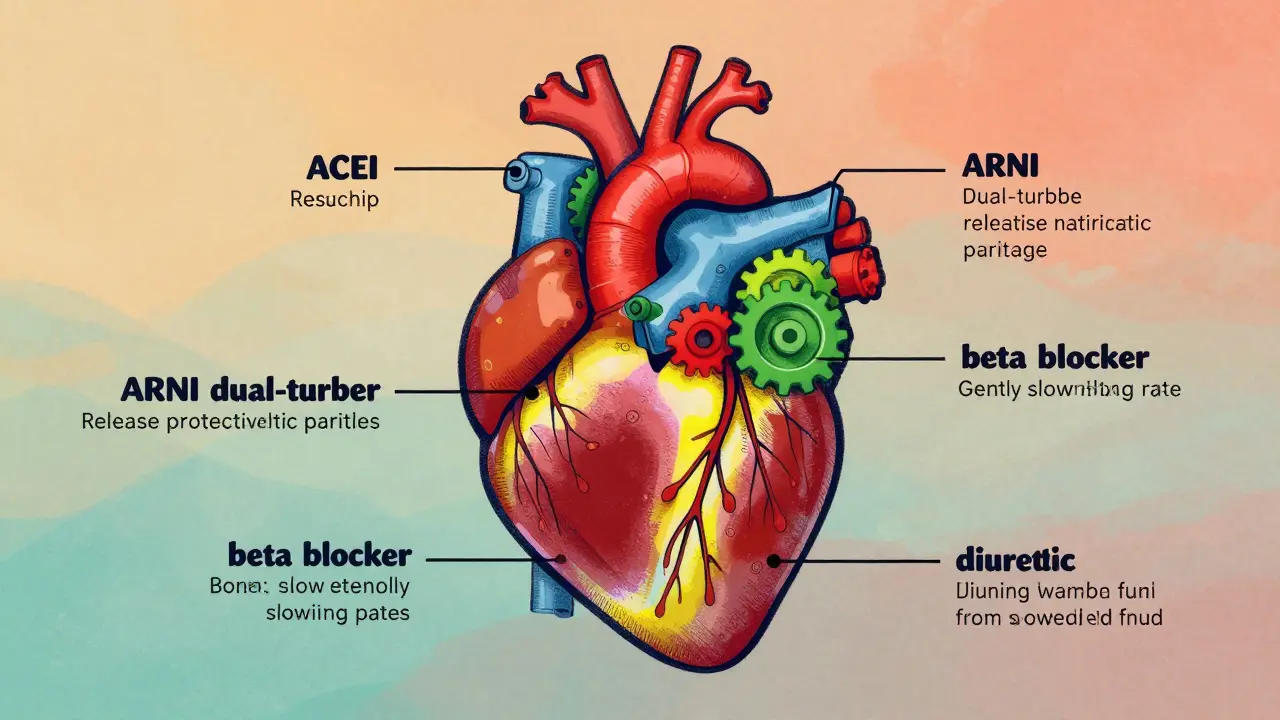
When someone is diagnosed with heart failure with reduced ejection fraction (HFrEF), the treatment plan isn’t just about managing symptoms-it’s about saving lives. Four drug classes form the backbone of modern care: ACE inhibitors, ARNIs, beta blockers, and diuretics. Each plays a distinct role, and together, they can cut death risk by up to 20% and hospital stays by 21%. But knowing which ones to use, when, and how to avoid side effects makes all the difference.
ACE Inhibitors: The Original Game-Changer
ACE inhibitors were the first class of drugs proven to extend life in heart failure. Captopril, approved in 1981, and later enalapril, showed that blocking the renin-angiotensin-aldosterone system (RAAS) could ease the heart’s workload. The CONSENSUS trial in 1987 found enalapril cut death risk by 27% in severe cases. Today, these drugs remain widely used, especially where newer options aren’t available.
Common ACEIs include lisinopril, enalapril, and ramipril. They work by stopping the body from turning angiotensin I into angiotensin II-a hormone that tightens blood vessels and raises blood pressure. Lowering this pressure helps the heart pump more efficiently.
But they come with trade-offs. About 1 in 5 people develop a dry, persistent cough. It’s not dangerous, but it’s enough to make many stop taking the drug. Others face high potassium levels (hyperkalemia), which can trigger dangerous heart rhythms. Rarely, swelling of the face or throat (angioedema) occurs. If you’ve had this reaction before, you should never take an ACEI again.
ARNI: The New Standard in First-Line Therapy
ARNI-specifically sacubitril/valsartan (brand name Entresto)-changed everything. Approved in 2015 after the PARADIGM-HF trial, it outperformed enalapril in reducing death and hospitalizations. The trial tracked nearly 8,400 patients across 47 countries. Those on ARNI had a 20% lower risk of dying from heart problems and 21% fewer hospital stays.
What makes ARNI different? It does two things at once. Valsartan blocks angiotensin receptors like an ARB, while sacubitril blocks neprilysin-an enzyme that breaks down helpful hormones called natriuretic peptides. These peptides help the body get rid of salt and water, relax blood vessels, and reduce strain on the heart.
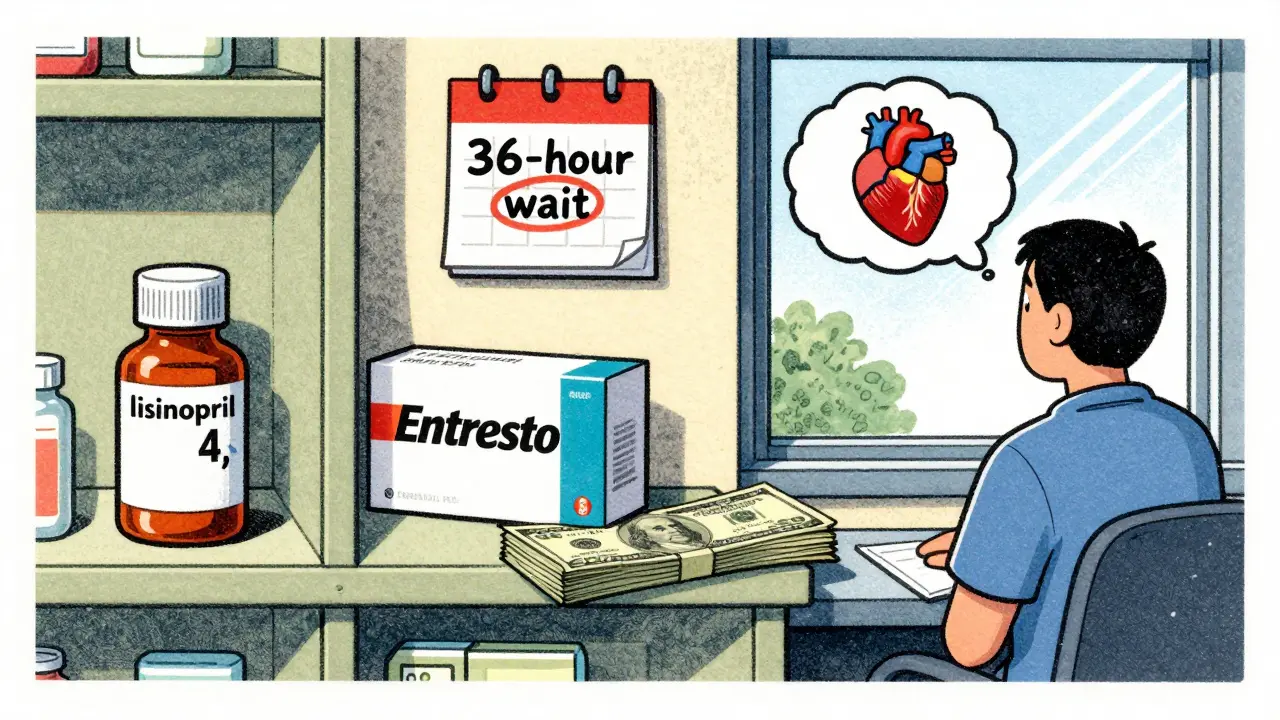
Current guidelines say ARNI should replace ACEIs or ARBs as the first choice for HFrEF patients. But there’s a catch: you can’t switch from an ACEI to ARNI within 36 hours. The risk of angioedema jumps by half a percent. That’s why doctors start patients on a low dose-24/26 mg twice daily-and slowly increase it every 2-4 weeks, as long as blood pressure stays above 100 mmHg.
Cost is a barrier. While lisinopril costs about $4 a month, Entresto runs $550 without insurance. That’s why adoption is still higher in academic hospitals (65%) than in community clinics (42%). But for those who can access it, the benefits are clear. One patient on Reddit shared that within two weeks of switching from lisinopril to Entresto, their shortness of breath improved dramatically.
Beta Blockers: Slowing Down to Save the Heart
It sounds backward, but slowing the heart can actually help it heal. Beta blockers like carvedilol, metoprolol succinate, and bisoprolol were once avoided in heart failure. Then came the landmark MERIT-HF and COPERNICUS trials in the late 1990s and early 2000s. They showed these drugs cut death risk by 30-35% in patients with HFrEF.
They work by blocking adrenaline’s effects on the heart. This lowers heart rate, reduces blood pressure, and decreases the heart’s oxygen demand. Over time, they can even help the heart muscle recover some of its pumping strength. One patient reported their ejection fraction rose from 25% to 45% after 18 months on carvedilol.
But starting them is tricky. You begin at the lowest possible dose. For metoprolol succinate, that’s 12.5 mg once daily. You wait two to four weeks before doubling it. Why? Because if you start too fast, you can make heart failure worse-causing fluid buildup, low blood pressure, or extreme fatigue. About 1 in 5 patients feel dizzy or lightheaded. Around 10% develop bradycardia (heart rate under 50). Fatigue is common, reported by 72% of users on PatientsLikeMe.
The key is patience. Most people adapt after a few months. The long-term payoff? Fewer hospital visits and a better chance of living longer.

Diuretics: Managing Fluid, Not Fixing the Heart
Diuretics don’t improve survival. But they make life bearable. When the heart can’t pump effectively, fluid backs up into the lungs and legs. That’s when you feel short of breath, swollen, and exhausted.
Loop diuretics-furosemide, bumetanide, and torsemide-are the go-to. Furosemide (Lasix) is the most common, starting at 20-80 mg daily. Torsemide may be more effective: the EVEREST trial found it lowered hospitalization risk by 18% compared to furosemide.
Thiazides like hydrochlorothiazide are used for milder cases or when loop diuretics aren’t enough. Spironolactone is special-it’s both a diuretic and a mineralocorticoid receptor antagonist (MRA). The RALES trial showed it cut death risk by 30% in severe heart failure. But it can spike potassium levels. About 1 in 7 patients need dose adjustments because of this.
Patients often complain about frequent urination. One Reddit user said furosemide caused severe leg cramps until they started taking potassium and magnesium supplements. That’s a common fix. Staying hydrated and monitoring electrolytes is essential. Diuretics have the highest average rating (4.1/5) on Amazon reviews-not because they cure anything, but because they make breathing easier.
How These Drugs Work Together
The modern standard is quadruple therapy: ARNI (or ACEI/ARB), beta blocker, MRA (like spironolactone), and an SGLT2 inhibitor (like dapagliflozin). Diuretics are added as needed for symptoms.
Each drug tackles a different problem:
- ARNI reduces harmful hormone activity and boosts natural protective hormones.
- Beta blockers calm the overactive nervous system that’s stressing the heart.
- MRA prevents salt and water retention and reduces scarring in the heart muscle.
- SGLT2 inhibitors help the kidneys remove sugar and salt, lowering heart strain-even in patients without diabetes.
- Diuretics remove excess fluid to relieve symptoms.
Together, they create a powerful shield. The 2022 AHA/ACC/HFSA guidelines say this combo reduces mortality by up to 20% compared to older regimens. Yet, only 35% of eligible patients receive all four drugs within a year of diagnosis. That’s a massive gap between what science says works and what actually happens in clinics.
Monitoring and Safety: What You Need to Watch
These drugs are powerful, but they need careful management. Here’s what to track:
- Potassium levels: Check within 1-2 weeks of starting or changing dose. Target: under 5.0 mmol/L. High potassium can cause dangerous heart rhythms.
- Creatinine: Monitor kidney function. A rise of more than 30% from baseline may mean you need a lower dose.
- Blood pressure: Systolic pressure should stay above 100 mmHg. If you feel dizzy or faint, your dose may be too high.
- Heart rate: Beta blockers should not be increased if resting heart rate drops below 50 bpm.
- Weight: Daily weight checks help catch fluid buildup early. A gain of 2+ pounds in a day is a red flag.
Specialists with heart failure clinics achieve 85% adherence to this regimen. General practices? Only 52%. Why? Because titrating these drugs takes time, education, and follow-up. It’s not a one-time prescription-it’s a long-term partnership between patient and provider.
Real-World Challenges
Cost, side effects, and access aren’t just academic issues-they’re daily struggles.
Entresto’s price tag keeps it out of reach for many. Medicare covers it, but 78% of cases require prior authorization. Patients in rural areas are especially affected: only 28% of eligible patients get guideline-recommended therapy.
Side effects are common. Sixty-eight percent of patients on PatientsLikeMe couldn’t tolerate full beta blocker doses because of fatigue. Forty-five percent quit ACEIs because of cough. But those who stick with ARNI? Eighty-two percent say their energy and breathing improved enough to keep going.
One common theme across forums: people feel better after switching. Not because they’re cured-but because their heart is finally getting the support it needs.
What’s Next?
Research is moving fast. SGLT2 inhibitors are now recommended for all heart failure patients, regardless of ejection fraction. ARNI is being studied in patients with mildly reduced ejection fraction (HFmrEF)-a group once thought to be untreatable. Early results are promising.
By 2027, experts predict ARNI will be first-line for 70% of HFrEF patients. But until then, the biggest challenge isn’t finding new drugs-it’s making sure everyone who needs them gets them.
Comments
Sean Bechtelheimer
lol so ACEIs cause cough? 😏 guess that's why Big Pharma pushed ARNI so hard... they knew people would ditch the $4 pills for the $550 one. 🤔💸 #pharmabullshit
March 23, 2026 AT 06:35
Seth Eugenne
I switched to Entresto last year after years of lisinopril coughing like I had a lung infection. Within 10 days, I could walk to my mailbox without stopping. 🙏 It’s not magic, but it’s the closest thing my heart’s had in a decade. Slow titration saved me - don’t rush it.
March 23, 2026 AT 21:59
rebecca klady
I’m a nurse and I’ve seen so many patients quit their meds because of side effects. The key is not giving up - it’s working with your doc to tweak it. You don’t have to suffer to be safe.
March 23, 2026 AT 22:57
Brandon Shatley
so beta blockers make you tired? wow. i thought they were just for high blood pressure. but wait, if they slow your heart down, doesnt that mean your heart is getting a break? kinda like when you stop running and just breathe? kinda makes sense. i mean, if your heart is tired, why make it work harder? lol i dont know much but this sounds right.
March 24, 2026 AT 09:45
Blessing Ogboso
As someone from Nigeria where access to even basic heart meds is a daily struggle, I want to say how deeply moved I am by this post. In Lagos, many patients are still on furosemide alone because ARNI is a dream. But I’ve seen patients thrive when we combine even one or two of these drugs with education. It’s not about the cost - it’s about dignity. One woman told me, 'I can hug my grandchild again.' That’s the real metric. Let’s not let profit decide who lives.
March 24, 2026 AT 11:13
Jefferson Moratin
The philosophical underpinning of modern HFrEF therapy is not merely pharmacological - it is ontological. We are not treating a disease of the heart; we are intervening in the body’s self-destructive feedback loops. The RAAS system is not a villain - it is a misfired survival mechanism. ARNI doesn’t suppress it - it redirects it. Beta blockers don’t weaken the heart - they allow it to relearn its rhythm. This is medicine as epistemological humility.
March 24, 2026 AT 20:36
Anil Arekar
I must respectfully express my profound admiration for the rigorous clinical evidence presented in this post. The integration of evidence-based pharmacotherapy into real-world practice remains one of the most critical challenges in global cardiovascular care. In India, we face additional layers of socioeconomic complexity, yet adherence to quadruple therapy, when properly supported, yields outcomes comparable to those in Western cohorts. The human cost of non-adherence is not merely statistical - it is familial.
March 26, 2026 AT 19:22
Elaine Parra
So let me get this straight - we’re telling people to take FOUR expensive drugs that make them dizzy, tired, and pee nonstop just to live a few extra months? And we call this progress? My dad died of heart failure in 2015 and all he got was a pill and a prayer. This is capitalism masquerading as science.
March 28, 2026 AT 17:52
Kevin Siewe
I’ve been on carvedilol for 3 years. The first month was rough - I felt like a zombie. But after 6 months, I could mow the lawn without stopping. I didn’t even realize how tired I’d been until it lifted. Slow and steady. Don’t quit before it works.
March 29, 2026 AT 19:07
Danielle Arnold
So diuretics don’t save lives... but they get you to 4.1/5 on Amazon? Interesting. I guess that’s the new metric for medical breakthroughs.
March 31, 2026 AT 08:04