
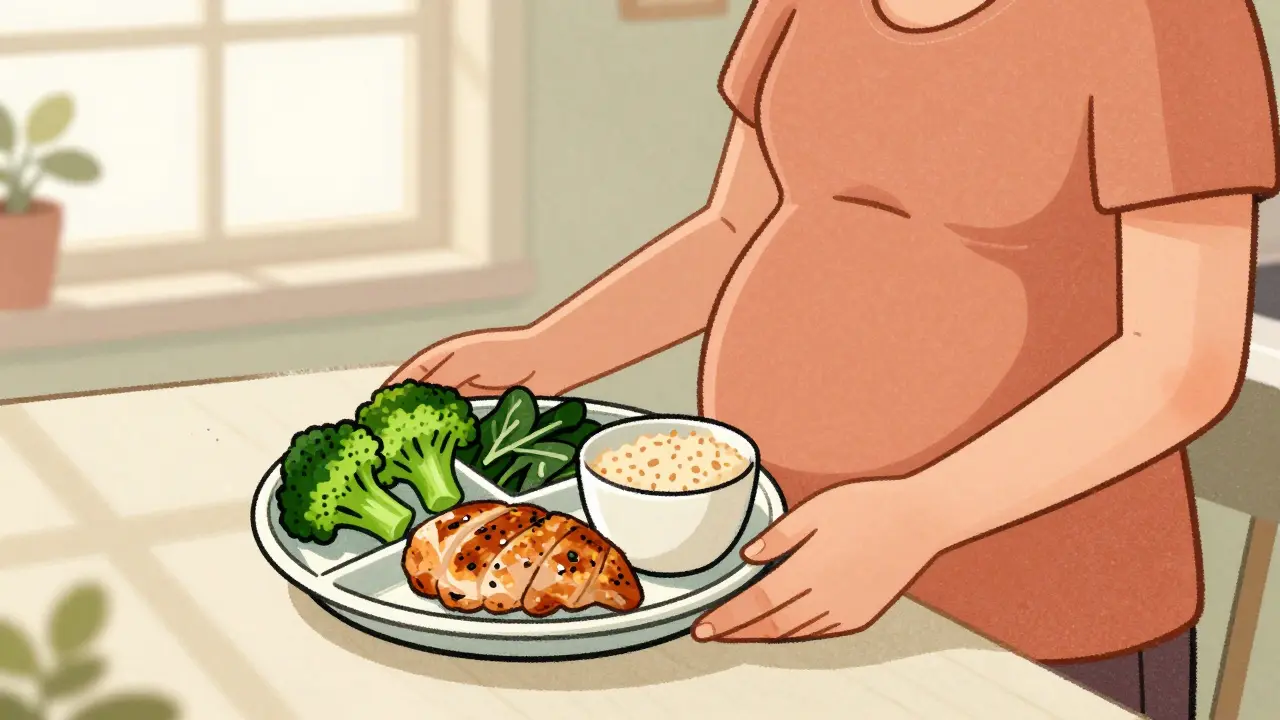
When you’re pregnant and diagnosed with gestational diabetes, the first thing you hear is: food is your medicine. It’s not about cutting out carbs entirely. It’s not about eating bland, boring meals. It’s about timing, portioning, and choosing the right kinds of carbs so your blood sugar stays steady-keeping you and your baby healthy.
Why Your Blood Sugar Matters During Pregnancy
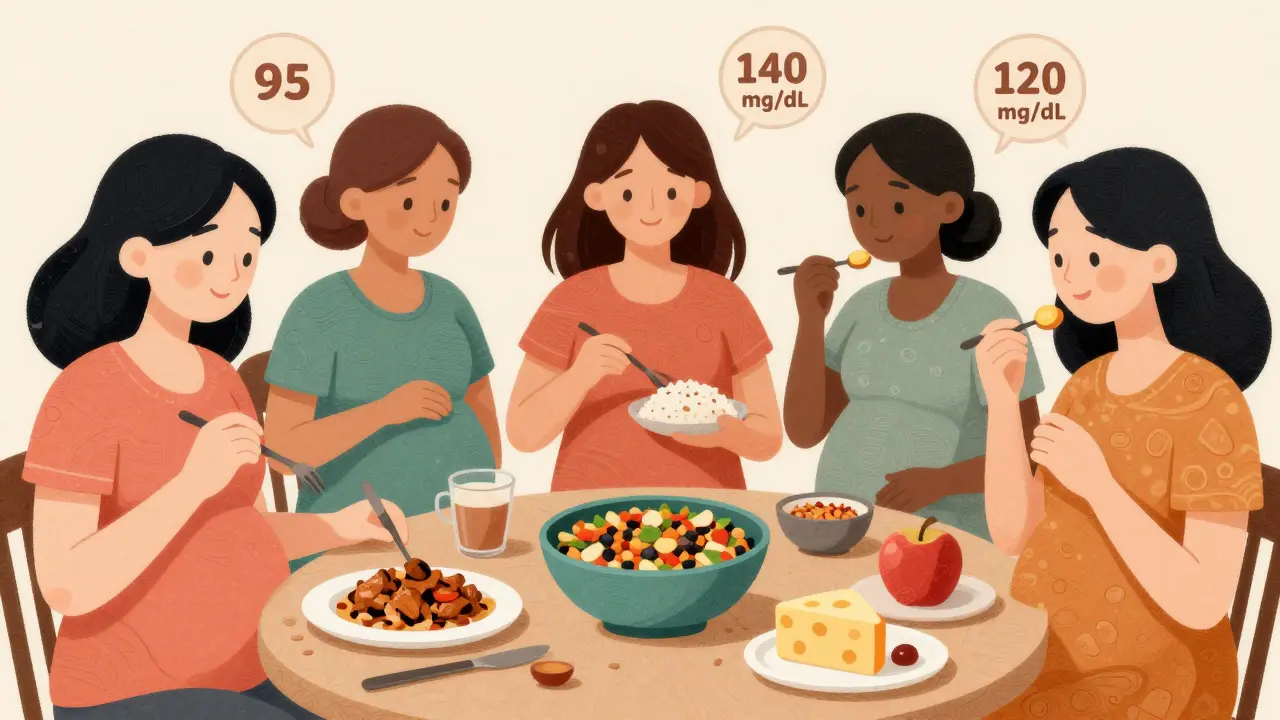
Gestational diabetes happens when your body can’t make enough insulin to handle the extra sugar in your blood during pregnancy. That doesn’t mean you did something wrong. It’s a common condition-about 1 in 10 pregnant women in the U.S. get it. But if blood sugar stays too high, it can lead to a bigger baby, harder delivery, or low blood sugar in your newborn right after birth. The good news? Most women can manage it with food alone. Studies show that following a structured meal plan cuts the risk of having a baby over 9 pounds by nearly a third. It also lowers the chance of needing a C-section by 22%. The targets are clear: fasting blood sugar below 95 mg/dL, under 140 mg/dL one hour after eating, and under 120 mg/dL two hours after eating. These aren’t arbitrary numbers-they’re based on decades of research from the International Association of Diabetes and Pregnancy Study Groups.The Plate Method: Simple, Visual, and Effective
If counting grams of carbs feels overwhelming-especially when you’re exhausted or nauseous-the plate method works better for most women. It’s visual, easy to remember, and doesn’t require a scale or app. Here’s how it works: take a regular 9-inch plate. Fill half of it with non-starchy vegetables-broccoli, spinach, peppers, zucchini, green beans. These have almost no impact on blood sugar. One-quarter of the plate gets lean protein: chicken, fish, eggs, tofu, or lean beef. The last quarter? That’s your carb portion. One serving equals about 15 grams of net carbs. That’s:- Half a cup of cooked brown rice
- One medium slice of whole grain bread
- Three-quarters of a cup of oatmeal
- One small apple or one cup of berries
Carbohydrate Counting: For Precision and Control
If you’ve had prediabetes before pregnancy, or your doctor says you need tighter control, carb counting might be your best bet. The standard is 45-60 grams of net carbs per meal and 15 grams per snack. Net carbs = total carbs minus fiber. So if a food has 20g total carbs and 6g fiber, you count 14g net carbs. This method gives you more flexibility. You can have a small serving of pasta, as long as you balance it with protein and veggies. But it requires learning how to read labels and track portions. Many women find this stressful. One survey found 42% of users gave up on carb counting because it felt too technical. The key is consistency. Eat the same amount of carbs at the same time each day. Skipping meals or eating a big lunch and no snack? That causes spikes and crashes. Spread carbs evenly: three meals, three snacks. Your body doesn’t like big swings.What to Eat: High-Fiber, Low-Glycemic Choices
Not all carbs are equal. White bread, sugary cereals, and fruit juices spike blood sugar fast. Whole grains, legumes, and non-starchy veggies do the opposite. They’re high in fiber, which slows digestion and keeps glucose steady. Aim for at least 6 grams of fiber per meal. That’s:- One cup of lentils (15g fiber)
- Half a cup of black beans (7g fiber)
- One medium pear with skin (5g fiber)
- Two tablespoons of chia seeds (10g fiber)
Sample One-Day Meal Plan
Here’s what a day looks like using the plate method and carb targets:- Breakfast: 2 scrambled eggs + 1 slice whole grain toast + ½ cup berries + 1 tbsp almond butter
- Snack: 1 small apple + 1 oz cheddar cheese
- Lunch: Grilled chicken salad (2 cups spinach, cucumbers, tomatoes) + ½ cup quinoa + 1 tbsp olive oil vinaigrette
- Snack: ½ cup Greek yogurt + ¼ cup blueberries + 1 tbsp flaxseed
- Dinner: Baked salmon + 1 cup roasted broccoli + ½ cup brown rice
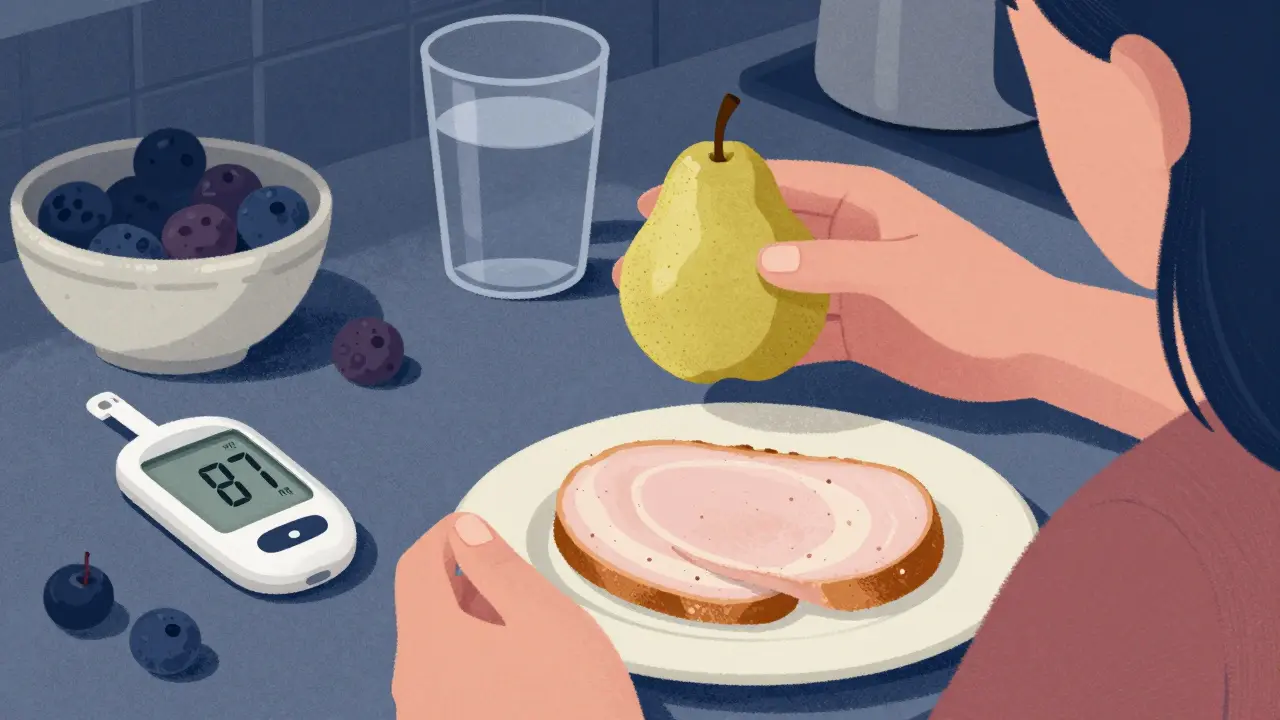
- Bedtime Snack: 1 oz turkey slices + 1 small pear
What to Avoid
Some foods are tricky. Even “healthy” ones can cause spikes:- Fruit smoothies (even with spinach)-they’re liquid carbs. Eat the whole fruit instead.
- Granola bars and “diabetic-friendly” snacks-many are loaded with sugar alcohols and sodium. One 2023 Lancet study found these products have 27% more salt than whole foods.
- White rice, pasta, and bread-swap for whole grain versions.
- Flavored yogurt-check labels. Many have 20g+ sugar per cup. Choose plain and add your own berries.
Real-Life Success Stories
Maria, 32, from Chicago, had gestational diabetes in her third trimester. Her fasting sugars were climbing to 105 mg/dL. She started eating a snack of 1 oz cheese and 15g carbs (like half a banana) before bed. Within three days, her fasting levels dropped to 87 mg/dL. “It wasn’t magic,” she said. “It was just timing.” Another woman from the Philippines used a traditional dish-adobo chicken-with half a cup of brown rice. She hit her carb target and felt like she was eating home-cooked food, not a “diabetic meal.” That’s the power of cultural adaptation. Meal plans that respect your food traditions stick better.Common Mistakes and How to Fix Them
Most women stumble in the same ways:- Misjudging portions: Half a cup of rice looks like a tennis ball. Use that as a visual. Don’t eyeball it.
- Forgetting fiber: If you’re eating a lot of white rice or pasta, you’re missing fiber. Swap even one serving a day for beans or lentils.
- Not eating snacks: Skipping snacks leads to bigger meals later. That causes spikes. Stick to the schedule.
- Over-relying on “sugar-free” products: These often have artificial sweeteners and high sodium. Stick to whole foods.
When You Need More Than Food
About 1 in 3 women with gestational diabetes eventually need insulin or metformin. That doesn’t mean your diet failed. Pregnancy hormones change how your body responds. Sometimes, even perfect eating isn’t enough. But here’s the key: if you’ve followed a good meal plan, your doctor will likely need less medication. And if you do need it, you’ll probably only need it for the last few weeks. Most women stop after delivery.Support Is Key
You’re not alone. There are over 147,000 women in the Facebook group “Gestational Diabetes Support.” They share meal ideas, troubleshoot spikes, and celebrate wins. One member said, “Joining that group cut my anxiety in half.” Many hospitals now offer free virtual dietitian visits covered by insurance. Ask your OB if they have a certified diabetes care and education specialist (CDCES) on staff. These are the people who know the latest guidelines and can personalize your plan.Looking Ahead
New tools are making this easier. The ADA just launched a mobile app that syncs with continuous glucose monitors. It suggests meals based on your real-time blood sugar. In a pilot study, users improved their time-in-range by 23%. The future is personalized. AI tools can now adjust your carb targets based on your activity, sleep, and glucose patterns. But for now, the basics still work: eat balanced meals, spread carbs out, prioritize fiber and protein, and don’t skip snacks.What Happens After Baby?
Gestational diabetes usually goes away after birth. But it raises your risk of type 2 diabetes later. That’s why you’ll get a glucose test 6-12 weeks postpartum. Even if it’s normal, keep eating this way. It’s not just for pregnancy-it’s for lifelong health.Can I eat fruit with gestational diabetes?
Yes, but choose whole fruits over juice and limit portions. One small apple, one cup of berries, or half a banana is one carb serving (15g net carbs). Pair fruit with protein-like cheese or nuts-to slow absorption. Avoid dried fruit and smoothies-they’re concentrated sugars without fiber.
Do I need to count calories?
Not usually. The focus is on carb distribution, not total calories. Most women need about 2,200-2,500 calories a day during pregnancy. If you’re eating balanced meals with protein, fiber, and healthy fats, you’ll naturally get enough. Only count calories if your doctor says you’re under- or overweight.
Is the Mediterranean diet good for gestational diabetes?
Yes, and research shows it can reduce post-meal glucose spikes by 15% compared to standard plans. It’s rich in olive oil, beans, fish, vegetables, and whole grains. But it requires more cooking and planning. If you’re new to meal prep or have limited time, start with the plate method instead.
Can I have dessert?
Yes-but sparingly. Save dessert for a planned snack. Try ½ cup sugar-free pudding with berries, or a small square of dark chocolate (70%+ cocoa). Avoid cakes, cookies, and ice cream-they’re pure sugar with no fiber or protein. If you want something sweet, reach for fruit first.
What if I’m vegetarian or vegan?
You can still manage gestational diabetes. Focus on plant-based proteins like lentils, chickpeas, tofu, tempeh, and edamame. Combine them with whole grains and veggies. Watch your carb portions carefully-beans are high in carbs but also high in fiber. A half-cup of black beans counts as one carb serving. Consult a dietitian to ensure you’re getting enough iron, B12, and omega-3s.
How do I know if my meal plan is working?
Check your blood sugar logs. If your fasting levels stay under 95 mg/dL and your post-meal numbers are under 140 mg/dL at one hour and 120 mg/dL at two hours, you’re on track. If you’re consistently over, adjust your carb portions or timing. Talk to your dietitian if you’re unsure.
If you’re feeling overwhelmed, remember: you’re not trying to be perfect. You’re trying to be consistent. One good meal at a time. One snack. One blood sugar check. Progress, not perfection. Your baby is already benefiting from every healthy choice you make.
Comments
Nicole Rutherford
Ugh I can't believe people still think carb counting is necessary. The plate method is literally all you need. I had gestational diabetes with both kids and never measured a single gram. Just fill half your plate with greens, quarter with protein, quarter with carbs. Done. No apps. No stress. Just eat.
Also why are people still eating white rice? Swap it for lentils. It's not that hard.
December 19, 2025 AT 11:35
Chris Clark
yo i'm from the philippines and i just ate adobo with brown rice yesterday and my sugar was 112 two hours later. no cap. it worked. my mom made this for me every day when i was pregnant and i never felt like i was on a 'diet'-just normal food. why do we make this so complicated? your grandma knew what she was doing.
also no one talks about how much better you feel when you don't eat those fake sugar-free bars. they taste like chalk and make you bloated. real food > processed crap.
December 20, 2025 AT 11:41
William Storrs
you got this. seriously. i know it feels overwhelming but every time you choose broccoli over white bread, you're doing something powerful for your baby. it's not about perfection-it's about showing up. even if you slip up and eat a bagel, just reset at the next meal. you're not failing. you're learning.
and hey-if you're tired, just do the plate method. no guilt. no math. just fill the plate. you're already doing better than 90% of people out there.
December 21, 2025 AT 11:57
Nina Stacey
i just want to say thank you for writing this because i was so scared when i got diagnosed and i thought i had to give up everything i loved but honestly the plate method changed my life i used to panic every time i ate something now i just look at my plate and go okay half veggies one quarter protein one quarter carbs and boom i feel good and my numbers are great and i even started eating dark chocolate again like one square a day with almonds and my husband says i'm less moody so maybe its not just the food maybe its also the peace of mind
also please everyone stop drinking fruit smoothies i did that for a week and my sugar went to 180 and i cried in the grocery store next to the oat milk
December 21, 2025 AT 21:34
mary lizardo
While the plate method may be convenient, it lacks scientific rigor. The International Association of Diabetes and Pregnancy Study Groups explicitly recommends individualized carbohydrate distribution based on glycemic response, not arbitrary visual cues. Relying on a 9-inch plate is anecdotal at best and potentially dangerous for women with insulin resistance.
Furthermore, the assertion that 'most women can manage it with food alone' is misleading. Approximately 30% require pharmacologic intervention, and delaying insulin due to misplaced confidence in dietary control can lead to fetal macrosomia, which carries significant neonatal morbidity.
Also, the reference to Reddit anecdotes as evidence is a clear logical fallacy. Peer-reviewed literature, not user-generated content, should guide clinical practice.
December 23, 2025 AT 13:37
jessica .
they dont want you to know this but the whole gestational diabetes thing is a big pharma scam to sell you insulin and low carb bars
my cousin in mexico had her baby with no testing and ate rice and sugar and the kid was fine
why do you think they push all these tests and apps and diets on pregnant women its to make money
they even say 'eat protein first' like its some new discovery when our grandmas ate meat then rice for centuries
they just want you to feel guilty so you buy their crap
December 23, 2025 AT 14:35
Sajith Shams
the plate method is bullshit. you dont understand how blood sugar works. you need to track net carbs precisely. 15g per carb serving? thats arbitrary. my glucose monitor shows even 12g of oats spikes me to 145. you need to log every bite. no excuses.
and dont tell me about 'cultural food'-if your adobo has sugar in the sauce, you're sabotaging yourself. read labels. calculate. track. or your baby will pay the price.
i had gdm. i did the math. you dont get to be lazy just because you're pregnant. this is science not feelings.
December 24, 2025 AT 01:30
Erica Vest
Just wanted to add a quick note: if you're vegetarian, combining legumes with whole grains (like lentils + brown rice) creates a complete protein profile. Also, chia seeds and flaxseeds are excellent sources of omega-3s for fetal brain development-especially if you're not eating fish.
And yes, plain Greek yogurt with berries and a sprinkle of flaxseed is one of the best snacks out there. I've been recommending it to every patient for years. Simple, effective, and satisfying.
December 24, 2025 AT 05:29
Chris Davidson
people keep saying eat protein first but no one explains why
its because insulin response is blunted when protein hits before carbs
your body gets the signal to release insulin slower so the carb spike doesnt happen
its not magic its biology
and dont eat fruit after meals eat it with protein or youll crash
also stop drinking almond milk its just water with additives
real food only
December 25, 2025 AT 05:23
Glen Arreglo
as a guy who watched his wife go through this i just want to say thank you for normalizing cultural food. she was so stressed trying to give up her mom's cooking but we found a way to make biryani with brown rice and extra veggies and it worked. she cried because she felt like she could still be herself.
also the bedtime snack thing? game changer. she used to wake up at 3am with headaches and we thought it was stress turns out it was low blood sugar. turkey and pear fixed it. no meds needed.
you're not alone. we're all just trying to feed our babies right.
December 25, 2025 AT 08:17
Matt Davies
bloody brilliant post. honestly this is the kind of thing that should be handed out at every prenatal appointment-not some 20-page PDF no one reads.
I’ve seen so many women burn out trying to be perfect. This? This is sustainable. It’s not about being a saint with your diet. It’s about being smart. Like, ‘I’m gonna eat like I’m feeding a tiny human who’s also my best friend’ kind of smart.
And the part about ditching ‘diabetic-friendly’ snacks? YES. Those things taste like regret wrapped in plastic. Real food doesn’t need a label saying ‘for diabetics.’ It just needs to be real.
December 26, 2025 AT 07:47
mark shortus
I just found out my sugar was 158 after a slice of whole grain toast and I felt like I failed my baby so bad I cried for an hour
my husband said it was fine but I kept thinking what if my baby has diabetes what if they have to get shots what if they hate me for this what if I’m a terrible mom
then I read this post and realized I’m not alone
and I ate a hard boiled egg and a pear and my next reading was 108
and I’m not okay but I’m trying
and that’s enough
December 26, 2025 AT 21:18
Takeysha Turnquest
we are all just temporary vessels for the next generation
the blood sugar numbers are just echoes of a deeper truth
you are not your glucose levels
you are not your carb count
you are the quiet force that chooses broccoli over bread not because you must but because you love
and in that choice
you become a kind of quiet god
feeding life with intention
not control
not fear
just love
December 28, 2025 AT 18:40