
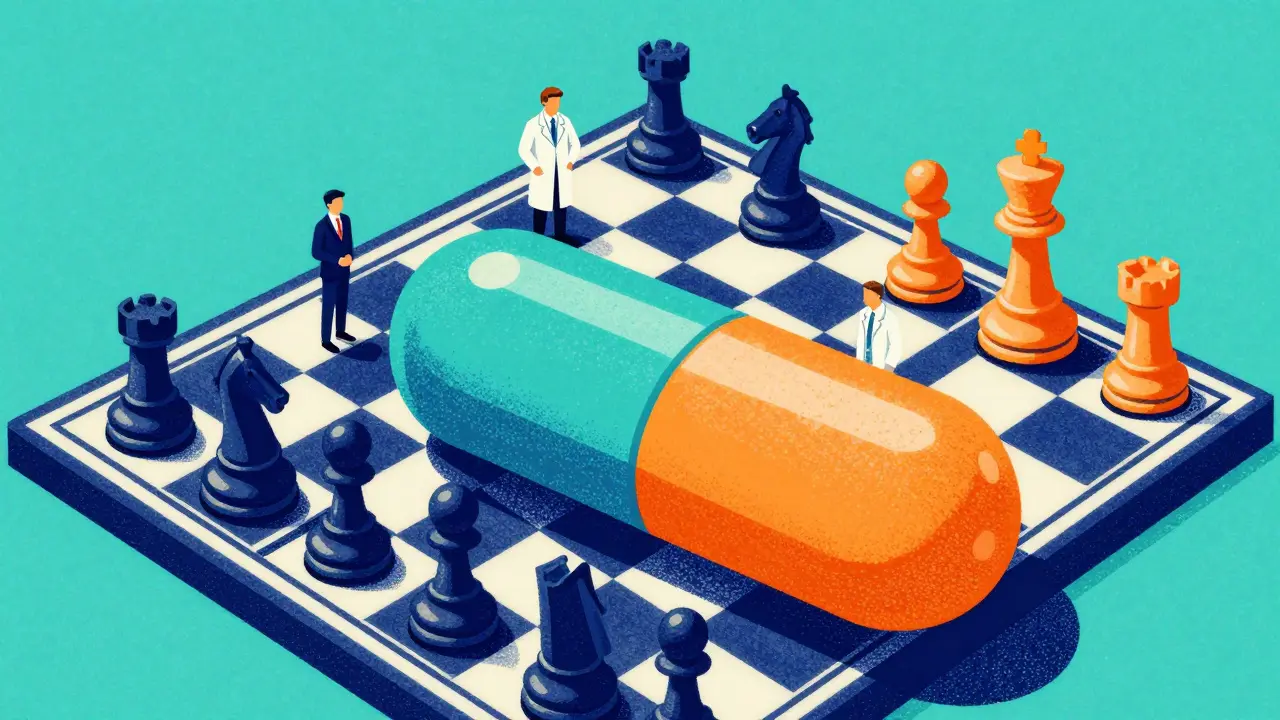
Ever wonder why some generic drugs hit the shelves the moment a patent expires, while others take years to appear? It usually comes down to a high-stakes legal chess match. In the pharmaceutical world, generic patent case law is the set of rules that determines when a cheaper version of a drug can legally enter the market. For patients, this is the difference between paying a few dollars or thousands of dollars out of pocket for a life-saving medication.
The core of this battle is a balancing act: we want to reward companies for spending billions on research, but we also want the public to have access to affordable medicine. This tension is managed through a complex framework where a single court ruling can either unlock billions of dollars in savings or extend a monopoly for another decade.
The Foundation: The Hatch-Waxman Act
You can't talk about generic drugs without mentioning the Hatch-Waxman Act is the 1984 law that created the modern system for generic drug competition in the United States . Before this law, generic makers had to conduct their own expensive clinical trials, which meant fewer generics and higher prices. Hatch-Waxman changed the game by allowing generic companies to rely on the brand-name company's original research.
To make this work, the FDA maintains the Orange Book, which is essentially a master list of patents that a brand-name company claims cover its drug. If a generic company believes those patents are invalid or won't be infringed, they file an Abbreviated New Drug Application (ANDA) with a "Paragraph IV certification." This is a legal declaration that says, "The brand's patent is wrong, and we're coming to market anyway." This move almost always triggers a lawsuit, which is why the case law in this area is so dense.
Landmark Decisions Shaping the Industry
Recent court cases have fundamentally shifted how both brand and generic companies strategize. These aren't just dry legal debates; they change the actual chemistry and accessibility of medicines.
One of the most significant recent shifts came with Amgen v. Sanofi . In 2023, the courts established a much stricter "enablement" standard. Essentially, if a company claims a patent for a whole group of antibodies but only provides a few examples of how to make them, the court may find the patent invalid. This is a massive win for generic and biosimilar makers, as it prevents brand companies from "staking a claim" over millions of potential molecules without actually doing the work to describe them all. Professor Arti Rai from Duke Law has noted that this higher bar could actually reduce some follow-on innovation by making broad patents harder to defend.
On the flip side, the 2024 Allergan v. Teva decision provided some breathing room for brand-name companies. The court ruled that first-filed patents can't be easily invalidated by later-filed patents that might expire sooner. This protects the original patent portfolio from certain types of legal attacks, potentially extending the time a brand company remains the sole provider.
| Case Name | Key Outcome | Who Benefits? | Market Impact |
|---|---|---|---|
| Amgen v. Sanofi | Stricter enablement standards | Generics/Biosimilars | Easier to invalidate broad biologics patents |
| Allergan v. Teva | Protection of first-filed patents | Brand Manufacturers | Stronger defense against specific invalidity claims |
| Amarin v. Hikma | Labeling as induced infringement | Brand Manufacturers | Generic labels can't suggest unapproved uses |
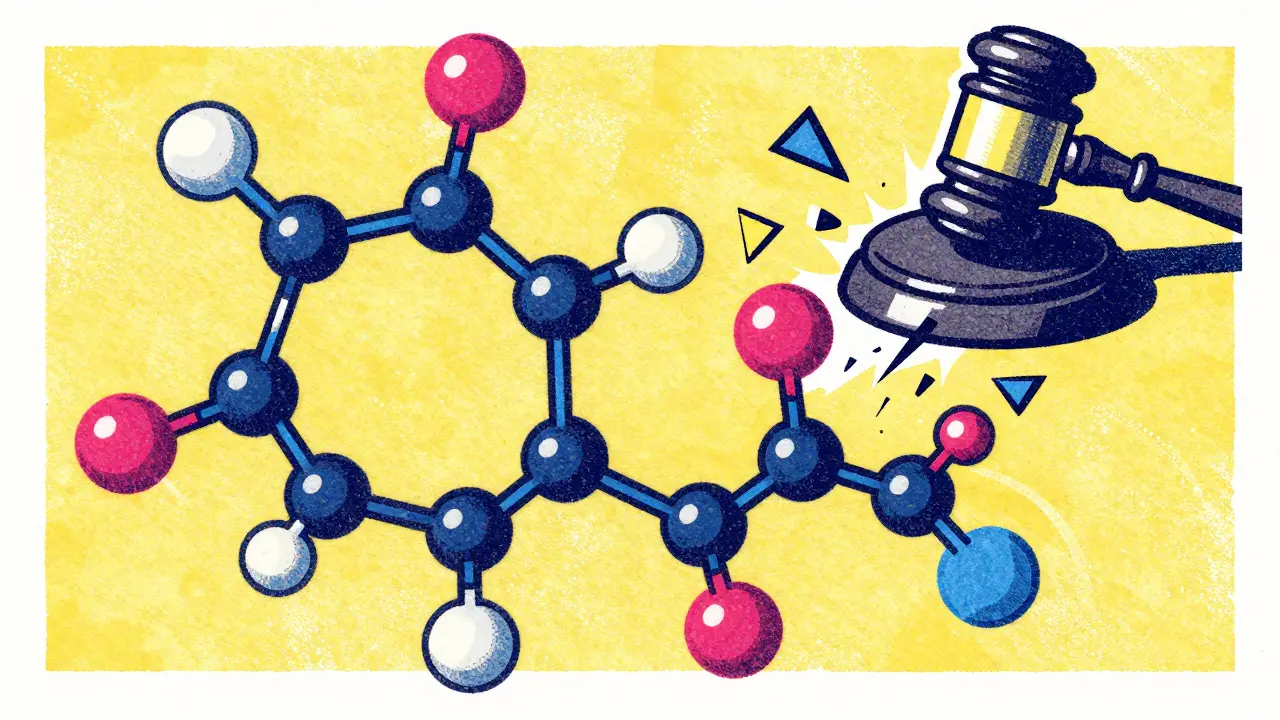
The "Skinny Label" and Induced Infringement
Generic companies often try a tactic called "skinny labeling." This is where they leave off certain approved uses of a drug from their label if those specific uses are still protected by a patent. It's a way to enter the market for some patients while avoiding a lawsuit over others. However, this is becoming a legal minefield.
The Amarin v. Hikma case showed that even if a generic label is "skinny," the way the company markets the drug can lead to "induced infringement." If a generic company encourages doctors to use the drug for a purpose that is still patented, they can be held liable. In 2023, this strategy worked for branded companies in 63% of their claims, leading to massive settlements, including a $135 million payout from Hikma to Amarin in late 2024.
Modern Battlegrounds: PTAB and IPR
Lawsuits in district courts are expensive and slow, often taking nearly 29 months to resolve. To speed things up, the America Invents Act introduced Inter Partes Review (IPR). This allows companies to challenge a patent's validity before the Patent Trial and Appeal Board (PTAB instead of going straight to a full trial.
It has become a standard move for generic companies. In 2023, over 78% of generic challenges utilized IPRs. It's a faster, more technical process that focuses on whether the invention was actually new and non-obvious. For a generic firm, an IPR is often the most efficient way to clear the path for an ANDA approval without waiting years for a court date.
Biologics vs. Small Molecules
Most of the classic case law focuses on "small molecule" drugs-the kind of pills you swallow. But the frontier is now "biologics"-complex proteins made in living cells. These are much harder to copy and even harder to patent. The "patent dance" under the BPCIA (Biologics Price Competition and Innovation Act) is a mandatory exchange of information between the brand and the biosimilar company. It's designed to resolve disputes early, but it often leads to its own set of lawsuits over what information must be shared.
Because biologics are so complex, the enablement standard from the Amgen case is critical here. Without it, a brand company could effectively lock down an entire class of therapy for decades just by describing the general goal of the drug rather than the specific way to make it. This shift is why biosimilar litigation is expected to jump from 14% to 31% of all generic challenges by 2027.
The High Cost of Legal Deadlocks
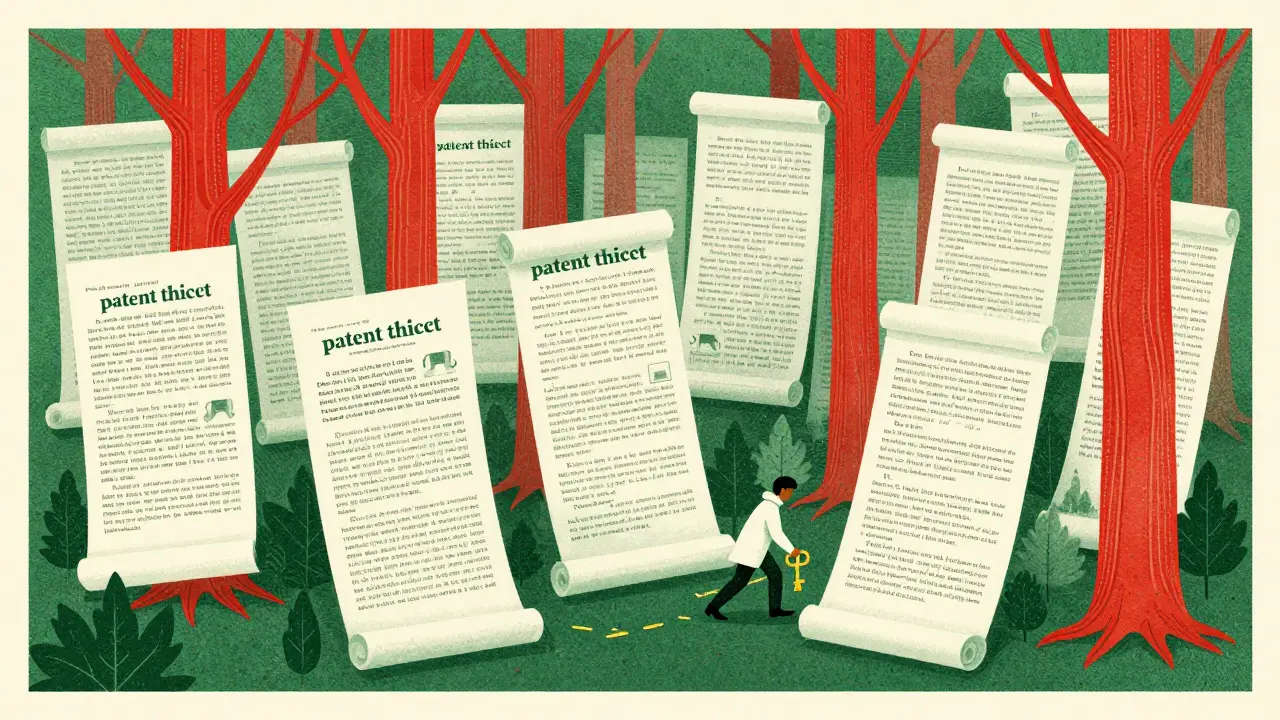
When these court cases drag on, the real loser is the patient. We see this in the "patent thicket" phenomenon, where companies file dozens of overlapping patents on a single drug to create a wall of litigation. While the Federal Trade Commission has vowed to crack down on improper Orange Book listings, these thickets can still delay generic entry by over four years beyond the original patent expiry.
The financial impact is staggering. Analysts estimate that unresolved disputes will delay roughly $127 billion in generic sales through 2026. For the average person, this means paying a premium for cardiovascular or oncology drugs while lawyers argue over the definition of a chemical bond in a courtroom.
What is a Paragraph IV certification?
It is a statement made by a generic drug manufacturer in an ANDA filing claiming that the brand-name drug's patent is either invalid or will not be infringed by the generic version. This certification typically triggers a legal battle between the two companies.
How does the Orange Book affect drug prices?
The Orange Book lists patents that may prevent generic competition. When companies list "improper" or weak patents, it can scare off generic competitors or lead to long lawsuits, keeping prices high by preventing cheaper alternatives from entering the market.
What is the difference between a generic and a biosimilar?
Generics are exact chemical copies of small-molecule drugs. Biosimilars are "highly similar" versions of complex biological medicines. Because biologics are grown in living cells, they can't be perfectly copied, leading to different patent rules and the "patent dance" process.
Can a company be sued for a "skinny label"?
Yes. While the label itself might omit patented uses, if the company's marketing or sales team encourages doctors to use the drug for those patented purposes, they can be sued for "induced infringement," as seen in the Amarin v. Hikma case.
What is an IPR and why is it used?
Inter Partes Review (IPR) is a procedure at the Patent Trial and Appeal Board (PTAB) that allows a third party to challenge the validity of a patent. It is generally faster and cheaper than a full federal court trial, making it a favorite tool for generic manufacturers.
Comments
Maggie Graziano
patent thickets are just a way for big pharma to keep us sick and broke no surprise here
April 18, 2026 AT 08:23