
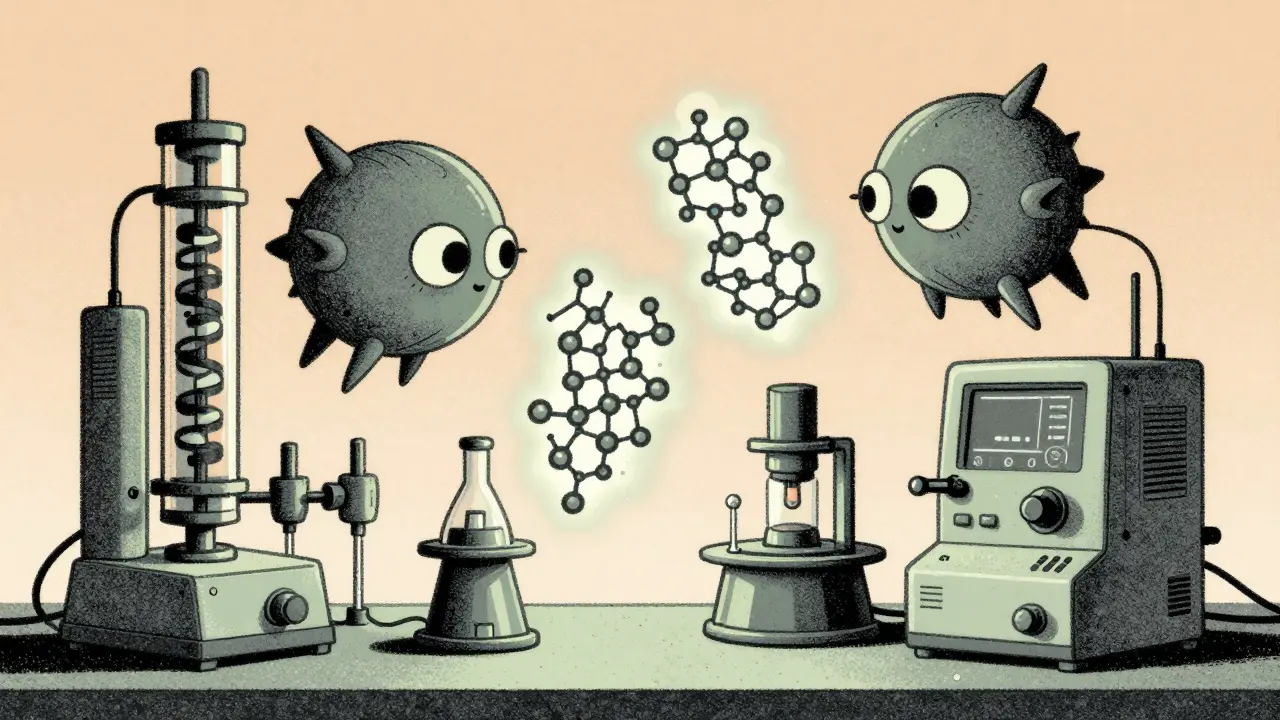
The FDA doesn’t rate biosimilars like you’d rate a movie or a restaurant. There’s no star system, no green checkmarks, no ‘highly recommended’ labels. Instead, the FDA uses a rigorous, science-driven process to determine if a biosimilar is truly similar enough to its reference biologic to be approved for use in patients. This isn’t about opinions-it’s about hard data, complex chemistry, and years of testing.
What Makes a Biosimilar Different From a Generic
People often confuse biosimilars with generics. They’re not the same. Generics are exact copies of small-molecule drugs-like aspirin or metformin-made from simple chemical formulas. You can recreate them perfectly in a lab because their structure is straightforward. Biosimilars, on the other hand, are copies of biologic drugs. These are made from living cells-yeast, bacteria, or mammalian cells-and are far more complex. A single biologic drug can have hundreds of tiny variations in its structure, like sugar chains attached at specific spots or slight twists in its protein shape. These differences don’t change how the drug works, but they matter a lot when you’re trying to copy it. That’s why a biosimilar isn’t called a ‘generic.’ It’s called a ‘biosimilar’ because it’s highly similar, but not identical. The FDA requires proof that any differences are minor and don’t affect safety or effectiveness.The FDA’s Step-by-Step Approval Process
Getting a biosimilar approved isn’t a shortcut. It’s a detailed, multi-layered process that starts in a lab and ends in a clinic. Analytical studies come first. Developers must use advanced tools-mass spectrometers, chromatography systems, capillary electrophoresis-to compare every possible characteristic of their product to the reference drug. They look at molecular weight, charge variants, glycosylation patterns, and more. The FDA expects 95-99% similarity across 200-300 critical quality attributes. If the data doesn’t meet this bar, the application gets rejected before it even moves to the next phase. Then come non-clinical studies. These include animal tests to check for toxicity. The FDA may waive these if the analytical data is strong enough. That’s a big shift from 2015, when animal studies were almost always required. Next, human studies. Usually, this means a pharmacokinetic (PK) study-how the body absorbs, moves, and clears the drug-and a pharmacodynamic (PD) study-how the drug affects the body. These are done in healthy volunteers or patients, with 50-100 people per group. The design is often a crossover: you get the biosimilar, then the reference drug, or vice versa, to eliminate individual variation. Immunogenicity is non-negotiable. All biosimilars must be tested for immune reactions. Even tiny differences can trigger antibodies that make the drug less effective-or worse, cause side effects. Studies track immune responses for 24 to 52 weeks. And now, the big change: fewer clinical trials. Before 2024, most biosimilars needed full clinical trials comparing safety and effectiveness in patients. Now, if the analytical data is rock-solid, the FDA may allow approval without those large, expensive studies. This has cut development time and costs by up to 60% for simpler proteins, according to Sandoz’s chief scientist in late 2024.The Purple Book: The Official FDA List
Once approved, a biosimilar shows up in the FDA’s Purple Book. Think of it as the official directory of all biologics and their biosimilars. It’s updated daily now, since early 2025, and it’s searchable online. Each entry includes:- The reference product name
- The biosimilar’s brand and generic name
- Approval date
- Exclusivity period
- Whether it’s designated as ‘interchangeable’

Interchangeable vs. Non-Interchangeable: What It Means for You
If a biosimilar is interchangeable, a pharmacist can swap it for the brand-name drug without asking the doctor. In most states, that’s allowed by law. If it’s not interchangeable, the prescriber must specifically write the biosimilar’s name on the prescription. Many doctors still default to the original biologic out of habit or uncertainty. The difference isn’t about safety. Both types are equally safe. The interchangeable label is about substitution rules and pharmacy practice, not clinical performance. Only 17 out of 43 approved biosimilars have it-because the data requirements are tougher. Developers need to show that switching back and forth between the biosimilar and the reference product doesn’t change outcomes. That means extra clinical data, sometimes multiple switches in a single study.Why It Takes So Long to Get to Market
Even after approval, many biosimilars sit on the shelf. Why? Patent lawsuits. Biologic makers often file multiple patents on minor variations of their drugs-method of delivery, storage conditions, dosing schedules. These create what’s called a ‘patent thicket.’ A biosimilar company can get FDA approval, but still can’t launch until the courts decide who owns what. Between 2015 and 2025, the FDA approved 43 biosimilars. Only 29 actually reached pharmacies. The average delay between approval and launch? 11.3 months. Developers also face high costs. The analytical phase alone can cost $120-180 million. It takes 10-12 months just to collect and analyze the data. That’s why only a handful of companies can afford to play this game.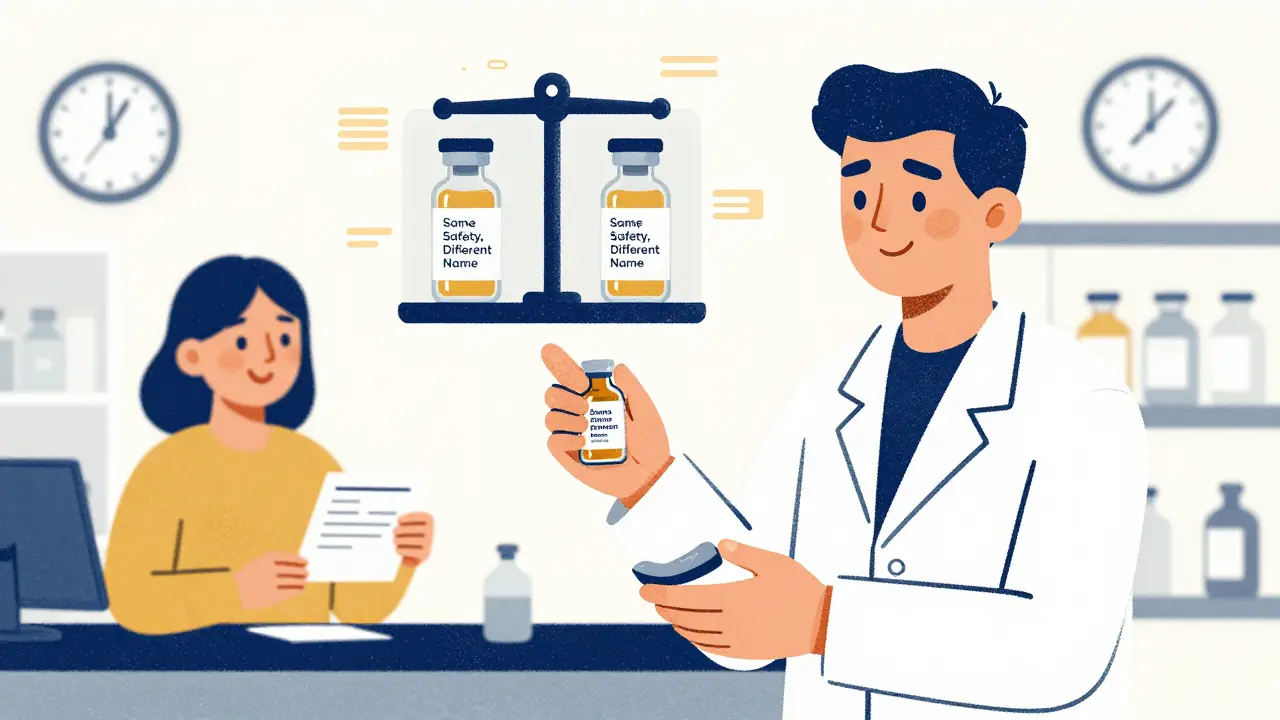
Comments
Lily Lilyy
This is such a clear and important breakdown of how biosimilars work. It’s easy to fear what’s unfamiliar, but the science here is rock-solid. Every patient deserves access to affordable, safe medicine-and this is how we get there. Thank you for sharing this.
January 5, 2026 AT 21:32
Mukesh Pareek
Let’s be precise: the FDA’s analytical comparability requirements for biosimilars are non-negotiable, with CQA profiling across 200+ parameters via orthogonal methods-HPLC, CE-SDS, MS, NMR-ensuring structural fidelity within 95-99% tolerance. Anything less is not biosimilar, it’s counterfeit. The regulatory bar is intentionally high to mitigate immunogenicity risks.
January 7, 2026 AT 06:39
Gabrielle Panchev
Okay, so let me get this straight-you’re telling me that after spending over $150 million and a decade of R&D, a company can create a molecule that’s 98.7% identical to a biologic, and the FDA says ‘good enough,’ but then the same company can’t get a pharmacist to swap it out without a doctor’s permission because someone’s afraid of a 1.3% difference that’s been proven statistically irrelevant in 9 years of real-world data across millions of patients? And this is the land of the free and the home of the brave? What even is this? The patent thickets, the inertia, the fear-mongering-it’s not science, it’s corporate theater wrapped in a white coat. And don’t even get me started on how insurers still make patients jump through hoops for a drug that’s been approved, studied, monitored, and used safely by people who can’t afford the $20,000-a-year original. We’re not fixing healthcare-we’re just rearranging the deck chairs on the Titanic while people drown in co-pays.
January 8, 2026 AT 01:24
Katelyn Slack
i just read this and wow, i had no idea how complex this was. biosimilars arent just cheap copies, theyre like… super close cousins of the real thing? and the purple book is actually updated daily?? that’s wild. i think more people should know this. i’m gonna share this with my mom who’s on adalimumab.
January 8, 2026 AT 03:52
Melanie Clark
They say biosimilars are safe but who really controls the data? Big Pharma owns the reference drugs, the labs, the FDA reviewers, the studies… and now they’re letting cheaper versions in? Why now? It’s not about patient care-it’s about patents expiring and shareholders screaming. The immunogenicity studies? They’re too short. The real damage shows up in 5-10 years. And don’t get me started on the ‘interchangeable’ label-that’s just a marketing trick to make pharmacists swap without asking. You think they care if your immune system slowly starts attacking your own joints? No. They care about the bottom line. This is all a slow poison disguised as progress.
January 8, 2026 AT 09:50
Harshit Kansal
Man, this is actually super interesting. I thought biosimilars were just knockoffs, but the science behind them is wild. Like, copying a protein made by living cells? That’s like trying to clone a snowflake. And the Purple Book? I’m bookmarking that. Also, 43 approved but only 29 on shelves? That’s wild. Pharma lawsuits are the real villains here.
January 9, 2026 AT 08:01
Saylor Frye
Interesting, but let’s be honest-the FDA’s standards are the gold standard because they’re the only ones who don’t cave to lobbying. Other countries? They approve biosimilars with half the data. The U.S. system is slow, yes, but it’s the only one that actually protects patients. The rest are just playing catch-up with corners cut.
January 9, 2026 AT 20:13
Kiran Plaha
So if a biosimilar is approved but not interchangeable, does that mean a doctor has to write it by name every time? Like, even if the patient wants to switch? That seems like a weird barrier. I get the caution, but why not let patients choose if they’re informed? Seems like it’s more about habit than safety.
January 10, 2026 AT 05:28
Matt Beck
It’s not just about molecules-it’s about identity. We’re trying to replicate the soul of a living drug. A biosimilar isn’t a copy-it’s a mirror. And mirrors don’t lie, but they don’t always reflect the whole truth either. The FDA doesn’t just approve drugs… it approves trust. And trust? That’s the hardest thing to manufacture.
January 10, 2026 AT 17:41
Kelly Beck
This is such a hopeful story, honestly. I’ve seen friends struggle with the cost of biologics-some had to choose between rent and their meds. Knowing there’s a safe, science-backed alternative that’s actually getting approved faster now? That’s huge. And the fact that we’ve had zero new safety issues in 9 years? That’s not luck-that’s rigorous science. We need to celebrate this, not fear it. Keep pushing for access, keep educating, keep fighting. We’re getting there 💪❤️
January 12, 2026 AT 13:07
Katie Schoen
So let me get this straight-the FDA has the strictest process in the world, the data is clean, patients are safe, but we still can’t get pharmacists to swap them because doctors are scared or insurers are lazy? Wow. The real biosimilar here is… bureaucracy. 🤦♀️
January 14, 2026 AT 00:11