
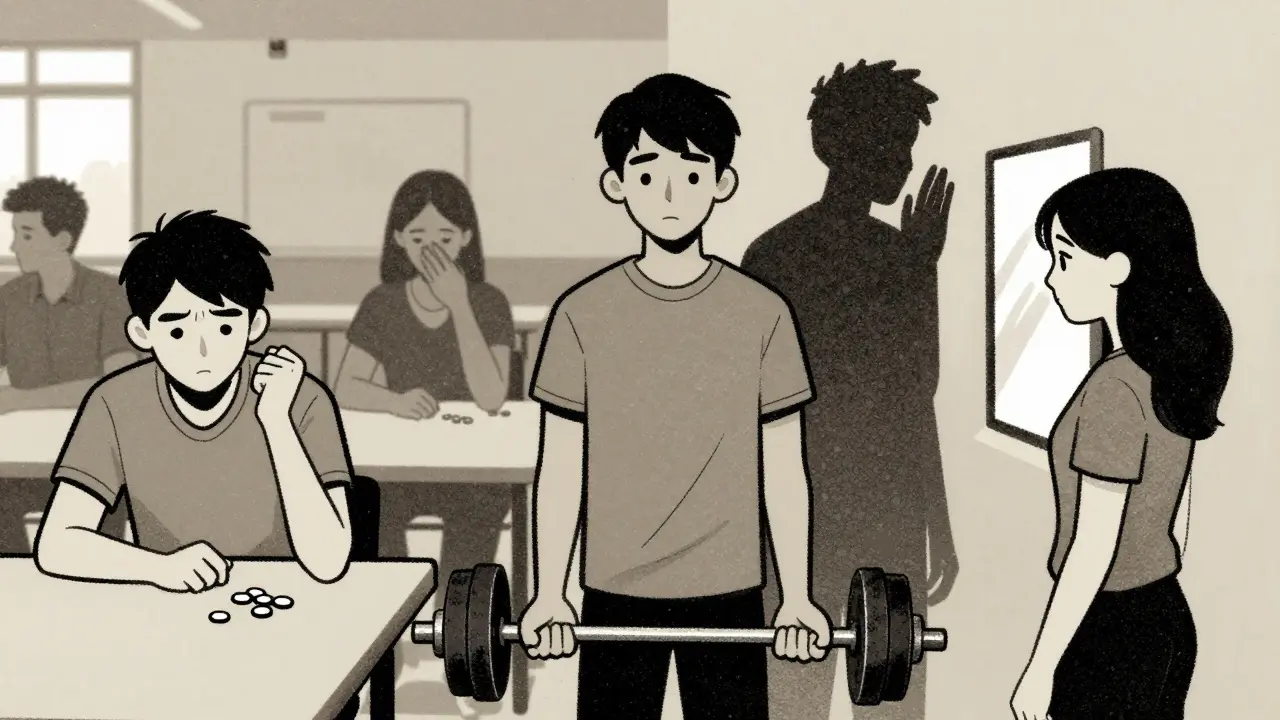
More than 28 million Americans will develop an eating disorder in their lifetime. That’s not a distant statistic-it’s your neighbor, your coworker, your sibling. Yet most people still picture an eating disorder as someone dangerously thin. The truth is far more complex, and far more dangerous. Anorexia nervosa kills more people per capita than almost any other mental illness. Bulimia nervosa doubles the risk of early death. And binge eating disorder, the most common type, is often invisible because the person isn’t underweight. These aren’t choices. They’re illnesses with biological roots, psychological traps, and physical consequences that can end lives.
What Anorexia Nervosa Really Looks Like
Anorexia isn’t just about not eating. It’s a brain disorder where the fear of gaining weight overrides hunger, safety, and even love. About 1% of the population has it, with women affected ten times more often than men-but that gap is shrinking. Young men are being diagnosed at rising rates, often because they’re chasing leanness for sports or body image ideals, not because of cultural stereotypes.
The diagnostic criteria are strict: body weight far below normal, intense fear of gaining weight, and a distorted sense of self. But here’s what most don’t realize: less than 6% of people with eating disorders are medically underweight. Someone can have anorexia and still weigh 120 pounds. Their body might look normal to others, but their mind is screaming that they’re fat.
The physical toll is brutal. Heart rate drops. Bones weaken. Organs shut down. One in five people with anorexia die within 20 years of diagnosis. That’s a 5.1 death rate per 1,000 person-years-six times higher than peers without the illness. And suicide accounts for nearly half of those deaths. People don’t die from starvation alone. They die because the illness steals their hope.
Bulimia Nervosa: The Hidden Cycle
Bulimia doesn’t always show on the scale. It shows in swollen cheeks from vomiting, in calluses on knuckles from inducing gagging, in the constant rhythm of bingeing and purging. About 1.5% of women and 0.5% of men will develop it in their lifetime. It often starts in adolescence, triggered by dieting, trauma, or perfectionism.
Unlike anorexia, people with bulimia often maintain a normal weight. That’s why it stays hidden for years. One patient told me she hid her vomiting for seven years because she didn’t think she was "bad enough" to need help. She wasn’t underweight. She wasn’t crying in front of doctors. But she was vomiting 14 times a week. Her teeth were rotting. Her esophagus was inflamed. Her electrolytes were dangerously low.
The mortality rate is lower than anorexia, but still twice that of the general population. And the mental toll? Depression hits 76% of people with bulimia. One in ten also struggles with alcohol abuse. The cycle of bingeing and purging isn’t about control-it’s about escape. It’s a way to numb emotional pain, even if it destroys the body doing it.
Why Evidence-Based Care Isn’t Just a Buzzword
Treatment for eating disorders isn’t one-size-fits-all. Talk therapy alone won’t fix a heart that’s beating too slow. Weight restoration isn’t optional-it’s life-saving. That’s why evidence-based care matters. It’s not about what feels good. It’s about what science proves works.
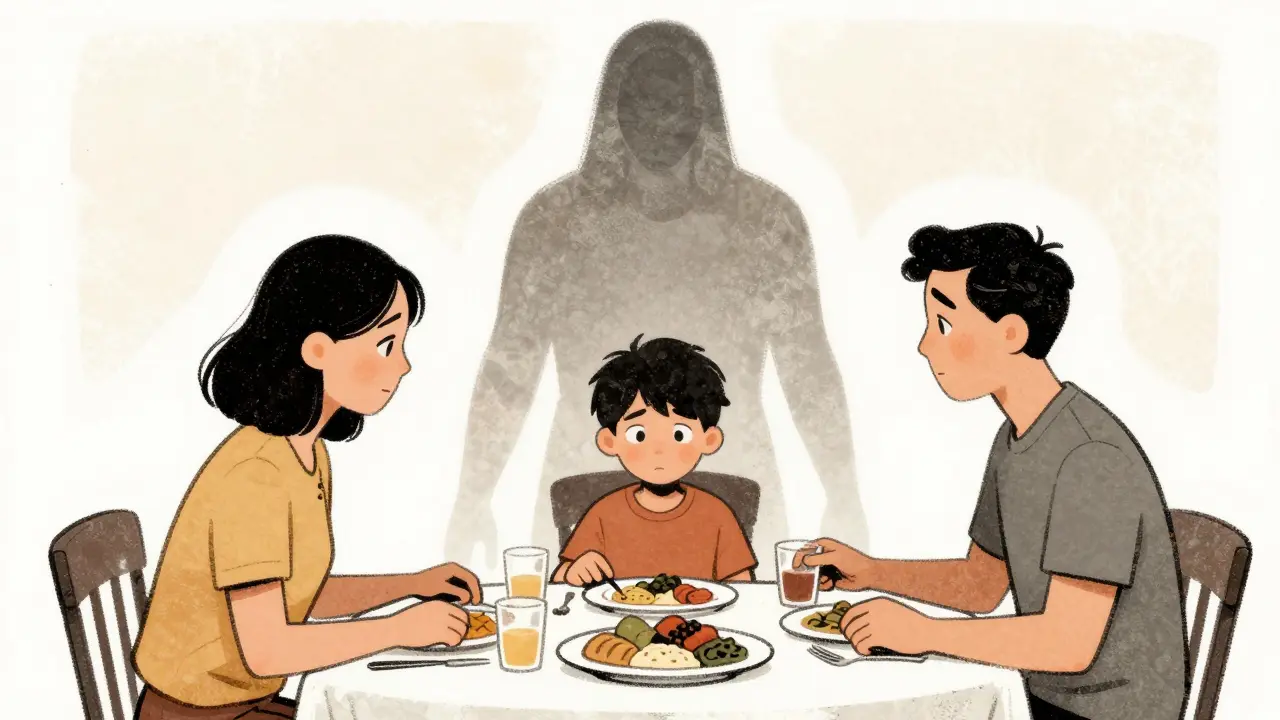
For teens with anorexia, Family-Based Treatment (FBT) is the gold standard. Parents aren’t the enemy. They’re the most powerful tool in recovery. In FBT, parents take charge of meals for weeks, helping their child eat enough to restore weight. After 12 months, 40-50% recover. That’s double the success rate of individual therapy. And it’s not about blaming parents-it’s about using their love as medicine.
For adults with bulimia or binge eating disorder, Enhanced Cognitive Behavioral Therapy (CBT-E) is the most effective approach. It doesn’t just focus on food. It tackles the thoughts behind the behaviors: the belief that your worth depends on your weight, the fear of losing control, the ritual of purging to feel safe. After 20 sessions, 60-70% of patients stop bingeing and purging. That’s not luck. That’s structured, proven therapy.
And now, for the first time, there’s a medication approved specifically for binge eating disorder: lisdexamfetamine (Vyvanse). In clinical trials, it cut binge episodes in half compared to placebo. It’s not a cure. But for someone who’s tried everything else, it’s a lifeline.
The System Is Failing People
Here’s the harsh reality: most people with eating disorders never get treated. Only 27% of women who develop an eating disorder by their 40s ever see a specialist. Fewer than half of those with bulimia or binge eating disorder seek help at all.
Why? Insurance. One woman waited 27 months for treatment after being diagnosed with severe anorexia at 18. Her BMI was 14.5-critically low. But her insurance denied coverage 11 times. She raised $78,000 on GoFundMe to pay for 90 days of residential care. That’s not an outlier. In 2023, over 1,200 insurance appeals were filed for eating disorder treatment. More than half needed lawyers to win.
There are only 35 specialized residential treatment centers in the entire U.S. With 30 million Americans living with eating disorders, that’s less than 0.004% of people getting access to intensive care each year. Rural areas? Only 22% have any specialist at all. A child in Nebraska or Mississippi might wait six months just to see a therapist.
And even when care is available, it’s often poorly delivered. Only 38% of treatment centers keep full, accurate clinical records. Only 12% use standardized tools to track progress. That means people are getting therapy, but no one knows if it’s working.
What Recovery Actually Looks Like
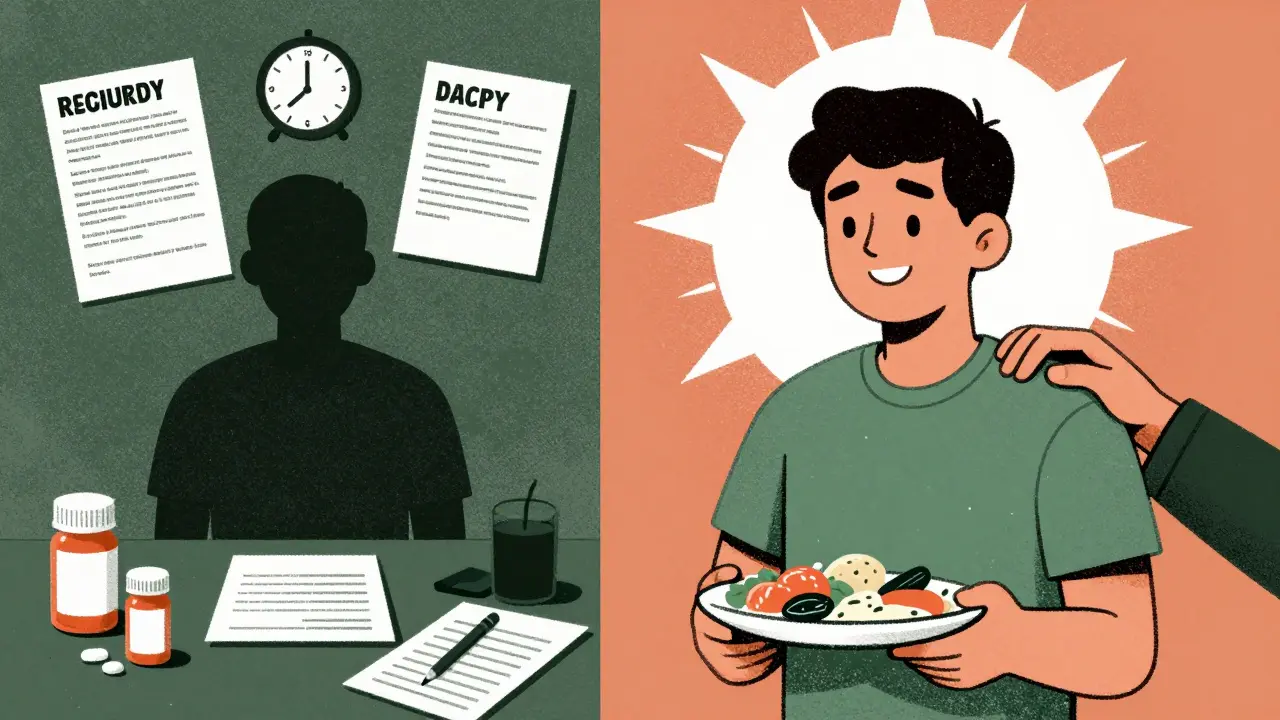
Recovery isn’t a straight line. It’s messy. It’s setbacks. It’s crying during meals. It’s relearning how to trust your body. One patient, after seven years of bulimia, started CBT-E through a university clinic. After 12 sessions, her binge-purge episodes dropped from 14 times a week to two. She didn’t become perfect. But she got her life back.
Recovery doesn’t mean being thin. It means eating without guilt. It means not checking your reflection 20 times a day. It means sleeping through the night without panic. It means calling your mom when you’re scared, not hiding in the bathroom.
And yes, it’s possible. People do recover. With the right treatment, at the right time, they live full lives. They become doctors, teachers, artists, parents. But they need help before it’s too late.
The Path Forward
There’s hope. The NIH is spending $25 million to track 7,500 children from birth to find early signs of eating disorders. Telehealth is expanding access, especially in rural areas. The military now requires screening for service members, who are 2.3 times more likely to develop these illnesses.
But progress won’t happen without pressure. If you’re worried about someone, don’t wait for them to look "sick enough." Ask. Listen. Push for care. If you’re struggling, know this: you are not broken. You are not weak. You have an illness that can be treated-and you deserve help.
Start with a doctor. Get your vitals checked. Get a referral. Fight your insurance. Call NEDA’s helpline. Find a therapist trained in CBT-E or FBT. Don’t wait for the perfect moment. There won’t be one. The best time to start recovery was yesterday. The second-best time is now.
Can you recover from anorexia or bulimia?
Yes, full recovery is possible. With evidence-based treatment like Family-Based Treatment for teens or CBT-E for adults, 40-70% of people stop dangerous behaviors and regain health. Recovery takes time-often months or years-but it’s not rare. Many people go on to live healthy, fulfilling lives after treatment.
Is binge eating disorder really an eating disorder?
Absolutely. Binge Eating Disorder (BED) is the most common eating disorder in the U.S., affecting 2.8% of adults. It’s defined by recurrent episodes of eating large amounts of food with a sense of loss of control, without purging. People with BED often struggle with shame and depression, and it carries serious health risks like obesity, diabetes, and heart disease. It’s not a lack of willpower-it’s a medical condition.
Why is insurance denying treatment for eating disorders?
Many insurers still treat eating disorders as behavioral issues rather than life-threatening medical conditions. They deny coverage for residential care, claim treatment is "not medically necessary," or limit sessions arbitrarily. The 2023 Mental Health Parity Act requires equal coverage for mental and physical health, but enforcement is inconsistent. Over 68% of people surveyed by NEDA reported at least one insurance denial. Legal appeals are often needed to get care.
What’s the difference between CBT-E and regular therapy?
Regular talk therapy might explore feelings or past trauma. CBT-E (Enhanced Cognitive Behavioral Therapy) is structured, time-limited, and focused specifically on eating disorder behaviors. It targets the core thoughts driving bingeing, restricting, or purging-like "I must be thin to be loved" or "If I eat this, I’ll lose control." It includes meal planning, behavior tracking, and relapse prevention. It’s the most effective treatment for bulimia and BED, with 60-70% success rates.
Can medication help with eating disorders?
Yes-but only for specific cases. Lisdexamfetamine (Vyvanse) is FDA-approved for binge eating disorder and reduces binge episodes by over 50% in clinical trials. Antidepressants like SSRIs can help with depression and anxiety that often co-occur with bulimia. But medication alone doesn’t fix the core behaviors. It works best when combined with therapy like CBT-E or FBT.
How do I know if someone I love has an eating disorder?
Look for changes, not just weight. Signs include: avoiding meals, extreme dieting, excessive exercise, frequent trips to the bathroom after eating, swollen cheeks, dental erosion, wearing baggy clothes to hide body changes, talking obsessively about food or calories, or expressing intense fear of gaining weight-even if they’re not underweight. If you notice these, say something. Don’t wait for them to look "sick enough." Early intervention saves lives.
Comments
Sarthak Jain
bro i had a cousin go through this and honestly the part about insurance denying care for 27 months broke me. she was 18, bmi 14.5, and they kept saying "not severe enough" like her brain was just being dramatic. we raised 78k on gofundme just to get her into a program that actually knew what they were doing. if you’re reading this and you’re struggling-don’t wait for them to say you’re sick enough. you already are.
December 16, 2025 AT 03:24
Jonny Moran
as someone who grew up in a household where food was a weapon and weight was a metric of worth, this hit different. FBT saved my sister. my mom didn’t know how to cook healthy meals, but she showed up. she made oatmeal at 2am when i was crying because i thought carbs were poison. that’s not parenting-that’s love with a clipboard. if you’re a parent reading this, you don’t need to be perfect. you just need to be there.
December 17, 2025 AT 00:34
Daniel Wevik
CBT-E isn’t magic, but it’s the only thing that’s been shown to rewire the cognitive distortions driving binge-purge cycles. the core mechanism targets the "all-or-nothing" thinking patterns-like "if i eat one cookie i’ve failed"-and replaces them with behavioral experiments. it’s not about willpower, it’s about restructuring the belief system that treats food like a moral test. the 60-70% success rate? that’s not anecdotal. that’s peer-reviewed data from 12 RCTs.
December 17, 2025 AT 05:48
Rich Robertson
my aunt had bulimia for 12 years. she never looked "sick"-she was always the life of the party, always cracking jokes. but her teeth were gone by 35, and she had a pacemaker by 40 because her heart kept dropping out. no one knew because she never talked about it. the silence is the deadliest part. if you see someone avoiding meals, wearing baggy clothes, or disappearing after dinner-ask. don’t wait for them to say it.
December 18, 2025 AT 23:56
Dwayne hiers
the data on vyvanse for BED is solid-52% reduction in binge episodes vs placebo in phase 3 trials. but it’s not a standalone solution. it’s a pharmacological bridge to behavioral change. the real work happens in CBT-E: identifying triggers, building distress tolerance, interrupting the ritual. medication reduces the intensity of the urge, but therapy rebuilds the relationship with food. you need both. neither alone is enough.
December 20, 2025 AT 17:04
jeremy carroll
you’re not broken. you’re not lazy. you’re not weak. you have an illness that’s been misunderstood for decades. i used to hide in the bathroom after meals and cry because i thought i was disgusting. now i’m 5 years out, and i eat pizza on the couch without guilt. it took years. it sucked. but it’s worth it. you deserve to be free.
December 20, 2025 AT 20:11
Daniel Thompson
the fact that we’re even having this conversation is a sign of systemic collapse. eating disorders are treated like fashion trends by insurance companies, while cancer patients get unlimited scans. why is a brain disorder less valid than a tumor? the medical establishment still views mental illness as a character flaw wrapped in a DSM code. until we stop treating psychology like a side hustle, people will keep dying.
December 21, 2025 AT 13:08
Alexis Wright
let’s be real-this whole "recovery is possible" narrative is just corporate wellness propaganda. the real answer? most people die quietly. the stats look good because they only track the ones who make it to treatment centers. what about the 73% who never get diagnosed? the ones who binge and purge in their car after work? the ones who starve themselves while working 80-hour weeks? the system isn’t failing-it’s designed to let them vanish. stop romanticizing recovery. it’s a lottery with terrible odds.
December 23, 2025 AT 09:50
Natalie Koeber
have you considered this is all a Big Pharma plot? vyvanse is just a gateway to get people addicted to stimulants so they’ll keep buying antidepressants. and fbt? that’s just the government’s way of controlling mothers. the real cause is social media algorithms that brainwash girls into hating their bodies. the truth is buried under layers of medical jargon. they don’t want you to know the real enemy: the shadowy elite who profit from your insecurity.
December 24, 2025 AT 21:29
Thomas Anderson
if you’re scared to ask for help, just call the neda helpline. no judgment, no forms, no insurance checks. they’ll walk you through the next step. you don’t need to have it all figured out. you just need to pick up the phone. i did. it changed everything.
December 26, 2025 AT 19:53
Wade Mercer
people like you think you’re helping, but you’re just enabling. eating disorders are a choice. no one forces you to vomit or starve yourself. if you had real willpower, you’d just eat normally. this whole post is just a way to excuse weakness. stop making excuses and grow up.
December 27, 2025 AT 23:44
Dwayne hiers
the comment above is dangerously wrong. eating disorders have a heritability rate of 50-80%-that’s higher than schizophrenia. they’re neurobiological disorders with genetic, hormonal, and environmental triggers. telling someone to "just eat" is like telling a diabetic to "just stop being high." it’s not willpower. it’s biology. and dismissing that kills people.
December 28, 2025 AT 19:07