
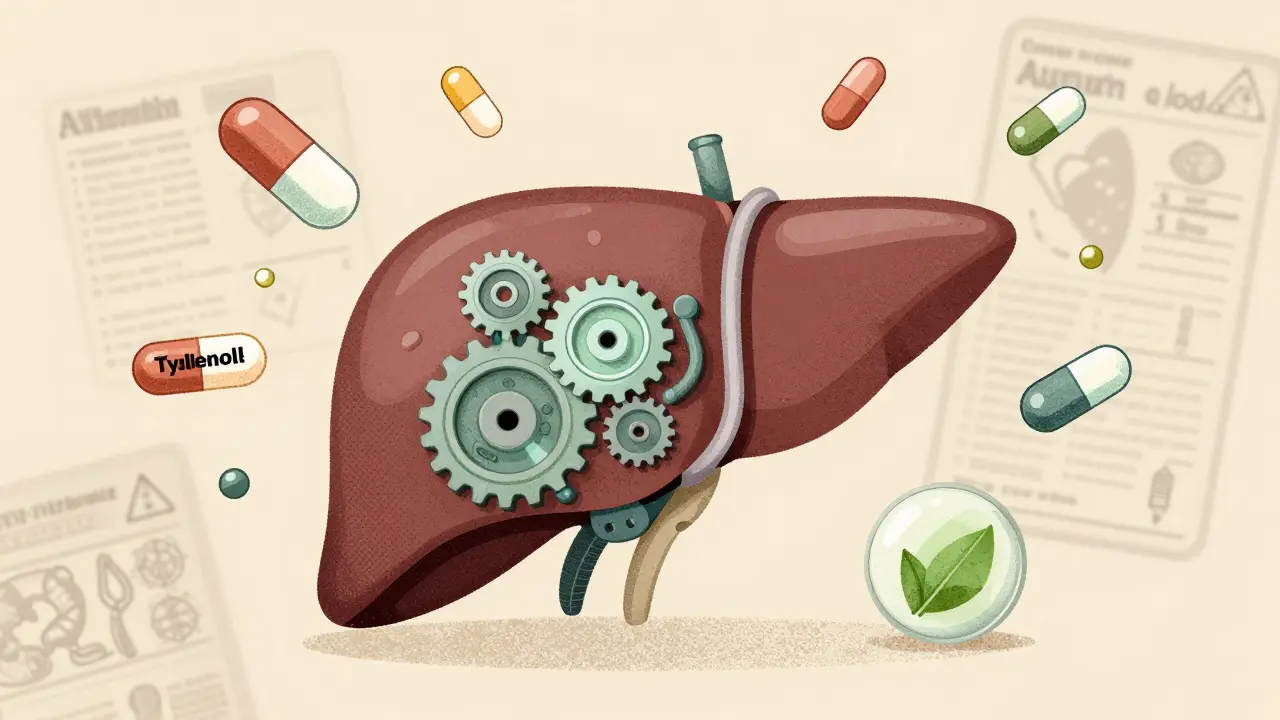
Every year, thousands of people end up in the hospital not because of a virus or injury, but because of something they took to feel better. Drug-induced liver injury (DILI) is one of the most dangerous hidden side effects of common medicines. It doesn’t always show up on a blood test right away. It doesn’t always come with obvious symptoms. And by the time it does, the damage can be severe - even life-threatening.
Unlike liver disease caused by alcohol or hepatitis, DILI happens when your liver can’t handle a medication. It’s not about taking too much - though that can trigger it - but sometimes just taking the right dose of the wrong drug. The liver breaks down most medicines, and in some people, that process turns toxic. It’s unpredictable. It can happen to anyone. And it’s rising.
What Makes a Drug High-Risk for Your Liver?
Not all drugs are created equal when it comes to liver safety. Some have been known for decades to cause harm. Others are newer, less studied, and slipping through the cracks.
Acetaminophen - the active ingredient in Tylenol and hundreds of over-the-counter cold and pain meds - is the #1 cause of acute liver failure in the U.S. A single overdose of 7-10 grams can destroy liver cells. But even regular use at the maximum daily dose (4 grams) can be risky for people who drink alcohol, are elderly, or have existing liver disease. The safe limit for older adults or those with liver issues is now 3 grams per day.
Antibiotics, especially amoxicillin-clavulanate (Augmentin), are the most common cause of idiosyncratic DILI - the unpredictable kind. It affects about 1 in every 2,000 to 10,000 people who take it. You might take it for a sinus infection, feel fine for weeks, then wake up with yellow eyes, dark urine, and skin that itches like crazy. Recovery can take months.
Antiepileptic drugs like valproic acid and carbamazepine carry serious liver risks, especially in children under two. Valproic acid can cause liver failure in up to 1 in 10,000 users, with a fatality rate of 10-20% in the worst cases. Statins, often blamed for liver damage, rarely cause serious harm. Less than 1 in 100,000 people on statins develop severe injury. But even mild enzyme elevations can alarm patients - and doctors - unnecessarily.
Herbal and dietary supplements are now responsible for 20% of DILI cases in the U.S. - up from just 7% in the early 2000s. Green tea extract, kava, anabolic steroids, and weight-loss products labeled as “natural” are common culprits. Many people assume supplements are safe because they’re sold without a prescription. They’re not. The FDA doesn’t test them for liver toxicity before they hit shelves.
How Do You Know If It’s DILI?
DILI doesn’t have a single test. It’s a diagnosis of exclusion. That means your doctor has to rule out everything else first: hepatitis A, B, or C; autoimmune liver disease; fatty liver; gallstones; or even heart failure.
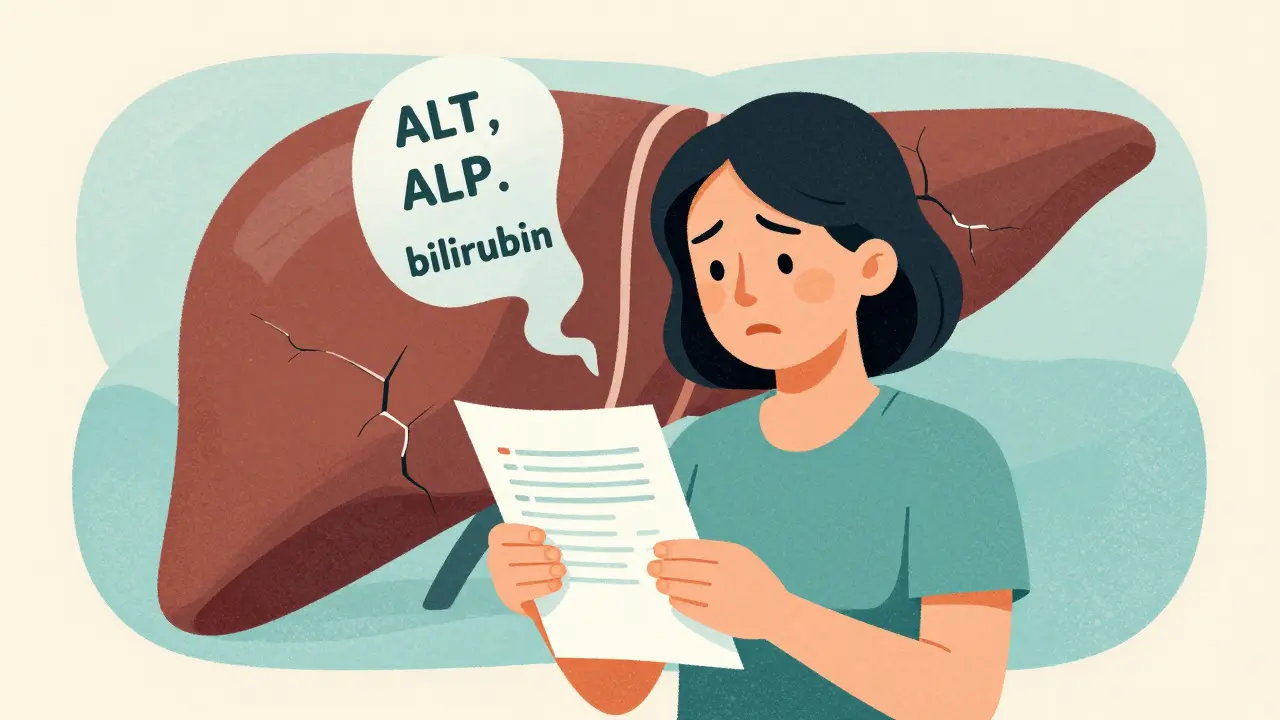
The key clues come from blood tests. Two numbers matter most: ALT (alanine aminotransferase) and ALP (alkaline phosphatase). If ALT is more than three times the normal upper limit, you’re likely dealing with hepatocellular injury - direct damage to liver cells. That’s what you see with acetaminophen. If ALP is more than twice the normal limit, it’s cholestatic - bile flow is blocked. That’s common with antibiotics like Augmentin.
There’s a rule doctors call Hy’s Law: if your ALT or AST is more than three times normal AND your bilirubin is more than twice normal, you have a 10-50% chance of developing acute liver failure. That’s a red flag that needs immediate action.
The RUCAM scale is the gold standard for deciding if a drug caused the injury. It scores symptoms, timing, risk factors, and whether the liver improves after stopping the drug. A score of 8 or higher means “highly probable” DILI. Less than 3 means “unlikely.”
Who’s Most at Risk?
Women make up about 63% of DILI cases. Why? We don’t fully know, but it may be linked to how female bodies metabolize drugs differently. Age matters too. The median age for DILI is 55. People over 35 are at higher risk for isoniazid-induced liver injury - a drug used to treat tuberculosis.
People on multiple medications are also at higher risk. Taking five or more drugs increases the chance of dangerous interactions. One patient on Reddit spent three months seeing four different doctors before someone realized his cholesterol medicine was causing his liver enzymes to spike. He’d been on it for a year.
Genetics play a role too. Some people carry a gene variant called HLA-B*57:01 that makes them 80 times more likely to get liver damage from flucloxacillin. Another variant, HLA-DRB1*15:01, raises the risk for amoxicillin-clavulanate injury by more than five times. Genetic testing isn’t routine yet - but it’s coming.
How to Monitor Your Liver Safely
For some drugs, monitoring is mandatory. For others, it’s optional - but smart.
If you’re taking isoniazid for tuberculosis, the CDC recommends monthly liver tests for the first three months, then every three months after that. Stop the drug immediately if ALT rises above 3-5 times normal, or if you develop nausea, vomiting, or jaundice.
For valproic acid, liver tests should be done before starting, then every 2-4 weeks for the first six months. After that, every 3-6 months. Children under two need even closer monitoring.
For statins? Routine blood tests aren’t recommended. The risk of serious injury is so low - 1-2 cases per 100,000 patient-years - that the cost of testing outweighs the benefit. Instead, patients should know the warning signs: fatigue, dark urine, pale stools, abdominal pain, yellow skin. If any appear, get tested right away.
For any new prescription - especially antibiotics, seizure meds, or TB drugs - ask your doctor: “Should I get my liver checked? When?” Don’t assume it’s automatic. Many primary care doctors don’t order these tests unless symptoms appear.
What Happens When You Stop the Drug?
Stopping the offending drug is the single most important step. In 90% of cases, liver enzymes begin to drop within 1-2 weeks. Full recovery can take 3-6 months. For some, it’s longer. About 12% of patients have permanent liver damage, even after stopping the drug.
For acetaminophen overdose, there’s a lifesaving antidote: N-acetylcysteine. It works best if given within 8 hours - offering nearly 100% protection. After 16 hours, its effectiveness drops to 40%. That’s why ERs always check for acetaminophen levels in anyone who shows up with unexplained liver failure.
There’s no cure for other types of DILI. No pills, no herbs, no supplements will fix it. Rest, hydration, and time are your best tools. Avoid alcohol. Avoid other liver-stressing drugs. Don’t take any new meds without checking with your doctor.
What You Can Do Right Now
1. Know your meds. Keep a list of everything you take - prescriptions, OTC pills, vitamins, and supplements. Bring it to every appointment.
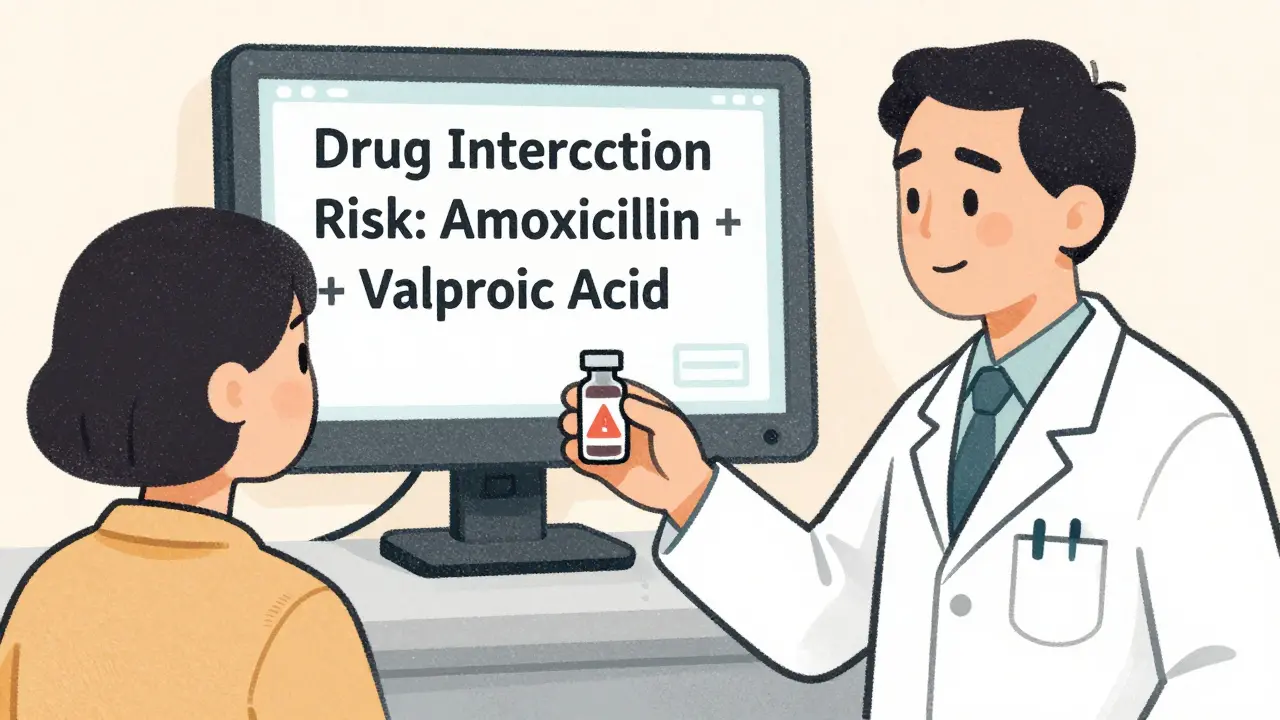
2. Ask your pharmacist. Pharmacists are trained to spot dangerous drug interactions. One patient on a liver forum credited her pharmacist with catching a deadly combo between her antibiotic and seizure medicine before she even took the first pill.
3. Don’t ignore symptoms. Yellow eyes, dark pee, itchy skin, unexplained fatigue - these aren’t normal. Don’t brush them off as “just stress” or “a virus.”
4. Be skeptical of “natural.” Supplements aren’t regulated like drugs. Green tea extract, weight-loss teas, and “liver cleanses” have all been linked to DILI. If it sounds too good to be true, it probably is.
5. Get tested if you’re on high-risk meds. If you’re on isoniazid, valproic acid, or any antibiotic for more than two weeks, ask for a baseline liver test - and a follow-up.
What’s Changing in DILI Detection?
Science is catching up. Researchers at the University of North Carolina developed a tool called the DILI-similarity score. It analyzes a drug’s chemical structure and predicts liver risk with 82% accuracy. That could help drugmakers avoid dangerous compounds before they even reach patients.
New blood biomarkers are also emerging. MicroRNA-122 rises within 12-24 hours of liver damage - way before ALT spikes. Full-length keratin-18 shows if liver cells are dying. These could lead to faster diagnosis and earlier intervention.
Hospitals are starting to use electronic alerts in their systems. If a doctor prescribes amoxicillin-clavulanate to someone already on valproic acid, the EHR can flash a warning. Early data suggests this could prevent 15-20% of severe DILI cases.
And while we wait for better tools, the most powerful defense remains awareness. DILI isn’t rare. It’s silent. And it’s preventable - if you know what to look for.
Comments
Kiranjit Kaur
I had no idea green tea extract could mess with your liver 😱 I’ve been drinking it daily for ‘detox’… guess I’m stopping now. Thanks for this eye-opener!
December 22, 2025 AT 12:50
Sam Black
The part about Hy’s Law hit me hard. I remember my cousin’s ER visit-jaundice, no alcohol, no hepatitis. Turns out it was Augmentin she’d taken for a sinus infection. Two months later, she’s fine. But if the doctor hadn’t asked about meds? She might not have made it. This needs to be in every GP’s checklist.
December 23, 2025 AT 14:40
Tony Du bled
Statins get a bad rap. My liver enzymes went up a little after starting atorvastatin. Docs freaked out. Turned out I was fine. No damage. Just a blip. Don’t panic over numbers unless you’ve got symptoms.
December 23, 2025 AT 21:11
Art Van Gelder
Let me tell you something that keeps me up at night. We’ve got a whole generation raised on ‘natural = safe’ and ‘if it’s on the shelf, it’s okay.’ But supplements? They’re the wild west. No FDA vetting. No clinical trials. Just some guy in a warehouse mixing powdered kava with caffeine and calling it ‘Fat Burner X.’ And people swallow it like candy. I’ve seen patients with ALT levels over 2000 because they took a ‘liver cleanse’ from a TikTok influencer. There’s no antidote. No magic pill. Just waiting. And praying. We’re not just talking about liver damage here-we’re talking about people losing their lives because they trusted a meme. This isn’t science. It’s a horror show.
December 25, 2025 AT 04:44
Kathryn Weymouth
The RUCAM scale is underutilized. Primary care providers rarely know about it, and even when they do, they don’t use it systematically. I work in a clinic where we’ve started including a one-page RUCAM checklist for all new prescriptions with known hepatotoxic potential. It’s reduced misdiagnoses by nearly 40% in six months. Documentation matters. Clarity matters. And if you’re on multiple meds, you owe it to yourself to ask for this.
December 25, 2025 AT 08:19
Herman Rousseau
Big shoutout to pharmacists-they’re the unsung heroes. My sister was prescribed amoxicillin-clavulanate and valproic acid at the same time. Her pharmacist flagged it immediately. Said, ‘This combo is a ticking time bomb.’ She got a different antibiotic. Saved her liver. We all think doctors know everything. But sometimes, the person who hands you the pill knows more than the one who wrote the script.
December 27, 2025 AT 02:54
Aliyu Sani
dude the system is rigged. pharma companies know this stuff and still push it. why? profit. they dont care if you die as long as you buy the next bottle. they dont test for long term effects because it costs money. and the fda? theyre paid off. look at the history of acetaminophen. they knew. they always knew. and now they tell you to take 4g a day like its nothing. smh.
December 27, 2025 AT 16:42
Sai Keerthan Reddy Proddatoori
Why do Americans take so many pills? In India, we use turmeric and ginger for pain. No liver damage. No side effects. This is what happens when you trust chemicals over nature. Your body is not a lab. Stop poisoning it.
December 29, 2025 AT 02:05
Vikrant Sura
This post is just fearmongering. Most people won’t get DILI. Stop scaring people over rare side effects.
December 30, 2025 AT 12:22