
Pharmacists don’t just fill prescriptions-they make decisions that can mean the difference between healing and harm. And when it comes to generics, those decisions are more complex than ever. With over 90% of prescriptions filled with generic drugs in the U.S., and new approvals hitting the market at a record pace, staying current isn’t optional. It’s essential. If you’re a pharmacist wondering how to keep up, you’re not alone. The rules change monthly, state laws vary, and one wrong substitution can lead to serious consequences. This isn’t about ticking a box for CE hours. It’s about protecting patients-and your license.
Why Generics Knowledge Is Non-Negotiable
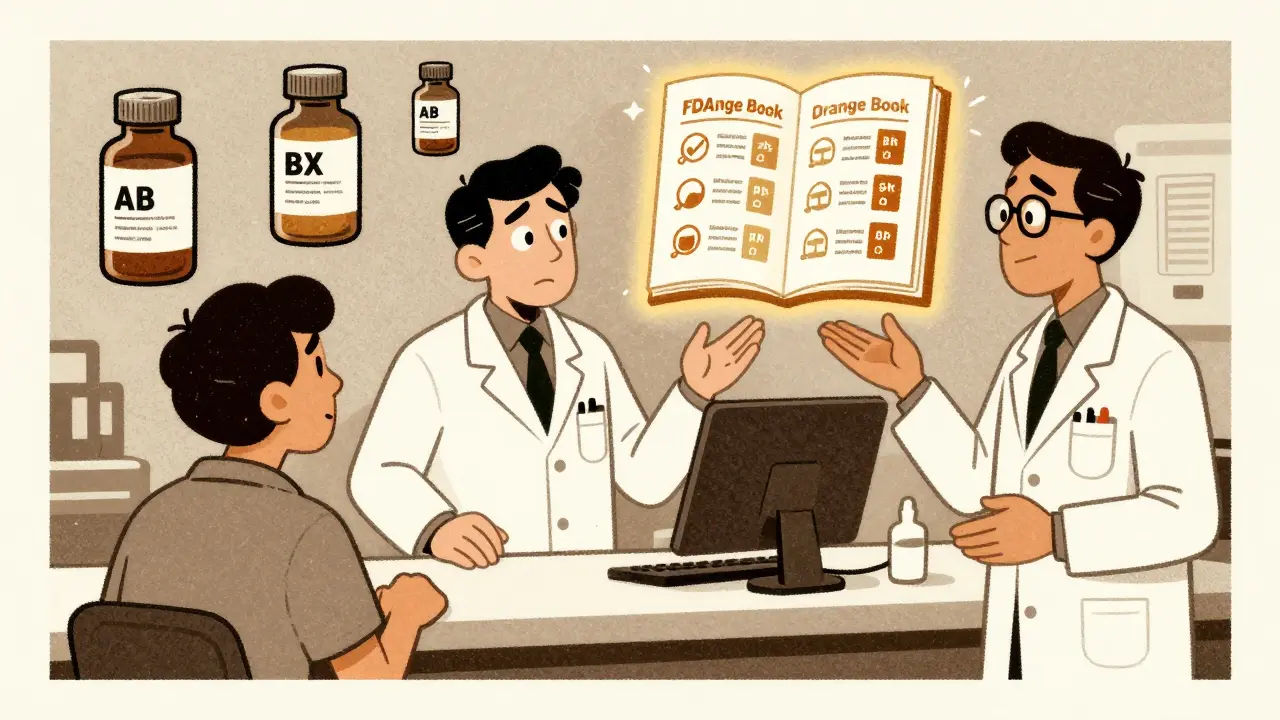
Generic drugs aren’t just cheaper versions of brand-name drugs. They’re legally required to be identical in strength, purity, and performance. But that doesn’t mean they’re all the same. The FDA’s Orange Book lists over 1,200 therapeutic equivalence ratings, and these get updated every month. A pharmacist who doesn’t know the difference between an AB-rated and an BX-rated drug could accidentally substitute a medication that’s not interchangeable-like switching one levothyroxine brand for another without realizing the narrow therapeutic index demands precision.
In 2021, ACPE found that 42.7% of all pharmacy malpractice claims involved errors tied to generic substitution. That’s not a small number. It’s a warning. And it’s why pharmacists who complete even 5 hours of targeted generics continuing education each year make 37% fewer substitution errors, according to the American Pharmacists Association. This isn’t theory. It’s data. Real-world outcomes.
What the Law Requires
All 50 U.S. states require pharmacists to complete continuing education to renew their license. Most require between 15 and 30 hours every two years. But here’s the catch: not all CE credits are equal. Only courses accredited by the Accreditation Council for Pharmacy Education (ACPE) or your state board count. And even then, states add their own rules.
For example, in Illinois, pharmacists need 30 hours total every two years, including 1 hour on sexual harassment prevention, 1 hour on implicit bias, and-starting January 1, 2025-a full hour on cultural competency. Meanwhile, Texas requires specific training on narrow therapeutic index drugs like warfarin and phenytoin, and 12 states now mandate education on biosimilars. New York wants you to submit your CE certificates with your renewal. California just wants you to keep them on file for two years. If you hold licenses in multiple states, you’re playing a game of regulatory whack-a-mole.
What You Need to Know About Generic Drugs
Here’s the core knowledge every pharmacist must own:
- ANDA Process: The Abbreviated New Drug Application is how generics get approved. Unlike brand drugs, they don’t need full clinical trials-they just need to prove bioequivalence.
- Bioequivalence: A generic must deliver the same amount of active ingredient into the bloodstream within 80-125% of the brand-name drug’s range. That’s not a guess. It’s a strict FDA requirement.
- Therapeutic Equivalence Ratings: These are the codes in the Orange Book: AB = fully substitutable, BX = not recommended for substitution. Miss this, and you risk therapeutic failure or toxicity.
- CREATES Act: This law forces brand manufacturers to sell samples to generic developers. Before 2019, some companies refused, blocking competition. Now, pharmacists need to understand how this affects drug availability and delays in generic launches.
And don’t forget biosimilars. These aren’t traditional generics. They’re complex biologic drugs with no exact copy. Interchangeability isn’t automatic. The FDA has only approved a handful as interchangeable, and state laws vary on whether pharmacists can substitute them without prescriber approval. A 2023 ASHP survey found 78% of hospital pharmacists felt underprepared for this.

Choosing the Right CE Courses
Not all continuing education is created equal. You’ve probably sat through boring, 1-hour lectures that felt like watching paint dry. But the best courses? They’re the ones that make you think.
ACPE breaks CE into three types:
- Knowledge-based: Lectures, readings, videos. Good for basics, but forgettable.
- Application-based: Case studies, patient scenarios, decision trees. These are where real learning happens.
- Certificate programs: Longer, multi-module courses with assessments. Best for deep dives.
Pharmacists who take application-based courses rate them 4.7 out of 5. Knowledge-based? Only 3.2. Why? Because you learn by doing. A good case study might ask: A 68-year-old patient on levothyroxine switches to a new generic. Their TSH rises from 2.1 to 6.8. What happened? The answer? Not all levothyroxine products are bioequivalent across brands. Even small differences matter. That’s the kind of lesson that sticks.
Providers like Pharmacist’s Letter and PocketPrep offer free, ACPE-accredited modules specifically on generics. PocketPrep alone had 45,000 pharmacist users in 2023, with 32% growth in generics content usage. And CVS Health’s pilot program-where pharmacists got real-time alerts and mini-lessons at the point of dispensing-cut generics-related errors by 28%. That’s not magic. That’s smart design.
What’s Changing in 2025 and Beyond
ACPE announced new standards in January 2024: all generics-related CE must now include content on biosimilar interchangeability and FDA REMS programs. That’s not a suggestion. It’s a requirement starting January 1, 2025. States are catching up too. NABP is pushing for 80% alignment in state CE requirements by 2025. That means less confusion, fewer compliance headaches.
And the tech is coming. AI-powered platforms are starting to map your knowledge gaps. If you keep missing questions about biosimilars, the system flags you. If you’re weak on therapeutic equivalence ratings, it serves you targeted modules. By 2027, IQVIA predicts 35% of pharmacists will use these personalized CE tools-up from just 12% today.
How to Stay Ahead (Without Getting Overwhelmed)
You don’t need to read every FDA update. But you do need a system:
- Track your state’s CE requirements. Bookmark your board’s website. Set calendar reminders.
- Focus on application-based courses. Skip the fluff. Choose modules with real patient cases.
- Use free, accredited resources. Pharmacist’s Letter, ASHP, and NABP offer high-quality, no-cost CE.
- Join peer discussions. Reddit’s r/pharmacy and local pharmacist forums are goldmines for real-world tips.
- Review the Orange Book monthly. Don’t wait for CE deadlines. Make it part of your routine.
And here’s a pro tip: if you work in a hospital or long-term care, ask your pharmacy director for extra training. 68% of hospitals now require more than the state minimum. You’re not alone in wanting to do better.
Final Thought: It’s Not About Compliance. It’s About Care.
Continuing education isn’t a tax on your time. It’s your shield. Every hour you spend learning about generics isn’t just ticking a box-it’s preventing a mistake. It’s keeping a patient safe. It’s protecting your career.
The system isn’t perfect. Courses can be repetitive. State rules are messy. But the stakes are too high to ignore. You’re not just a dispenser of pills. You’re the last line of defense. Stay sharp. Stay current. And don’t let the next generic change catch you off guard.
Do all states require the same continuing education hours for pharmacists?
No. While all 50 states require continuing education for license renewal, the number of hours and required topics vary. Most require 15-30 hours every two years, but some states add mandatory training on topics like sexual harassment, implicit bias, cultural competency, biosimilars, or narrow therapeutic index drugs. Pharmacists licensed in multiple states must meet each state’s individual requirements.
What’s the difference between a generic drug and a biosimilar?
A generic drug is a chemically identical copy of a small-molecule brand-name drug. It must prove bioequivalence to the original. A biosimilar is a highly similar version of a complex biologic drug-like insulin or monoclonal antibodies. Biosimilars aren’t exact copies because biologics are made from living cells. Interchangeability is not automatic; only FDA-approved interchangeable biosimilars can be substituted without prescriber approval, and state laws differ on whether pharmacists can make that switch.
How often is the FDA Orange Book updated?
The FDA Orange Book is updated monthly. It lists all approved drug products, including therapeutic equivalence ratings for generics. Pharmacists should review updates regularly, especially when managing patients on narrow therapeutic index drugs like levothyroxine, warfarin, or phenytoin, where even small changes in bioavailability can impact safety.
Are free continuing education courses for generics reliable?
Yes-if they’re ACPE-accredited. Providers like Pharmacist’s Letter, ASHP, and NABP offer free, high-quality CE modules that meet national standards. These are often application-based and include real-world case studies. Always check the provider’s accreditation status before completing the course to ensure it counts toward your state’s license renewal.
What’s the best way to prepare for generics-related CE exams?
Focus on application-based learning. Instead of memorizing facts, practice with case studies. Ask yourself: What would I do if a patient’s lab values changed after switching generics? Which drugs have narrow therapeutic windows? What does an AB vs. BX rating mean? Use platforms like PocketPrep or CE21 that offer scenario-based quizzes. Review the FDA Orange Book monthly. And don’t skip the state-specific rules-those often show up on exams.
Comments
Janelle Pearl
Just wanted to say this post hit home. I’ve been in pharmacy for 12 years, and I swear, every time I think I’ve got generics figured out, the FDA drops a new update. Last month, I caught a BX-rated switch that would’ve tanked a diabetic patient’s control. Thank you for laying this out so clearly.
March 9, 2026 AT 08:58
Samantha Fierro
As someone who manages CE compliance across 7 states, I can confirm: the regulatory whack-a-mole is real. We just added a quarterly internal newsletter to flag state-specific changes. It’s not glamorous, but it’s saved us from two license renewals being flagged. Also-yes, ACPE’s new 2025 standards are coming. Start prepping now.
March 9, 2026 AT 11:12
Robert Bliss
Big thanks for this! 😊 I’ve been skipping CE because it feels like busywork. But this made me realize it’s not about hours-it’s about avoiding a nightmare. Just did a 30-min PocketPrep module on levothyroxine swaps. Eye-opening. Going to do one every week now.
March 9, 2026 AT 12:27
Peter Kovac
Let’s be honest-the 42.7% malpractice statistic is misleading. Most of those cases involved understaffed pharmacies, not pharmacist ignorance. Blaming the clinician while ignoring systemic underfunding is irresponsible. This post reads like a corporate pamphlet, not a real-world analysis.
March 10, 2026 AT 13:36
APRIL HARRINGTON
OMG YES I JUST HAD A PATIENT COME IN LAST WEEK WITH A TSH OF 8.9 AFTER A GENERIC SWITCH AND I THOUGHT I WAS GONNA LOSE MY MIND
March 11, 2026 AT 10:46
Leon Hallal
Why are we even talking about this? The real issue is that big pharma controls the Orange Book. They delay generics on purpose. The FDA is a joke. I’ve seen the same inactive ingredient in three different generics-two were fine, one made a patient vomit for three days. Nobody checks this. Nobody cares.
March 12, 2026 AT 05:45
Judith Manzano
This is so helpful. I’ve been trying to figure out how to make CE stick. I started doing one case study during lunch-just 15 minutes. Now I look forward to it. The levothyroxine one you mentioned? I used it with my team last week. We all had that ‘ohhh’ moment. Thanks for the nudge.
March 12, 2026 AT 20:42
Dan Mayer
Wait… so you’re telling me we’re supposed to memorize every AB and BX rating? And the FDA updates it monthly? And we’re supposed to know state rules? That’s insane. I’ve been in this job 8 years and I still think ‘generic’ means ‘cheaper’. I’m not a robot. Who designed this system? A robot?
March 14, 2026 AT 06:06
Stephen Rudd
Let me guess-you’re all drinking the ACPE Kool-Aid. The Orange Book? It’s a propaganda tool. I’ve reviewed 14 generics that were rated AB but had different fillers. One had lactose monohydrate. Another had corn starch. Patients with allergies? They’re being poisoned. And you’re telling me to ‘review monthly’? That’s not education. That’s survival.
March 15, 2026 AT 21:22
Scott Easterling
...and yet, the FDA approved 37 new generics last month. 37. Who has time? I’ve got 120 scripts an hour. I don’t have time to read the Orange Book. I have time to double-check the screen. That’s it. This whole system is designed to make us feel guilty so we work harder for less.
March 16, 2026 AT 17:23
Mantooth Lehto
I’m so tired. I just got yelled at by a patient because her new generic made her dizzy. She said the old one was ‘better’. I looked it up-it was AB-rated. So why? I don’t know. I’m not a scientist. I’m just trying to get through my shift. Why does everyone expect me to be perfect?
March 18, 2026 AT 07:36
Melba Miller
Let’s not forget-this isn’t just about patients. It’s about protecting our profession. I’ve seen pharmacists get suspended over this. I’ve seen careers end. You think you’re just filling a script? No. You’re holding someone’s life in your hands. And if you’re not keeping up? You’re not just negligent-you’re a liability.
March 19, 2026 AT 12:06
Katy Shamitz
Thank you for saying this. I’ve been so lonely in this. Everyone else just says ‘it’s just a generic’. But I’ve seen the difference. I’ve seen the TSH numbers climb. I’ve seen the seizures. This isn’t theory. It’s blood. And I’m so glad someone finally gets it.
March 21, 2026 AT 07:05
Neeti Rustagi
As a pharmacist from India, I find this perspective deeply valuable. In our context, generics are often the only option, and the quality variance is even more pronounced. The Orange Book concept is not universally accessible, yet the clinical consequences are universal. The emphasis on application-based learning is not just pedagogical-it’s ethical. Thank you for framing this not as compliance, but as care.
March 23, 2026 AT 01:15
Ray Foret Jr.
just did my ce today and used the pocketprep levothyroxine case and i cried a little because i realized how close i came to messing up last month 😅 thanks for the reminder
March 23, 2026 AT 19:45