
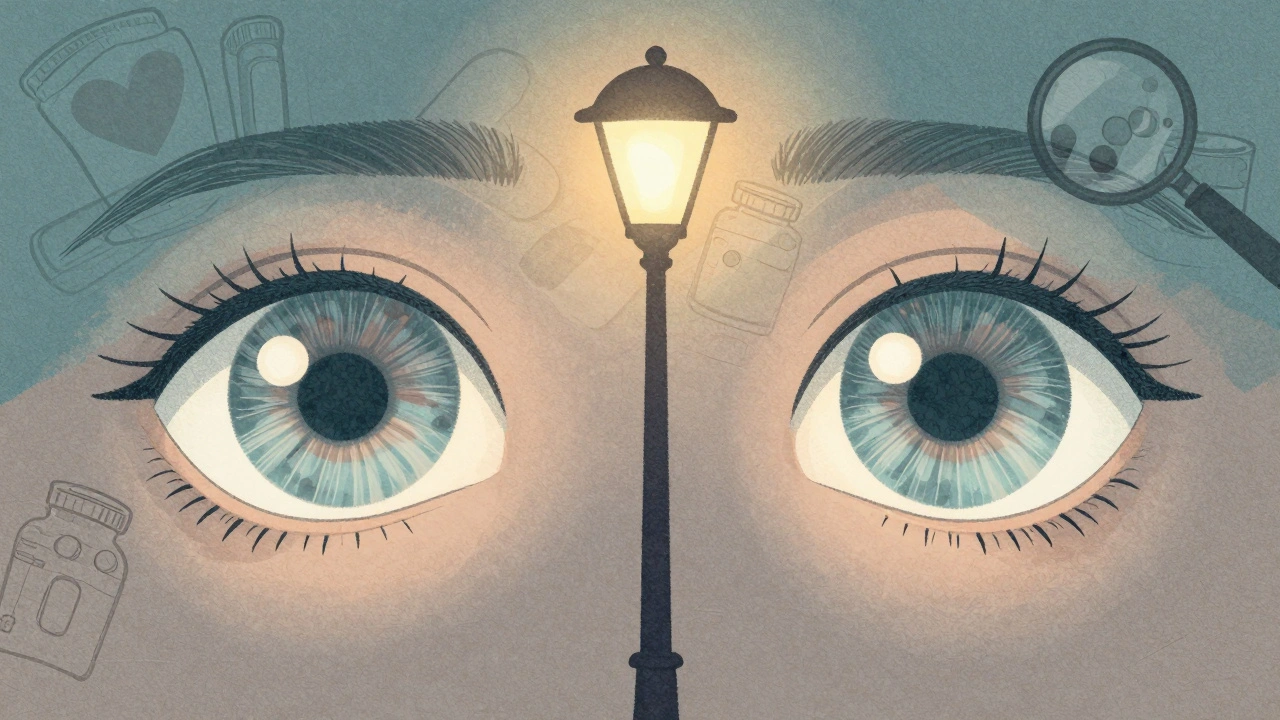
Blurred vision isn’t just something that happens when you’re tired or squinting at a phone screen. For millions of people taking common medications, it’s a real and sometimes dangerous side effect. You might not think your blood pressure pill or acne treatment could mess with your eyes - but they can. And if you ignore it, you could risk permanent damage.
Why Do Medications Cause Blurry Vision?
Your eyes are sensitive. They rely on precise fluid balance, nerve signals, and blood flow to work right. Many medications interfere with those systems - sometimes in ways you’d never expect.
Some drugs dry out your eyes, making it hard to focus. Others change the shape of your cornea or lens. A few even damage the retina or optic nerve over time. It’s not just one mechanism - it’s a dozen different ways a pill can blur your world.
Take amiodarone, a heart medication. Over 70% of people who take it long-term develop tiny swirls of deposits on their cornea. These don’t hurt, but they scatter light, causing halos and blurry vision - especially at night. The deposits stay even after you stop the drug. That’s not rare. It’s expected.
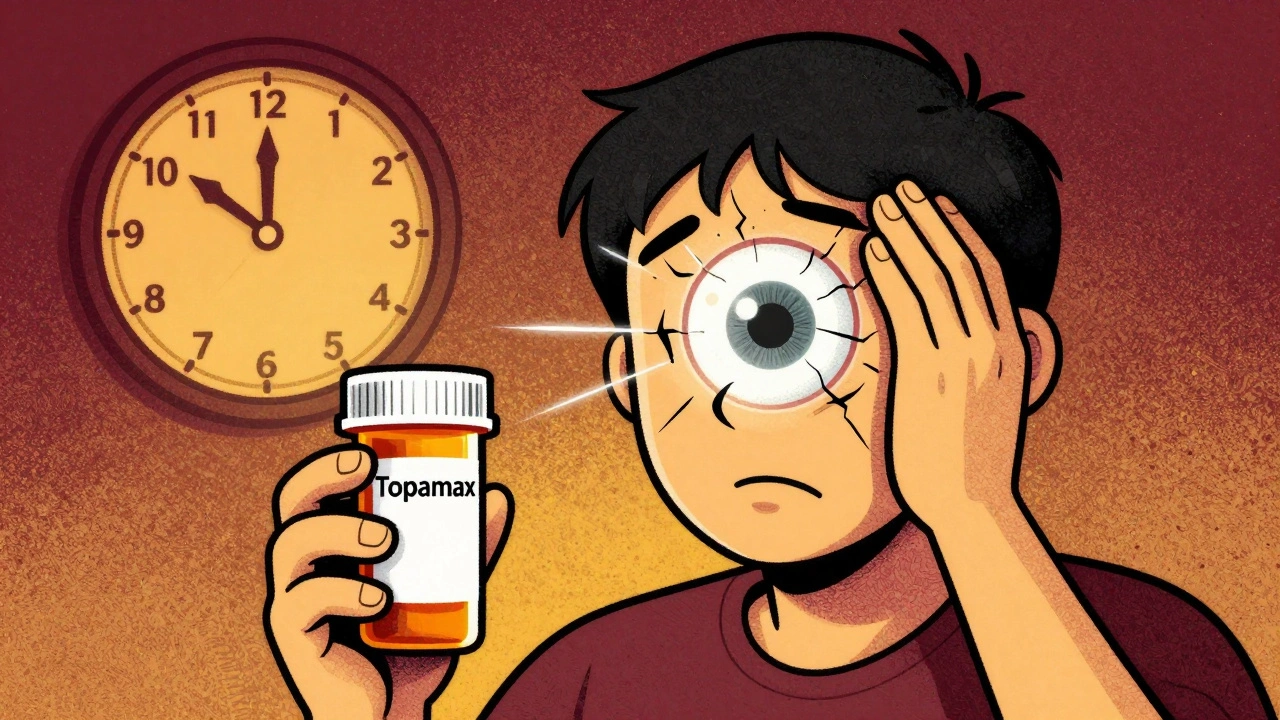
Then there’s topiramate (Topamax), used for migraines and seizures. It can trigger acute angle-closure glaucoma - a medical emergency. Your eye pressure spikes suddenly. You get intense pain, headache, nausea, and blurry vision. If you don’t get treatment within 24 to 48 hours, you could lose vision forever.
Top Medications That Cause Blurry Vision
Over 100 prescription drugs are known to affect vision. Here are the most common ones and what they do:
- Isotretinoin (Accutane, Absorica) - Used for severe acne. Up to 60% of users develop dry eyes. About 1 in 5 say their vision gets blurry enough to make driving risky. The dryness doesn’t always go away after stopping the drug.
- Corticosteroids (prednisone, dexamethasone) - These can cause cataracts in 5-7% of users after just six months. They also raise eye pressure in 30-40% of people with glaucoma. Diabetics are 3 times more likely to get steroid-induced eye damage.
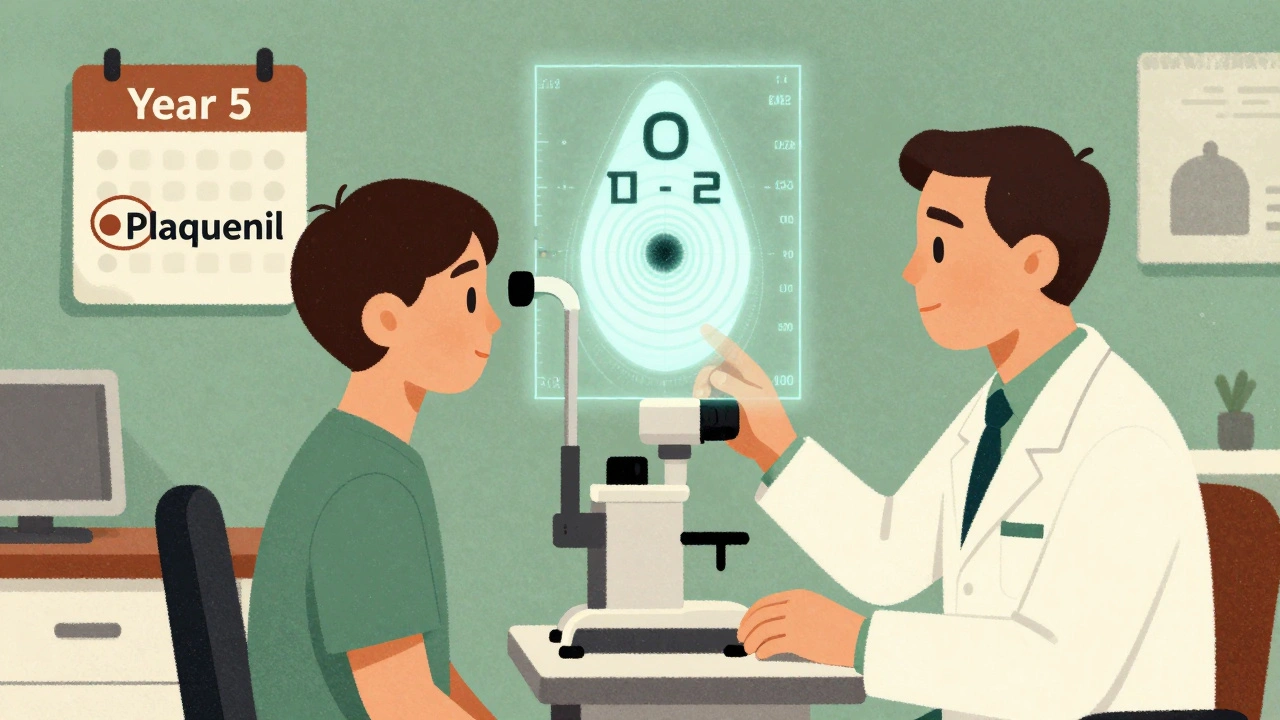
- Hydroxychloroquine (Plaquenil) - Used for lupus and rheumatoid arthritis. It can cause irreversible retinal damage called bull’s eye maculopathy. Risk climbs after five years of use. One in 5,000 users gets it - but once it happens, vision loss is permanent in 95% of cases.
- Tamsulosin (Flomax) - A prostate medication. It causes a condition called intraoperative floppy iris syndrome. If you ever need cataract surgery while taking this - or even up to 18 months after stopping - your iris will behave unpredictably during surgery. Surgeons need to know ahead of time.
- NSAIDs (ibuprofen, naproxen) - Daily use for more than two years raises your risk of retinal bleeding and cataracts by 28%. It’s not common, but it’s real.
- Beta-blockers and calcium channel blockers - Blood pressure meds. Around 10% of new users report blurry vision in the first month. It’s from reduced blood flow to the eye, not the brain.
- PDE5 inhibitors (Viagra, Cialis) - Rare, but they can cause optic nerve damage in about 2.5 out of every 100,000 prescriptions. Symptoms include sudden vision loss or blue-tinted vision.
When Should You Worry?
Not every bit of blurry vision is an emergency. But some signs mean you need to act fast.
Call your doctor or go to the ER if you have:
- Sudden, severe blurry vision in one or both eyes
- Eye pain, headache, or nausea along with blurry vision
- Halos around lights, especially if you’re on amiodarone
- Blurred vision that doesn’t improve after a few hours (if you’re on anticholinergics like some antidepressants or bladder meds)
- Loss of peripheral vision or dark spots in your central vision
These aren’t normal side effects. They’re warning signs. For example, if you’re on Topamax and suddenly get a pounding headache with blurry vision, you could be having acute glaucoma. Waiting even a day could cost you sight.
And if you’re on Plaquenil or amiodarone, don’t wait for symptoms. Regular eye exams are non-negotiable. The American Academy of Ophthalmology recommends baseline and yearly screenings - sometimes every six months - depending on your dose and risk.
Who’s at Highest Risk?
Some people are more vulnerable than others.
If you have:
- Diabetes - You’re 3 times more likely to develop steroid-induced cataracts or eye pressure spikes.
- Glaucoma - You’re at high risk for steroid-induced pressure spikes. Even a short course of prednisone can trigger a crisis.
- History of dry eye or autoimmune disease - You’re more likely to have severe reactions to drugs like Accutane or Plaquenil.
- Been on the medication for more than 6 months - Long-term use increases the chance of irreversible damage, especially with amiodarone and Plaquenil.
Also, older adults and those taking multiple medications are at higher risk. Drug interactions can make side effects worse. A blood pressure pill might not cause blurry vision alone - but add it to an antihistamine and a muscle relaxant, and your eyes dry out fast.
What You Can Do to Protect Your Vision
Knowledge is power. Here’s how to stay safe:
- Know your meds. Read the side effect section on your prescription label. If it says “blurred vision,” don’t ignore it.
- Get baseline eye exams. If you’re starting a high-risk drug like Plaquenil, amiodarone, or long-term steroids, get a full eye check before you begin.
- Schedule regular screenings. Once a year for most high-risk drugs. Every 6 months if you’re on Plaquenil for more than five years or taking high doses of steroids.
- Use artificial tears if your eyes feel dry. Especially if you’re on Accutane. Preservative-free drops work best. Some people need punctal plugs or Restasis.
- Tell your eye surgeon if you’re on Flomax. Even if you stopped it months ago. This one detail changes how your cataract surgery is done.
- Don’t stop meds without talking to your doctor. Stopping abruptly can be dangerous. But you can ask: “Is there an alternative with less eye risk?”
And if you’re on a drug with known eye risks - like Plaquenil - ask your doctor about the latest guidelines. In January 2024, the American Academy of Ophthalmology lowered the safe daily dose from 5.0 mg/kg to 2.3 mg/kg based on new research. Many people are still on outdated doses.
What’s Changing in Eye Safety?
The medical world is waking up. In March 2023, the FDA approved the first AI-powered visual field analyzer to catch early Plaquenil damage. It’s 95% accurate - far better than old methods.
Hospitals now require ophthalmology consults for patients on high-risk drugs. Ophthalmology residents get 24 hours of training on medication-related eye damage - up from just 8 hours in 2010.
Drug labels now include eye warnings in 89% of cases - up from 62% in 2015. That’s progress. But patients still miss it. If your doctor doesn’t mention eye risks, ask. It’s your vision.
And in the next five years, genetic testing may help identify who’s most likely to suffer vision damage from certain drugs. That means safer prescribing - tailored to your body, not just your diagnosis.
Real People, Real Stories
On Reddit, one user wrote: “Topamax ruined my vision permanently. I stopped it after six months, but the blur never went away.” Over 60 others shared similar stories.
GoodRx data shows 18% of Accutane users say their blurry vision made driving dangerous. One in three needed prescription eye drops just to see clearly.
And in clinics, doctors see it every week: patients who thought “blurred vision” was normal - until they lost half their sight.
It doesn’t have to be that way.
Blurred vision from meds isn’t something you just have to live with. It’s a signal. And if you act on it, you can protect your vision - and your future.
Can blurred vision from medication be reversed?
It depends on the drug and how long you’ve been taking it. For drugs like anticholinergics, blurred vision usually clears up within hours after stopping. Dry eyes from Accutane often improve after treatment ends, but may need ongoing care. With amiodarone, corneal deposits are permanent in most cases, but don’t always affect vision. However, damage to the retina from Plaquenil or the optic nerve from Viagra is often irreversible - especially if not caught early. The key is early detection.
How long does it take for medication to cause blurry vision?
It varies. For some drugs, like blood pressure meds or anticholinergics, blurry vision can start within days. Topamax can trigger acute glaucoma in under a week. Cataracts from steroids usually appear after 6 months. Retinal damage from Plaquenil often takes 5+ years. Amiodarone corneal deposits can show up after 3-6 months. If you notice changes early, report them - don’t wait.
Should I stop my medication if I get blurry vision?
Never stop a prescription drug on your own. Some meds, like beta-blockers or amiodarone, can cause serious problems if stopped suddenly. Instead, call your doctor. They can check if it’s a side effect, adjust your dose, switch your drug, or refer you to an eye specialist. Your vision matters - but so does your overall health.
What eye tests should I ask for if I’m on high-risk medication?
For Plaquenil: a 10-2 automated visual field test and spectral-domain OCT (SD-OCT) to check for early retinal changes. For amiodarone: a slit-lamp exam to look for corneal deposits. For steroids: intraocular pressure checks every 2-4 weeks if you’re on them long-term. For anyone on long-term meds: a full dilated eye exam at least once a year. Don’t settle for just a vision chart - ask for the full screening.
Can over-the-counter drugs cause blurry vision?
Yes. NSAIDs like ibuprofen and naproxen can cause retinal bleeding and increase cataract risk after years of daily use. Antihistamines and decongestants can dry out your eyes and blur vision. Even some sleep aids and allergy pills have anticholinergic effects. Always check the label for “blurred vision” or “dry eyes” as side effects - even with OTC drugs.
Comments
Marvin Gordon
Been on Topamax for migraines for 3 years. Vision got blurry last winter - thought it was screen fatigue. Turned out my eye pressure was through the roof. Got treated in time, but holy crap, I didn’t know a pill could do that. Now I get checked every 6 months. Don’t ignore it.
December 5, 2025 AT 07:44
Norene Fulwiler
My mom’s on Plaquenil for lupus. She didn’t know she needed yearly eye scans until her doctor told her. She’s been on it for 7 years - no damage yet because she stayed on top of it. If you’re on any of these meds, don’t wait for symptoms. Get the baseline exam. It’s not optional.
December 7, 2025 AT 03:28
Ada Maklagina
Accutane gave me dry eyes so bad I couldn’t read my phone. Got prescription drops. Still use them 2 years later. No one warned me. Just said 'dry mouth possible.' Like that’s the worst of it.
December 7, 2025 AT 17:20
Harry Nguyen
Of course the FDA approves AI to catch drug damage after decades of people going blind. Meanwhile, Big Pharma still pushes these pills like candy. Wake up. They don’t care if you see - as long as you keep buying.
December 7, 2025 AT 17:53
James Moore
It’s not merely a matter of pharmacological interaction, nor is it simply a matter of individual physiology - it’s a systemic failure of medical education, pharmaceutical marketing, and patient autonomy. We have been conditioned to accept side effects as 'normal' - but vision is not a commodity to be traded for hypertension control. The optic nerve does not negotiate. It either transmits, or it does not - and once it’s gone, no algorithm, no AI, no 'yearly screening' can resurrect the light that was lost.
And yet, we are told to 'ask your doctor' - as if the doctor, who was trained by the same system that profits from these drugs, is somehow an impartial guardian. The truth? You are your own advocate. Or you are blind.
December 9, 2025 AT 03:13
Kylee Gregory
I appreciate how thorough this is. I’ve been on beta-blockers for 5 years and never thought about my eyes. I’ll schedule a checkup this week. Thanks for sharing the real risks - not just the 'dry mouth' stuff.
December 10, 2025 AT 10:30
Lucy Kavanagh
Did you know the FDA only started requiring eye warnings because a whistleblower leaked internal documents showing they knew about Plaquenil damage since 1998? And the AI tool? It’s owned by a company that also makes the drugs. Coincidence? I think not.
December 10, 2025 AT 11:22
Chris Brown
People need to stop blaming medications. If you’re experiencing blurred vision, it’s because you’re not taking care of yourself. You’re probably staring at screens too much, eating junk food, and not exercising. These drugs are safe. The real problem is weak willpower and poor lifestyle choices.
December 10, 2025 AT 17:18
Stephanie Fiero
OMG I JUST REALIZED I’M ON FLOMAX AND MY DAD’S HAVING CATARACT SURGERY NEXT MONTH!! I’M CALLING HIS SURGEON RIGHT NOW!! THANK YOU FOR THIS!!
December 10, 2025 AT 19:56
Michael Dioso
Everyone’s acting like this is new info. Newsflash: ophthalmologists have been screaming about this since the 90s. You just didn’t listen because you didn’t want to hear it. Now you’re mad the system didn’t protect you? You’re the one who didn’t ask the right questions. Stop pretending you’re a victim.
December 12, 2025 AT 18:13