

Running out of your blood pressure or cholesterol meds shouldn’t be a surprise. Yet, for millions of people taking daily medications for chronic conditions, it happens all the time. Forgetting to call the pharmacy, missing the mail, or just not remembering until the bottle’s empty - these small delays add up. And when you’re on long-term meds, especially generics, every missed dose increases your risk of hospitalization, complications, or worse. That’s where automated refills come in. They’re not magic. But for people managing diabetes, hypertension, thyroid issues, or arthritis, they’re one of the quietest, most effective tools in modern healthcare.
How automated refills actually work
Automated refill systems don’t just send you more pills when you ask. They predict when you’ll run out - usually five to seven days before - and start the refill process automatically. This isn’t guesswork. Pharmacies track your prescription history, dosage, and typical usage patterns. If you take one pill a day of lisinopril, and your last fill was for 30 tablets, the system knows you’ll need a new one around day 23. It then sends a refill request to your doctor’s office (if needed), processes it, and prepares your medication. You’ll get a text, email, or app notification asking if you want it shipped or picked up. Most people say yes. And that’s where the real benefit kicks in.Why it matters for generic medicines
Generic drugs are the backbone of chronic care. They’re cheaper, just as effective, and prescribed to over 90% of patients on long-term therapy. But because they’re low-cost, patients often don’t feel the urgency to refill. A $5 monthly co-pay doesn’t sting like a $300 brand-name bill. So people delay. Or skip. Automated refills fix that. A 2016 study of Medicare Part D patients found those enrolled in automatic refill programs had 7.2% higher adherence for statins, 3.9% for blood pressure meds, and 6.8% for diabetes drugs compared to those who had to request refills manually. That’s not a small number. It’s the difference between staying out of the hospital and ending up there.Who’s offering this, and how to sign up
Most major online pharmacies and retail chains have automated refill systems. CVS, Walgreens, Walmart Pharmacy, and Amazon Pharmacy all offer them. Even smaller mail-order services like Express Scripts and OptumRx include the option. Signing up is simple: log into your pharmacy’s website or app, find the “Refill Settings” or “Auto-Refill” section, and toggle it on for any chronic medication. You’ll need to give consent - it’s required by law - and you can pick how you want to be notified: text, email, or phone call. Some systems even let you choose delivery timing: “Ship it the day after I run out” or “Hold it until I confirm I still need it.”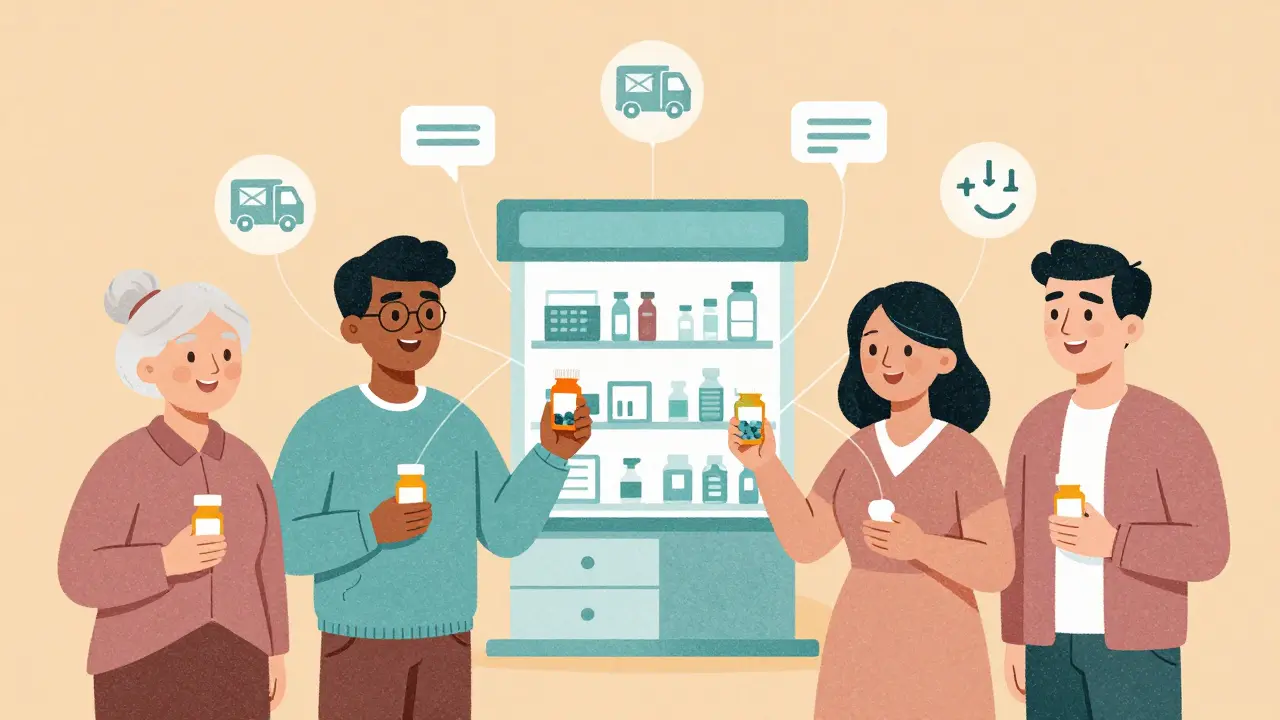
The hidden perks you might not know about
Beyond just getting your pills on time, automated refills unlock other benefits. For one, they cut down on phone calls to the pharmacy. Staff no longer spend hours fielding “I’m out!” requests. That means faster service for everyone. Also, many pharmacies now bundle auto-refills with free shipping, discounted copays, or even subscription models. Amazon Pharmacy’s RxPass, for example, lets Prime members get 60 common generic medications for $5 a month - no insurance needed. And because refills are scheduled, pharmacies can better manage inventory, reducing waste and keeping prices low.What can go wrong - and how to avoid it
No system is perfect. The biggest risk? Dosage changes. If your doctor increases your dose from 20 mg to 40 mg of a medication, but the auto-refill system still has the old order in place, you could get the wrong amount. There are documented cases where patients received outdated doses because the pharmacy didn’t sync with the doctor’s updated prescription. That’s why it’s critical to double-check every time you get a new refill - especially after a doctor’s visit. Look at the label. Compare it to your prescription. If it doesn’t match, call the pharmacy immediately. Also, if you stop taking a medication - say, you switched to a different drug or your condition improved - make sure you turn off auto-refill. Otherwise, you’ll keep getting pills you don’t need, and that’s just waste.Real people, real experiences
On Reddit’s r/Pharmacy community, users consistently report positive experiences. One woman with type 2 diabetes said she went from missing refills every other month to hitting 98% adherence after turning on auto-refill. “I used to forget until my pills were gone. Now I just open the box and see them there,” she wrote. Another man with high blood pressure said he no longer gets stressed about running low before a weekend trip. “I used to panic if I was traveling. Now I just pack my pills and go.” But not everyone’s happy. About 22% of users who posted complaints mentioned unexpected deliveries - sometimes multiple boxes arriving without warning. One man on Trustpilot said he was charged for a refill he didn’t want because he forgot to cancel it after switching doctors. That’s why awareness matters. Make sure you know when your refill is scheduled. Check your email. Read the notification. If you’re not sure, call the pharmacy. Most will let you pause or skip a refill with a single click.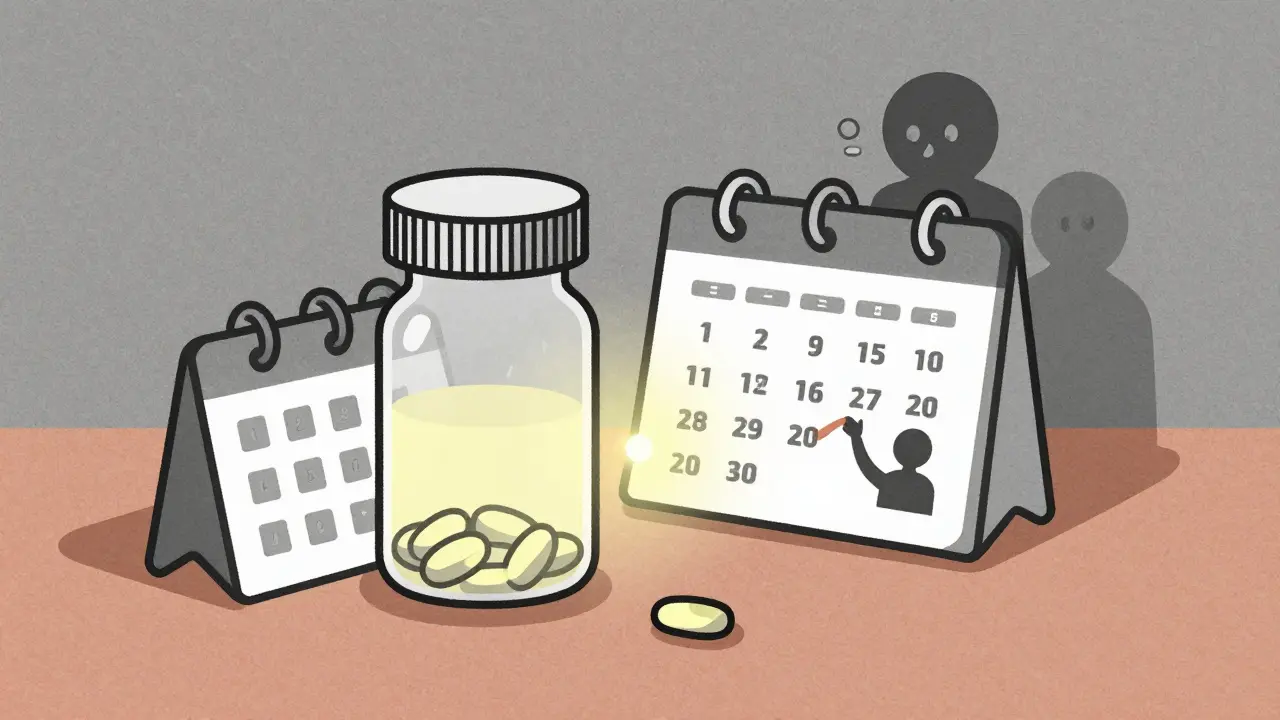
How this fits into the bigger picture
Automated refills are part of a much larger shift in healthcare. Pharmacies aren’t just places to pick up pills anymore. They’re becoming health hubs. CVS and Walgreens now offer blood pressure checks, flu shots, and even virtual visits. Auto-refill systems feed into that. They keep patients connected to care. And with Apple Health and Google Fit now syncing medication logs, your pharmacy data can even show up in your fitness app. It’s not just about convenience - it’s about continuity. For older adults, people with memory issues, or those juggling multiple medications, this system isn’t a luxury. It’s a lifeline.What’s next for automated refills
The next wave is personalization. Right now, most systems refill on a fixed schedule. But soon, AI will start adjusting based on your behavior. If you usually refill on a Tuesday but skipped last month because you were on vacation, the system might learn to delay your refill by a few days. Some companies are testing smart pill bottles that beep when you miss a dose - and then trigger an auto-refill if you haven’t picked up your next batch. By 2026, nearly two-thirds of pharmacy automation systems are expected to use this kind of adaptive scheduling. It’s not science fiction. It’s already being tested in clinics in Ohio and California.Final thoughts: Is it right for you?
If you take any generic medicine daily - whether it’s for blood pressure, cholesterol, thyroid, diabetes, or depression - automated refills are worth considering. They’re free to use, easy to set up, and backed by solid data. You don’t need to be tech-savvy. Most people over 70 use them just fine with a little help from a family member or pharmacy staff. The key is to stay involved. Don’t turn it on and forget it. Review your meds every few months. Confirm your dosage. Make sure your doctor’s updates made it through. And if you ever feel uneasy about getting pills you didn’t ask for - pause it. You’re in control. The system is just there to help you remember.Are automated refills safe for all medications?
Yes, for most chronic medications - especially generics used daily like blood pressure, cholesterol, or diabetes drugs. But they’re not ideal for medications with frequent dose changes, short-term use, or those requiring close monitoring (like blood thinners or certain psychiatric drugs). Always check with your pharmacist before enrolling in auto-refill for any new prescription.
Can I turn off auto-refill anytime?
Absolutely. You can pause, skip, or cancel any auto-refill through your pharmacy’s app or website. Most systems let you do it with one click. If you’re having trouble, call the pharmacy. They can disable it for you over the phone.
Do I need insurance to use automated refills?
No. Insurance isn’t required. Many pharmacies offer auto-refill even for cash-paying customers. Amazon Pharmacy’s RxPass, for example, works without insurance - just pay $5 a month for 60 common generics. Other chains may offer discounts for auto-refill users even if you’re uninsured.
What if I get two refills by accident?
If you receive duplicate refills, don’t take extra pills. Call your pharmacy right away. Most will arrange to pick up the extra supply. You won’t be charged for it, and they’ll update your system to prevent future errors. It’s rare, but it happens - especially if there’s a delay in syncing doctor’s notes.
How do I know if my dosage changed in the refill?
Always check the label on the bottle or box. Compare the dosage, frequency, and quantity to your most recent prescription. If it doesn’t match, don’t take the pills. Call your pharmacy and ask them to verify with your doctor. Most pharmacies will recheck the prescription before filling if you raise a concern.
Do auto-refills cost extra?
No. Auto-refill services are free. You only pay for the medication and any shipping fees (if applicable). Some pharmacies even waive shipping for auto-refill users. The system saves them money on staff time, so they pass the benefit to you.
Can I use auto-refill for over-the-counter meds?
Not usually. Auto-refill systems are designed for prescription medications only. Over-the-counter drugs like pain relievers or antacids aren’t tracked in pharmacy systems the same way. But some pharmacies offer subscription services for OTC items - like monthly deliveries of vitamins or allergy meds - through separate programs.
Is my data safe with automated refills?
Yes. All major pharmacy chains follow HIPAA rules to protect your health information. Notifications are sent through secure channels, and your refill history is encrypted. You control who has access - and you can opt out of communications anytime.
Comments
mukesh matav
Been using auto-refill for my statins for two years now. Never missed a dose. No more panic runs to the pharmacy at 11pm on a Sunday. Simple, quiet, works. I don't even think about it anymore.
December 21, 2025 AT 07:22
Peggy Adams
Yeah right. Next they’ll be tracking your bathroom habits and sending you ads for laxatives. I’ve seen the ‘smart pill bottles’ thing. They’re just a gateway to Big Pharma’s surveillance empire. You think this is about your health? It’s about data.
December 21, 2025 AT 20:10
Sarah Williams
This is literally life-changing for my mom. She’s 74, has four meds, and forgets everything. Now she just opens the box and there they are. No guilt. No stress. Just peace. Everyone should try it.
December 22, 2025 AT 15:26
Jay lawch
Automated refills are the quiet colonization of personal responsibility. In the West, we outsource even our survival to algorithms. We used to remember, we used to care, we used to be human. Now we are passive nodes in a pharmaceutical supply chain. The moment you surrender control to a system, you surrender your autonomy. The government, the pharmacy, the algorithm-they all win. You? You become a data point with a blood pressure reading. And when the system glitches? Who gets blamed? You. Always you.
December 22, 2025 AT 18:57
Christina Weber
Technically, the article misuses the term ‘auto-refill’ in several places. It’s not ‘auto-refill’ if the system requires your explicit confirmation. That’s ‘pre-notification with opt-in.’ True automation would be refill-and-ship without consent, which is illegal. Also, ‘RxPass’ isn’t a pharmacy service-it’s a subscription model. Terminology matters.
December 24, 2025 AT 15:41
Erika Putri Aldana
They say it’s free but they’re just buttering you up so you stay hooked. Next thing you know, your insurance gets jacked up because ‘you’re using more meds.’ I got a refill I didn’t want and they charged me $12 for ‘processing.’ I called and they said ‘it’s in your contract.’ What contract? I didn’t sign anything!
December 26, 2025 AT 04:16
Grace Rehman
So we’ve turned taking pills into a subscription service like Netflix but with more side effects and less cancel button? Cool. I guess now my meds come with a ‘recommended for you’ banner. Next up: AI tells you when you’re ‘due’ for a panic attack. And you’ll thank it for the reminder.
December 26, 2025 AT 18:52
Siobhan K.
My pharmacy lets me pause refills with one tap. I use it when I travel. Also, they send a text saying ‘Your refill is ready’-not ‘Your refill is on the way.’ That distinction matters. If you’re picking up in person, you want to know it’s there, not that it’s in transit. Small things.
December 28, 2025 AT 05:46
Brian Furnell
Adherence metrics are statistically significant, but the underlying behavioral economics are underexplored. The nudge theory here is a classic libertarian paternalism implementation-designing choice architecture to optimize outcomes without coercion. Yet, the asymmetry of power between patient and system remains unaddressed. The algorithm doesn’t care if you’re depressed, broke, or in denial. It just pushes the button. We need ethical oversight frameworks, not just convenience.
December 28, 2025 AT 18:24
Southern NH Pagan Pride
They're putting trackers in the pill bottles. I heard it from a guy who works at CVS. The app syncs with your phone's GPS. They know when you're home. They know when you're not. They know if you're taking them or just tossing them. This isn't healthcare. It's social control.
December 30, 2025 AT 09:26
Orlando Marquez Jr
While the operational efficiency of automated refill systems is commendable, one must consider the sociocultural implications of medical commodification in the context of neoliberal healthcare infrastructures. The normalization of algorithmic intervention in personal health management may inadvertently erode patient autonomy, particularly among marginalized populations with limited digital literacy.
December 31, 2025 AT 22:15
Swapneel Mehta
I set it up for my dad’s blood pressure pills. He didn’t believe it would work. Now he says, ‘It’s like having a little robot that remembers for me.’ Best thing I’ve done for him. No drama. No yelling. Just pills on time.
January 2, 2026 AT 18:28
Dan Adkins
The implementation of automated refill protocols in the United States pharmaceutical supply chain represents a paradigmatic shift in the patient-provider relationship. While ostensibly beneficial, this model introduces systemic vulnerabilities in data integrity, regulatory compliance, and pharmacovigilance. The absence of standardized interoperability between EHR systems and pharmacy automation platforms creates latent risks for dosage misalignment, particularly in polypharmacy scenarios. Further, the commercialization of refill logistics via third-party entities such as Amazon Pharmacy introduces conflicts of interest that may compromise clinical judgment. A comprehensive regulatory audit is warranted.
January 4, 2026 AT 11:02
Cameron Hoover
I almost cried the first time my auto-refill came. I’d been skipping my antidepressants because I was too tired to go to the pharmacy. Then one day-there they were. Just… there. Like someone had reached through the screen and handed me a hug. I didn’t know I needed it until I got it.
January 4, 2026 AT 11:08