

When your body starts attacking itself, life changes. For people with autoimmune diseases, it’s not just about daily symptoms-it’s about waiting for the next flare. These sudden, often severe spikes in symptoms don’t come with warning signs everyone recognizes. One day you feel okay; the next, you’re exhausted, in pain, or struggling to think clearly. Flares aren’t random. They’re predictable-if you know what to look for.
What Exactly Is an Autoimmune Flare?
An autoimmune flare is when your immune system, which normally protects you from germs, turns on your own tissues. It’s like your body’s security system goes haywire and starts setting off alarms inside your skin, joints, gut, or brain. Symptoms get worse-sometimes dramatically. Fatigue spikes. Joints swell. Brain fog sets in. You might feel like you’re coming down with the flu, but it lasts for days or weeks. It’s not just feeling tired. In lupus, a flare might mean a butterfly-shaped rash across your cheeks or kidney inflammation. In rheumatoid arthritis, morning stiffness can last over an hour. In multiple sclerosis, you might lose feeling in your legs or have trouble seeing. These aren’t minor setbacks. They’re signs your immune system is in overdrive. Lab tests back this up. During a flare, C-reactive protein (CRP) often jumps 30-50% above normal. Erythrocyte sedimentation rate (ESR) climbs from under 20 mm/hr to 30-50 mm/hr. Autoantibody levels-your body’s mistaken attack signals-can double or triple. But here’s the catch: you don’t always need lab results to know you’re flaring. Many patients feel it before tests show it. That’s why tracking your own symptoms matters just as much as bloodwork.Top 7 Triggers Behind Autoimmune Flares
Flares don’t happen for no reason. Research shows they’re tied to specific triggers. Some are obvious. Others sneak up on you.- Stress-Not just mental stress. Physical stress from surgery, injury, or even lack of sleep can trigger flares. Studies show acute stress can raise flare risk by 40-60% within 72 hours. Your body releases cortisol, but chronic stress messes with how it works, leaving your immune system unchecked.
- Infections-Viruses are big players. Epstein-Barr, the virus behind mono, is linked to 22% of lupus flares. Even a common cold can set off a flare in someone with rheumatoid arthritis or MS. Your immune system gets so busy fighting the bug, it accidentally turns on your own cells.
- Diet-Gluten is a known trigger for celiac disease, with 99% of patients reacting after exposure. High sodium intake increases MS relapse rates by 30%. For others, processed foods, sugar, and dairy can spark inflammation-even if they don’t have a diagnosed food sensitivity.
- Sunlight-UV rays don’t just burn skin. In lupus, they can trigger rashes and internal flares. Up to 45% of cutaneous lupus flares are linked to sun exposure. That’s why SPF 50+ sunscreen applied every two hours cuts flare risk by over half in clinical trials.
- Seasonal Changes-Flares spike 37% more in spring and fall than in summer or winter. Temperature swings, changing daylight, and pollen levels all play a role. Many patients notice patterns: “Every March, I get worse.”
- Hormones-Pregnancy can calm rheumatoid arthritis symptoms during gestation, but 40% of patients flare hard after giving birth. Estrogen and progesterone shifts directly affect immune activity.
- Missing Medication-Skipping doses, even for a day or two, causes 28% of preventable flares. Immunosuppressants and biologics need consistent levels in your blood to work. Missing doses is like turning off a fire alarm-you don’t know it’s on fire until it’s too late.
How to Prevent Flares Before They Start
Prevention isn’t about perfection. It’s about stacking small, smart habits that lower your risk over time.- Protect Your Skin from the Sun-Wear broad-spectrum SPF 50+ every day, even when it’s cloudy. Use hats, sunglasses, and UV-blocking clothing. In one study, consistent sun protection reduced lupus skin flares by 52% in a year.
- Manage Stress Like a Habit-Mindfulness practices like meditation, yoga, or even daily breathing exercises cut flare frequency by 35% in trials. You don’t need hours. Ten minutes a day, five days a week, makes a measurable difference.
- Eat to Reduce Inflammation-The Autoimmune Protocol (AIP) diet removes common irritants like gluten, dairy, eggs, and nightshades. In one study, rheumatoid arthritis patients on AIP saw flare frequency drop by 42%. It’s not a cure, but it’s a tool.
- Keep Vitamin D Above 40 ng/mL-Low vitamin D is linked to more MS relapses. Taking 2,000-4,000 IU daily (with your doctor’s approval) can lower relapse rates by 32%. Get your levels checked every 6 months.
- Stick to Your Medication-Use phone alarms, pill organizers, or apps. One study found patients using reminders improved adherence by 65% and cut flares by 28%. If you’re struggling with side effects, talk to your doctor-not just skip pills.
- Watch Your Gut-A healthy microbiome helps regulate immunity. Probiotics, fiber-rich foods, and avoiding antibiotics unless necessary can reduce flares in IBD patients by up to 22%.
Early Intervention: The Game-Changer
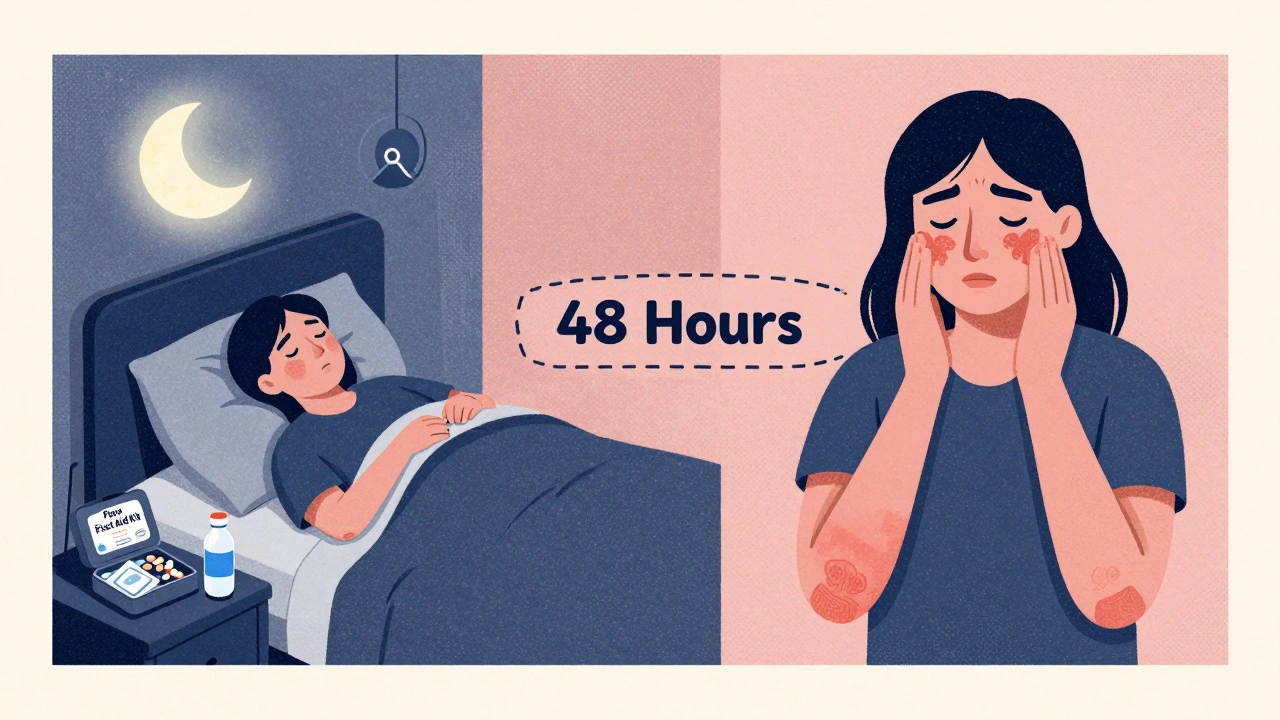
The sooner you act when a flare starts, the less damage it does. Waiting too long means more pain, longer recovery, and higher chance of hospitalization. Many patients notice a “pre-flare” window-usually 2-4 days before full symptoms hit. You might feel: extra tired, a low-grade headache, mild joint aches, or a strange sense of being “off.” That’s your signal to act. The Lupus Foundation’s “Flare First Response” protocol shows what works: start low-dose steroids within 24 hours of noticing early signs. Patients who did this had flares that ended 6.2 days faster and were 45% less likely to end up in the hospital. You don’t need to wait for your doctor’s appointment. Keep a “Flare First Aid Kit” ready: your prescribed steroid pack, pain relief, electrolyte drinks, cold packs, and a list of your meds and dosages. When you feel the warning signs, grab it and start treatment early. Telemedicine has made this easier. Many clinics now offer same-day virtual visits for flare assessments. One study showed patients using these services had 22% fewer ER visits and saved 18% on healthcare costs.Disease-Specific Flare Patterns You Should Know
Not all flares are the same. Knowing what to expect in your condition helps you respond faster.- Lupus (SLE)-Average of 2.3 flares per year. Most involve joint pain (68%), skin rashes (35%), or kidney issues (42%). Fatigue hits 85% of patients during flares.
- Rheumatoid Arthritis-About 1.8 flares yearly. The clearest early sign? Morning stiffness lasting more than 45 minutes. It’s 92% predictive of a flare.
- Multiple Sclerosis-Relapse rate around 0.6 per year. Watch for vision blurring (38%) or leg weakness (45%). New numbness or balance issues are red flags.
- Crohn’s Disease-Flares usually mean abdominal pain (87%) and diarrhea (79%). Fever and weight loss often follow.
- Ulcerative Colitis-Bloody diarrhea (92%) and sudden urgency (85%) are the hallmarks. No blood? It’s probably not a flare.
What Experts Are Saying Now
The field is shifting. Doctors no longer just wait for flares to happen-they’re trying to predict them. Dr. Victoria Fragiadakis at UCSF is using immune profiling to spot pre-flare changes weeks before symptoms appear. Early trials show promise: by tracking immune cell activity, they can warn patients before they feel anything. In 2023, the FDA approved the first digital tool-FlareGuard AI-that uses wearable sensors to predict flares 72 hours ahead with 76% accuracy. It tracks heart rate variability, sleep patterns, and activity levels. It’s not perfect, but it’s a start. Still, experts warn against overusing steroids. Dr. David Pisetsky points out that 65% of patients who get frequent steroid bursts develop osteoporosis within five years. Steroids are a tool, not a long-term fix. The goal is to reduce their use by catching flares early and using other therapies.
What Patients Are Telling Each Other
Real-world advice from people living with autoimmune disease is often the most practical. On Reddit and patient forums, the top complaint? Brain fog. It’s not just forgetfulness-it’s mental slowness, trouble finding words, feeling like you’re underwater. Seventy-two percent of users say it’s the most disabling part of a flare. The most shared tip? Track your triggers. Use a simple app or notebook. Note what you ate, how much you slept, your stress level, and symptoms each day. Within three months, 68% of people spot patterns: “Every time I skip sleep, I flare.” “My joints hurt after dairy.” People who keep a “flare kit” recover 33% faster. It includes: your meds, water bottles, ice packs, a cozy blanket, electrolyte powder, and a printed list of your doctors’ contact info. When you’re too tired to think, you don’t have to figure it out-you just grab it.What’s Next for Autoimmune Flare Management
The future is personal. Researchers at the NIH are testing a system that predicts lupus flares 14 days in advance using blood markers, gene activity, and protein levels. Early results show 82% accuracy. Soon, you might get a flare risk score based on your unique immune profile-not just your disease type. One 2024 pilot study found patients on personalized prevention plans had half as many flares as those on standard care. The message is clear: flares aren’t inevitable. They’re manageable. With the right tools, awareness, and action, you can reduce their frequency, shorten their duration, and take back control.Can autoimmune flares be prevented completely?
No, flares can’t be eliminated entirely because autoimmune diseases involve an overactive immune system that can’t be fully turned off. But they can be significantly reduced. Studies show consistent lifestyle changes-sun protection, stress management, medication adherence, and diet adjustments-can lower flare frequency by 30-50%. The goal isn’t perfection, it’s control.
Are flares the same as disease progression?
No. A flare is a temporary spike in symptoms caused by immune activity, while disease progression means permanent damage is building over time. You can have many flares without major progression if you manage them well. But repeated, uncontrolled flares increase the risk of long-term organ damage, like kidney scarring in lupus or joint erosion in rheumatoid arthritis.
Should I go to the ER during every flare?
No. Most flares can be managed at home with your pre-planned response kit and communication with your rheumatologist. Go to the ER only if you have severe symptoms like chest pain, trouble breathing, sudden weakness, confusion, or high fever with rash. These could signal a medical emergency, not just a flare.
Do I need to follow a strict diet forever?
Not necessarily. Diets like AIP are used as a tool to identify triggers. Many people reintroduce foods slowly after 3-6 months to see what they tolerate. It’s not about lifelong restriction-it’s about finding your personal triggers. Work with a dietitian who understands autoimmune conditions to avoid unnecessary restrictions.
Can stress management really make a difference?
Yes. A 2023 trial with 450 autoimmune patients showed those who practiced mindfulness daily had 35% fewer flares over six months. Stress doesn’t cause autoimmune disease, but it fuels inflammation. Even 10 minutes of deep breathing or walking in nature can lower cortisol and calm immune overactivity.
Is it safe to take steroids for flares repeatedly?
Short-term, low-dose steroids are safe and effective for stopping flares quickly. But frequent use-more than 2-3 times a year-increases risks like weight gain, bone loss, diabetes, and cataracts. Doctors now aim to use steroids only as a bridge while starting or adjusting longer-term treatments. Always discuss a taper plan with your provider.
How do I know if my flare is getting worse?
Track your symptoms daily. If you’re using more pain meds than usual, needing more rest, having trouble walking or thinking, or developing new symptoms like swelling in your legs or changes in urine, your flare may be worsening. Contact your doctor if symptoms last more than 5 days without improvement or if you feel worse despite following your flare plan.
Can I still work or care for my family during a flare?
It depends on the severity. Many people modify their routines-working from home, asking for help with chores, taking short breaks. Brain fog and fatigue are real barriers, but planning ahead helps. Use a flare calendar to warn loved ones when you’re likely to need support. You’re not failing-you’re adapting.
Comments
Ella van Rij
oh wow, another ‘autoimmune bible’ that somehow forgot to mention that most of this is just ‘eat kale and cry’ advice wrapped in fancy stats. i mean, congrats on turning a chronic illness into a lifestyle brand. 🙃
December 3, 2025 AT 03:07
Steve World Shopping
the pathophysiological cascade initiated by chronic stress-induced glucocorticoid receptor resistance is empirically well-documented in the literature, yet the conflation of correlation with causality in dietary interventions remains methodologically unsound. peer-reviewed meta-analyses suggest a negligible effect size for AIP beyond placebo.
December 3, 2025 AT 15:30
Elizabeth Grace
i cried reading this. not because it’s sad, but because for once someone gets it. the brain fog? yeah. i once forgot my kid’s name for 17 minutes. 17. minutes. and the sun? i wear a hat indoors now. not for fashion. for survival. thank you.
December 4, 2025 AT 01:59
Steve Enck
One must interrogate the ontological presuppositions embedded within the discourse of ‘flare prevention.’ The very notion that one can ‘control’ an autoimmune response through behavioral modification implies a Cartesian dualism that fundamentally misapprehends the embodied nature of chronic illness. The body is not a machine to be calibrated-it is a site of contested sovereignty.
December 5, 2025 AT 17:21
Jay Everett
THIS. THIS RIGHT HERE. 🙌 I’ve been living with lupus for 12 years and the flare kit? LIFE SAVER. I keep mine in my car: steroid pack, electrolytes, a weighted blanket (yes, really), and a sticky note that says ‘BREATHE, YOU’RE STILL HERE.’ Also, if you’re not tracking your sleep, you’re flying blind. I use SleepCycle + a notebook. Patterns emerge. You start seeing the ghosts before they hit you. 💪
December 6, 2025 AT 18:36
dave nevogt
It’s interesting how the article frames flares as individual failures of discipline when, in reality, the immune system operates beyond conscious control. The emphasis on personal responsibility-while well-intentioned-can inadvertently deepen the isolation of those already burdened by invisible illness. Perhaps the real breakthrough isn’t in predicting flares, but in building societal structures that accommodate them without judgment.
December 8, 2025 AT 02:06
Arun kumar
in india we call this ‘body betrayal’-when your own cells turn against you. no fancy stats needed. just pain. and tea. lots of tea. and silence. the quiet ones understand.
December 9, 2025 AT 11:38
Zed theMartian
Oh please. ‘Sunscreen reduces flares by 52%’? That’s like saying ‘wearing socks prevents gravity.’ You’re not preventing flares-you’re just delaying the inevitable collapse of a broken system. This article is just capitalism’s way of selling you hope as a subscription service.
December 10, 2025 AT 19:00
ATUL BHARDWAJ
flares are real. i have jodhpur heat and joint pain. no one believes me. your article is the first to not sound like a pharmaceutical ad. thank you.
December 11, 2025 AT 03:14
Jack Dao
So let me get this straight: if you don’t meditate, avoid dairy, and wear SPF 50 every day, you’re just lazy? And if you flare anyway? Well, that’s on you. Classic victim-blaming dressed up as ‘empowerment.’ I’ll take my uncontrolled immune system and my 3am pain over your toxic positivity any day. 🤷♂️
December 12, 2025 AT 15:11