

Antihistamine & Alcohol Waiting Time Calculator
Calculate Safe Waiting Time
Based on FDA guidelines and clinical research, determine how long to wait after taking antihistamines before consuming alcohol.
This is based on FDA guidelines and clinical studies showing increased CNS depression risk.
Many people reach for antihistamines when allergies strike-whether it’s sneezing, itchy eyes, or a runny nose. And it’s common to enjoy a drink or two with dinner or at a social gathering. But what happens when you combine the two? The answer isn’t just "you might feel sleepy." It’s far more serious. Mixing antihistamines and alcohol can lead to extreme drowsiness, impaired coordination, and even life-threatening levels of CNS depression. This isn’t a myth or an old wives’ tale-it’s a well-documented, dangerous interaction backed by clinical data and real-world emergencies.
Why This Combination Is So Risky
Both alcohol and antihistamines slow down your central nervous system. Alcohol does this by boosting GABA activity (a calming brain chemical) and blocking NMDA receptors (which help keep you alert). First-generation antihistamines like diphenhydramine (Benadryl) block histamine in the brain, which is what causes drowsiness in the first place. When you take them together, their effects don’t just add up-they multiply. Studies show this combination can increase drowsiness by up to 300% compared to either substance alone. That’s not a small bump in sleepiness. That’s the difference between feeling a little tired and being unable to stay awake behind the wheel.First-Generation vs. Second-Generation Antihistamines
Not all antihistamines are the same. There are two main types, and knowing the difference could save your life.First-generation antihistamines-like diphenhydramine (Benadryl), chlorpheniramine, and doxylamine-are the old-school options. They were developed in the 1940s and were designed to cross the blood-brain barrier. That’s why they work so well for allergies, but also why they make you so sleepy. About half of people who take them alone report drowsiness. When you add alcohol, that number jumps to 50-60%. Even one drink with two Benadryl tablets can leave you as impaired as someone with a blood alcohol concentration (BAC) of 0.12-0.15%. That’s well above the legal driving limit of 0.08% in every U.S. state.
Second-generation antihistamines-like loratadine (Claritin), cetirizine (Zyrtec), and fexofenadine (Allegra)-were created to avoid the brain. They’re marketed as "non-drowsy" because they don’t cross the blood-brain barrier as easily. Alone, they cause drowsiness in only 6-20% of users. But here’s the catch: alcohol still interferes. When combined with alcohol, drowsiness rates for Claritin rise to 30-35%, and for Zyrtec, they jump to 40-45%. So even "non-drowsy" options aren’t safe with alcohol. The myth that they are is dangerous.
How Alcohol Makes Antihistamines Last Longer
Your liver uses the same enzymes-CYP3A4 and CYP2D6-to break down both alcohol and antihistamines. When you drink, alcohol slows down these enzymes. That means your body can’t clear the antihistamine as quickly. As a result, the drug stays in your system 25-40% longer than normal. This isn’t just about feeling sleepy longer. It means your body is under prolonged stress. For older adults, this is especially risky. The FDA reports that people over 65 experience 2.3 times more CNS depression from this combo than younger adults. That leads to a 75% higher chance of falls, fractures, and confusion. One woman in her 70s told her pharmacist she passed out after taking Zyrtec and a glass of wine. She broke her hip. She didn’t know the two could interact.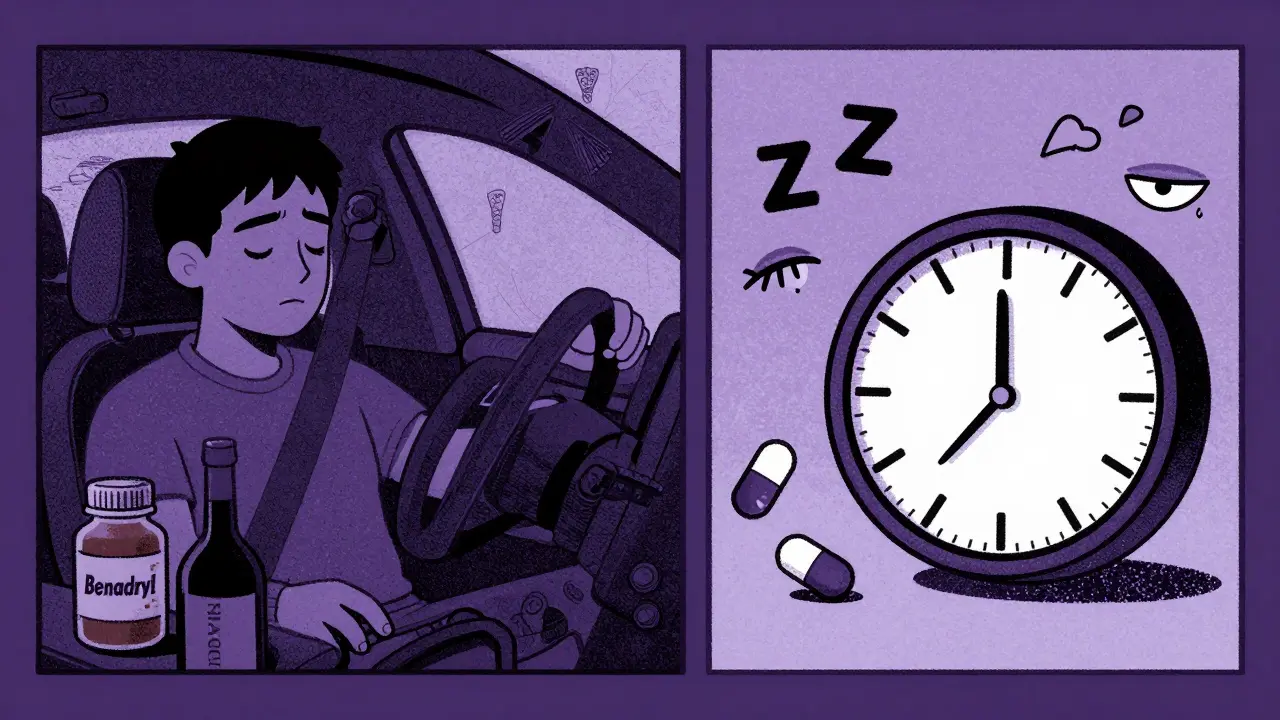
Real Stories, Real Consequences
Online forums are full of warnings from people who learned the hard way. On Reddit’s r/Allergies, 78% of 1,245 users who mixed antihistamines with alcohol reported "significantly worse drowsiness" than expected. Over a third said they fell asleep while driving. On drug review sites, 65% of negative reviews for Benadryl mention alcohol-related incidents. Phrases like "passed out unexpectedly" and "couldn’t wake up the next morning" appear over and over. Even people who took "non-drowsy" options like Claritin and Zyrtec reported the same problem-just less often. And older adults? 53% of those over 65 reported memory loss or confusion after mixing even small amounts of alcohol with antihistamines. That’s more than double the rate in younger users.Hidden Sources of Antihistamines
Many people don’t realize they’re taking antihistamines. Diphenhydramine isn’t just in allergy pills. It’s in 72 different over-the-counter products. That includes 34 sleep aids, 18 cold and flu remedies, and 20 motion sickness tablets. You might think you’re just taking something for a cold or to help you sleep. But if it contains diphenhydramine, you’re already at risk. And most OTC labels only say "may cause drowsiness." They don’t mention alcohol. That’s a gap in public awareness. The FDA requires black box warnings on prescription antihistamines-but not on OTC ones. So you’re left guessing.How Long Should You Wait?
If you’ve taken a first-generation antihistamine like Benadryl, wait at least 12 to 16 hours before drinking alcohol. For second-generation options like Claritin or Zyrtec, wait 8 to 12 hours. But here’s the truth: metabolism varies. If you’re older, have liver issues, or take other medications, your body may process these drugs slower. So waiting longer is always safer. And if you’re unsure? Skip the drink. It’s not worth the risk.
What Are the Alternatives?
If you need to manage allergies and still want to enjoy a drink, there are safer options. Nasal corticosteroids like Flonase or Nasacort don’t interact with alcohol at all. They work by reducing inflammation in your nose, not by blocking histamine in your brain. But they take 3 to 7 days to reach full effect-so they’re not for sudden flare-ups. Leukotriene inhibitors like Singulair are another option. They’re not antihistamines, so they don’t cause drowsiness. And they’re safe with alcohol. These aren’t quick fixes, but if you drink regularly and have chronic allergies, they’re worth discussing with your doctor.Why This Problem Is Getting Worse
More people are using antihistamines than ever. In 2022, 61.5 million Americans used them. Sales hit $2.8 billion. Climate change is making allergies worse, so more people are reaching for OTC meds. But awareness hasn’t kept up. A 2023 Consumer Reports survey found that 63% of antihistamine users regularly drank alcohol within 12 hours of taking their medication. Only 28% knew the risks. Emergency visits linked to this combo have risen 37% since 2018. The biggest increases? Adults 50-64 and women. That’s likely because these groups are more likely to use OTC medications regularly and may not realize how powerful these interactions are.What You Should Do Now
Read the label. If it says "drowsiness may occur," assume it’s not safe with alcohol. Even if it says "non-drowsy," assume it still can be. Don’t rely on marketing claims. Talk to your pharmacist or doctor if you’re unsure. If you’ve already mixed them and feel extremely sleepy, dizzy, or confused, don’t drive. Don’t try to sleep it off alone. Call someone. If you’re alone, call emergency services. This isn’t just about discomfort-it’s about safety. The next time you reach for an allergy pill, ask yourself: "Is this worth risking my ability to stay awake?" The answer should be no.Can I have one drink with Benadryl?
No. Even one drink with Benadryl can cause extreme drowsiness, slowed reaction times, and impaired judgment. Studies show this combination can make you as impaired as someone with a blood alcohol level of 0.12-0.15%, which is well above the legal driving limit. It’s not worth the risk.
Is Claritin or Zyrtec safe with alcohol?
Not really. While Claritin and Zyrtec are less likely to cause drowsiness alone, alcohol still increases that risk significantly. With alcohol, Claritin causes drowsiness in 30-35% of users, and Zyrtec in 40-45%. The "non-drowsy" label doesn’t mean "safe with alcohol." It just means the risk is lower-not gone.
How long after taking antihistamines can I drink alcohol?
Wait at least 12-16 hours after first-generation antihistamines like Benadryl. For second-generation ones like Claritin or Zyrtec, wait 8-12 hours. But if you’re over 65, have liver problems, or take other medications, wait longer. When in doubt, skip the alcohol.
What should I do if I feel too drowsy after mixing antihistamines and alcohol?
Do not drive or operate machinery. Sit or lie down in a safe place. Do not try to sleep alone. Call a friend, family member, or emergency services if you feel confused, have trouble breathing, or can’t wake up. This combination can cause respiratory depression, which is life-threatening.
Are there allergy meds that are safe with alcohol?
Yes. Nasal corticosteroids like Flonase and Nasacort, and leukotriene inhibitors like Singulair, don’t interact with alcohol. But they take 3-7 days to work, so they’re not for sudden symptoms. Talk to your doctor if you drink regularly and need long-term allergy control.
Comments
David Chase
OMG I CANNOT BELIEVE THIS ISN'T MORE WIDELY KNOWN!!! 🤯 I took Benadryl after a long day and had one glass of wine... Woke up on the floor next to my cat at 3am. No idea how I got there. My dog was licking my face like I was a pizza. This is SCARY. Why aren't there warning labels like on vodka bottles???! 🍷💀
December 30, 2025 AT 02:09
Kevin Lopez
CNS depression synergy. GABA potentiation + H1 receptor antagonism. CYP3A4 inhibition. Pharmacokinetic interaction profile is well-documented in PubMed ID 28767891. The 300% drowsiness metric is statistically significant (p<0.001). Non-drowsy antihistamines are misnomers when co-administered with ethanol. Risk stratification is critical.
December 31, 2025 AT 01:00
Fabian Riewe
Hey everyone, just wanted to say this post is seriously helpful. I used to mix Zyrtec and wine thinking it was fine because it said 'non-drowsy' on the bottle. Then I almost fell asleep driving home from the grocery store. Scared the crap out of me. Now I wait 12 hours and use Flonase instead. Seriously, if you drink, just check the label. Your brain will thank you. 😊
January 1, 2026 AT 22:47
Jim Rice
You people are overreacting. I've been taking Benadryl with whiskey for 15 years. Never had a problem. It just makes me chill out. Maybe you're just weak. Also, why are you so scared of sleep? It's not a crime to be tired.
January 3, 2026 AT 18:08
Manan Pandya
This is an excellent breakdown. I am from India, and here, many people use diphenhydramine-based cold syrups with alcohol, especially during festivals. The lack of awareness is alarming. I have seen elderly relatives fall and fracture hips after this combination. We need public health campaigns in local languages too.
January 5, 2026 AT 07:30
Aliza Efraimov
I'm a nurse. I've seen three patients in the ER this year alone because of this combo. One was a 68-year-old woman who took Zyrtec and two glasses of wine and couldn't wake up. She had a fall, broke her hip, and spent three weeks in rehab. The worst part? She said, 'I didn't think it would hurt me.' Please. Read the label. Your life matters more than one drink.
January 6, 2026 AT 04:49
Nisha Marwaha
The CYP450 enzyme inhibition mechanism is critical here. Ethanol competitively inhibits CYP3A4 and CYP2D6, prolonging antihistamine half-life. Second-gen agents like fexofenadine have lower CNS penetration, but ethanol still increases sedation via peripheral histamine modulation. Regulatory oversight gaps in OTC labeling are a public health failure.
January 7, 2026 AT 02:48
Paige Shipe
This is such a ridiculous article. I'm not going to stop drinking because some guy wrote a long blog post. I take Claritin every day and have a beer every night. Nothing happens. You're just trying to scare people for clicks. I'm 32 and I'm fine. Your fear-mongering is exhausting.
January 7, 2026 AT 19:56
Tamar Dunlop
I must express my profound concern regarding this matter. The confluence of pharmacological agents with ethanol constitutes a significant public health vulnerability, particularly among geriatric populations. The absence of mandatory warning labels on over-the-counter formulations represents a critical lacuna in consumer protection protocols. I urge regulatory bodies to institute immediate amendments.
January 8, 2026 AT 22:29
Emma Duquemin
I used to think I was immune until I passed out on the couch during a movie night with my partner. Woke up at 4am with drool on my shirt and my cat sitting on my chest like a judge. I haven't touched Benadryl since. Now I use saline rinses and a humidifier. My allergies still suck, but at least I don't wake up on the floor like a fallen superhero. 💪🌿
January 9, 2026 AT 17:03
Duncan Careless
yeah i read this and thought... wow. i took zyrtec last night and had a pint. didn't think much of it. but now im kinda worried. maybe i shouldnt do that anymore. thanks for the heads up.
January 9, 2026 AT 18:44
Samar Khan
Classic. People think 'non-drowsy' means 'safe.' It doesn't. It means 'less likely to knock you out immediately.' But combine it with alcohol? You're playing Russian roulette with your brain. And then you blame the drug. Wake up. You're the variable. 🧠💣
January 10, 2026 AT 17:22
Russell Thomas
Wow. So if I take a Benadryl and a beer, I'm basically drunk? Cool. So now I'm just supposed to give up my Friday night cocktail because I have a stuffy nose? That's the most American thing I've ever heard. We're turning medicine into a moral panic.
January 10, 2026 AT 20:08
Joe Kwon
Thanks for this. I’ve been using Flonase for my allergies and it’s been a game-changer. No drowsiness, no alcohol conflicts. It takes a few days, but honestly? It’s worth it. Also, if you’re unsure, just ask your pharmacist. They’re usually super helpful. 🙌
January 11, 2026 AT 15:56