
Medical Risk Comparison Calculator
What this means:
Enter values to see the interpretation.
Why These Numbers Often Feel Misleading
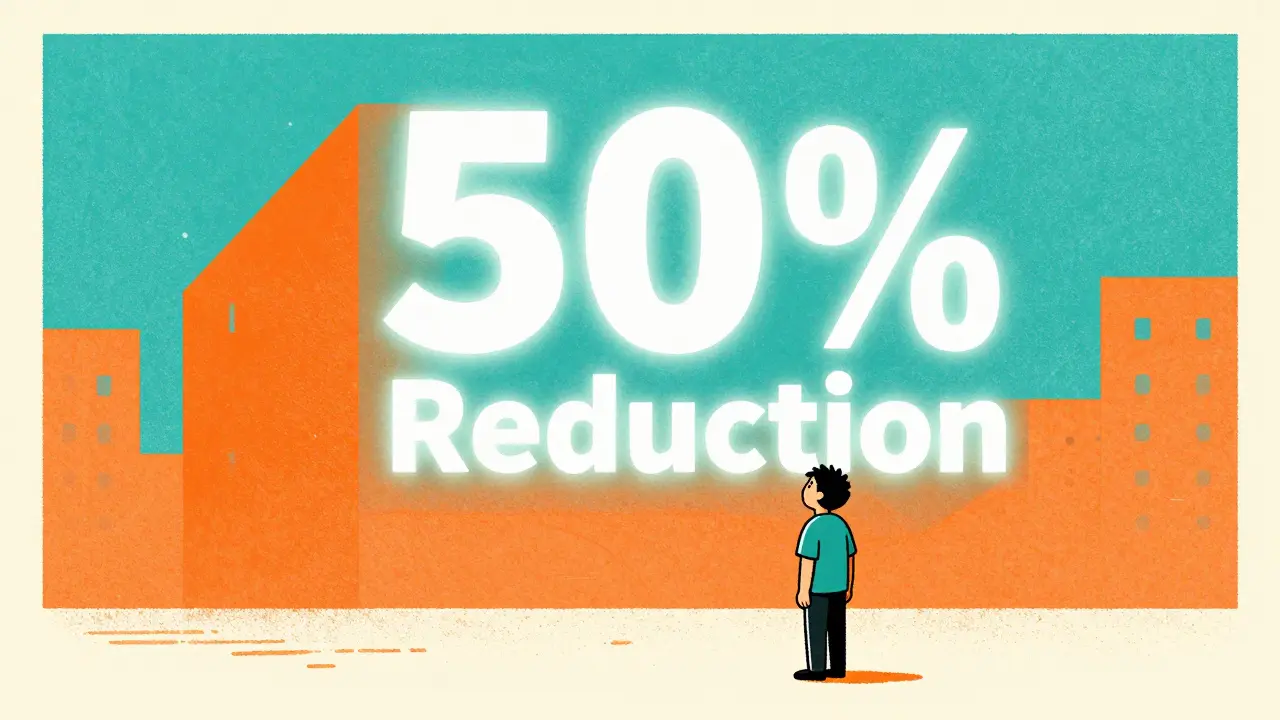
Pharmaceutical companies often lean on relative risk in their marketing because the numbers look much more impressive. A "50% reduction" sounds far more impactful than a "1 percentage point drop." This isn't necessarily lying, but it is an incomplete picture. When we only look at relative risk, we lose the context of the baseline risk. Take a hypothetical example: Drug X reduces the incidence of a rare side effect from 1 in 100,000 (0.001%) to 1 in 10,000,000 (0.00001%). Mathematically, that is a staggering 90% relative risk reduction. However, the absolute risk reduction is only 0.099%. For the average patient, a change of less than 0.1% is practically invisible, yet the "90%" figure makes the drug seem revolutionary.How to Calculate the Difference
To really understand what is happening in a clinical trial, you need to know a few basic formulas. You don't need to be a mathematician, but knowing these three metrics will change how you read medical news.- Absolute Risk Reduction (ARR): This is the simplest calculation. You subtract the risk in the treatment group from the risk in the control group. (Control Risk - Treatment Risk = ARR).
- Relative Risk Reduction (RRR): This measures how much the risk is reduced relative to the starting point. It is calculated as (ARR / Control Risk).
- Number Needed to Treat (NNT): This is a gold-standard metric for clinical utility. It tells you how many people need to take the drug for one person to actually benefit (or avoid a side effect). The formula is 1 / ARR.
| Scenario | Control Group Risk | Treatment Group Risk | Absolute Risk Reduction (ARR) | Relative Risk Reduction (RRR) |
|---|---|---|---|---|
| Common Condition | 20% | 10% | 10% | 50% |
| Rare Condition | 0.2% | 0.1% | 0.1% | 50% |
The Danger of "Statistical Deception"
There is a systemic issue in how risk is communicated. Research suggests that a huge portion of direct-to-consumer drug ads highlight relative risk while burying absolute risk in the fine print. This creates a gap in understanding. A patient might refuse a statin because they read it "cuts heart attack risk in half," only to later realize that if their baseline risk was only 2%, the drug only moved the needle to 1%. This gap isn't just a patient problem; it's a provider problem too. Some studies have shown that a significant number of physicians struggle to convert relative risk into absolute terms on the fly. This is why experts, such as those from the Dartmouth Institute for Health Policy & Clinical Practice, argue that absolute numbers must be presented first. They provide the "true size" of the benefit or risk, whereas relative numbers only provide the scale.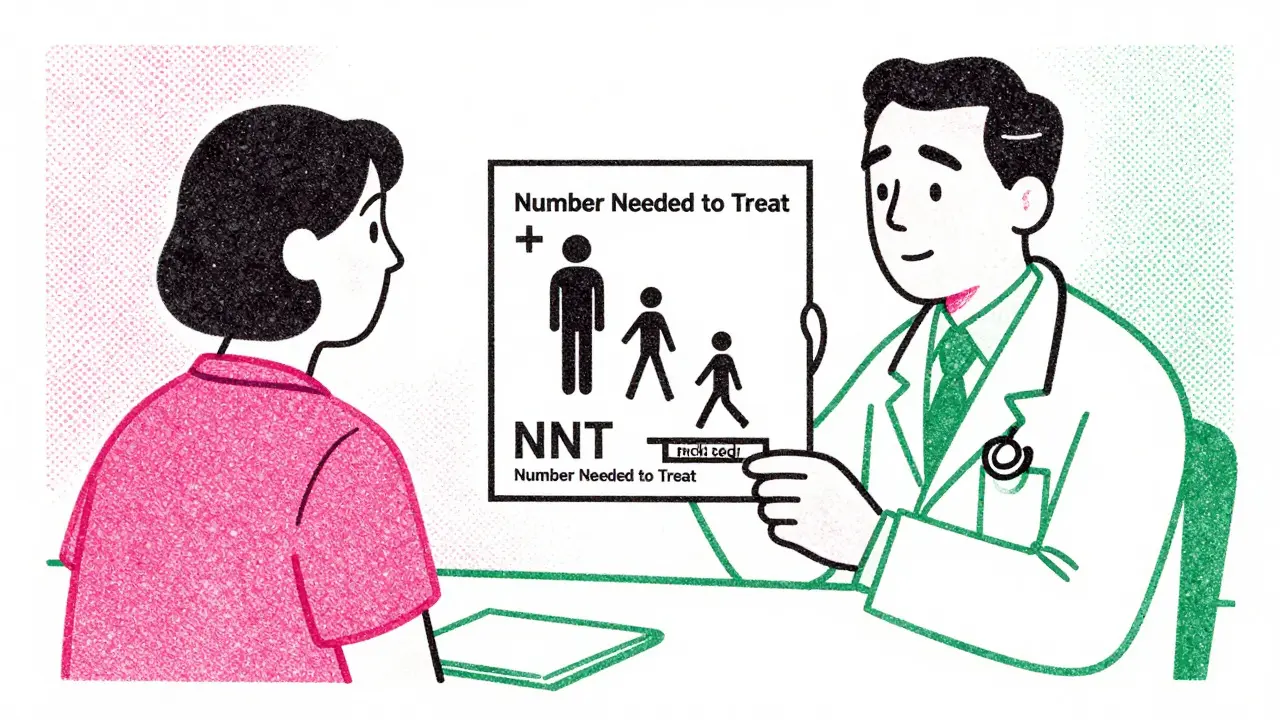
Practical Tips for Interpreting Your Meds
When you are discussing a new medication with your doctor or reading a study, don't just accept the percentages. Ask specific questions to uncover the absolute risk.- Ask for the baseline: If a doctor says a drug reduces the risk of a side effect by 30%, ask: "What was the risk for people who didn't take the drug?"
- Request the NNT: Ask, "How many people have to take this medication before one person sees a benefit?" If the NNT is 100, you have a 1% chance of being that person.
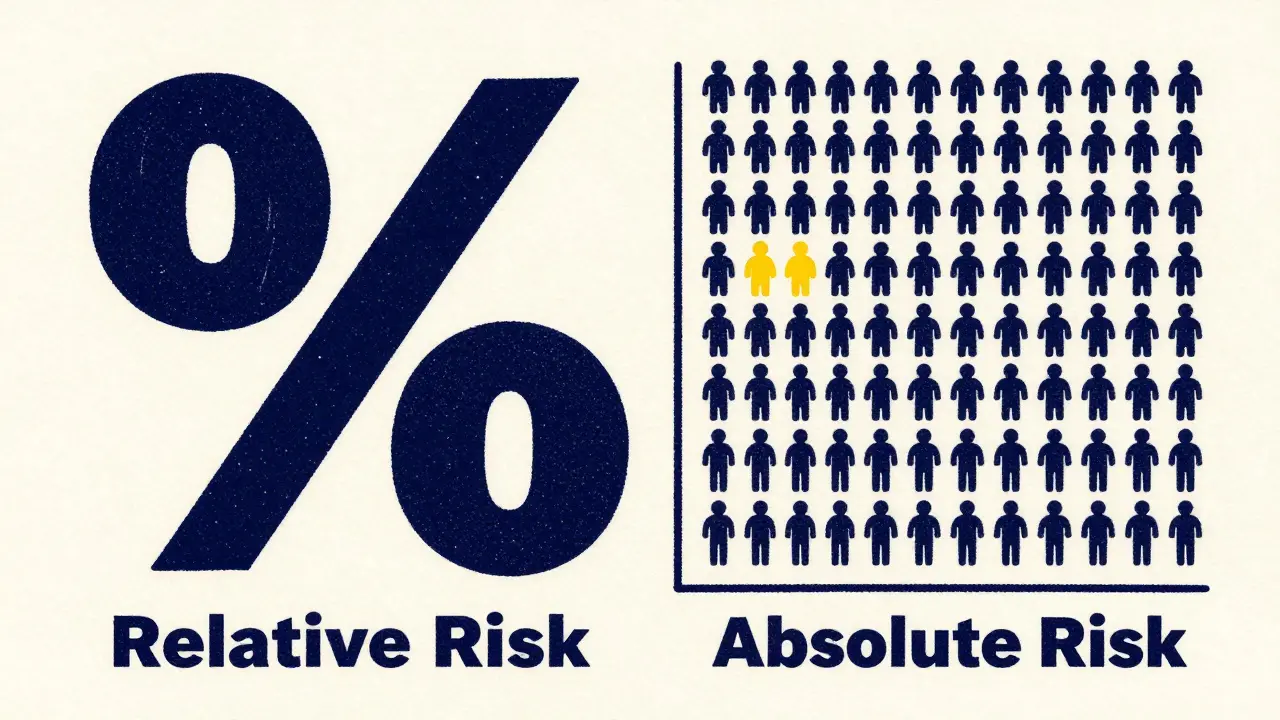
- Use visual aids: If the numbers are confusing, ask for a "risk ladder" or a pictogram. Seeing 100 little stick figures with 2 colored in (before) and 1 colored in (after) is far more intuitive than hearing "50% relative risk reduction."
Connecting the Dots: Why Both Matter
It would be a mistake to say relative risk is useless. It is actually very helpful for scientists to identify risk factors. For example, if we find that smoking increases the relative risk of lung cancer by 20 times, that is a massive signal for researchers, even if the absolute risk varies based on age or genetics. Relative risk standardizes the effect across different populations. However, for a patient deciding whether to take a pill every morning, absolute risk is the only metric that truly matters. You are not a "ratio"; you are a single person with a specific baseline risk. Knowing that your personal risk of a side effect moves from 0.5% to 0.4% allows you to make a rational choice about whether that 0.1% difference is worth the cost or the effort of the treatment.Is relative risk always a lie?
No, relative risk is a mathematically accurate measurement. The problem isn't the math; it's the communication. When it's presented without the absolute risk, it can be misleading because it exaggerates the perceived impact of a drug, especially when the baseline risk is very low.
What is the easiest way to spot "statistical deception"?
Look for big percentages (like "50% reduction") without accompanying baseline numbers (like "from 2% to 1%"). If an advertisement or article mentions a relative percentage but doesn't tell you the actual number of people affected, they are likely highlighting the most impressive-looking number rather than the most useful one.
Which is more important: ARR or RRR?
For clinical decision-making and patient health, Absolute Risk Reduction (ARR) is more important because it reflects the real-world impact on an individual. Relative Risk Reduction (RRR) is more useful for researchers identifying patterns and trends across large populations.
What does NNT mean in simple terms?
NNT stands for Number Needed to Treat. It tells you how many patients need to be given the treatment for one patient to experience the positive outcome. A low NNT (like 2 or 5) means the drug is very effective; a high NNT (like 100 or 1,000) means the benefit is rare.
Why do pharma companies prefer relative risk?
Relative risk numbers are almost always larger than absolute risk numbers. In marketing, a larger number suggests a more powerful drug, which can lead to higher prescription rates, even if the actual absolute benefit to the patient is minimal.